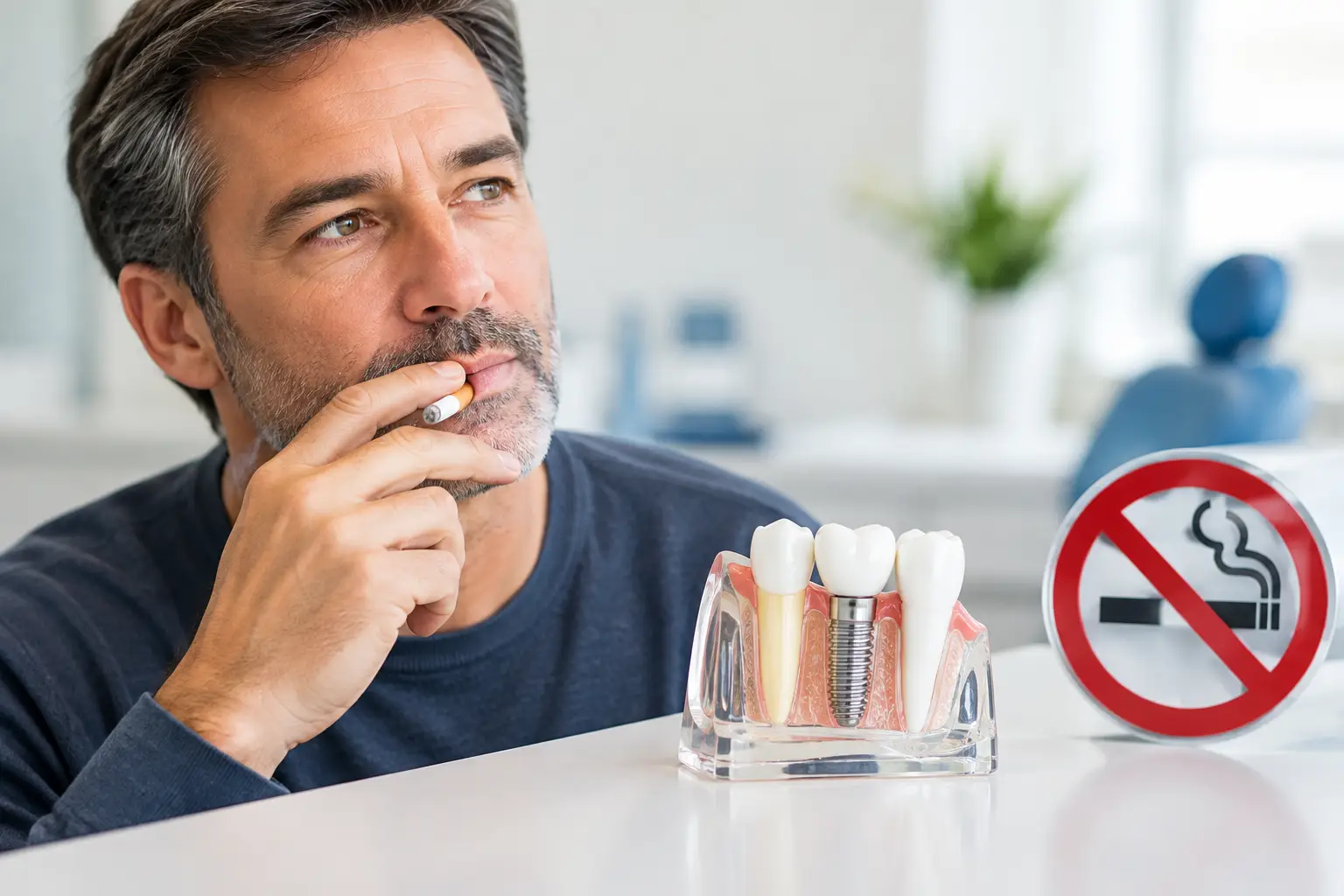
Being honest about smoking or vaping should not cost you the chance to replace a missing tooth. If you are considering dental implants if you smoke , the answer is not automatically no. Smoking and vaping can raise the risk of complications, but many patients can still be candidates with thoughtful planning, realistic expectations, and a clear plan to protect healing.
At Seattle Oral Care, implant treatment starts with a conversation, not a judgment. Your care team needs an accurate picture of your health and habits because it helps them plan for the safest, most durable result. The goal is not simply to place an implant. It is to help it heal well enough to serve you comfortably for years.
Can Smokers Get Implants?
Yes, smokers can get implants. However, smoking is one of the factors a dentist or specialist considers when determining your individual risk. Implant success depends on a process called osseointegration, where the jawbone heals around the implant and holds it securely. Tobacco use can interfere with that process.
Smoking reduces blood flow to the gums and bone, which limits the oxygen and nutrients tissues need during healing. It can also affect the body's immune response, making it harder to fight infection. Over time, smoking increases the risk of gum disease and bone loss around natural teeth and implants.
That does not mean every smoker will have a failed implant, nor does it mean every nonsmoker will have a perfect outcome. Your candidacy also depends on the health of your gums, available bone, bite forces, medical history, oral hygiene, and the type of restoration you need. A person who smokes occasionally and has healthy gums may have a different risk profile than someone who smokes heavily and has untreated periodontal disease.
The most helpful first step is a complete implant evaluation. Imaging and a careful exam can show whether bone grafting, gum treatment, staged care, or another treatment approach may improve your prospects.
Why Smoking Raises Implant Risks
The concern is not just what happens on the day of surgery. Healing continues for weeks and months after implant placement. During that time, nicotine and smoke exposure can make a meaningful difference.
Smoking is associated with slower wound healing, a higher chance of infection, and a greater risk that the implant will not integrate fully with the bone. It may also contribute to peri-implant disease, an inflammatory condition that affects the gums and bone supporting an implant. In advanced cases, peri-implant disease can lead to bone loss and implant failure.
For patients receiving a bone graft, sinus lift, or full-mouth restoration, smoking can be an even bigger consideration because there are more healing tissues involved. A complex case is not necessarily off the table. It may simply require more careful sequencing and a stronger commitment to reducing risk.
Your dental team should explain these concerns plainly, including what they mean for your particular treatment plan. You deserve to know both the benefits of implants and the factors that could affect their longevity.
Vaping and Dental Implants: Is It Different?
Many people ask whether vaping and dental implants are safer together than traditional cigarettes and implants. Vaping may avoid some of the combustion products found in cigarette smoke, but it is not considered risk-free for implant healing.
Most vaping products contain nicotine. Nicotine can constrict blood vessels and reduce blood flow to healing oral tissues, which is a central concern after implant surgery. Vape aerosols may also irritate oral tissues, contribute to dry mouth, and expose the mouth to chemicals that can affect inflammation and bacterial balance.
Even nicotine-free vaping deserves a candid conversation with your dentist. Research on vaping continues to develop, and the ingredients and exposure levels vary widely by product. If your priority is giving a new implant the best possible healing environment, avoiding vaping during the surgical and healing period is the cautious choice.
Do not assume that switching from cigarettes to vaping removes implant-related risk. It may change the risk, but it does not erase it.
What Your Implant Team May Recommend
If you are a smoker or vaper worried they will be turned away for implants, expect a recommendation tailored to your health rather than a one-size-fits-all rule. Many implant providers encourage patients to stop using tobacco and nicotine before surgery and remain nicotine-free through initial healing. The exact timeline can vary based on your procedure, medical history, and the extent of treatment.
Some patients are ready to quit completely. Others need help taking that step or are not ready yet. Being direct about where you are allows your dental team to give practical guidance instead of making assumptions. They may recommend coordinating with your primary care physician or a smoking-cessation program, especially if nicotine replacement or prescription support would be helpful.
If quitting is not currently possible, your clinician may discuss whether it makes sense to delay treatment, modify the plan, or proceed with a clear understanding of increased risk. In some situations, saving an existing tooth, treating gum disease first, or choosing a temporary replacement may be the most responsible next step while you prepare for implant care.
Ways to Support Better Healing
Stopping smoking and vaping is the single most meaningful action you can take for implant healing. But a successful result also depends on daily care and follow-through. Keep every surgical and maintenance appointment, take medications exactly as prescribed, and follow instructions for rinsing, eating, and cleaning around the surgical site.
Excellent plaque control matters before and after implants. Your hygienist and dentist can show you how to clean around an implant crown, bridge, or implant-supported denture without irritating the surrounding tissue. Regular professional cleanings are not optional maintenance. They help identify early inflammation before it becomes a more serious problem.
It also helps to protect the implant from excess force. If you clench or grind your teeth, a custom nightguard may be recommended. If you have diabetes, sleep apnea, or another condition that affects healing or inflammation, keeping it well managed supports both your general health and your oral health.
A Straightforward Conversation Is the Best Starting Point
Some patients avoid asking about implants because they expect a lecture about smoking. That delay can allow a missing tooth to create new problems, including drifting teeth, changes in bite, and additional bone loss. You do not need to hide your habits or make promises you cannot keep. You do need a treatment team that understands the risks and will help you make an informed decision.
Implants remain one of the most stable, natural-feeling ways to replace missing teeth. For smokers and vapers, the path may involve extra preparation and closer maintenance, but it can still lead to a strong, functional smile. A thoughtful consultation gives you the space to ask questions, understand your risks, and take the next step when you are ready.