A parent can be 82, active, and an excellent candidate for implants. Another person may be 68 and need medical issues stabilized first. If you are asking, “Is it too late for dental implants for an elderly parent?” the most reassuring answer is that age alone rarely decides it. Overall health, healing ability, oral health, bone support, and a carefully coordinated plan matter far more than the number on a birthday card.
For many families, missing teeth affect much more than appearance. A parent may avoid favorite foods, feel self-conscious in photos, struggle with a loose denture , or speak less clearly than before. Dental implants can provide a secure foundation for a crown, bridge, or implant-supported denture. The right treatment can make eating, talking, and smiling feel more natural again.
Is There an Age Limit for Dental Implants?
There is no fixed upper age limit for dental implants. Healthy adults in their 70s, 80s, and beyond can successfully receive them. What clinicians evaluate is whether the person can safely undergo treatment and whether the mouth can support a predictable, long-lasting result.
An implant is a small titanium post placed in the jawbone to replace a missing tooth root. Over time, the bone heals around it, creating a stable base for a restoration. This healing process does not automatically stop at age 80. Many older adults heal well, particularly when medical conditions are well managed and they follow postoperative instructions.
The question is not simply, “Can seniors get dental implants?” It is whether implants are the best option for your parent’s specific needs, health history, and goals. A thorough consultation should make that answer clearer, not pressure your family toward a decision.
What Matters More Than Your Parent’s Age
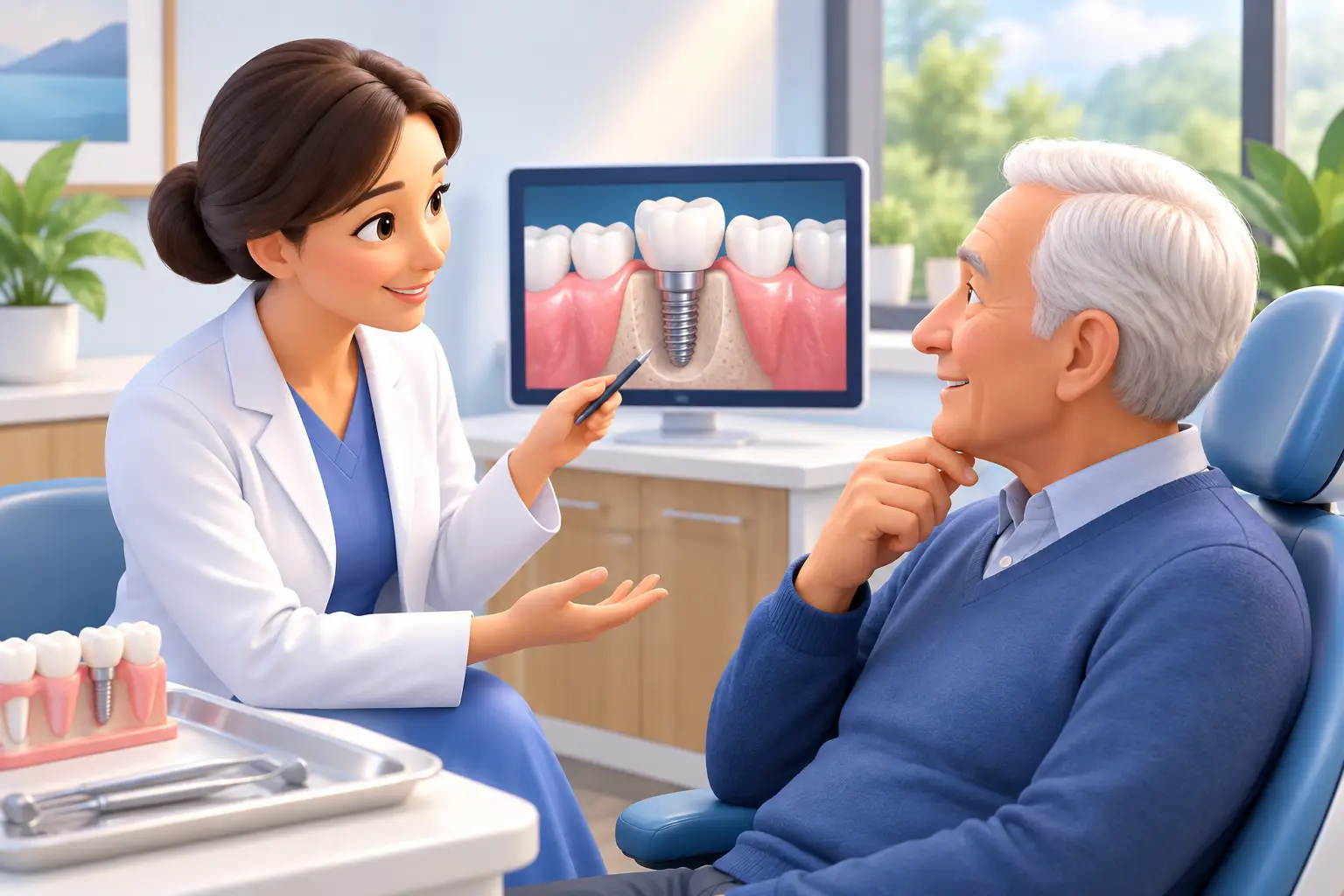
A dental implant evaluation includes more than looking at an X-ray and counting missing teeth. It begins with a conversation about how your parent feels, what they want to eat, whether they are tired of removable dentures, and what level of treatment feels manageable.
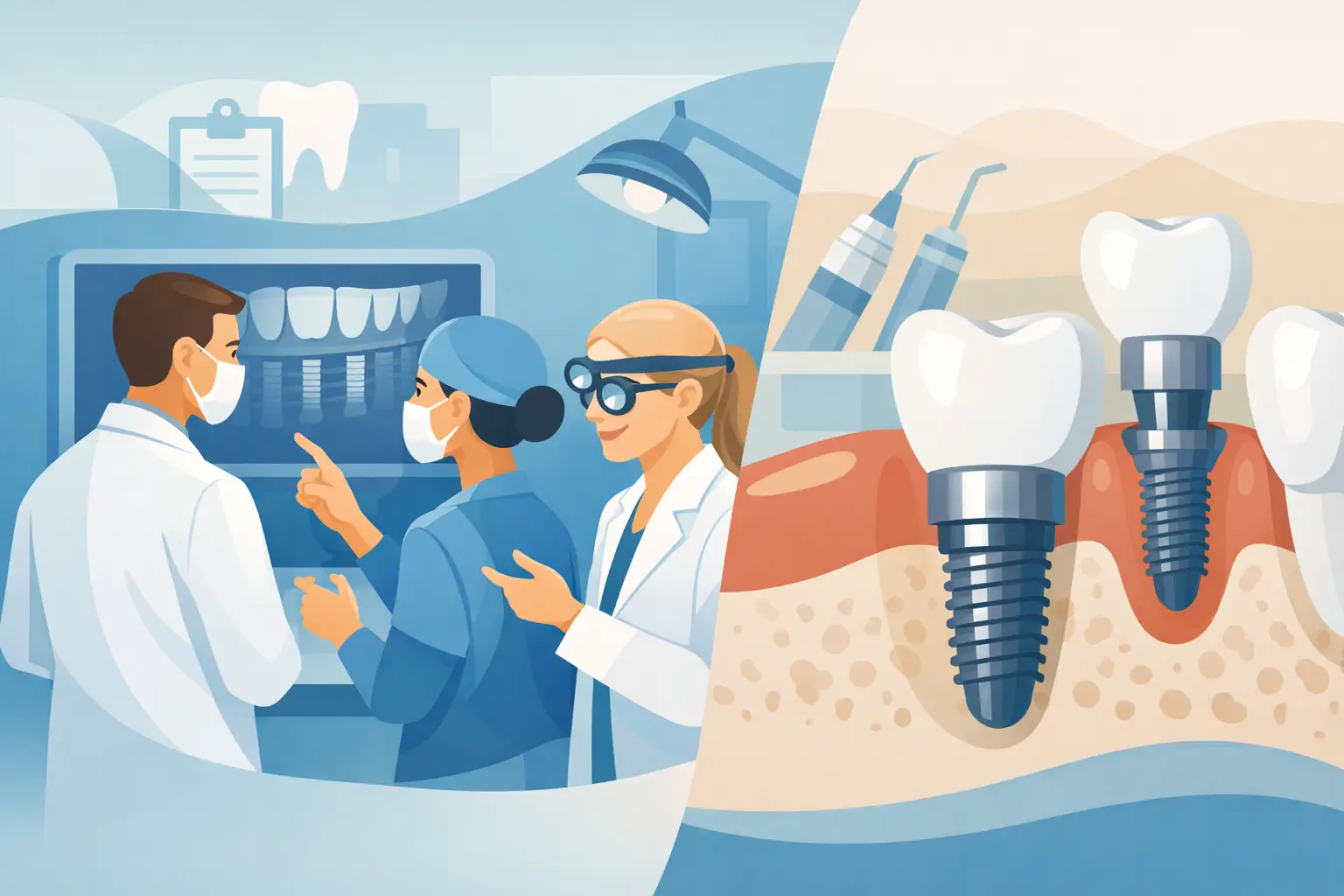
The clinical evaluation considers gum health, signs of infection, remaining teeth, bite forces, and the amount and shape of jawbone. A 3D scan may be used to assess bone volume and identify important structures, such as nerves and sinuses. This allows the care team to plan implant placement precisely and determine whether grafting, extractions, or periodontal treatment should come first.
Medical history also matters. The dentist will review medications, past surgeries, diabetes control, heart and lung conditions, immune concerns, and any history of radiation therapy involving the head or neck. For some patients, a physician’s input is appropriate before treatment begins.
A parent who is medically stable and able to maintain daily oral hygiene may be a stronger candidate than someone younger with uncontrolled gum disease, heavy tobacco use, or poorly managed health conditions. The goal is not to rule out treatment because it is complex. The goal is to plan it safely.
Dental Implants for Elderly Patients With Health Conditions
Many older adults have health conditions, and having one does not necessarily prevent implant treatment. It does mean treatment should be personalized.
Diabetes is a good example. When blood sugar is well controlled, many patients can receive implants successfully. When diabetes is uncontrolled, healing and infection risks may be higher, so improving medical control may be the first step. Similarly, people taking blood thinners often can have dental procedures with appropriate precautions, but they should never stop or change medication without direction from the prescribing clinician.
Heart disease, sleep apnea, arthritis, and limited mobility also affect planning. A patient may need shorter appointments, a caregiver’s help with transportation, or a restoration that is especially easy to clean. For someone with significant dental anxiety, gentle communication and a clear explanation of each stage can make care feel far more manageable.
Dental implants for elderly patients with health conditions should never follow a one-size-fits-all timeline. In some cases, the safest plan is a few strategically placed implants to stabilize a denture rather than replacing every missing tooth individually. In others, a conventional bridge or well-designed removable denture may be the better choice. Good care includes discussing these trade-offs openly.
What About Implants for a Parent With Osteoporosis?
Osteoporosis does not automatically mean your parent is too old for implants or unable to receive them. Bone density throughout the body and bone quality in the jaw are related but not identical. A detailed scan helps the dental team evaluate the local bone available for implant placement.
The most important issue is often the medication used to manage osteoporosis. Certain antiresorptive medications, including some bisphosphonates and denosumab, can be associated with a rare but serious jaw-healing complication called medication-related osteonecrosis of the jaw. Risk varies based on the specific medicine, dose, duration, and whether it is taken orally or given intravenously.
Your parent should provide a complete medication list, including injections and infusions received at another office. The dentist may coordinate with the physician managing osteoporosis before recommending extractions, bone grafting, or implant surgery. Your parent should not pause osteoporosis medication on their own. The decision requires a thoughtful assessment of both bone health and oral-surgery risk.
Some people with osteoporosis are appropriate implant candidates. Others may benefit more from alternatives that avoid invasive surgery. Either way, an honest risk discussion is essential.
Dental Implants After 80: What Treatment Can Look Like
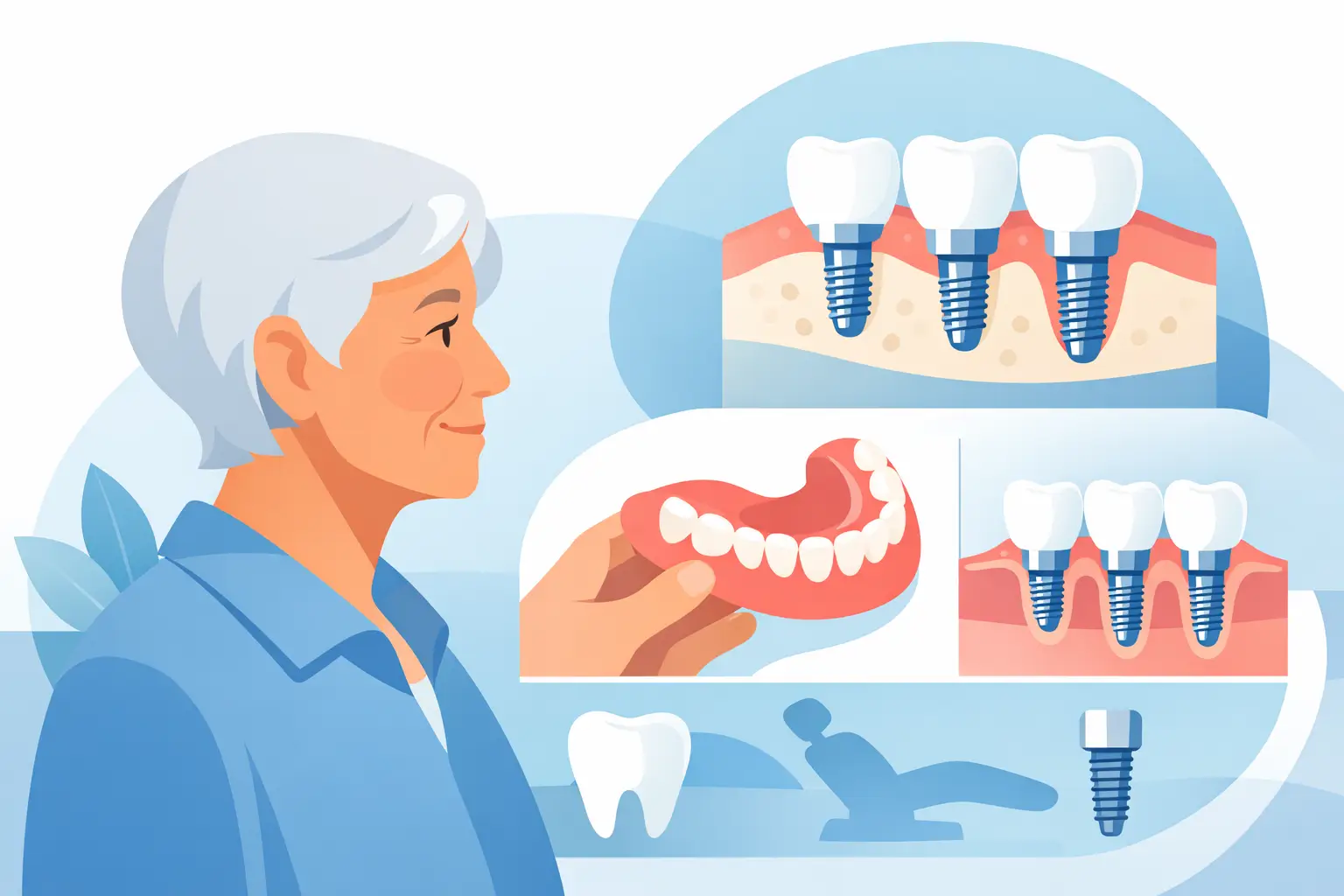
Implant treatment can range from relatively simple to more involved. Replacing one missing tooth may involve placing one implant and later attaching a custom crown. Replacing several teeth may involve an implant-supported bridge. For a parent frustrated by a lower denture that shifts while eating, two or more implants may help hold the denture securely in place.
Treatment is usually completed in phases. First, the mouth is stabilized: active infection, gum disease, or nonrestorable teeth are addressed. Next comes implant placement, followed by a healing period that allows the implant and bone to integrate. The final crown, bridge, or denture is designed to fit comfortably, support speech, and work with the person’s bite.
Not every patient needs every phase, and not every case requires bone grafting. Some patients have enough healthy bone for straightforward placement. Others benefit from additional preparation to improve stability and long-term predictability. Rushing the process to meet an arbitrary timeline is rarely the right approach.
Questions Families Should Ask at an Implant Consultation
When you are wondering, “Is my parent too old for implants?” bring the practical questions to the appointment. Ask whether your parent is a candidate now, what needs to be addressed before surgery, and what alternatives would provide a good quality of life if implants are not advisable.
It is also reasonable to ask who will manage each part of care, how medical conditions and medications will be coordinated, how many appointments are likely, and what daily cleaning will involve. If your parent has memory changes, hand arthritis, or relies on a caregiver, discuss that early. A beautiful restoration only succeeds when it is realistic to maintain.
At Seattle Oral Care, complex implant planning can be coordinated among a prosthodontist, oral surgeon, periodontist, and general dentist. That team approach is especially valuable when an older adult has extensive tooth loss, medical considerations, or needs a full-mouth treatment plan.
A Better Way to Decide
The decision is not about proving that your parent is “young enough” for dentistry. It is about understanding what will help them eat comfortably, smile confidently, and protect their oral health without taking on unnecessary risk.
If your parent has avoided care because they assumed dental implants after 80 were off the table, a consultation can replace uncertainty with clear options. Bring their medication list, medical history, and the questions that have been weighing on your family. The best next step is a plan that respects both their health and the life they want to keep enjoying.