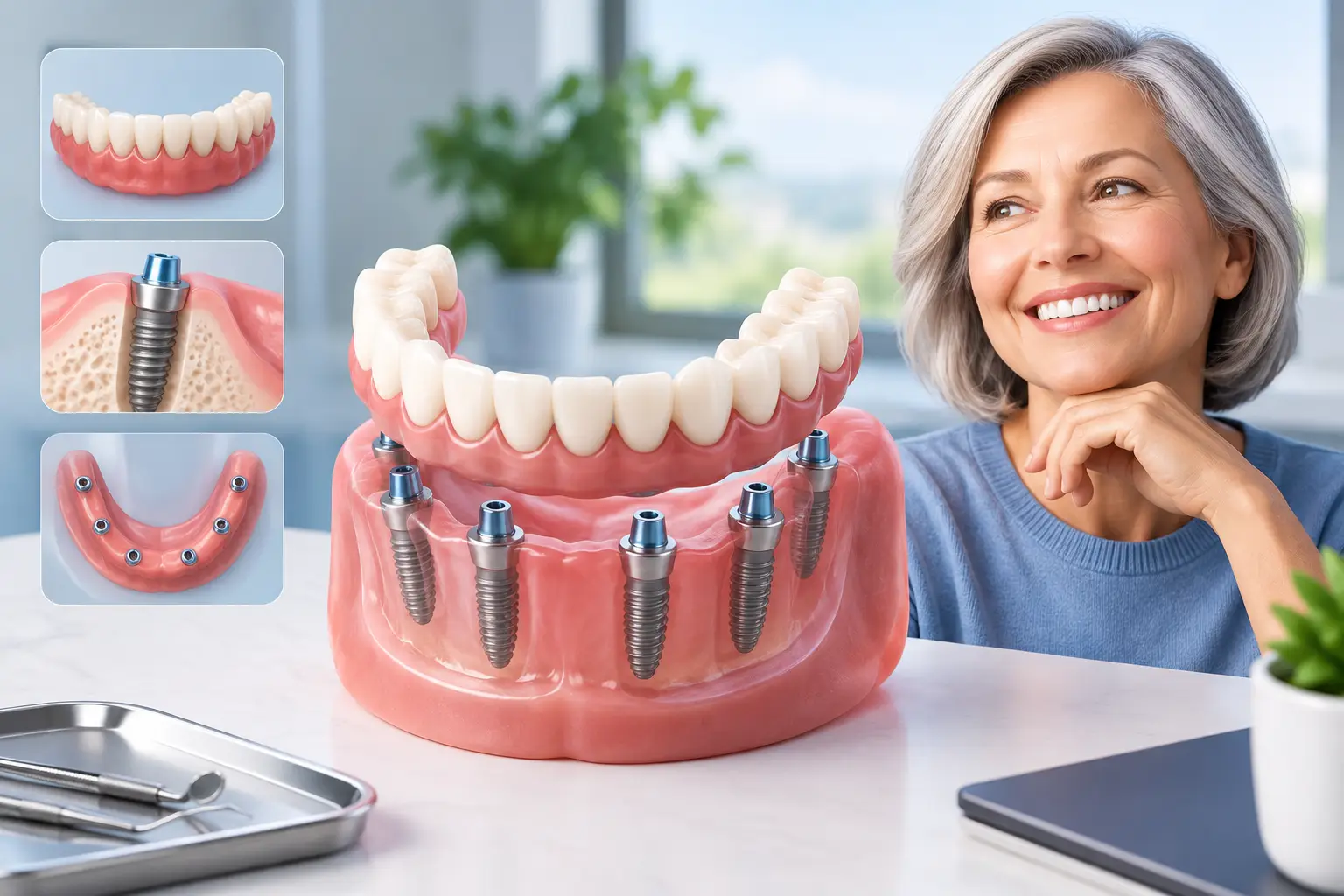
A full denture can restore the appearance of missing teeth, but it may still shift while you speak, limit what you eat, or make you feel self-conscious in close conversation. All-on-6 dental implants offer a different approach: a full arch of replacement teeth that is supported by six carefully placed implants in the jaw.
For many people with extensive tooth loss, this treatment can create a secure, natural-looking smile without needing an individual implant for every missing tooth. It is also a significant medical and financial decision. The right answer depends on your bone health, bite, overall health, goals, and the long-term care you are prepared to give your new smile.
What are all-on-6 dental implants?
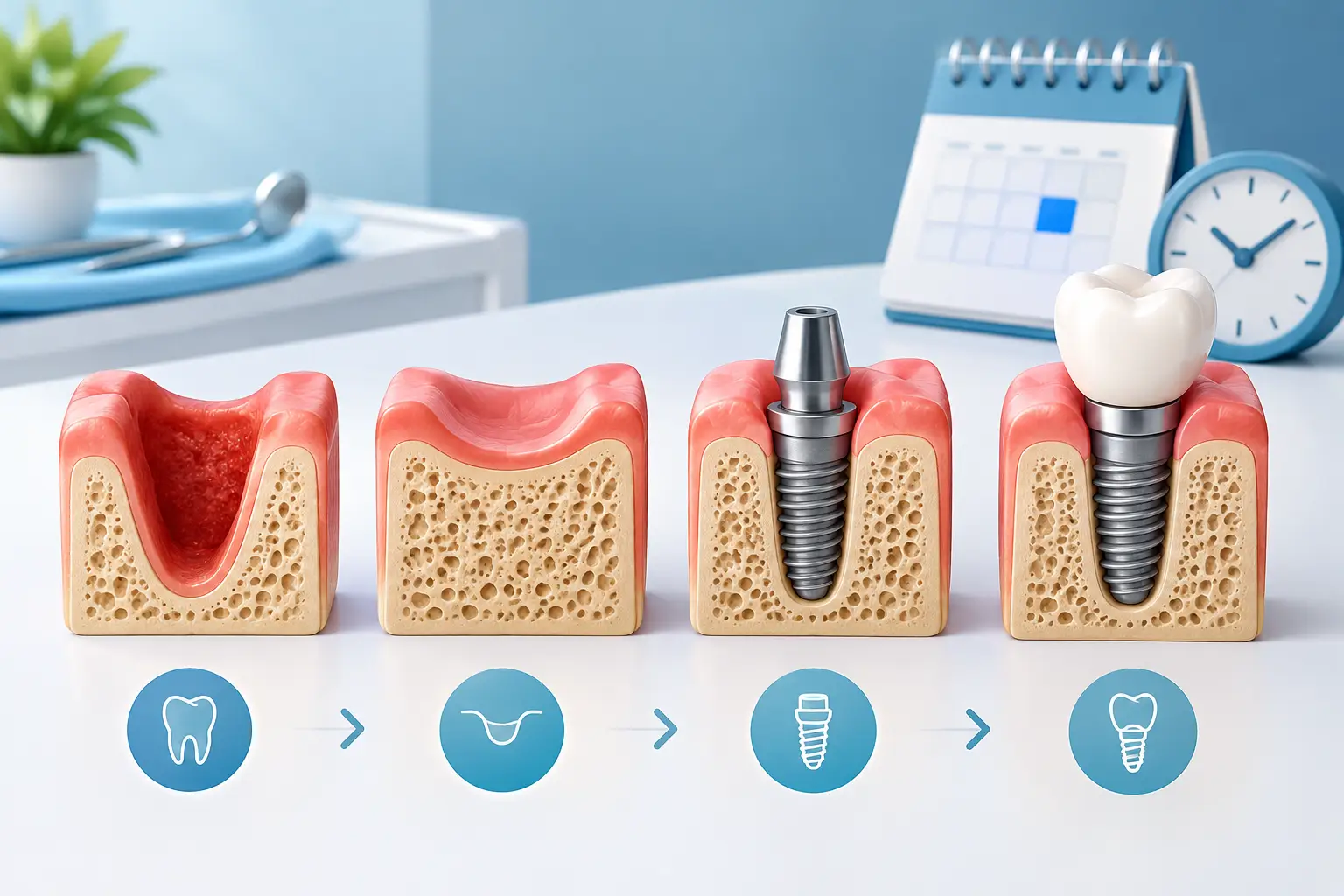
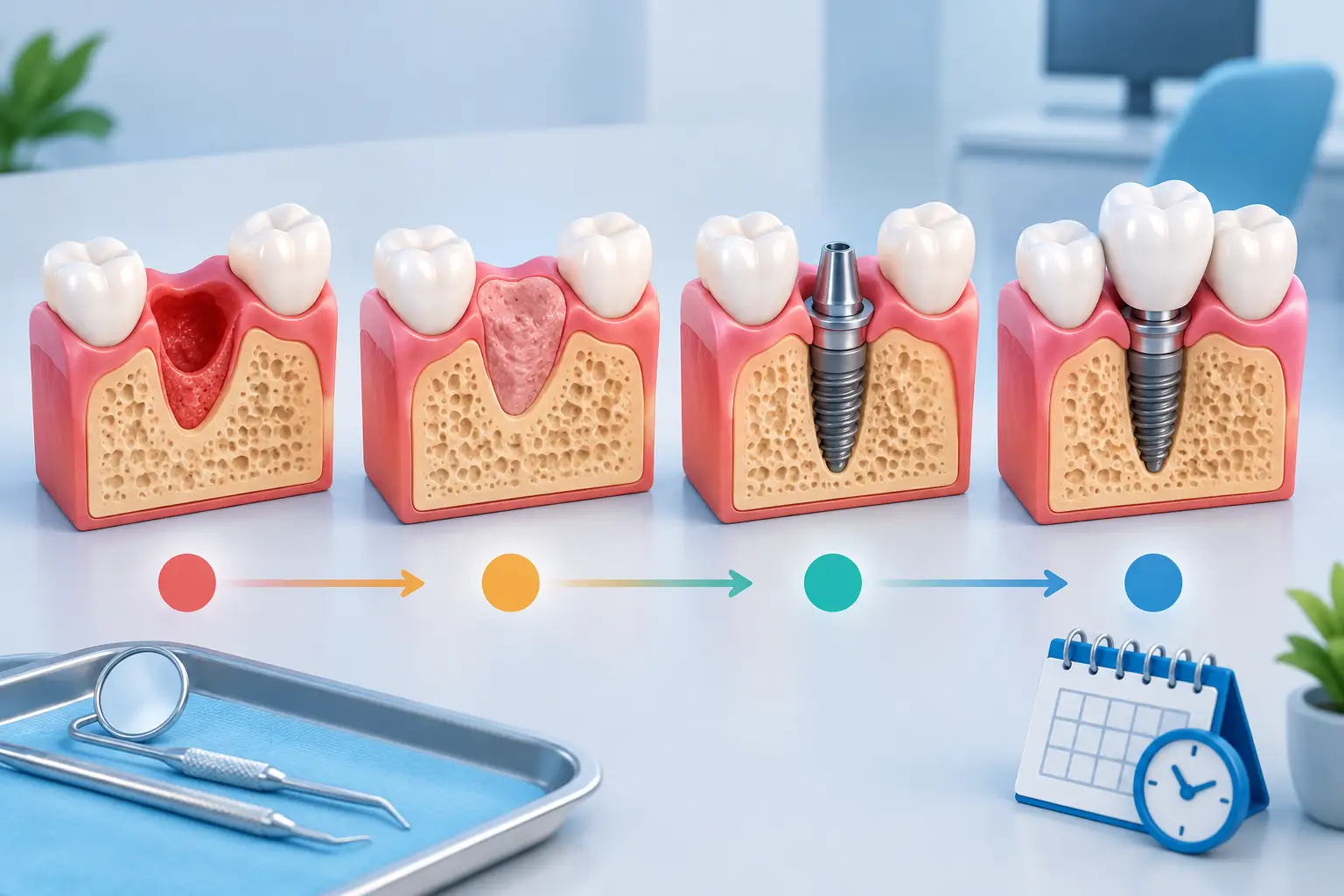
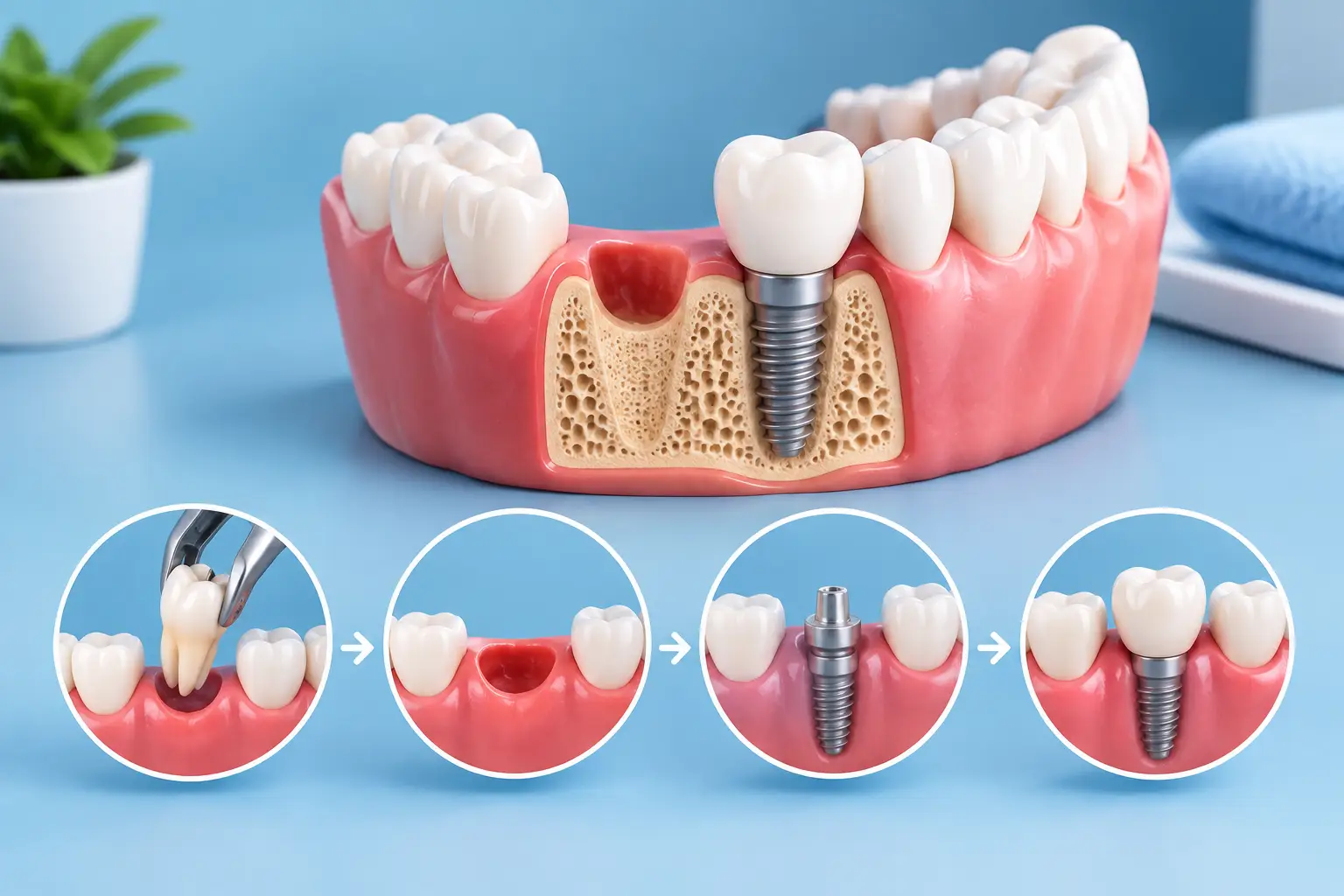
All-on-6 treatment replaces an entire upper arch, lower arch, or both with a fixed prosthesis supported by six dental implants. An implant is a small titanium post placed in the jawbone. After it integrates with the bone, it acts much like a tooth root and provides a stable foundation for replacement teeth.
The final restoration is not six separate teeth. It is a custom full-arch bridge designed to restore the visible teeth and, when needed, the appearance of the gums. Because it is fixed in place, only a dental professional removes it for periodic maintenance.
This distinction matters. A removable implant overdenture can also be an excellent option, but it clicks on and off for cleaning. An all-on-6 restoration is intended to stay in place day to day, giving many patients a stronger sense of security when eating, laughing, and speaking.
Why six implants can make a difference
A full arch places considerable pressure on the implants supporting it. Six implants distribute biting forces across more points than an arch supported by four implants. In some situations, that added support can be valuable, particularly for patients with a strong bite, adequate bone, or a desire for a larger fixed restoration.
That does not mean six is always better for every person. All-on-4, implant-supported bridges using a different number of implants, removable options, or grafting followed by conventional implants may be more appropriate depending on the anatomy of your jaw and your treatment goals. A thoughtful plan is more important than choosing a number from a brochure.
At Seattle Oral Care, complex implant care can be coordinated among a prosthodontist, oral surgeon, periodontist, and general dentist. That team perspective helps ensure the surgical plan, bite design, gum health, and final teeth are considered together rather than as separate steps.
Who may be a candidate for an all-on-6 full arch?
People consider full-arch implants for many reasons. You may have already lost most or all of your teeth, have teeth that are severely worn or failing, or feel that traditional dentures no longer fit or function well. A fixed implant-supported restoration may be considered when saving the remaining teeth would require repeated treatment with an uncertain long-term outcome.
Good candidates generally have enough healthy jawbone to support implants, or a realistic path to build bone through grafting when needed. Healthy gums and controlled medical conditions are also part of the picture. Diabetes, osteoporosis medications, autoimmune conditions, and smoking do not automatically rule out treatment, but they can affect healing and need careful discussion.
A comprehensive consultation should include a review of your health history, dental exam, 3D imaging, gum evaluation, and an assessment of how your teeth come together. This process also gives you room to talk honestly about dental anxiety. Many patients have postponed care because a past experience felt rushed or uncomfortable. You deserve to understand what will happen, why it is recommended, and what support is available to help you feel at ease.
The condition of remaining teeth matters
Sometimes a few natural teeth remain, but they are not necessarily a reason to avoid a full-arch plan. The question is whether those teeth have a favorable prognosis. Advanced periodontal disease, repeated infections, severe fractures, extensive decay, and major tooth wear can make individual repairs less predictable.
On the other hand, healthy natural teeth are worth preserving when possible. Full-mouth rehabilitation should never be treated as a one-size-fits-all solution. Your care team should explain the benefits and limitations of keeping teeth, replacing individual teeth, or moving forward with a full-arch restoration.
What treatment typically involves
The process begins with planning, not surgery. Your team uses diagnostic records and imaging to determine implant positions, the amount of available bone, and the ideal shape and position of the final teeth. Planning the final smile first helps guide the surgical phase.
If teeth need to be removed, extractions may be completed during the implant appointment. The six implants are then placed in planned locations. Some patients can receive a temporary fixed arch soon after surgery. Others need a healing period before wearing a temporary restoration or before the final bridge is made. The timeline depends on implant stability, bone quality, infection history, and the complexity of the case.
During healing, the implants bond with the jawbone in a process called osseointegration. This can take several months. Your temporary teeth, if you receive them, are designed to protect the healing process while allowing you to function socially and eat a modified diet.
Once healing is complete, your final prosthesis is created with attention to comfort, speech, bite, facial support, and appearance. The materials may vary. A high-quality acrylic-based temporary is often used during healing, while final options may include layered ceramic, zirconia, or other restorative materials. Each choice has trade-offs in appearance, repairability, force resistance, thickness, and cost.
Recovery, comfort, and eating after surgery
Most patients experience swelling, tenderness, and fatigue for several days after implant placement. Discomfort is often manageable with the post-operative plan prescribed by your clinician, but recovery is still real. It is wise to arrange a lighter schedule and have help available if you need it.
For the first phase of healing, a soft-food diet is essential. Even if temporary teeth feel secure, biting into hard foods too early can place damaging force on implants before they have fully integrated. Your team will tell you when it is safe to gradually return to more challenging foods.
Patients often ask whether they will leave without teeth. In many cases, a temporary restoration can be planned, but this should never be promised before the evaluation. Safety and long-term stability must guide the decision. A carefully managed healing period is preferable to placing a restoration that compromises the implants.
Long-term care protects your investment
Fixed does not mean maintenance-free. Food debris and plaque can collect beneath a full-arch bridge, near the gums, and around the implants. Daily home care usually includes a soft toothbrush, specialized floss or cleaning aids, and often a water flosser. Your dental team will show you techniques that fit the exact shape of your restoration.
Regular professional maintenance is equally important. Appointments allow the team to evaluate the gums, implant tissues, bite, and condition of the prosthesis. The bridge may need periodic removal for a more thorough cleaning and inspection. If you clench or grind your teeth, a protective night guard may also be recommended.
Implants cannot get cavities, but the tissues around them can become inflamed or infected. Consistent care is the best way to protect the bone that supports them.
Questions worth asking at your consultation
A clear treatment recommendation should leave you better informed, not pressured. Ask why all-on-6 is being recommended over alternatives, whether bone grafting is needed, what temporary teeth you may receive, and who will perform each part of treatment. You should also understand the proposed timeline, material options, expected maintenance, and what fees include.
It is reasonable to ask about the team’s experience with full-arch cases and how complications are handled. A good plan includes follow-up care, not just the day implants are placed.
All-on-6 dental implants can be life-changing for the right patient, restoring confidence along with the ability to eat and speak more comfortably. The most helpful next step is a thorough, unhurried evaluation where your questions, health needs, and hopes for your smile are all part of the plan.