A tooth that needs to be removed can bring a lot of questions at once: How soon after tooth extraction can you get an implant? Will you need a graft? Will you have a visible space while healing? The reassuring answer is that an implant plan can often begin before the tooth is removed. The right timing, however, depends on what your mouth needs to heal well and support a long-lasting result.
An implant is designed to replace a missing tooth from the root up. That makes careful planning especially valuable. Rather than following a one-size-fits-all calendar, your dental team evaluates the tooth, surrounding bone, gum health, bite, and overall health to determine the safest path forward.
Implant After Tooth Removal Timeline: What Determines It?
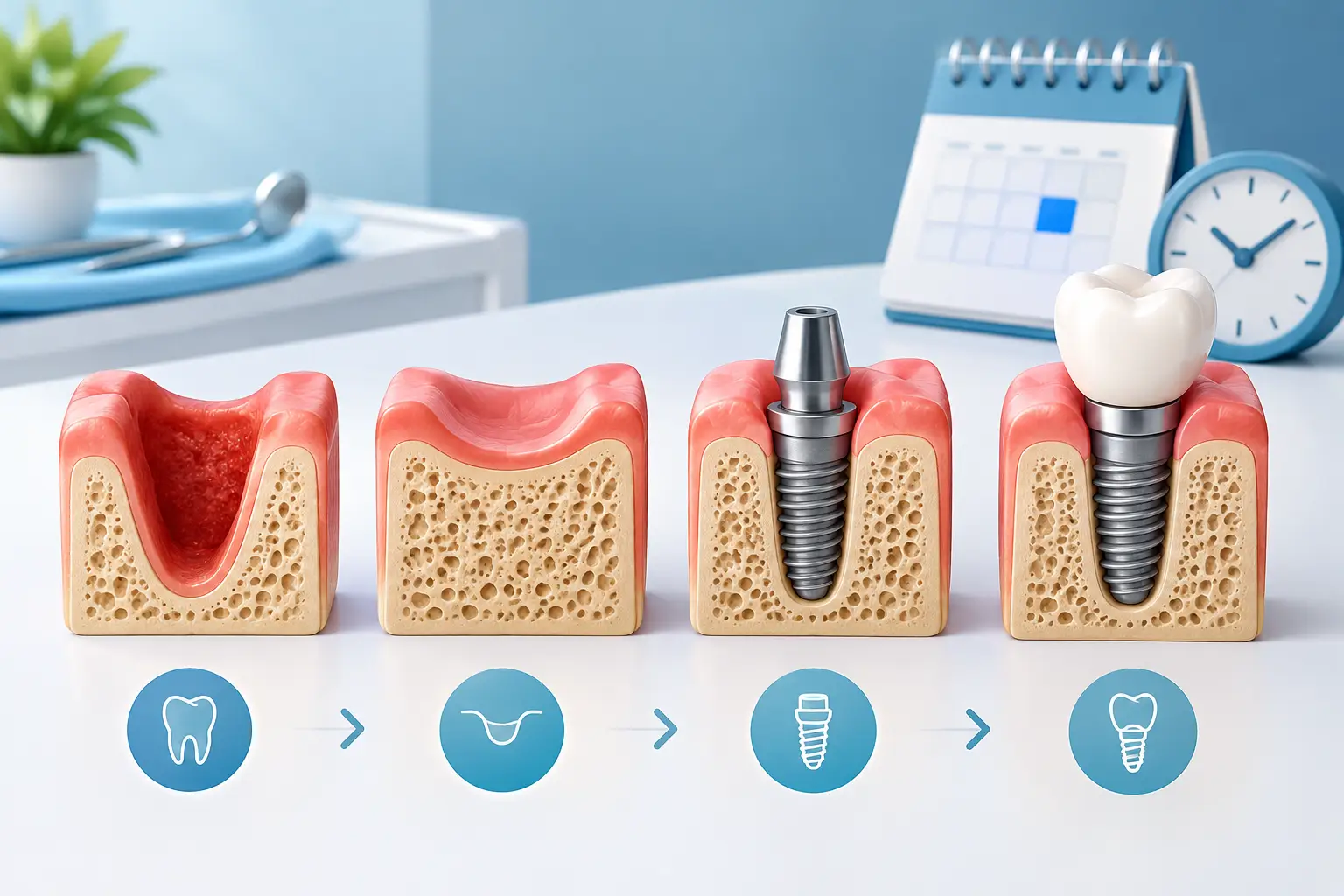
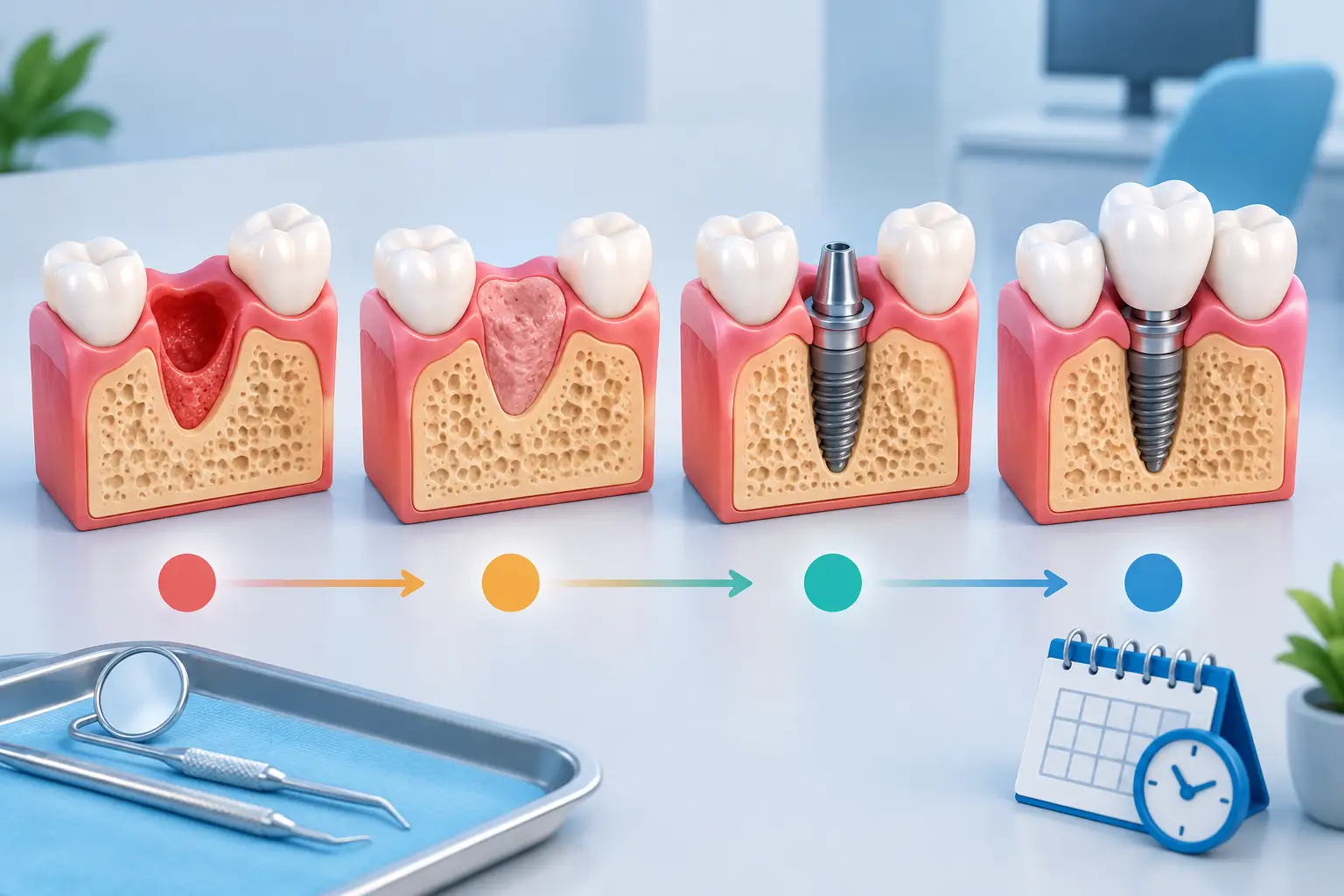
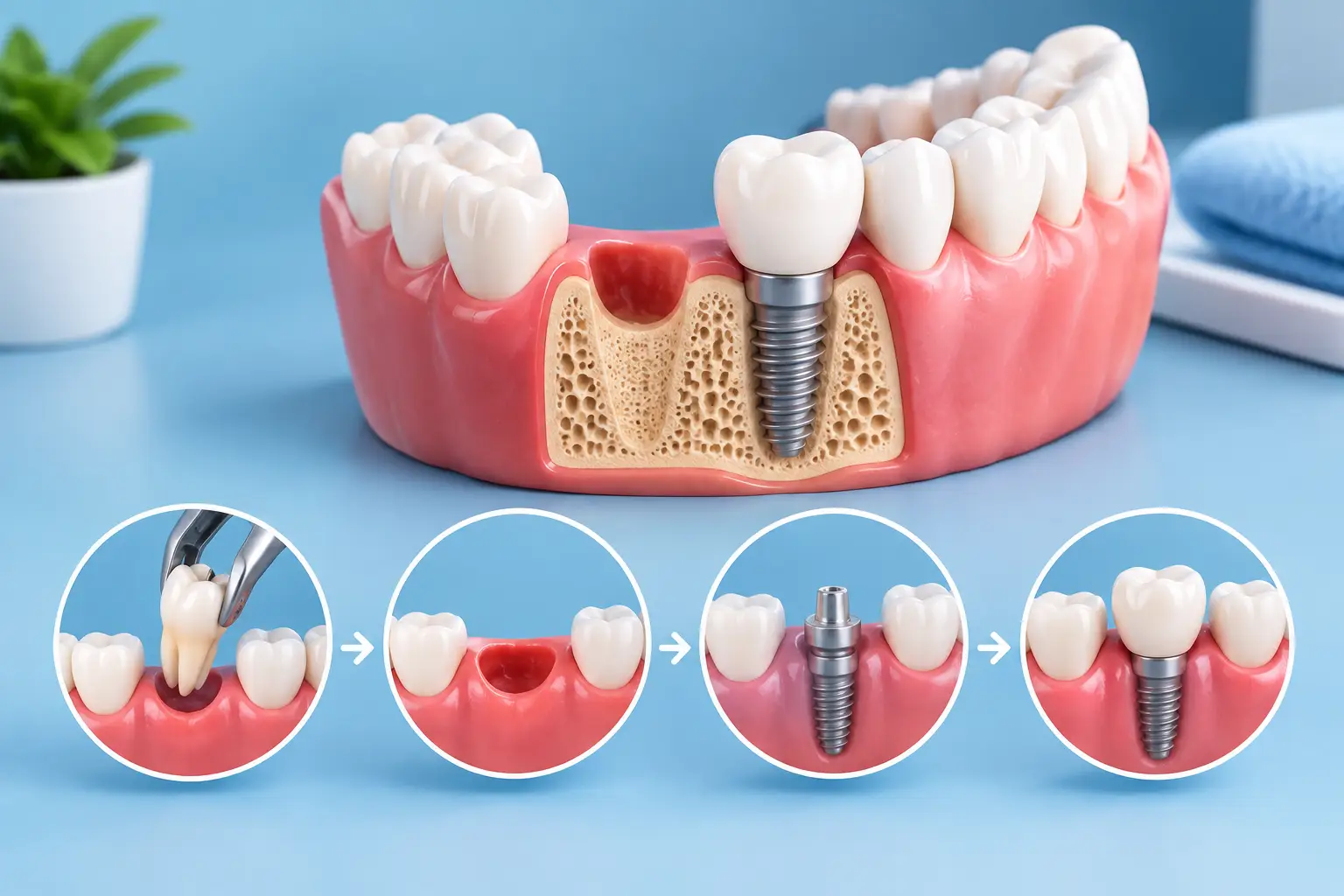
There are several approaches to placing an implant after a tooth extraction. In some situations, an implant can be placed at the same appointment as the extraction. In others, it is better to let the site heal first, sometimes with bone preservation performed at the time the tooth is removed. A more extended healing phase may be recommended when infection, bone loss, or complex anatomy is present.
None of these approaches is automatically better than the others. Immediate placement may reduce the number of surgical appointments and help preserve the shape of the tissues around the tooth. But it only works when the extraction site is clean, stable, and able to hold the implant securely. Trying to place an implant too soon in an unsuitable site can compromise the result.
Your dentist may use digital imaging and a detailed exam to assess the bone around the tooth, the condition of the gums, and the location of nearby structures. For upper back teeth, the sinus may affect planning. For lower back teeth, the location of the nerve is a key consideration. Front teeth require special attention to gum contours, since even small changes can affect the appearance of your smile.
Healing Before an Implant Is Not Wasted Time
Waiting for healing can sound frustrating when you are ready to move on from a painful or damaged tooth. Yet healing before implant placement is often an active part of treatment, not a delay without purpose.
After an extraction, the body naturally remodels the jawbone. The gums also close and mature around the area. When the site has been affected by infection, a fracture, advanced gum disease, or difficult removal, time may allow inflammation to resolve and tissues to become healthier. This can create a stronger foundation for the implant.
During this stage, your care team can also address factors that influence success. Periodontal disease may need treatment, and habits such as smoking or vaping can slow healing and increase implant complications. Conditions such as diabetes do not necessarily rule out implants, but good health management matters. A well-designed implant plan looks at the whole picture, not only the empty space.
If the missing tooth is visible when you smile, you may have temporary replacement options while the area heals. Depending on your bite and the planned restoration, this might include a removable temporary tooth, a bonded temporary, or another carefully chosen solution. The goal is to protect the healing site without putting harmful pressure on it.
When Is a Graft Needed After Extraction?
A bone graft is not required after every extraction. It is recommended when the natural bone is too thin, too damaged, or likely to shrink in a way that could make an implant less stable or less natural-looking later. In many cases, a graft placed at extraction is a preventive step called socket preservation.
A graft may be particularly helpful if the tooth has a large infection, has been missing support for some time, or has significant bone loss from gum disease. It can also be useful when the outer wall of bone is very thin or damaged during the extraction. For a front tooth, preserving bone can be especially important because the bone supports the shape of the gum line.
The purpose is not simply to fill a space. Grafting material supports the body as it builds bone in the area. Over time, your dental team confirms whether the site has developed the quality and volume of bone needed for implant placement.
Sometimes grafting is completed at the extraction appointment. Sometimes it is better to remove the tooth, allow infection or inflammation to settle, and graft later. In other cases, existing bone is healthy and plentiful, so no graft is needed. Imaging and clinical examination provide the clearest answer.
What Happens Before the Implant Is Placed?
A thoughtful implant plan begins with a consultation, not a procedure. Your dental team reviews your health history, medications, dental history, and goals for the final tooth. They also evaluate how you bite together, because an implant crown must function comfortably with the teeth around it.
If the tooth has not yet been removed, this appointment is the best time to discuss the full plan. Knowing that you want an implant can change how the extraction is performed and whether bone preservation is advisable. It also gives your team an opportunity to plan a temporary tooth, if needed, so you are not making decisions under pressure after the extraction.
Once the implant is placed, it needs time to integrate with the jawbone. This process is called osseointegration. The final crown is designed after the implant and surrounding tissues are ready, with careful attention to shade, shape, bite, and cleanability. For some patients, the tooth replacement process includes a temporary restoration before the final crown. For others, the implant stays protected beneath the gums while integration takes place.
Questions Worth Asking Before Your Tooth Is Pulled
You deserve a clear explanation of why a particular timeline is recommended. Before extraction, ask whether immediate implant placement is an option in your case, whether a socket preservation graft may be beneficial, and what temporary tooth options are available.
It is also helpful to ask how your gum health, bone level, and bite affect the plan. If you have had previous dental trauma, gum disease, clenching, sleep apnea, or difficulty healing after surgery, mention it. These details can influence the treatment sequence and the type of restoration recommended.
For patients with more complex needs, coordinated care can be especially reassuring. A prosthodontist focuses on the final function and appearance of the replacement tooth, while an oral surgeon or periodontist may address surgical and gum-health considerations. Working from one shared plan helps ensure the extraction, grafting, implant, and final crown are all moving toward the same outcome.
A Long-Term Result Starts With the Right First Step
Dental implants have an excellent track record when they are placed in healthy tissue, restored thoughtfully, and maintained with consistent home care and professional visits. The fastest path is not always the best path. The best path is the one that protects your bone, supports your gums, and gives your new tooth the stability to serve you for years.
If you are about to have a tooth removed and are planning an implant, bring that goal up before the extraction appointment. A calm, individualized conversation can replace uncertainty with a plan that feels clear, comfortable, and built around your long-term smile.