A single gap can create a surprisingly complex decision: should you replace the tooth first, straighten the surrounding teeth first, or do both as part of one plan? For an adult with a gap deciding between straightening and replacing a tooth, the right answer depends on your bite, gum health, the condition of nearby teeth, and what will give you the most stable result years from now.
Questions about Invisalign with missing teeth or implants are common, especially for adults who want a discreet way to improve their smile without compromising future restorative care. Clear aligners can often be part of the solution. The key is thoughtful sequencing.
Can You Get Invisalign With Missing Teeth or Implants?
Yes. Many adults can use Invisalign when one or more teeth are missing, and many can complete Invisalign treatment with an existing dental implant. However, an implant behaves differently from a natural tooth.
Natural teeth are held in the jaw by a living ligament that allows orthodontic forces to gradually guide them into new positions. A dental implant is fused directly to the jawbone. It does not move with Invisalign or braces. That is a benefit when the implant is in the right place, but it can limit treatment when surrounding teeth need significant movement.
A missing tooth also changes the orthodontic plan. Your dental team may choose to maintain the space for an implant crown, close the space by moving neighboring teeth, or adjust several teeth to create a better-sized, better-positioned space for replacement. Each option can be appropriate in the right situation.
Invisalign Before Implant Placement Is Often the Best Sequence
Invisalign before implant placement is frequently recommended when the teeth near the gap are crowded, tilted, rotated, or drifting into the open space. Moving those teeth first gives the future implant a more predictable foundation.
For example, a tooth that has been missing for years may leave a gap that looks adequate from the front but is too narrow, too wide, or angled beneath the gumline. The teeth beside it may lean inward, and the opposing tooth may have started to move down or up into the empty space. Placing an implant crown before correcting these issues can lock the smile into a compromised arrangement.
With aligners, your dentist can guide the natural teeth into positions that support a properly shaped replacement tooth. The implant can then be placed where it best supports your bite, gum contours, appearance, and long-term cleaning access.
This approach is not only about making the gap look better. Proper spacing can help prevent food trapping, uneven bite forces, excess wear on nearby teeth, and a crown that appears too narrow or overly broad.
What You May Wear During Treatment
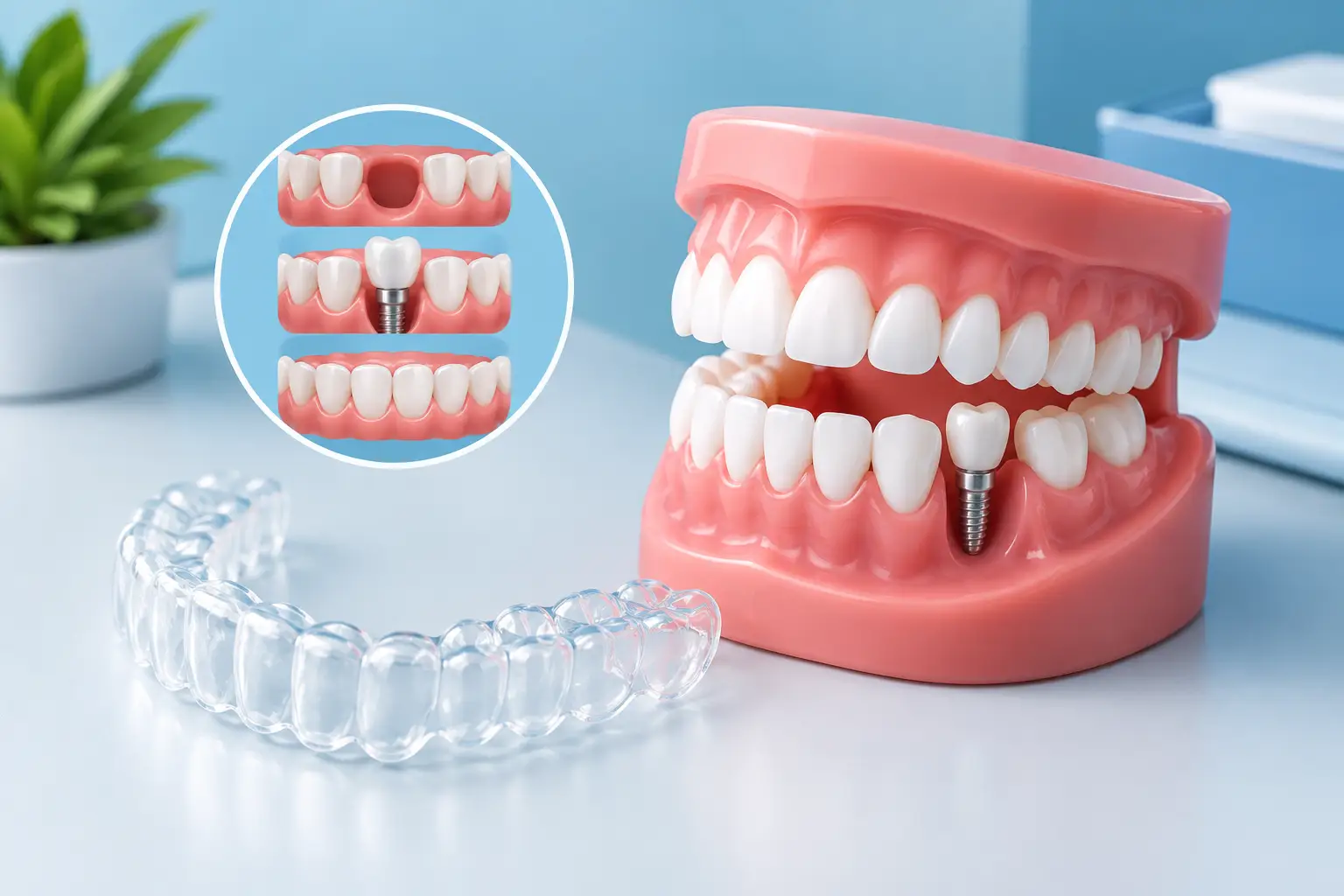
Understandably, many patients do not want to have a visible gap while their teeth are moving. In many cases, an aligner can include a temporary tooth-colored replacement, sometimes called a pontic, in the open space. It is designed to improve appearance while treatment is underway.
A temporary tooth in an aligner is not meant to chew like a natural tooth, so your care team will explain which foods to avoid and how to protect the aligner. For a front-tooth gap especially, it can provide welcome confidence during treatment.
Invisalign and Dental Implants Together: When Existing Implants Are Involved
Invisalign and dental implants together can work well when the implant is healthy, stable, and already in a position that fits the final plan. The aligners move the natural teeth around the implant while the implant remains stationary.
Sometimes, an existing implant crown may need to be modified or replaced after orthodontic treatment. If natural teeth shift into better positions, the old crown shape may no longer blend ideally with the new spacing or bite. This is especially common when an implant was placed years ago and the surrounding teeth have since changed.
An implant can occasionally serve as a stable point while other teeth move, but it must be planned carefully. Your dentist will consider the implant location, the health of the bone and gums, the bite, and whether the implant crown needs to be removed or adjusted during treatment.
The most important fact to remember is simple: Invisalign cannot move an implant. If an implant is poorly positioned for your desired smile or bite, aligners may improve the surrounding teeth but cannot correct the implant itself. That is why planning with the final restoration in mind matters so much.
Should the Gap Be Closed or Replaced?
Not every missing tooth needs an implant, and not every gap should be closed with orthodontics. The decision depends heavily on which tooth is missing and how your teeth fit together.
For a missing front tooth, maintaining or refining the space for an implant-supported crown is often the most natural-looking option. Closing that space could create proportion issues, shift the center of the smile, or leave a smaller tooth in a position where a larger one should be.
For certain missing back teeth, closing space may be possible if the bite and tooth positions allow it. In other cases, keeping the space and placing an implant is better for chewing support and for preventing surrounding teeth from drifting. If several teeth are missing, implants, bridges, or implant-supported restorations may be considered alongside orthodontic treatment.
There is no one-size-fits-all answer. A plan that looks efficient on a model must also protect your gums, support comfortable chewing, and remain practical to clean.
What a Coordinated Plan Should Evaluate
Before deciding whether to straighten, replace, or combine treatments, your dental team should look beyond the visible gap. Digital imaging and a detailed examination help evaluate the amount and quality of bone, gum condition, tooth roots, bite relationship, jaw function, and overall oral health.
They should also discuss your priorities. Some patients want to improve one visible space as efficiently as possible. Others are ready to address crowding, worn teeth, bite changes, or several missing teeth in one coordinated plan. Both goals are valid, but they can lead to different recommendations.
At Seattle Oral Care, complex cases can be planned with restorative, periodontal, surgical, and orthodontic perspectives in mind. That coordination is valuable because an implant is not simply a tooth replacement. Its final position should be considered alongside the way your natural teeth will move, meet, and function.
Timing, Healing, and Long-Term Maintenance
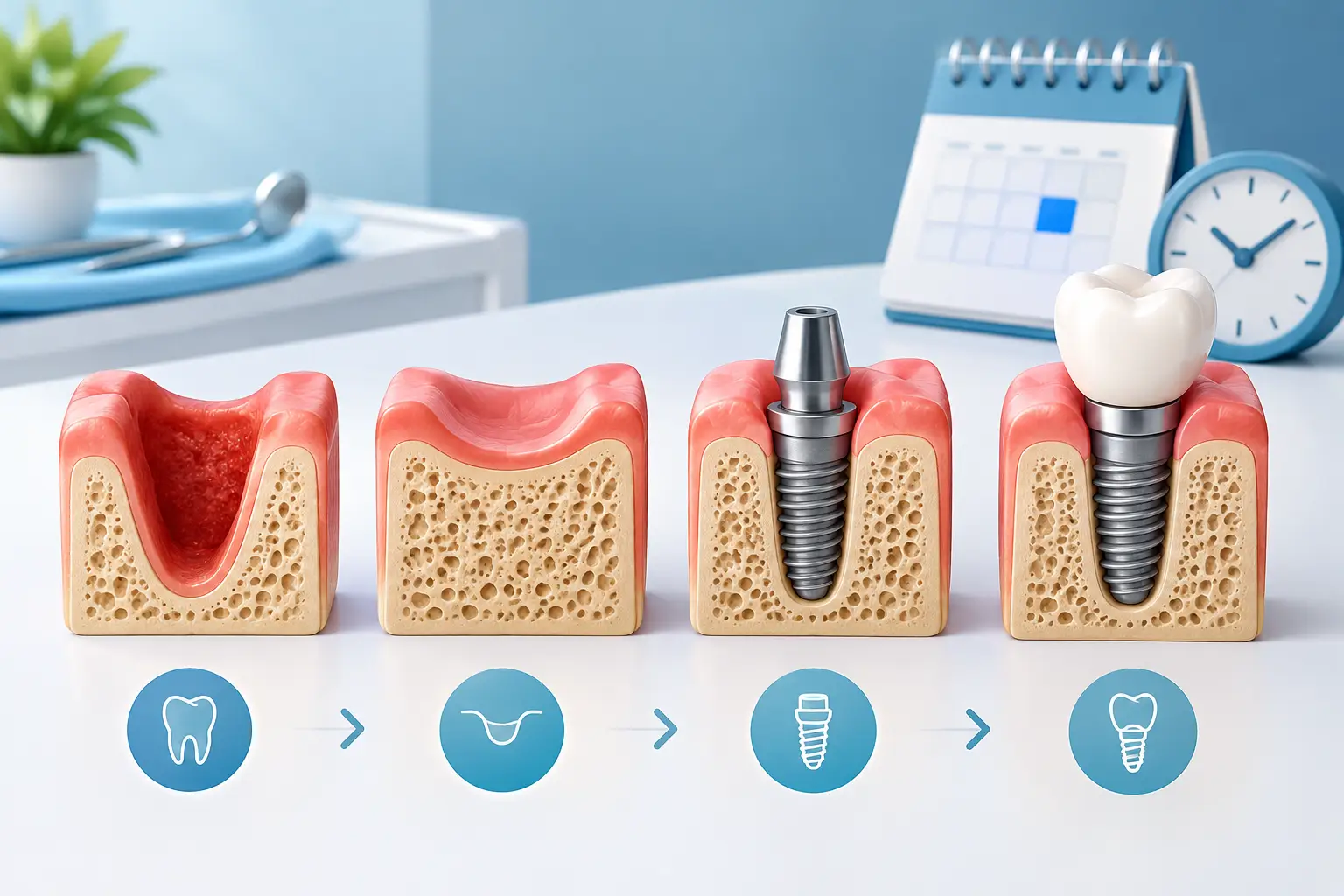
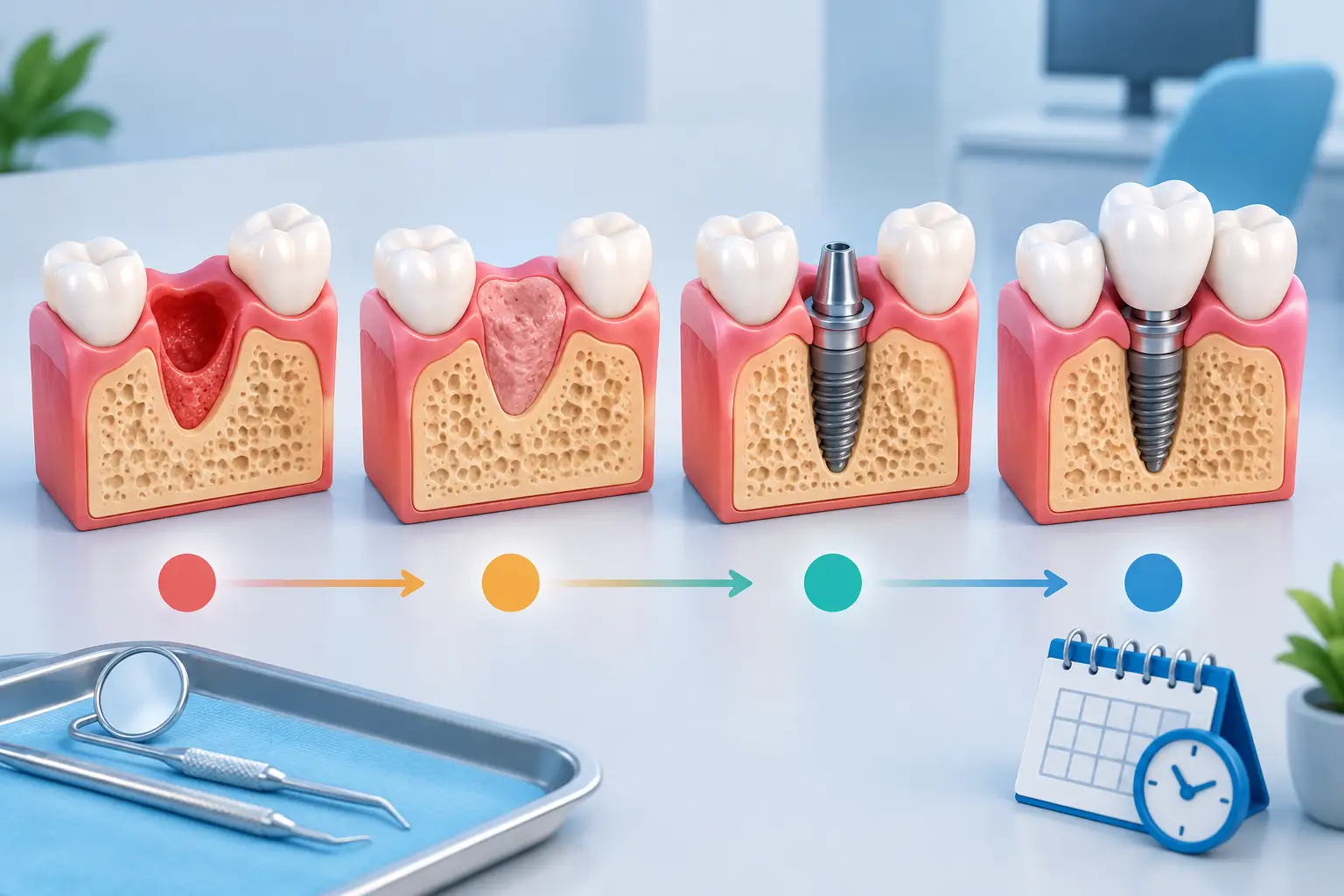
Treatment timing varies. Invisalign may take several months to more than a year, depending on how much movement is needed. Implant treatment also has stages: planning, implant placement when appropriate, healing and integration with the bone, then the final crown. Some cases allow parts of these processes to overlap, while others benefit from a more deliberate sequence.
Healthy gums are essential throughout. Orthodontic treatment and dental implants both depend on consistent home care and professional maintenance. Clear aligners must be removed for eating and cleaned regularly. After treatment, a retainer helps hold natural teeth in their new positions, while routine exams protect the implant crown and surrounding tissues.
If you have active gum disease, untreated decay, clenching, or a poorly balanced bite, those concerns may need attention before or during treatment. Addressing them early can protect the investment you make in both orthodontics and implant care.
A Gap Deserves a Plan, Not a Guess
It is tempting to choose the quickest-looking option when a missing tooth affects your smile. Yet replacing a tooth before the space and bite are ready can create avoidable compromises. Waiting too long can allow more shifting, bone changes, and difficulty cleaning around the gap.
A thoughtful consultation can show you whether Invisalign should come first, whether an existing implant can remain part of the plan, and whether closing or restoring the space best serves your long-term health. You deserve an answer that accounts for the smile you see today and the comfortable, lasting function you need tomorrow.