A missing back tooth can feel easy to postpone. It may not show when you smile, and you may still be able to chew on the other side. But replacing a back tooth with an implant or another restoration is often about protecting what remains, not simply filling an empty space. A molar dental implant can restore dependable chewing and help preserve the bone and neighboring teeth over time.
The right choice is personal. It depends on the condition of the teeth beside the space, the health and volume of your jawbone, your bite, your medical history, and what feels manageable for you. For a patient who lost a back tooth and is weighing an implant against a bridge, a thorough examination should come before a quick answer.
Why a Missing Molar Deserves Attention
Molars do demanding work. Their broad chewing surfaces absorb much of the force created when you eat, particularly with foods such as vegetables, meats, nuts, and bread. When one is lost, the teeth around it and the opposing tooth can gradually shift or change position. Your remaining teeth may also take on more force than they were designed to handle.
The jawbone in the area of a missing tooth can slowly resorb because it no longer receives stimulation from a tooth root. This does not mean every missing molar creates an immediate emergency. Some people function comfortably for years with a space, especially if it is far back in the mouth. Still, the longer a space is left untreated, the more likely the discussion may include changes in bite, tooth movement, or bone loss.
A consultation gives your dentist a chance to look beyond the gap itself. Digital imaging and an exam can reveal whether the surrounding teeth are healthy, whether the opposing tooth has shifted, and whether the available bone can support an implant.
Molar Dental Implant: What It Replaces
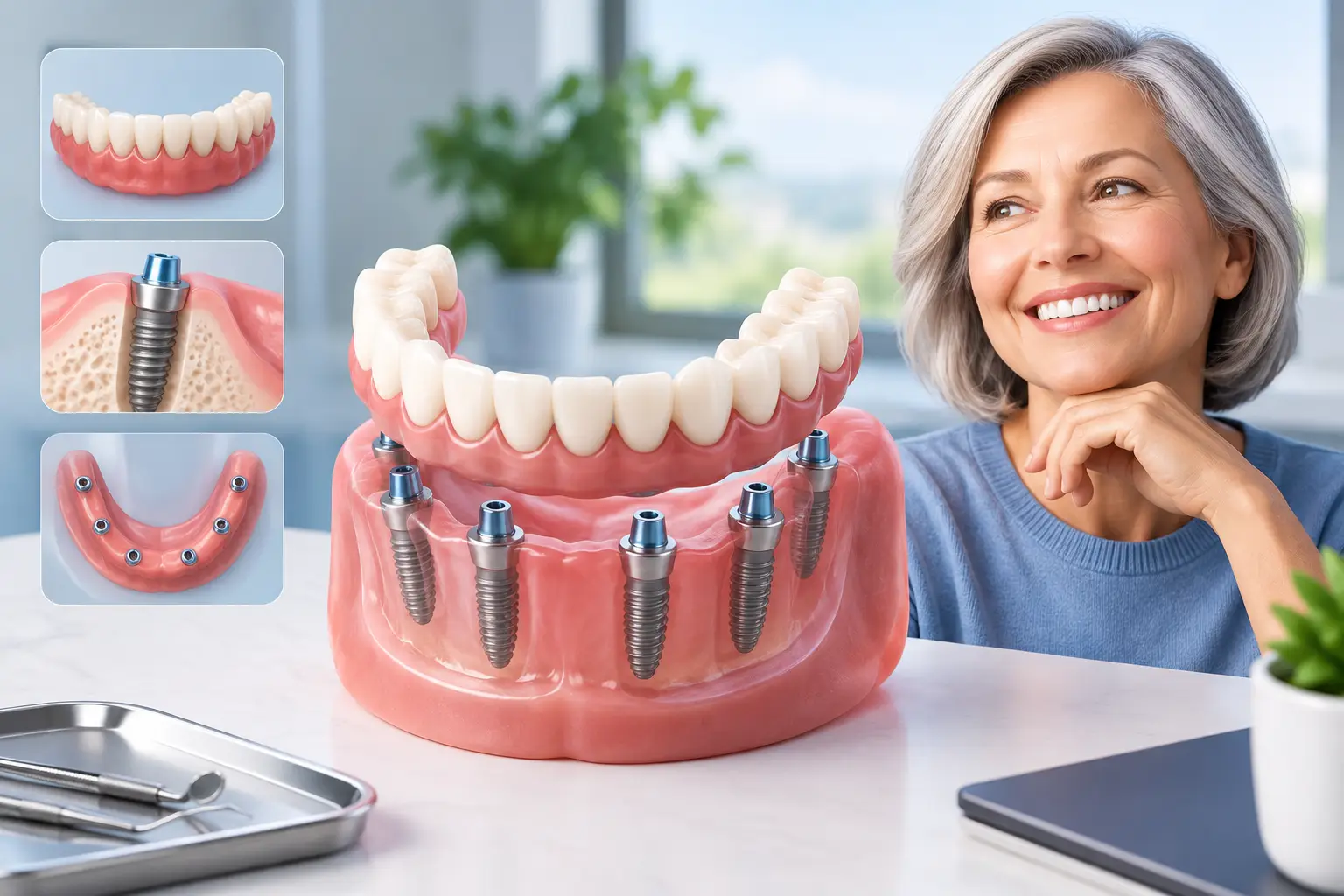
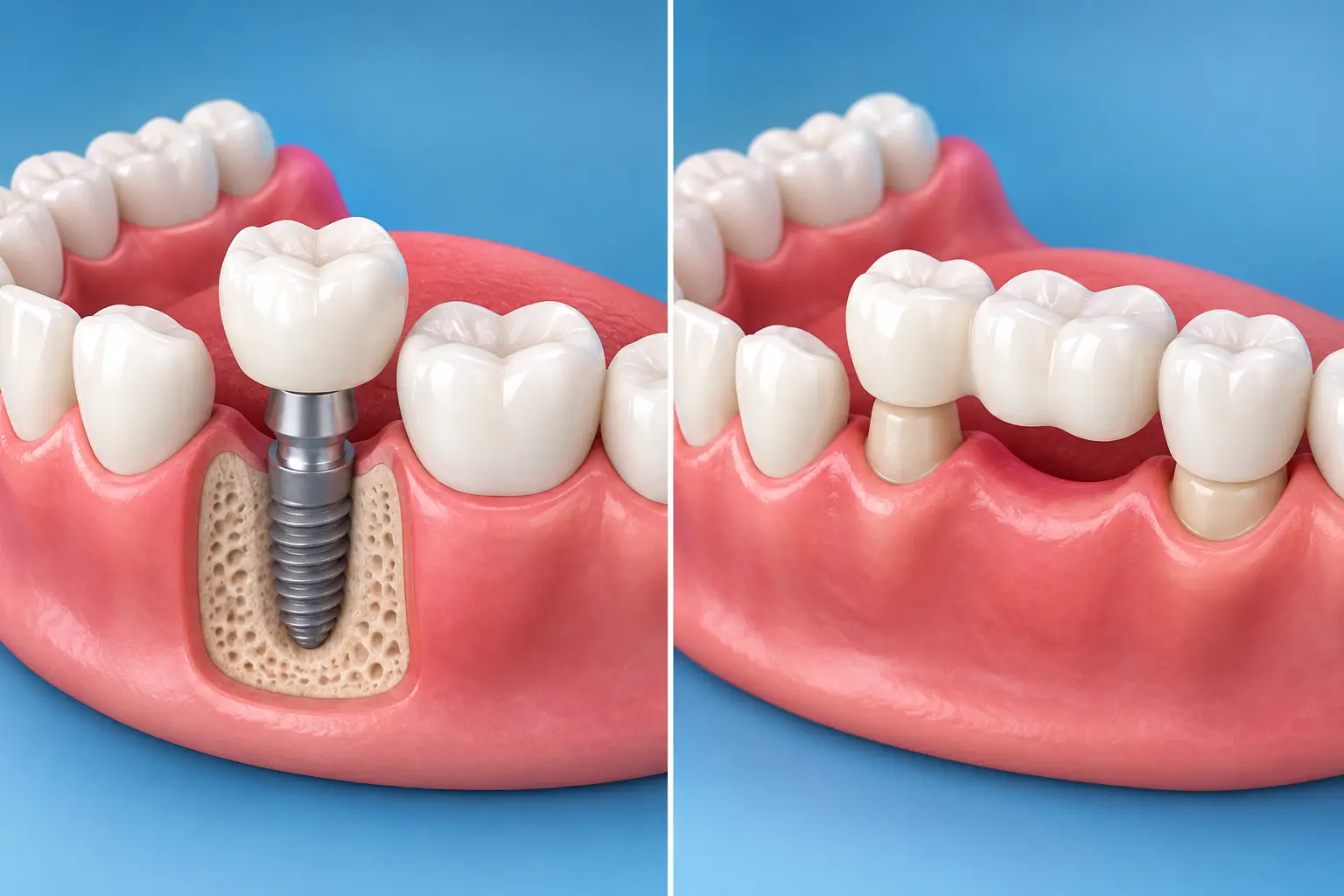
A single-tooth implant has three main parts: a small titanium implant placed in the jawbone, a connector called an abutment, and a custom crown that becomes the visible chewing surface. The implant acts as a replacement tooth root. Unlike a bridge, it does not rely on the teeth next to the space for support.
This independence is a meaningful advantage when neighboring teeth are healthy and intact. Placing a traditional bridge usually requires shaping those adjacent teeth to hold crowns. A molar implant allows those teeth to remain untouched while replacing the missing tooth on its own.
Implants can also support the jawbone through normal chewing forces. They are designed for long-term function, but they are not maintenance-free. Daily brushing, cleaning between teeth, regular dental visits, and attention to gum health are essential. Like natural teeth, implant restorations can develop problems if plaque accumulates or if grinding places excessive force on them.
Implant or Bridge: The Trade-Offs That Matter
A dental bridge replaces a missing tooth by connecting a replacement tooth to crowns on one or both neighboring teeth. It is a well-established option and may be appropriate when the teeth beside the gap already need crowns because of large fillings, fractures, or extensive decay.
A bridge generally does not require surgery, and treatment may be completed sooner than an implant in some cases. For someone who cannot have implant surgery because of certain health concerns, has insufficient bone and does not want grafting, or wants to avoid a surgical procedure, a bridge may be a practical choice.
The trade-off is that a bridge depends on the supporting teeth. Those teeth must be prepared, and cleaning under the replacement tooth requires a specific technique. If one supporting tooth develops a problem later, the bridge may need repair or replacement. A bridge also does not stimulate the bone beneath the missing tooth.
An implant may involve a longer timeline and a higher initial investment, especially if bone grafting is needed. Yet it can be the more conservative option for adjacent healthy teeth and may offer excellent long-term function when properly planned and maintained.
There is no universal winner. If the neighboring teeth already need full-coverage crowns, a bridge can make clinical and financial sense. If they are strong and untouched, an implant often deserves serious consideration.
Understanding Molar Implant Healing Time
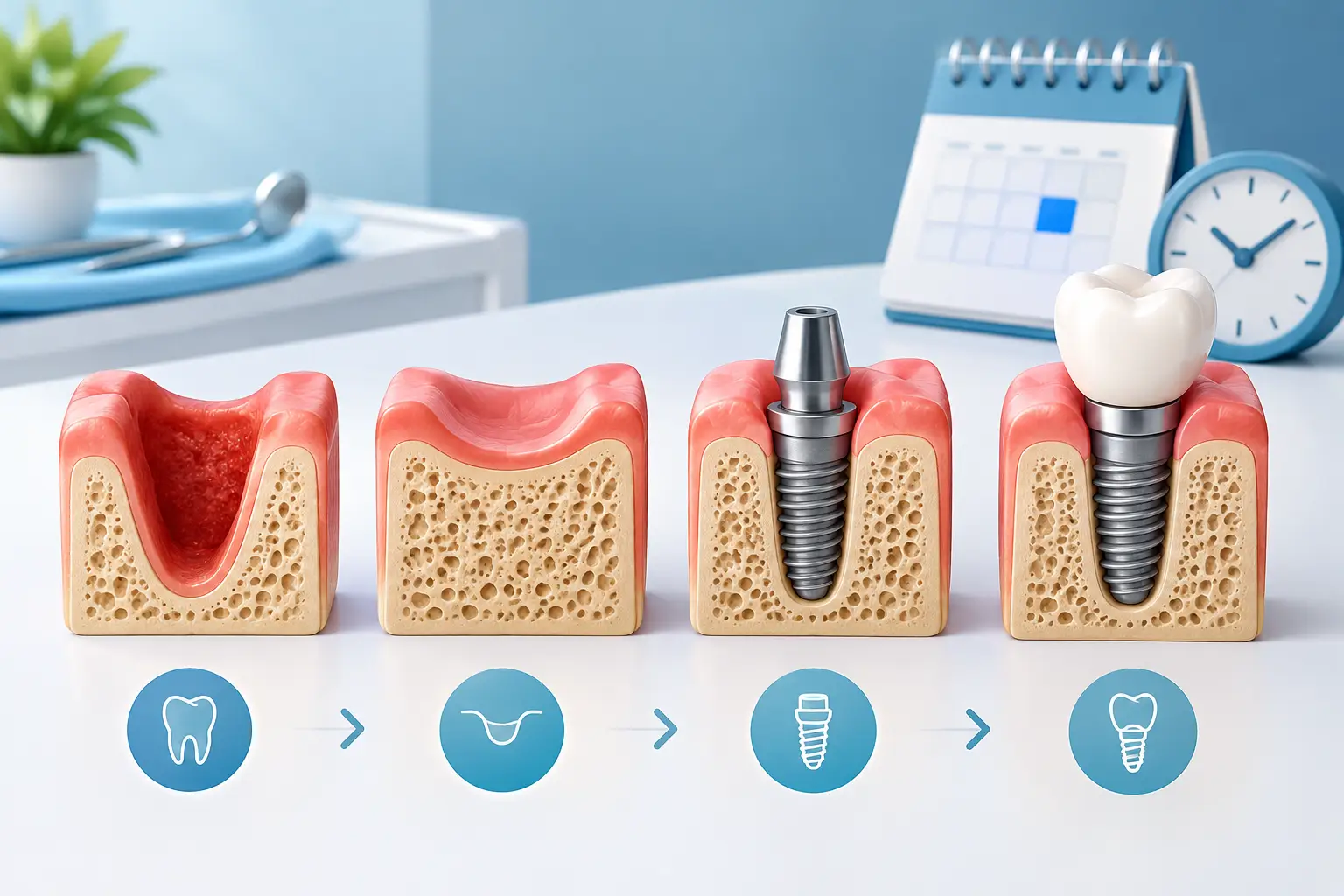
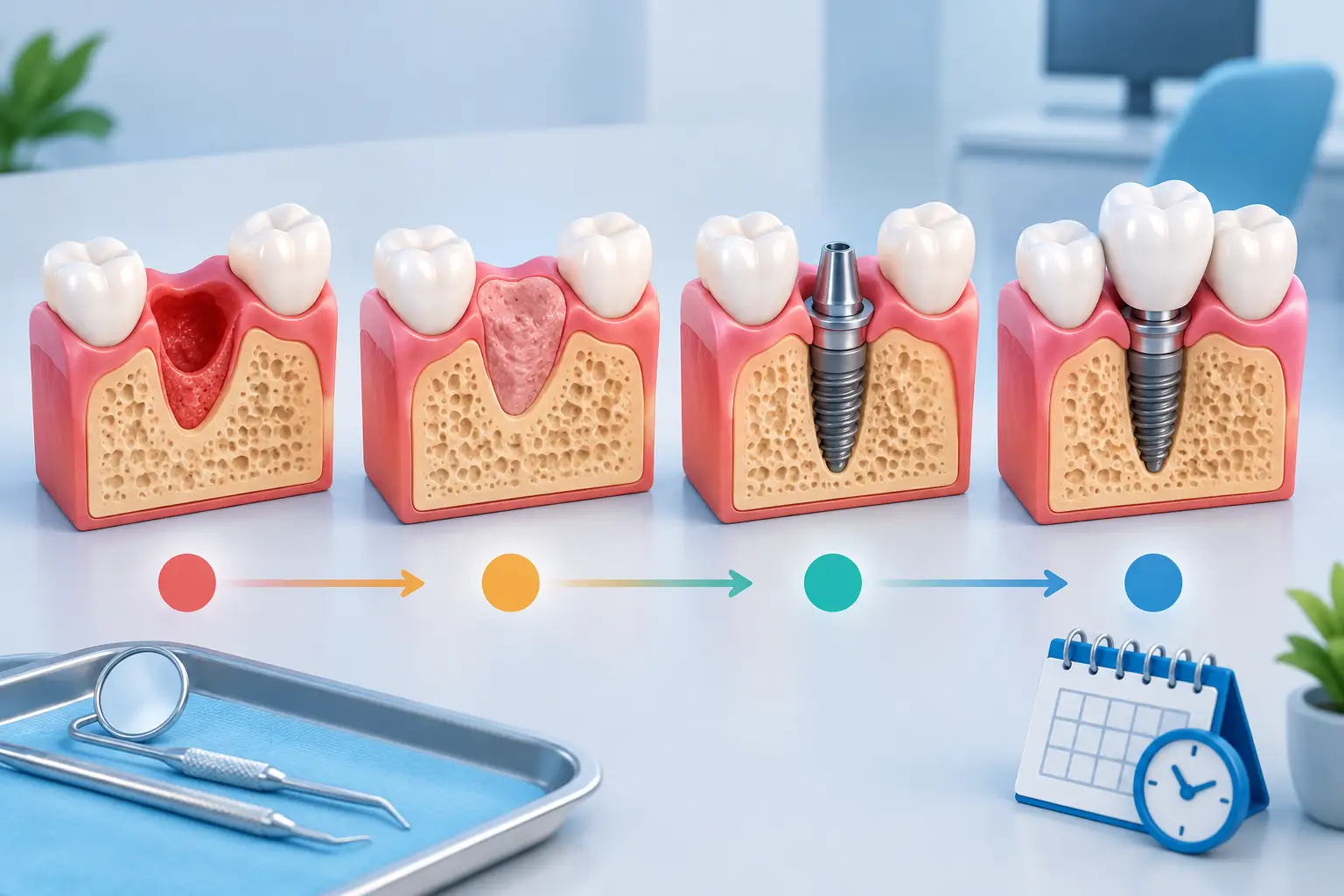
Molar implant healing time is not the same for everyone. After an extraction, some patients may be candidates for implant placement at the same visit. Others need time for the socket to heal or require a bone graft first. The best sequence depends on infection, bone quality, gum condition, and the stability needed for a successful implant.
Once an implant is placed, the bone needs time to integrate with its surface. This process, called osseointegration, commonly takes several months. During that period, your dentist may protect the site with a healing cap or a temporary tooth, depending on its location and your bite. A final crown is placed after the implant has demonstrated stable healing.
For many patients, the full process from extraction to final crown can range from several months to close to a year when grafting or staged healing is involved. That can sound discouraging when you want the space restored now, but healing time is part of creating a stable foundation. Rushing the process can compromise the result.
Comfort after surgery is usually manageable with the instructions and medications recommended by your care team. Tenderness, mild swelling, and temporary changes in chewing are common early on. Contact your dental office promptly if pain worsens rather than improves, swelling is significant, or you have concerns about bleeding, fever, or the healing site.
Other Missing Molar Options
Implants and traditional bridges are the two most common fixed solutions, but they are not the only missing molar options. In selected cases, a removable partial denture can replace one or more teeth at a lower initial cost. It can be useful when several teeth are missing or when a fixed restoration is not currently appropriate. It is removable, however, and may feel less natural or stable than a fixed option.
Some patients choose to leave the space open. This can be reasonable when the missing tooth is very far back, the bite is stable, and the risks of shifting or overloading other teeth are low. It should be a monitored decision, not an assumption that the space does not matter.
Occasionally, orthodontic treatment can help redistribute spaces or improve the bite before a final restoration. This is more common in complex cases, where the goal is to create a healthier, more stable position for teeth and restorations.
What Makes Someone a Good Implant Candidate?
Good implant candidacy is not defined by age alone. Many adults in their 60s, 70s, and beyond can be excellent candidates. More important factors include healthy gums, adequate bone or the ability to rebuild bone, controlled medical conditions, and a commitment to home care and professional maintenance.
Smoking and uncontrolled diabetes can raise the risk of healing complications. Clenching or grinding may require a night guard to protect an implant crown and the surrounding teeth. Periodontal disease needs to be treated and controlled before implant treatment begins. None of these factors automatically rules out an implant, but they should shape the treatment plan.
At Seattle Oral Care, implant decisions can be coordinated among a prosthodontist, oral surgeon, periodontist, and general dentist when a case calls for that level of planning. For nervous patients, knowing who is managing each step can make a complex decision feel much more manageable.
Start With the Tooth Next Door
The most useful question is not simply, “Can I get an implant?” It is, “What will best protect my teeth, bite, and comfort over the years ahead?” A careful evaluation of the missing space and the teeth around it can make that answer clearer.
If you are deciding between an implant and a bridge, bring your priorities to the conversation: timing, budget, anxiety about surgery, long-term maintenance, and how much you value preserving neighboring teeth. You deserve a plan that explains the trade-offs plainly and gives you confidence in the next step.