A missing tooth can affect far more than a photo or a favorite meal. It can change how you chew, how clearly you speak, and how confident you feel. If you are wondering, “how soon after tooth extraction can you get an implant?” the answer is often sooner than patients expect, but the right timing depends on the health of the extraction site, the amount of available bone, and your overall treatment goals.
For a patient about to have a tooth pulled and planning the implant, the most helpful step is to discuss replacement before the extraction whenever possible. Planning ahead allows your dental team to protect the bone and gum tissue that will support your future implant.
Implant After Tooth Removal Timeline: Your Main Options
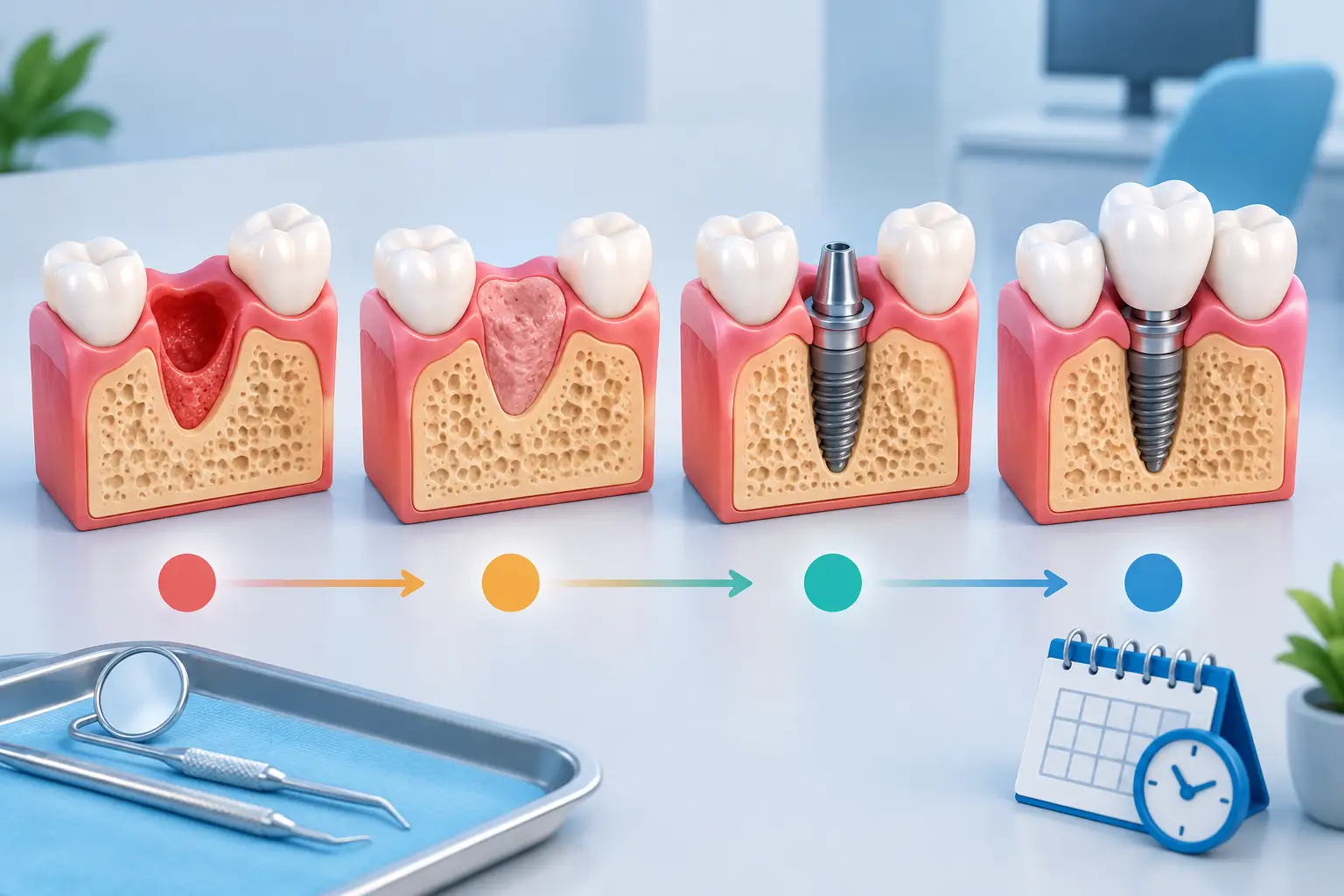
There is no single implant after tooth removal timeline that fits every patient. Some people can receive an implant the same day a tooth is removed. Others need a few months of healing or grafting first. A careful exam, digital imaging, and a review of your medical and dental history help determine which path offers the most predictable, lasting result.
Immediate implant placement: the same day
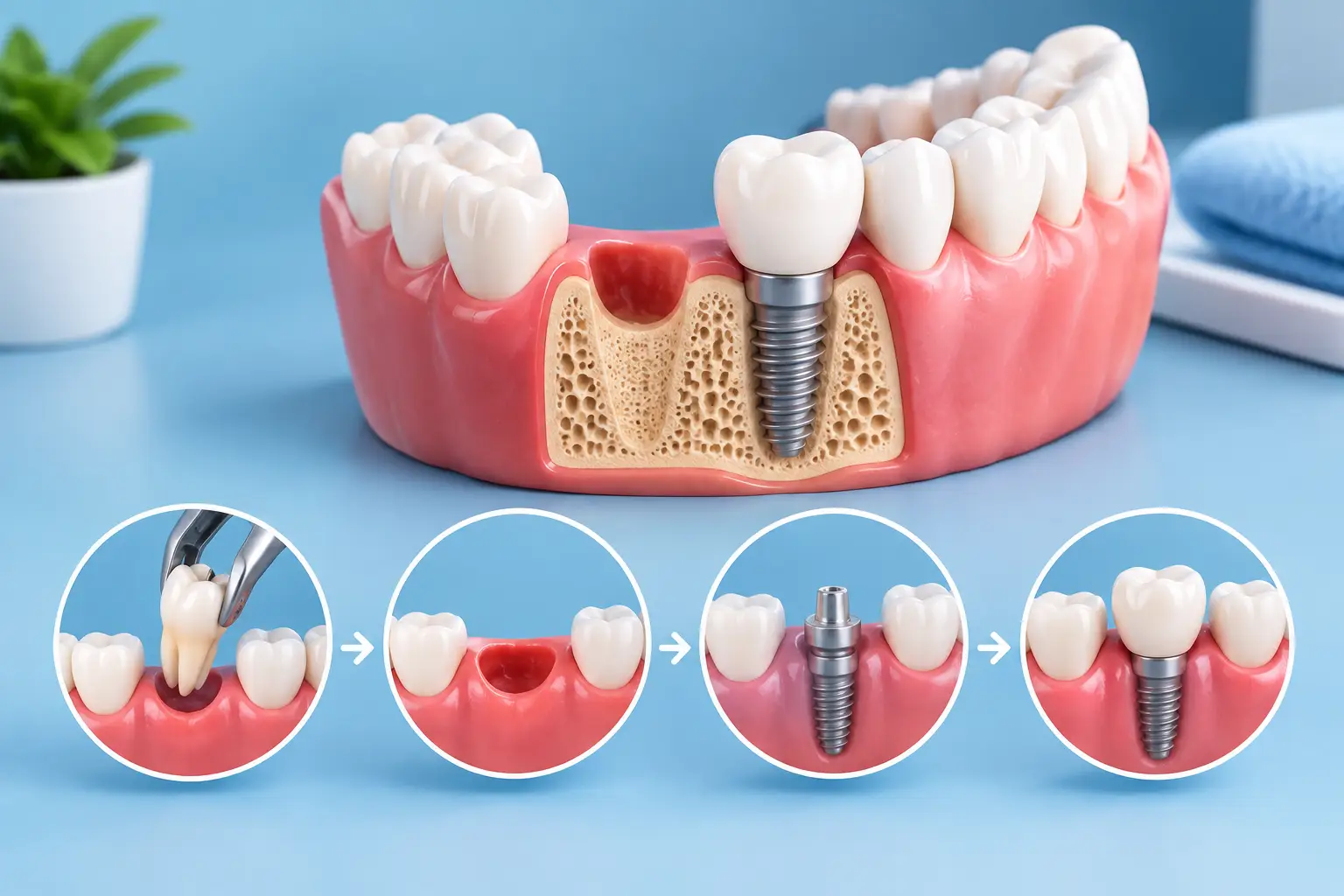
In select cases, an implant can be placed immediately after the tooth is extracted. This approach is most often considered when the surrounding bone is strong, the gums are healthy, and there is no active infection that would compromise healing.
Immediate placement can reduce the number of surgical visits and may help preserve the natural shape of the gum tissue. It does not always mean you will leave with a permanent tooth that day. Depending on bite forces and implant stability, you may wear a temporary restoration while the implant integrates with the jawbone.
This option is not automatically the best option simply because it is faster. If infection, bone loss, or a difficult extraction is present, asking the site to heal first may lead to a more secure and attractive result.
Early placement: about 6 to 12 weeks after extraction
Early implant placement is common when the extraction site needs time for the soft tissue to heal or for a minor graft to begin maturing. By this point, the gums have typically closed and inflammation has settled, allowing the clinician to see the area more clearly.
For many patients, this timing balances efficient treatment with thoughtful healing. It can be especially helpful after an infected tooth is removed, provided the infection has been fully treated and the site is healing normally.
Delayed placement: about 3 to 6 months after extraction
A delayed implant is often recommended when more substantial healing is needed. This may apply when a tooth has been missing for some time, when the extraction required a bone graft, or when periodontal disease has damaged the supporting structures around the tooth.
Healing before implant placement gives grafted bone time to become strong enough to support an implant. While waiting can feel discouraging, it is sometimes the step that prevents future complications and supports a more durable restoration.
Longer healing periods: 6 months or more
Some cases require more time, particularly after larger bone grafts, sinus augmentation in the upper back jaw, or treatment for significant infection. Certain medical conditions and habits, including uncontrolled diabetes and tobacco use, can also affect healing and may change the recommended schedule.
The goal is not to rush toward the implant date. The goal is to place an implant when it has the best possible foundation.
What Healing Before Implant Placement Actually Involves
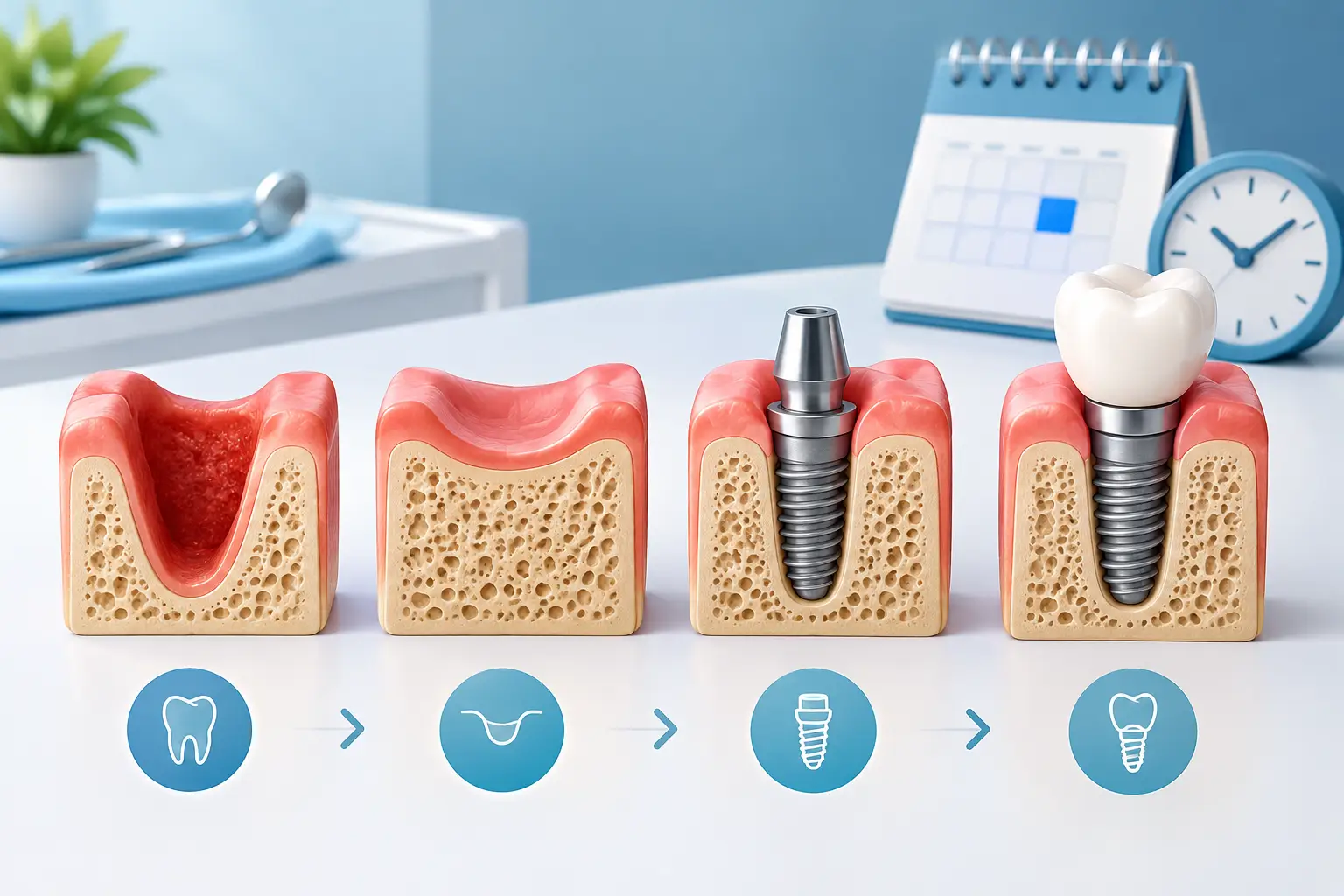
After an extraction, the body begins repairing the socket immediately. The blood clot that forms is the first stage of healing, followed by new gum tissue and gradual bone remodeling. Although the gums may look healed within a few weeks, the bone underneath continues changing for months.
This matters because the jawbone naturally loses some width and height after a tooth is removed. The greatest changes often occur in the first several months. An implant needs enough healthy bone around it to remain stable and support a crown that looks and functions like a natural tooth.
During the healing period, your care team will monitor the site, review imaging when needed, and make sure there are no signs of persistent infection or delayed healing. You may have a temporary tooth replacement during this time, especially if the missing tooth is visible when you smile.
When Is a Graft Needed After Extraction?
A bone graft is not needed after every extraction, but it is frequently recommended when a future implant is planned. The purpose is to preserve or rebuild the jawbone, not to add an unnecessary procedure.
A graft may be recommended if:
- The tooth has severe gum disease or bone loss around its roots.
- An infection, abscess, or fracture has damaged the bone surrounding the tooth.
- The tooth has been missing long enough for the ridge to shrink.
- The extraction is expected to leave a thin or damaged socket wall.
- The implant will be placed in an area where appearance is especially important, such as a front tooth.
Often, a socket preservation graft can be placed at the same visit as the extraction. This involves placing grafting material in the socket and protecting it with a membrane or sutures when appropriate. The graft supports the body’s own bone-building process and can reduce the amount of bone loss that naturally follows extraction.
Not every graft is the same. A small socket preservation graft may need only a few months of healing, while a larger graft to rebuild a deficient ridge may need longer. Your dental team should explain what type of graft is being recommended, why it is needed, and how it changes your implant schedule.
Factors That Shape Your Personal Timeline
Your extraction-to-implant plan should be based on more than a calendar. The condition of the tooth and its surrounding tissues matters, but so do your bite, esthetic goals, medical history, and preferences.
For example, an upper front tooth often demands careful attention to gum contours and bone preservation because small changes can show in the smile. A back tooth may have different challenges, such as limited bone below the sinus in the upper jaw or close proximity to a nerve in the lower jaw.
Your general health also plays a role. Well-managed chronic conditions do not necessarily prevent implant treatment, but they should be part of the planning conversation. Nicotine use can slow healing and increase the risk of implant complications. Grinding or clenching may require a protective night guard after the final crown is placed.
A coordinated team can be particularly valuable for complex cases. At Seattle Oral Care, restorative and surgical planning can be coordinated among prosthodontic, periodontal, oral surgery, and general dentistry providers, so each phase is designed with the final result in mind.
Can You Go Without a Tooth While You Heal?
Yes, but you do not always have to. The best temporary solution depends on the location of the tooth, the condition of your neighboring teeth, and whether pressure on the extraction site needs to be avoided.
A temporary retainer with a replacement tooth, a bonded temporary tooth, or a temporary partial denture may be considered. In some cases, particularly for a visible front tooth, a carefully planned temporary crown can be used with an immediate implant. Your dental team will make sure the temporary option protects healing tissues rather than placing too much force on them.
Questions to Ask Before Your Extraction
When you know an extraction may be necessary, ask whether an implant can be planned before the tooth is removed. You may also want to ask if a graft is likely, whether you are a candidate for same-day implant placement, how you will replace the tooth during healing, and what your expected treatment sequence will be.
A clear plan can take much of the uncertainty out of treatment. You deserve to know why a particular timeline is recommended, what each stage is designed to accomplish, and how your team will help you stay comfortable along the way.
The right time for an implant is the time when your jaw, gums, and overall health can support it confidently. Taking a little extra time to protect the foundation may be what helps your new tooth feel natural, function comfortably, and serve you well for years.