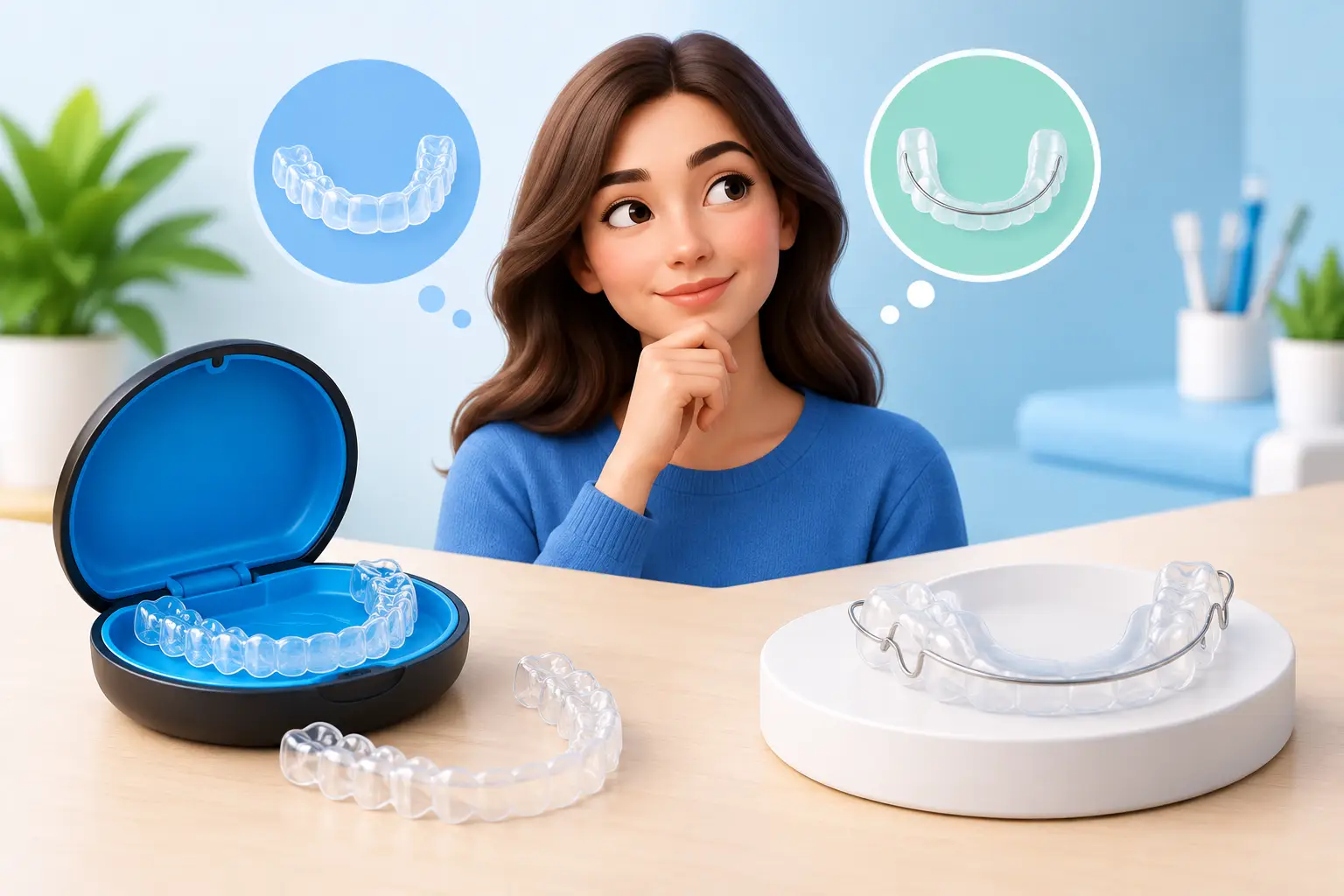
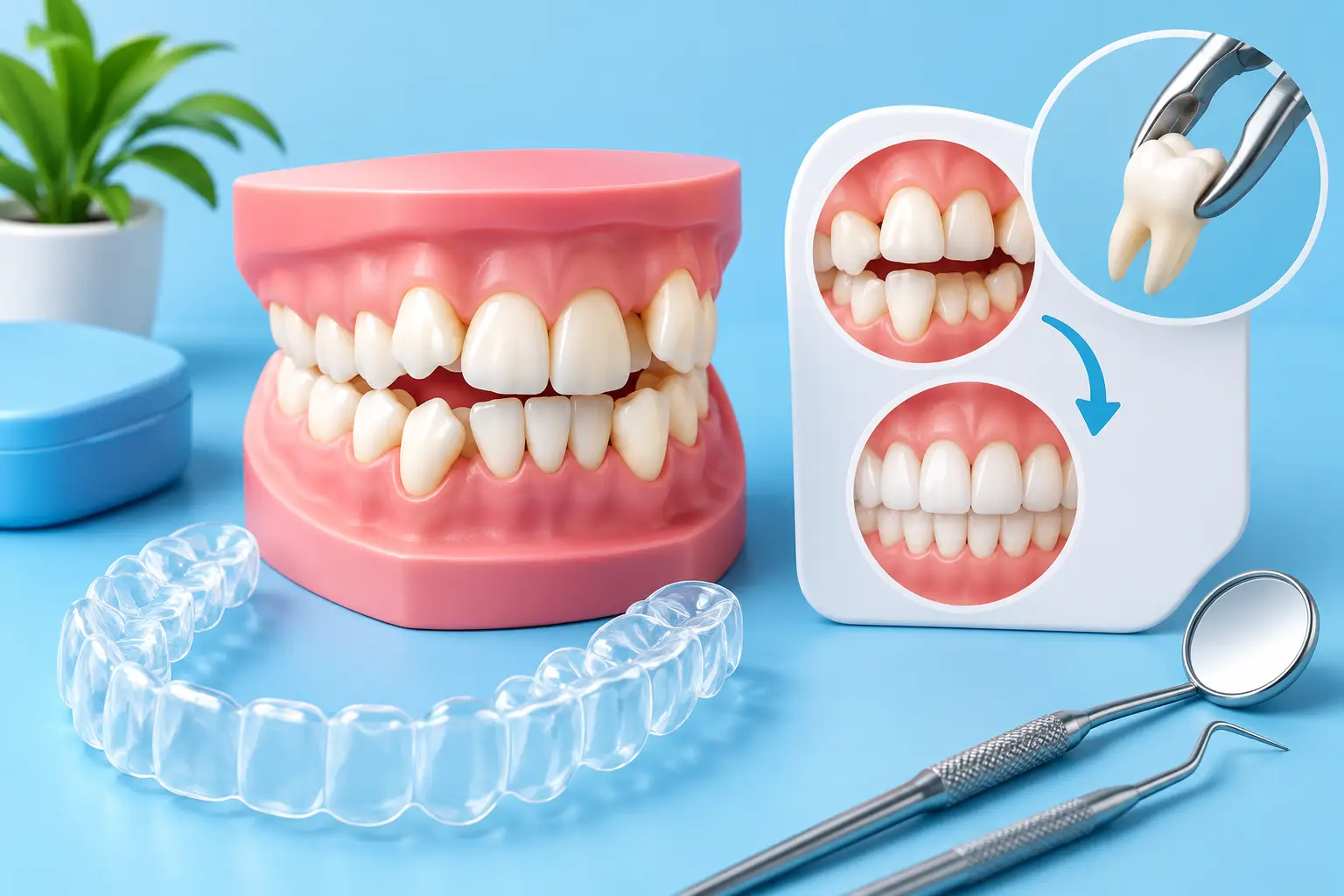
For an adult with crowding who is afraid they will need teeth pulled to straighten their smile, the question can feel bigger than orthodontics. Does Invisalign require tooth extraction? Usually, no. Many Invisalign crowded teeth cases can be treated without removing teeth. But when space is limited, the right answer depends on your bite, facial profile, gum and bone support, and the amount of crowding present.
The goal is not simply to make every tooth look straight. It is to create a healthy, stable bite that fits your smile and supports your long-term oral health. Sometimes Invisalign extractions are the best clinical choice. Often, there are other ways to create the needed room.
Does Invisalign Require Tooth Extraction?
Invisalign does not automatically require tooth extraction. Clear aligners move teeth gradually through a carefully planned series of trays, and treatment can create space in several ways without removing a tooth.
For mild to moderate crowding, your dentist may be able to gain enough room by gently broadening the dental arch, moving certain teeth backward, or making very small adjustments between selected teeth. These choices are not shortcuts. They are planned movements based on the limits of your teeth, gums, jawbone, and bite.
Extraction may be recommended when crowding is severe, when teeth are positioned far outside the supporting bone, or when attempting to keep every tooth would compromise the appearance or stability of the final result. The decision should come after a complete exam, digital scans, photographs, and X-rays, not from a quick look at crooked front teeth.
How Invisalign Creates Space for Crowded Teeth
A treatment plan may use one approach or a combination of approaches. What works well for one smile may not be appropriate for another.
Small changes between teeth
Interproximal reduction, sometimes called IPR, is one of the most common ways to make space for Invisalign crowded teeth. Your dentist carefully polishes a fraction of a millimeter of enamel from the sides of specific teeth. It is conservative, controlled, and usually does not feel like having a tooth drilled or filled.
The amount removed is very small. In the right patient, IPR can relieve minor crowding and improve how teeth fit together without changing the overall fullness of the smile.
Broadening the arch within healthy limits
Some patients have teeth that lean inward or an arch that can be widened modestly. Aligners can guide teeth into a broader, more balanced arrangement. This is not the same as expanding the jaw itself, which is more limited in adults than in children.
The key phrase is “within healthy limits.” Moving teeth too far outward can place stress on the gums and supporting bone. A thoughtful plan respects those boundaries rather than promising expansion for every crowded smile.
Moving back teeth to create room
In some cases, Invisalign can shift molars slightly backward, particularly when there is room behind them and the bite supports that movement. This is called distalization. It can create space toward the front of the mouth without extracting premolars.
Whether it is possible depends on your jaw relationship, wisdom tooth area, bite pattern, and the amount of movement needed. It is a useful option for some adults, but not a universal substitute for extraction.
Improving tooth position and bite relationships
Crowding can look worse when teeth have rotated, tipped forward, or drifted after previous orthodontic treatment. Straightening and uprightening those teeth may recover some space. Aligners may also coordinate the upper and lower arches so the bite functions more comfortably.
When Invisalign Extractions May Be Recommended
Hearing that an extraction may be helpful can be disappointing, especially if you hoped clear aligners would avoid it. Still, removing a tooth is not a failure of Invisalign or a sign that your case is unusually difficult. It can be the most conservative option when it prevents overly pushing teeth beyond their healthy support.
Extractions may be considered when there is substantial crowding, protruding front teeth, a bite that needs more room to correct, or a tooth that is badly damaged or poorly positioned. A tooth with a poor long-term prognosis may not be worth preserving simply to avoid an extraction today.
There are also situations where removing a tooth can create a more balanced facial profile or make it easier to keep results stable after treatment. The best plan looks at the whole picture, not only whether every natural tooth can remain in place.
For adults, periodontal health matters greatly. If there has been gum recession, bone loss, or long-standing inflammation, moving teeth aggressively may carry more risk. Your dentist may recommend a periodontal evaluation before orthodontic treatment so movement is planned around the health of the supporting tissues.
Why Adult Crowding Deserves an Individual Plan
Adult teeth do not move in exactly the same context as teenage teeth. Adults may have existing crowns, dental implants, missing teeth, old fillings, gum concerns, or a history of shifting after braces. These details can change what is possible and which approach offers the most predictable outcome.
Dental implants, for example, do not move with Invisalign because they are fixed to the jawbone. If you have an implant or are considering one, the orthodontic plan may need to create or preserve the correct space for a future restoration. Crowns and bridges also require careful planning so the final bite protects the dental work.
That is why an in-person consultation matters. A digital preview can be exciting, but it is a planning tool, not a diagnosis. Your provider should explain where the space will come from, what movements are being asked of your teeth, whether attachments or elastics are needed, and whether refinement aligners may be part of treatment.
Questions to Ask Before Agreeing to Extractions
If tooth removal is suggested, you deserve a clear explanation. Ask how much crowding is present, which teeth are being considered, and why other space-making options are or are not appropriate in your case.
It is also reasonable to ask what could happen if you chose a non-extraction plan instead. Could the front teeth be pushed too far forward? Would the gums or bone be at risk? Would the bite be less stable? A good conversation includes the benefits and limitations of both options.
You may also want to know how extraction spaces would close, how long treatment is expected to take, and what retention will involve. Retainers are essential after Invisalign, whether or not extractions are part of treatment. Teeth naturally tend to shift over time, particularly in the lower front teeth.
What Treatment Feels Like if an Extraction Is Needed
If extraction is part of your Invisalign plan, it is commonly completed before or early in orthodontic treatment. The area is numbed during the procedure, and your dental team will give you instructions for healing. Once it is appropriate to begin moving teeth, aligners guide neighboring teeth into the planned spaces gradually.
Many adults are relieved to learn that they will not be left with a visible gap indefinitely. The sequence is designed around space closure. Treatment does require consistency: aligners generally need to be worn about 20 to 22 hours each day, and appointments allow your provider to monitor progress and make adjustments when needed.
If dental anxiety has kept you from pursuing treatment, say so at the start. Gentle care begins with understanding what concerns you, whether that is discomfort, the sound of dental instruments, fear of losing a tooth, or simply not knowing what to expect.
A Straight Smile Should Still Be a Healthy Smile
The question is not whether Invisalign can straighten crowded teeth. In many cases, it can do so beautifully. The more meaningful question is how to make enough space while protecting your gums, jawbone, bite, and long-term result.
At Seattle Oral Care, Invisalign planning begins with a thorough conversation and evaluation, so you can understand your choices before making a decision. You may not need teeth removed at all. If extraction is the healthiest option, you should know exactly why, what it involves, and how it supports a smile that feels as good as it looks.