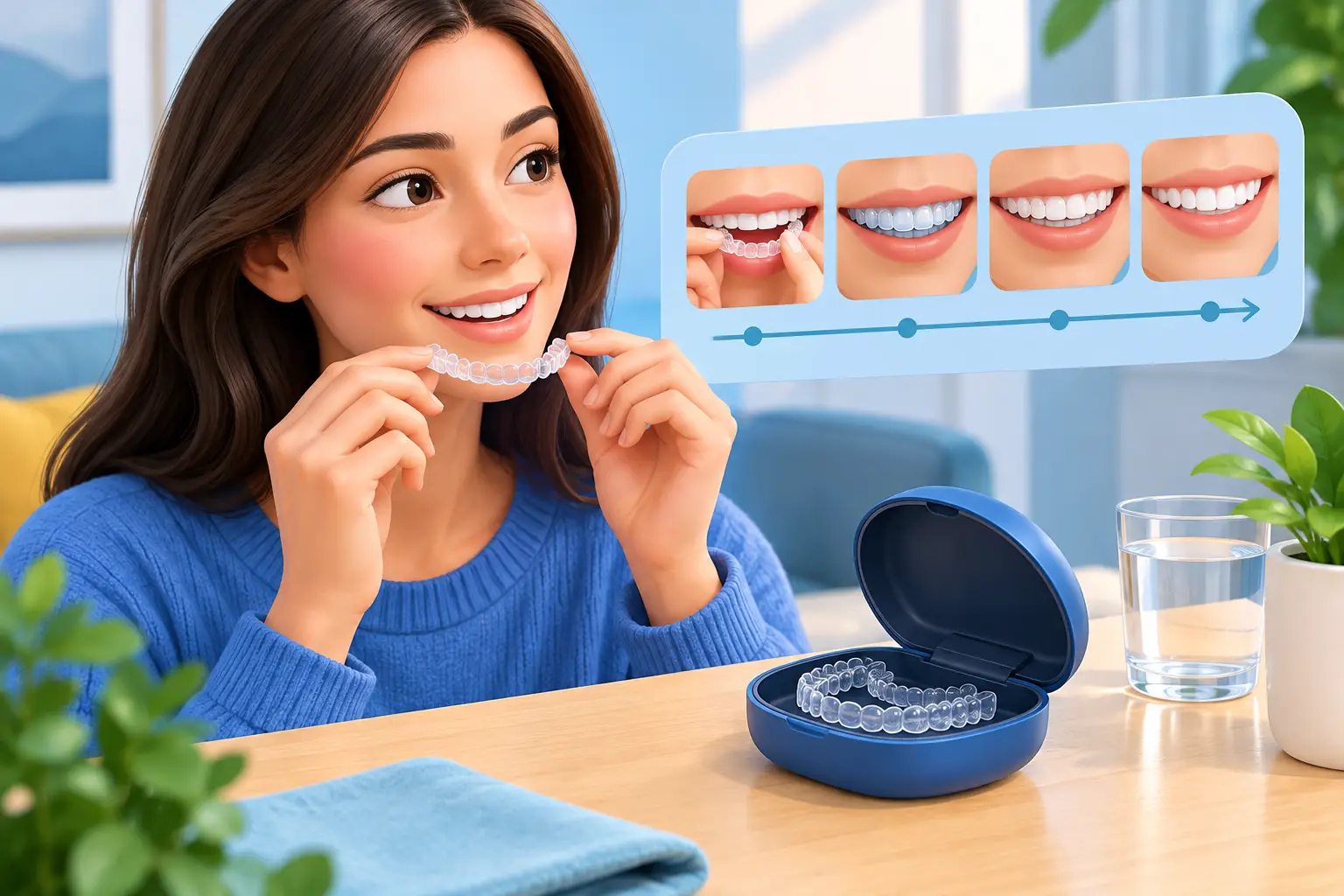

The first video call after receiving new aligners can feel more intimidating than the appointment itself. If you are an adult starting aligners who talks a lot at work or on calls, you may be asking, “Does Invisalign cause a lisp?” The short answer is: it can cause a temporary change in speech, but most people adapt quickly. A noticeable Invisalign speech impediment is uncommon, and it is usually part of the normal adjustment period rather than a sign that something is wrong.
Clear aligners are designed to fit closely over your teeth, making them a discreet option for adults who want orthodontic treatment without brackets and wires. Still, even a very thin aligner slightly changes the space where your tongue meets your teeth and palate. Your mouth simply needs time to learn a new pattern for certain sounds.
Why New Aligners Can Affect Speech
Speech is a coordinated movement between the tongue, teeth, lips, palate, and airflow. With aligners in place, the tongue may initially touch a smooth plastic surface rather than the natural contours of your teeth. That small change can make sounds such as “s,” “sh,” “z,” “ch,” and “th” feel less precise.
For some patients, the result is a faint whistle or a soft lisp. Others notice that they are speaking more carefully, more slowly, or with extra saliva during the first few days. These effects can be more apparent with upper aligners because they sit close to the area where the tongue helps form many consonants.
Not everyone experiences an Invisalign talking adjustment. The fit of the trays, the shape of your mouth, the movements planned for your teeth, and your own speech patterns all play a role. If you do notice a difference, it is usually most obvious to you. Colleagues and friends often do not notice it unless you mention it first.
How Long Does an Invisalign Lisp Last?
For many adults, a mild lisp improves within a few days and is largely gone within one to two weeks. Your brain is remarkably efficient at adjusting to a new oral environment, especially when you wear your aligners consistently and continue using normal speech throughout the day.
A few factors can make the adjustment take longer. If your aligners have small built-in features, if you have attachments on your teeth, or if your treatment plan involves more significant tooth movement, your mouth may need additional time to adapt. Changing to a new set of trays can also create a brief period of renewed awareness, although the adjustment is often much faster after the first set.
If speech is still clearly difficult after two to three weeks, or if an aligner feels loose, sharp, warped, or does not seat fully, contact your dental team. The concern may be as simple as an aligner that needs to be checked. Do not trim, heat, or reshape an aligner at home unless your provider has specifically directed you to do so.
Tips to Speak Clearly With New Aligners
The most helpful approach is usually to keep wearing your aligners as instructed and give yourself low-pressure opportunities to practice. Taking them out repeatedly to avoid speaking can slow the adjustment and may make it harder to meet the recommended daily wear time.
Practice out loud before an important call
Read a page from a book, rehearse a presentation, or talk through your meeting notes for five to 10 minutes while wearing your aligners. Pay special attention to words with “s,” “sh,” and “th” sounds. Speaking aloud helps your tongue identify its new placement more effectively than silent reading.
If you have a high-stakes presentation, begin practicing with your aligners several days ahead rather than waiting until the morning of the meeting. A quick voice memo can also be useful. You may hear a change on day one, then notice a meaningful improvement after a few practice sessions.
Slow down slightly, but do not overcorrect
Rushing is more likely to make speech feel unclear during the first few days. Give yourself a little more space between phrases and focus on relaxed, natural pronunciation. Trying too hard to force each sound can create tension in the jaw and tongue, which may make speaking feel less comfortable.
Drink water and manage dry mouth
A dry mouth can exaggerate speech changes and make aligners feel more noticeable. Keep water nearby during calls, especially in heated offices or after coffee. Staying hydrated supports comfort and can reduce the clicking or sticky feeling some people notice when first wearing trays.
Make sure your aligners are fully seated
Aligners should fit snugly against the teeth. If there is a visible gap between the tray and a tooth, speech may feel different and the aligner may not be tracking as planned. Use any seating tools your dental team recommends, following their instructions. If the tray will not fully seat, call the office rather than assuming it will correct itself.
Plan your first few days thoughtfully
If possible, start a new aligner series before a quieter stretch in your schedule, such as a weekend or a week with fewer presentations. This is not necessary for everyone, but it can give frequent speakers more confidence during the early adjustment period.
For a long client call, keep your camera angle and lighting comfortable, have water within reach, and remember that a slight speech change is rarely as visible or dramatic to others as it feels to you. Most professional conversations are carried by clarity of thought, tone, and pacing - not perfect pronunciation of every syllable.
Should You Remove Aligners for Meetings or Calls?
Invisalign aligners are typically worn about 20 to 22 hours each day, though your dentist will give you instructions specific to your treatment. They should be removed for eating and drinking anything other than water, as well as for brushing and flossing. Outside of those times, consistent wear is what helps teeth move according to plan.
Removing aligners for an occasional major event may be reasonable if your treating dentist approves it, but regularly taking them out for work calls is not a good long-term strategy. It can reduce wear time, interrupt the adjustment process, and potentially affect treatment progress. For most adults, practicing in the aligners is the better answer.
If your role involves frequent public speaking, sales calls, teaching, broadcasting, or customer service, mention that during your Invisalign consultation. Your dental team can discuss your work demands, expectations, and any practical ways to make the first stage of treatment easier. Individualized planning matters, particularly when treatment needs to fit a busy professional schedule.
When Speech Changes Need a Closer Look
A temporary lisp is not usually concerning. However, reach out to your dental provider if speaking causes pain, you develop sores that do not improve, the tray has a rough edge, or you cannot pronounce words normally after a reasonable adjustment period. You should also call if the aligner is cracked, persistently loose, or seems unable to fit over a tooth.
Speech changes that were present before aligner treatment, sudden speech difficulty unrelated to the trays, facial weakness, or trouble swallowing should not be assumed to be an Invisalign issue. Those symptoms deserve prompt medical evaluation.
At Seattle Oral Care, treatment planning begins with listening to the details that affect your daily life, including how much you speak for work and what would help you feel confident during treatment. New aligners may make you more aware of your speech for a short time, but with consistent wear and a little practice, most people are soon talking comfortably again - often before the people around them notice anything has changed.