A wedding, new job, or long-postponed photos can make a crooked tooth feel suddenly urgent. For an adult wanting a quick cosmetic fix who has not weighed moving teeth versus covering them, the Invisalign vs veneers decision is less about choosing the fastest option and more about choosing the treatment that protects the health and appearance of your smile over time.
Both options can create a more even-looking smile. They do so in very different ways. Invisalign gradually changes tooth position. Veneers improve the visible front surfaces of teeth. The right answer depends on what is causing the concern, how much movement is needed, the condition of your enamel and gums, and what you want your smile to look like years from now.
Invisalign vs Veneers: Moving Teeth or Covering Them
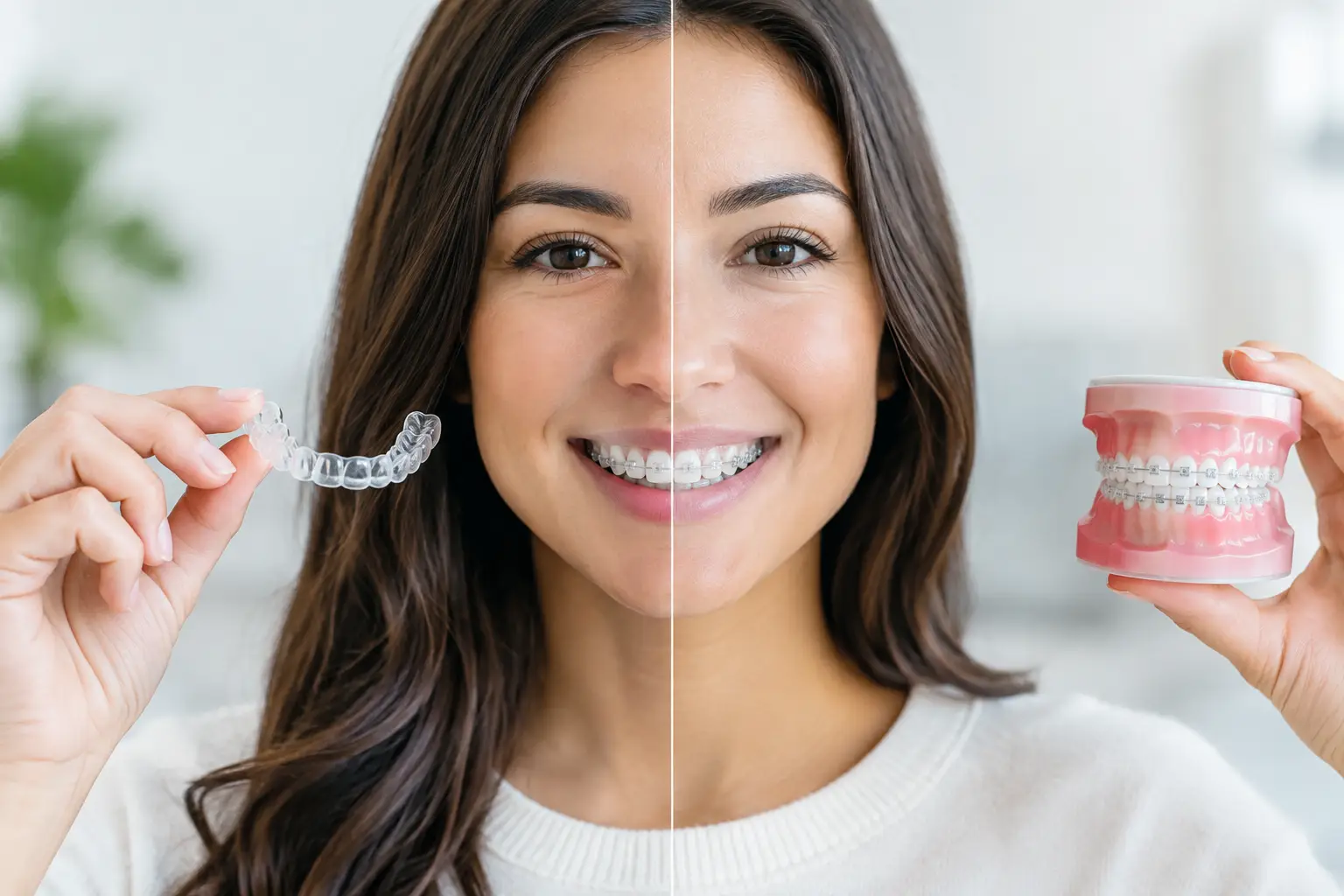
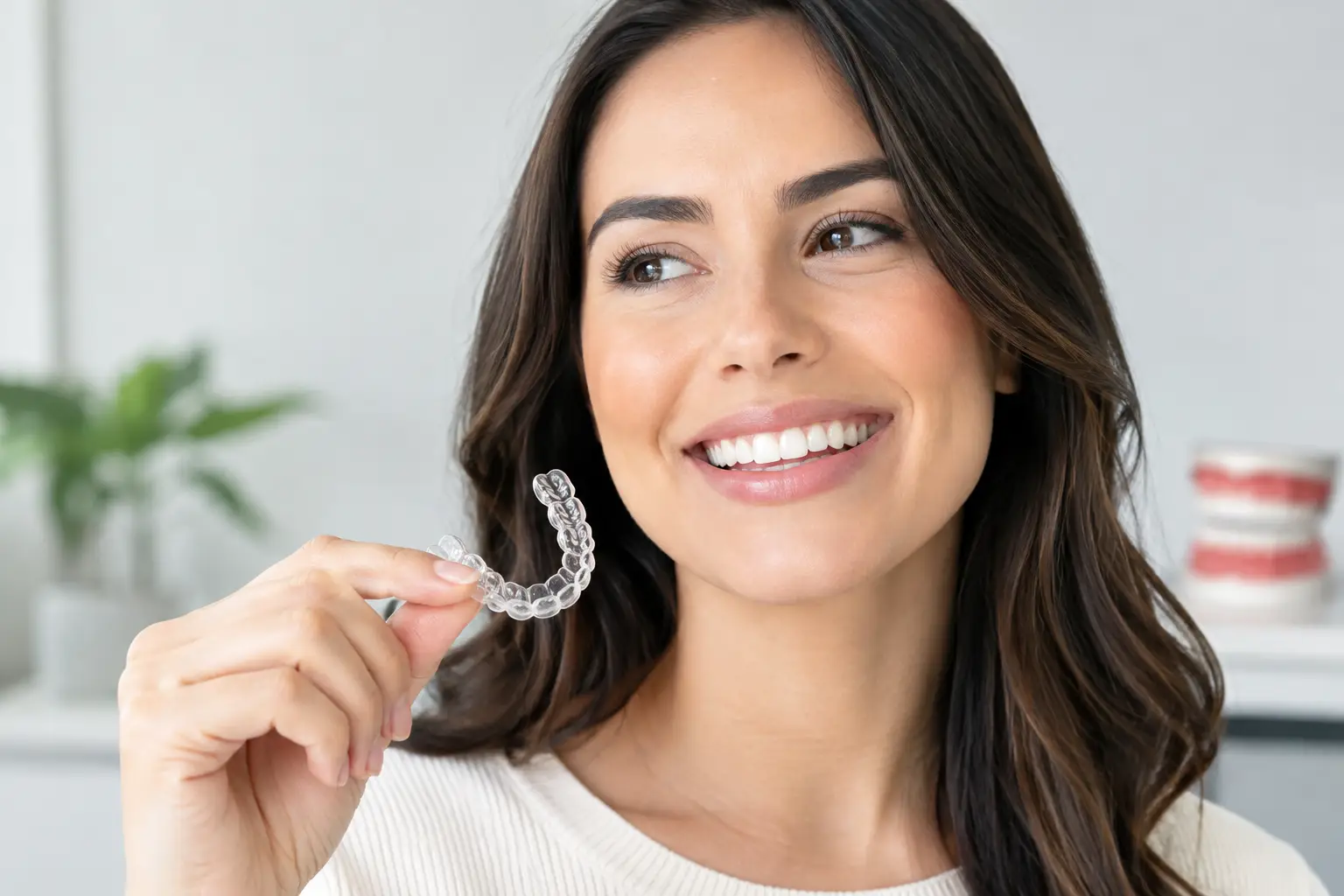
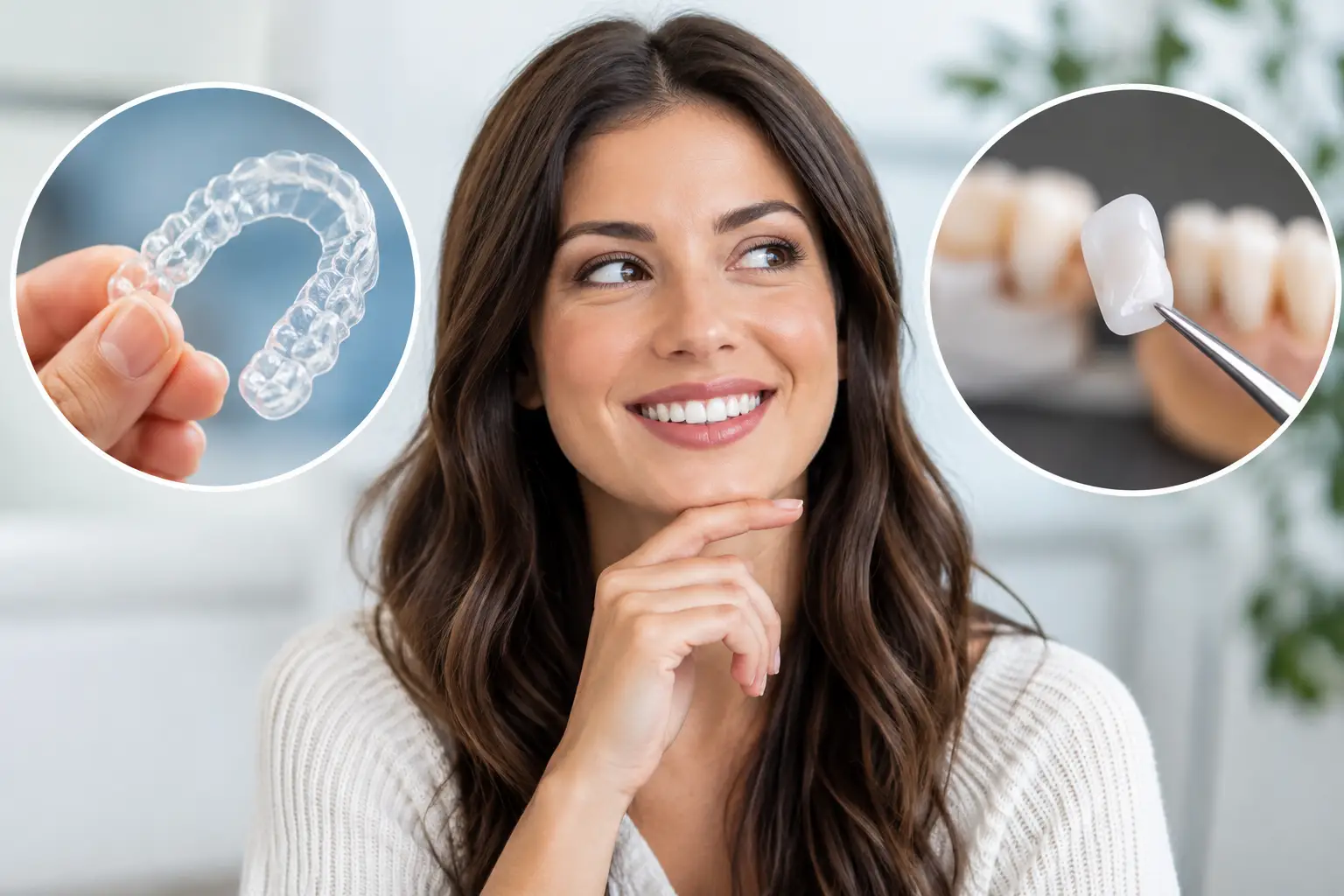
Invisalign uses a series of clear, custom aligners to apply gentle pressure and gradually move teeth. It can address crowding, gaps, certain bite concerns, and teeth that have shifted since earlier orthodontic treatment. Because aligners move the actual teeth, the outcome can improve both appearance and function when the case is appropriate.
Veneers are thin, custom-made coverings bonded to the front of teeth. They can change a tooth’s color, shape, length, and apparent alignment. A veneer does not move a tooth. Instead, it creates a new visible surface that can make a mildly crooked, worn, small, or discolored tooth appear straighter.
That distinction matters. If teeth overlap significantly, tilt inward or outward, or contribute to a bite imbalance, placing veneers without considering alignment may require removing more healthy enamel to create an even-looking result. In some situations, veneers can still be a beautiful choice. The key is making that decision after a careful examination, not because the cosmetic timeline feels pressing.
When Invisalign Is Often the Better Starting Point
Clear aligners are usually worth discussing first when the primary issue is tooth position. This includes crowding, spacing, rotated teeth, or orthodontic relapse after braces. Treatment commonly takes months rather than weeks, but it preserves the natural tooth structure and can create room for more conservative cosmetic work afterward.
For example, a patient may have one front tooth that sits slightly behind the others and two teeth with uneven edges. Moving the front tooth into a better position may allow minimal bonding or no additional cosmetic treatment at all. If veneers are still desired for color or shape, they can often be made more conservatively once the teeth are properly aligned.
Invisalign is not only for teenagers or people with very minor concerns. Many adults appreciate that the aligners are discreet and removable for meals, brushing, and special occasions. Success does require consistency. Aligners need to be worn as directed, generally about 20 to 22 hours each day, and retainers are needed after treatment to help hold the new positions.
Clear aligners may not be the complete answer if teeth are severely worn, fractured, heavily discolored, or already have large restorations. In those cases, orthodontics may be part of a larger plan rather than the only treatment.
What treatment feels like
Most patients experience a sense of pressure when starting a new set of aligners. This is usually temporary and is different from the discomfort of untreated dental problems. Regular check-ins allow your dental team to monitor progress, oral hygiene, gum health, and how your bite is responding.
The commitment is real, but so is the benefit: your own teeth are being repositioned rather than disguised. For people who value a conservative approach, that can be a meaningful advantage.
When Veneers May Be the Right Cosmetic Choice
Veneers may be appropriate when teeth are only mildly misaligned but have several cosmetic concerns at once. They are especially useful for teeth with persistent discoloration that does not respond well to whitening, uneven shape, small chips, visible wear, or naturally small teeth that create spaces.
A carefully planned veneer case can provide a striking change in a relatively short period. It may be a reasonable choice for someone whose teeth are already in a functional position but whose smile needs refinements that orthodontics alone cannot provide.
Still, veneers are a long-term restorative commitment. Traditional veneers typically require some enamel preparation, and veneers will eventually need maintenance or replacement. They are durable when designed, placed, and cared for properly, but they are not a one-time, permanent shortcut. Daily brushing, flossing, regular visits, and protection from grinding remain essential.
Veneers also do not correct every underlying problem. If you clench or grind your teeth, have untreated gum disease, active decay, or a bite that places excessive force on front teeth, those concerns need to be addressed first. A beautiful restoration lasts longer when the foundation is healthy.
Veneers or Aligners for Crooked Teeth: Questions to Ask
When deciding between veneers or aligners for crooked teeth, start with the problem you want to solve. Is it one rotated tooth, a general crowded appearance, gaps, tooth color, worn edges, or a combination? A photograph may highlight the appearance, but an exam can reveal whether the bite and gum tissue support the treatment you are considering.
It also helps to ask how much healthy enamel would need to be changed. If alignment can make your teeth look substantially better with little or no alteration to their surfaces, that is valuable information. On the other hand, if the teeth are worn and uneven after they are aligned, restorations may still provide the finishing touch you want.
Consider your timeline honestly. Veneers may appear faster, but a rushed cosmetic decision can lead to years of repairs, replacements, or dissatisfaction if the underlying alignment was not considered. Invisalign requires patience and daily wear, yet it can reduce the amount of restorative treatment needed later.
Cost is another practical factor, though it should not be viewed only as an initial price. Invisalign may involve a course of treatment and retainers. Veneers involve custom laboratory work and future replacement over time. A personalized treatment plan should explain the expected stages, maintenance needs, and likely long-term investment for each approach.
Can You Straighten Teeth With Veneers?
You can make teeth look straighter with veneers, but you do not actually straighten teeth with veneers. The teeth remain in their original positions beneath the restorations. That can be perfectly acceptable for mild irregularities when function is stable and enough tooth structure is available for conservative preparation.
For more pronounced crowding, using veneers to create the illusion of straightness can produce teeth that look overly wide or bulky. It may also require more reduction of the natural teeth than many patients expect. This is why a diagnostic preview and a discussion of alternatives are so helpful before any irreversible work begins.
Sometimes the strongest plan is a combination approach. Invisalign can place teeth in more favorable positions, followed by whitening, minor bonding, or a limited number of veneers to refine shape and color. This approach takes longer than covering everything immediately, but it can balance cosmetic goals with preservation of natural tooth structure.
Your Bite and Gum Health Belong in the Conversation
A front-tooth concern may seem purely cosmetic, yet your bite affects how restorations wear. Teeth that meet edge to edge, heavy clenching, nighttime grinding, and missing back teeth can all place additional stress on veneers and natural enamel. Gum recession, inflammation, and decay can also change what is safe or predictable.
That is why a thorough consultation should include more than a quick look at the front teeth. Digital images, bite evaluation, periodontal assessment, and a conversation about your health history give the dentist a clearer picture. For complex cases, coordinated input from restorative, periodontal, and surgical clinicians can help ensure the cosmetic plan supports long-term oral health.
At Seattle Oral Care, treatment planning is centered on listening first. Whether you feel ready for a fast cosmetic change or uncertain about orthodontics as an adult, you deserve clear explanations of what each path can and cannot accomplish.
The best smile plan is not always the fastest one. It is the one that lets you feel confident when you smile while respecting your natural teeth, bite, comfort, and future care needs. A thoughtful consultation can turn a rushed cosmetic question into a decision you will feel good about every day.