
You do not have to agree to Invisalign before you understand the plan. An Invisalign consultation is designed to answer the questions that matter most: whether clear aligners can address your concerns, what treatment may involve, what it may cost, and what your smile could look like along the way. For an adult nervous about committing before knowing the plan, this first visit should feel like a conversation, not a sales pitch.
At Seattle Oral Care, the goal is to listen carefully, evaluate your oral health, and give you clear information so you can make a decision at your own pace.
What to Expect at an Invisalign Consultation
Most first visits take about 45 to 90 minutes. The exact timing depends on whether you are new to the practice, need updated X-rays, have restorative dental work to discuss, or have a more complex bite concern. There is usually time to talk through your goals, complete a clinical exam, gather diagnostic records, and review preliminary recommendations.
You may come in wanting to straighten a few crowded lower teeth, close a visible gap, or feel more comfortable smiling in photos. Those are all useful starting points. Your dentist will also ask about dental history, past orthodontic treatment, jaw discomfort, grinding, and any concerns with your bite. Clear aligners move teeth, but successful treatment begins with understanding the whole mouth.
What the dentist checks before recommending aligners
Invisalign can be an excellent option for many adults, but it is not automatically the right solution for every orthodontic concern. Before recommending aligners, your dentist will evaluate the health and position of your teeth, gums, bite, and jaw.
The exam may include checking for gum inflammation or periodontal disease, tooth decay, worn or cracked teeth, loose restorations, and signs of clenching or grinding. Existing crowns, bridges, veneers, and implants do not necessarily prevent Invisalign treatment, but they can affect how teeth can be moved and how the plan is sequenced.
Your dentist will also look at whether your upper and lower teeth meet comfortably. Straight teeth are valuable, but a stable bite matters just as much. If you have significant bite discrepancies, missing teeth, active gum disease, or complex restorative needs, the right first step may be treatment beyond aligners or a coordinated plan that addresses those needs first.
The 3D Scan for Invisalign and Your Smile Preview
A 3D scan for Invisalign replaces the uncomfortable trays of impression material many people remember from past dental visits. A small scanner captures detailed digital images of your teeth and bite. The process is typically quick, comfortable, and does not involve radiation.
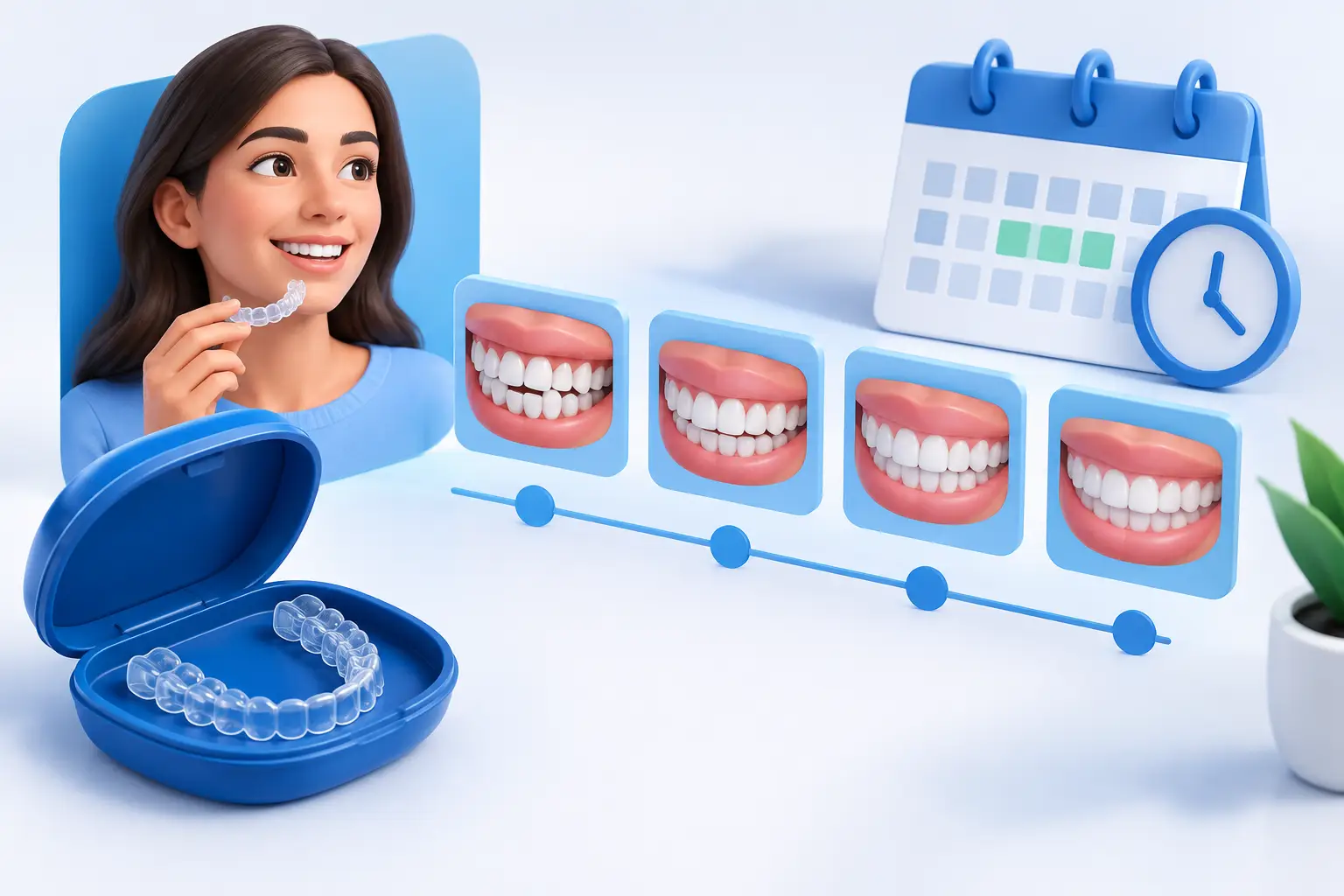
These images help create a digital treatment simulation. In many cases, seeing a preview of your new smile is one of the most reassuring parts of the consultation. You can see the intended direction of tooth movement and discuss changes that matter to you, such as reducing overlap, aligning the front teeth, or improving the appearance of a gap.
Still, a preview is a planning tool, not a promise that every tooth will move exactly as shown on a screen. Teeth and gums respond biologically, and treatment sometimes needs adjustments. Attachments, small tooth-colored shapes placed temporarily on certain teeth, may be needed to create precise movements. Some patients also need refinement aligners after their initial series. A thoughtful consultation explains these possibilities upfront rather than presenting the preview as a guarantee.
Is a Free Invisalign Consultation Really Free?
A free Invisalign consultation can be a useful way to learn whether you may be a candidate and discuss your goals without committing to treatment. However, what is included can differ from one dental office to another. Some practices offer a no-charge initial conversation and screening, while diagnostic X-rays, a 3D scan, or comprehensive records may involve separate fees.
Before booking, it is reasonable to ask what the appointment includes and whether there is a charge if additional records are needed. Clear answers help you compare your options fairly. The value of the first visit is not just whether it is free. It is whether you leave knowing what is clinically recommended, why it is recommended, and what your next steps would be.
Cost and Payment Options Explained at the First Visit
Invisalign treatment costs vary because every plan is different. A limited treatment for minor spacing or relapse after braces is not the same as comprehensive treatment that corrects crowding and bite concerns over a longer period. The complexity of movement, estimated number of aligners, expected treatment time, attachments, refinements, retainers, and any needed dental care all influence the final cost.
At the first visit, ask for a clear explanation of what is included in the quoted fee. For example, does it include digital records, all planned aligners, routine progress visits, refinement trays if needed, and retainers at the end of treatment? Knowing this early can prevent surprises later.
Insurance coverage for adult orthodontics varies widely. Your dental team can help you understand any available benefit, but it is wise to confirm coverage directly with your insurer as well. If insurance does not cover treatment fully, many patients consider monthly payment arrangements or third-party financing. The best payment option depends on your budget, the practice's policies, and whether you prefer to pay over time or upfront.
You should never feel pressured to make a financial decision before you understand the complete treatment recommendation. A written estimate and a chance to ask questions are reasonable expectations.
Questions to Ask Before Starting Invisalign
The right questions can turn uncertainty into a plan you can evaluate confidently. Consider asking:
- Am I a good candidate for Invisalign, and are there alternatives I should consider?
- What issues can aligners improve in my case, and what may not change completely?
- How long is my treatment likely to take, and how often will I need check-ins?
- Will I need attachments, enamel reshaping, elastics, or restorative treatment before or during aligner care?
- What happens if I lose an aligner, do not wear it consistently, or need refinements?
- What is included in the total fee, and what payment options are available?
You may also want to ask how many hours per day you will need to wear your aligners. For most Invisalign plans, aligners should be worn about 20 to 22 hours each day, removed mainly for eating, drinking anything other than water, and brushing and flossing. This commitment is often the deciding factor for adults with busy workdays, travel schedules, or frequent coffee breaks. Invisalign is discreet, but it still requires consistency.
A Plan You Can Feel Good About
The best Invisalign consultation gives you more than a price and a projected finish date. It gives you context: the condition of your oral health, the changes aligners can reasonably make, the responsibilities involved, and the options available if treatment is not the best next step.
If you have been putting off orthodontic care because you are unsure what you are signing up for, let the first visit do what it is meant to do: replace assumptions with a clear, personal plan. A confident decision starts with feeling heard, informed, and comfortable asking every question you have.