A bone graft is an investment in the foundation of your future tooth. So if you have just had one, it is natural to ask, how long after bone graft can you get implants? The honest answer is that your implant is placed when your graft has become stable, healthy bone that can support it - not when a generic calendar says it should happen.
That can feel frustrating when you are ready to move on from a missing tooth, a temporary appliance, or a long treatment process. But allowing the right healing process protects the result you are working toward: an implant that feels secure, functions comfortably, and is built to last.
Why bone graft healing before implant placement matters
Dental implants depend on bone. The implant is placed into the jaw, where bone gradually grows and bonds around it. This process gives the implant the stability it needs to support a crown, bridge, or denture.
When bone has been lost because of an extraction, gum disease, infection, injury, or years without a tooth, there may not be enough healthy bone in the right position to place an implant predictably. A graft helps restore the needed volume and shape. Depending on your needs, the grafting material may be placed in an extraction site, along a narrow ridge, beneath the sinus area in the upper jaw, or in another carefully planned location.
The goal is not simply to fill an empty space. Your dental team is creating a stable site that can hold an implant in the proper position for both strength and appearance. Rushing that process can compromise the foundation.
Bone graft healing happens in phases
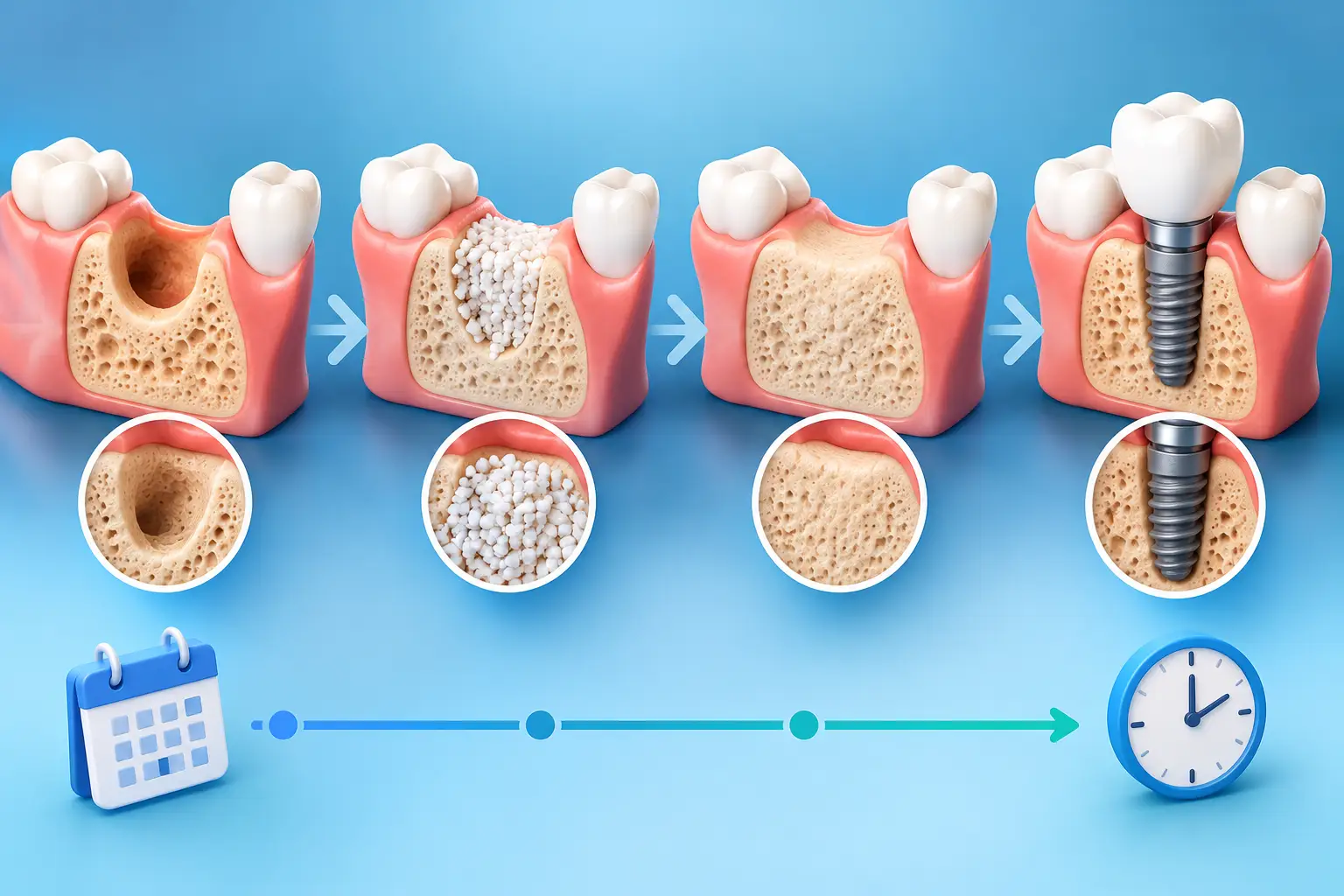
A graft does not remain unchanged after it is placed. Your body uses it as a framework for repair, gradually building new living bone into the area. While every person heals differently, the process generally moves through several overlapping phases.
Early protection and soft-tissue healing
Soon after grafting, the initial priority is protecting the surgical site. The gum tissue begins to close and recover, while the graft needs a quiet, stable environment underneath. A membrane, sutures, or both may be used to protect the area, depending on the procedure.
During this stage, following aftercare instructions matters. Avoiding pressure on the site, keeping the area clean as directed, taking prescribed medications appropriately, and avoiding tobacco or nicotine can all support healing. If you wear a temporary tooth replacement, your dentist may adjust it so it does not press on the graft.
Integration and new bone formation
As healing continues, the body begins to incorporate the graft material. Blood supply develops, cells involved in bone repair move into the area, and new bone starts to form. This is the phase that makes a staged implant timeline so valuable: the outside of the gums may look healed well before the bone underneath is ready for an implant.
You may feel fine, but comfort alone does not confirm that the graft has matured sufficiently. Your dentist evaluates what cannot be seen at home.
Maturation and implant-site evaluation
Over time, the grafted area becomes more organized and durable. The dental team looks at whether the bone has developed enough density, volume, and continuity to support an implant in the planned position.
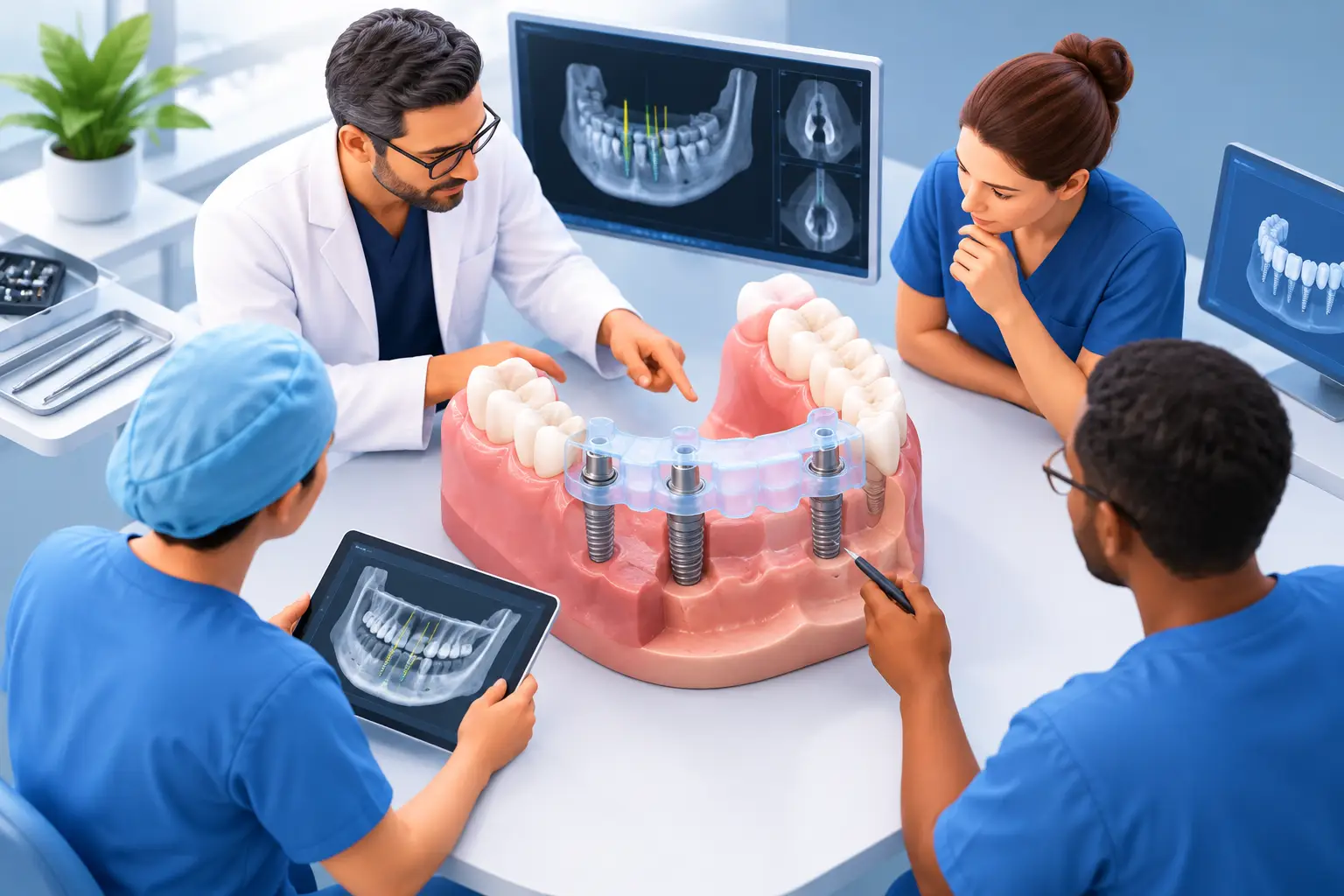
This is where imaging and clinical examination guide the next decision. A three-dimensional scan may help your dentist assess the height and width of available bone, nearby roots, sinus spaces, nerves, and the angle needed for a functional restoration. The question is not just whether an implant can be placed. It is whether it can be placed in a way that supports a long-lasting, natural-looking result.
What determines when your implant can happen?
There is no universal timeline for bone graft healing before implant placement. Two people may have similar procedures yet need different care plans because the biology, graft location, and final restoration are different.
The size and type of graft matter. A small graft placed to preserve an extraction socket has different healing demands than a graft used to rebuild a larger area of jawbone. Grafting near the sinus, for example, requires careful evaluation of both the graft and the surrounding anatomy.
Your starting bone quality matters as well. Healthy bone with good blood supply may behave differently than bone affected by past infection, periodontal disease, trauma, or longstanding tooth loss. Your general health can also influence healing. Conditions that affect healing, certain medications, tobacco use, uncontrolled diabetes, and oral hygiene all deserve a clear conversation with your dentist.
The planned implant restoration is another factor. Replacing a front tooth often requires careful attention to gum contours and cosmetic placement. Supporting a bridge or full-arch restoration may involve broader considerations around bite forces, implant position, and the amount of support needed across the jaw.
Your dentist sets the timeline, not a chart online
It is understandable to look for a single answer after surgery. You may be planning travel, work, a major event, or simply hoping to be done with the missing-tooth stage. Still, online timelines cannot account for what your own graft looks like as it heals.
Your dentist sets each person's timeline after reviewing healing at follow-up visits and evaluating imaging when appropriate. If the graft is progressing well, the next phase can be planned with confidence. If the bone needs more time to mature, that recommendation is not a setback. It is a decision intended to reduce risk and improve the chance of a stable implant.
At Seattle Oral Care, coordinated planning can bring the perspectives of a prosthodontist, oral surgeon, periodontist, and general dentist into complex implant care. That matters because the surgical plan and the final tooth replacement should work together from the beginning.
What happens after the graft is ready?
Once the grafted bone is ready, implant placement becomes the next surgical phase. The implant itself is a small titanium post positioned in the jawbone. After placement, it also needs time to bond with the surrounding bone, a process called osseointegration.
In some cases, a temporary tooth can be used during treatment so you are not left with a visible gap. Whether that is appropriate depends on the implant location, your bite, the stability of the surgical site, and how much pressure the area can safely tolerate. A temporary restoration should protect the treatment, not overload it.
After the implant has integrated, your dentist connects the final restoration. This may be an implant crown for one missing tooth, a bridge for several teeth, or a denture designed to attach securely to implants. The final step includes checking the fit, appearance, speech, bite, and ability to keep the restoration clean.
Signs to call your dental team during graft healing
Some tenderness, swelling, and minor bleeding can be expected after oral surgery, and your care team will explain what is normal for your procedure. Contact them promptly if discomfort worsens instead of improving, bleeding does not respond to the instructions you were given, swelling becomes concerning, you develop a fever, or you notice a change in the graft site or sutures that worries you.
It is also wise to call if a temporary appliance feels tight, rubs the surgical area, or seems to place pressure on the graft. Small adjustments can help protect the healing site.
The most useful question for your follow-up visit
Rather than asking only, “Am I ready yet?” try asking, “What are you looking for before you recommend implant placement?” Your dentist can explain whether the focus is bone volume, density, soft-tissue healing, imaging findings, infection control, or another part of your treatment plan.
That conversation turns waiting into an active part of care. Your graft is doing essential work beneath the surface, and the right next step is the one that gives your implant the strongest possible start.