Many people assume that years of wearing dentures mean implants are no longer possible. In reality, candidacy after long-term denture wear is often better than patients expect. If you are asking, “Can I get implants after years of dentures?” the answer may be yes, even when bone loss from long-term dentures has occurred.
The right answer depends on your current oral health, available jawbone, medical history, and goals. Some patients can move directly to implant treatment. Others benefit from bone grafting, gum care, or a staged plan first. A thoughtful evaluation replaces guesswork with clear options.
Why Denture Wear Can Change the Jawbone
Natural tooth roots do more than hold teeth in place. They stimulate the jawbone every time you chew. After teeth are lost, that stimulation is gone, and the body gradually resorbs bone it no longer needs to support roots.
Traditional dentures rest on the gums rather than in the jawbone. They can restore appearance and basic chewing function, but they do not stop this natural bone remodeling process. Over time, dentures may begin to feel loose, rub certain areas, or require relines because the shape of the ridge beneath them has changed.
Bone loss from long-term dentures is common, but it is not the same for every person. The amount and pattern of bone loss can be influenced by how long you have been without teeth, whether you wore dentures consistently, your bite forces, gum health, smoking history, nutrition, certain medications, and overall health. Even people who have worn dentures for decades may still have enough bone for carefully placed implants.
Switching From Dentures to Implants: What Changes?
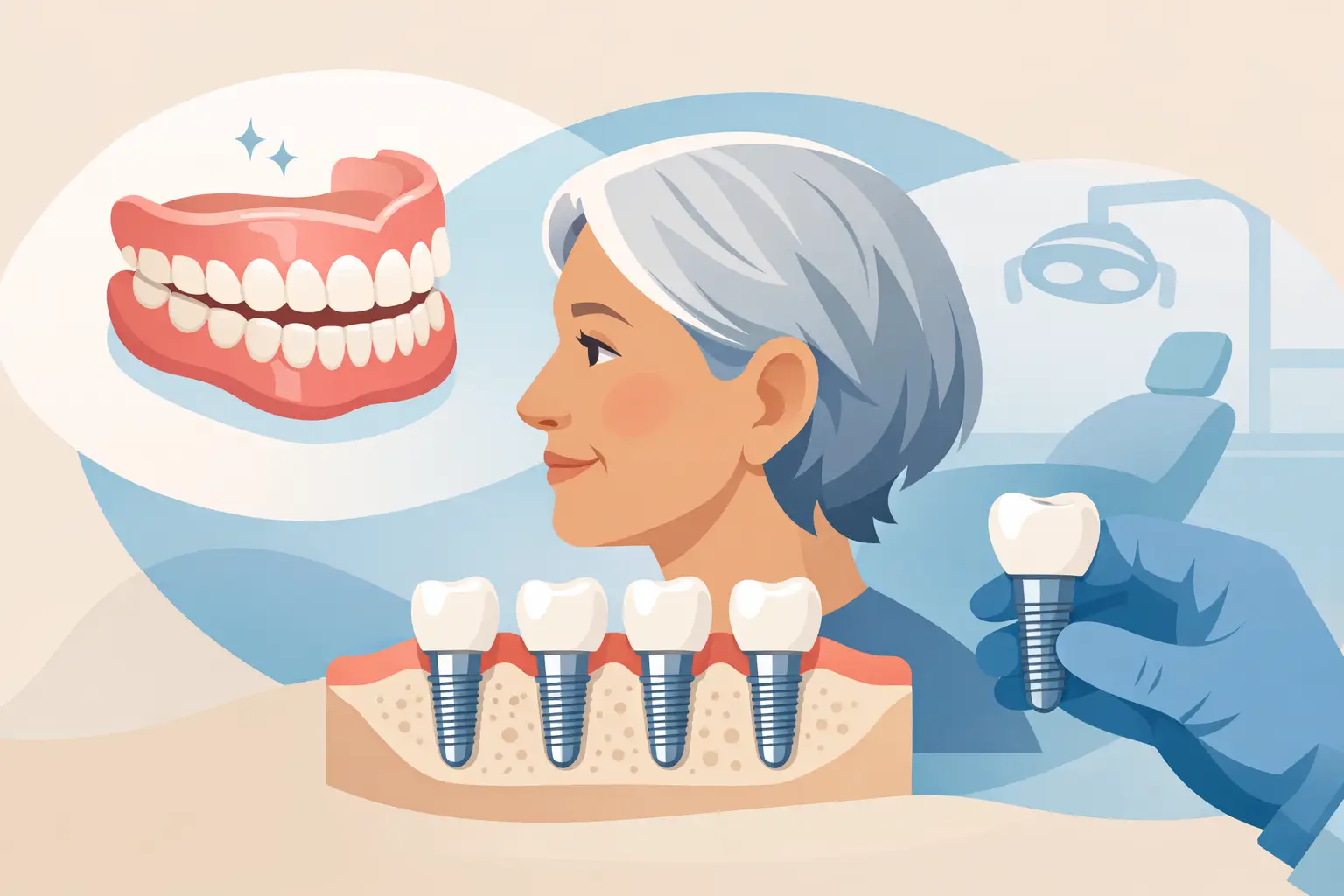
Switching from dentures to implants can mean different things. Some patients want a removable overdenture that snaps securely onto implants. Others prefer a fixed full-arch bridge that stays in place and is removed only by a dental professional for maintenance.
An implant-supported overdenture is often a meaningful improvement for someone tired of adhesive, slipping, or avoiding favorite foods. The denture remains removable for cleaning, while implants help anchor it more securely. A fixed implant bridge can feel closer to natural teeth, but it requires careful planning, daily cleaning around the restoration, and may involve more complex treatment.
Neither option is automatically “better.” The best choice should reflect your bone structure, oral hygiene habits, budget, medical needs, bite, and preference for a removable or fixed restoration. The goal is not simply to place implants. It is to create a result that is stable, comfortable, maintainable, and built to last.
Can I Get Implants After Years of Dentures?
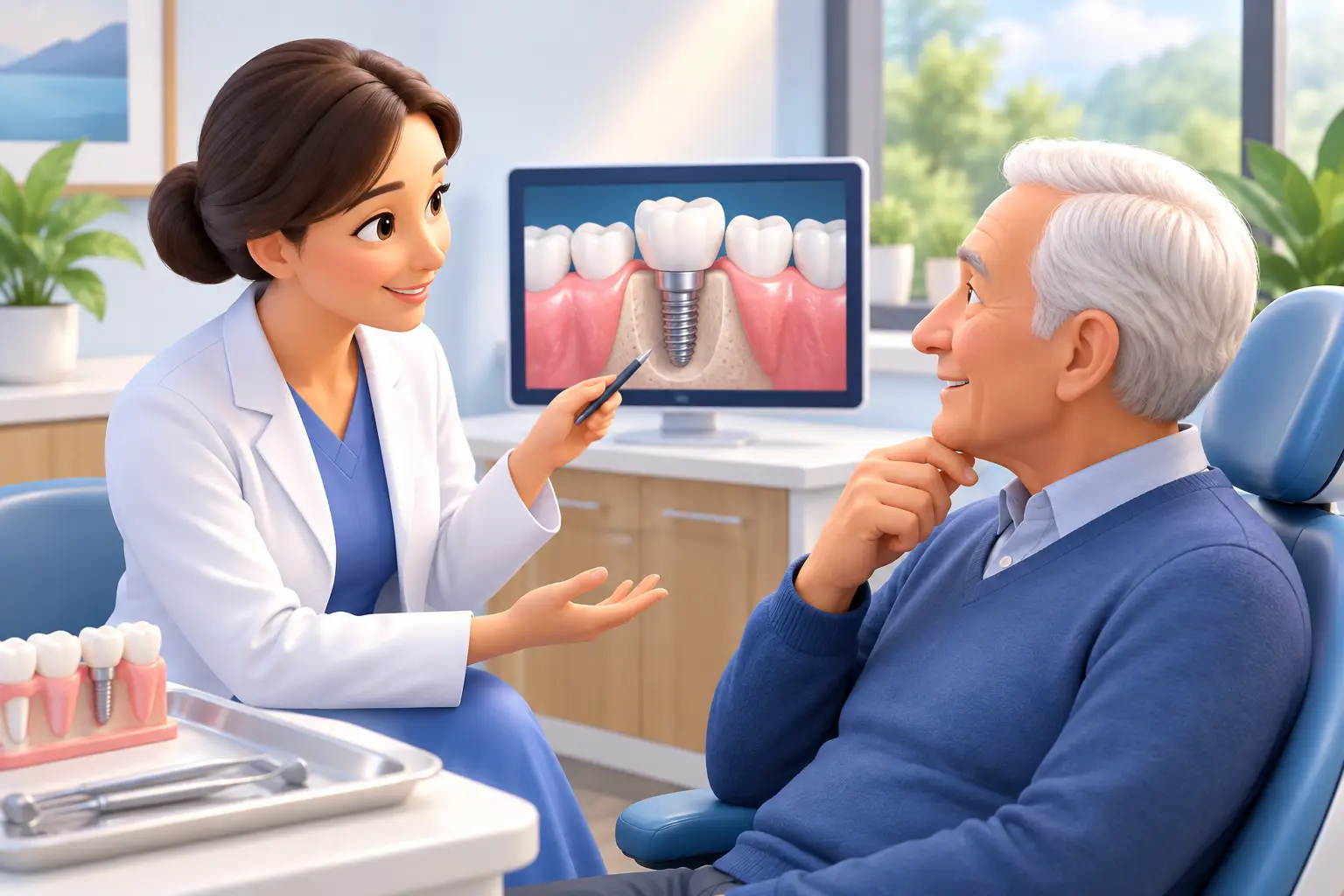
Yes, many long-term denture wearers are candidates for dental implants . The first step is a comprehensive evaluation, not a promise based on a quick glance. Your dental team needs to understand what is happening below the gums and how your mouth functions as a whole.
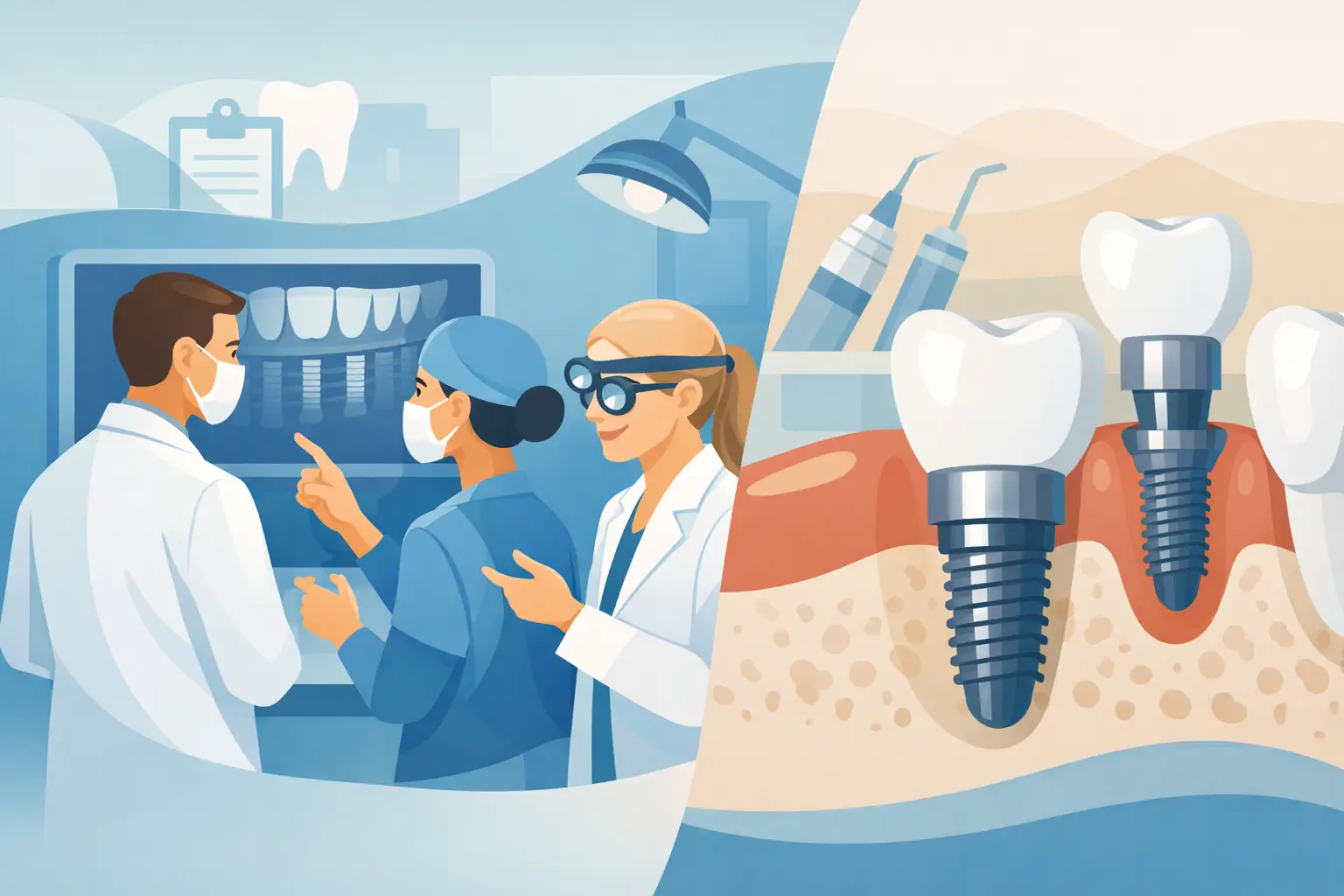
A complete consultation commonly includes a review of your health history, an examination of the gums and existing denture fit, photos or digital scans, and 3D imaging. A cone beam CT scan allows the team to assess bone height, width, density, and the location of important structures such as nerves and sinus cavities. This information guides safe implant placement and helps determine whether grafting or another preparatory procedure is needed.
At Seattle Oral Care, complex implant planning can be coordinated among a prosthodontist, oral surgeon, periodontist, and general dentist. That matters when long-term denture wear has created multiple needs at once, such as limited bone, gum inflammation, an unstable bite, or an older denture that no longer supports facial tissues well.
When Bone Grafting May Help
Insufficient bone does not automatically rule out implants. In many cases, bone grafting can rebuild or strengthen an area before implant placement. A graft may use processed donor material, your own bone, or another appropriate material selected for your situation. Over several months, the body incorporates the graft and creates a stronger foundation for an implant.
The type of graft depends on where bone has been lost. In the upper back jaw, a sinus lift may create adequate bone height beneath the sinus cavity. In areas with a narrow ridge, ridge augmentation may add width. For some full-arch cases, advanced implant placement techniques may allow treatment without extensive grafting, but that decision should be based on anatomy and long-term stability, not speed alone.
Grafting adds time and sometimes cost, which can feel discouraging when you are ready for a change. Yet placing implants in inadequate bone can compromise their position, appearance, and ability to handle chewing forces. A staged plan is often the more conservative choice for a durable result.
Other Factors That Affect Implant Candidacy
Your jawbone is only one part of the picture. Implant treatment has a high long-term success rate when it is planned well and maintained consistently, but implants still need healthy surrounding tissues and daily care.
Conditions such as uncontrolled diabetes, active gum disease, heavy smoking or vaping, untreated teeth grinding, and certain medications can affect healing or raise the risk of complications. This does not always mean implants are off the table. It may mean the care team recommends managing a health condition, treating gum inflammation, using a nightguard, or modifying the treatment timeline first.
Good oral hygiene is also essential. Implant crowns and bridges cannot get cavities, but the gum and bone around implants can become inflamed or infected. Regular professional maintenance and effective home cleaning protect the investment you make in your new smile.
What the Treatment Timeline Can Look Like
The timeline for dentures to implants varies widely. If your bone and gums are healthy enough for implant placement, treatment may move forward relatively quickly. If you need extractions, grafting, gum treatment, or time for healing, the process takes longer.
A typical plan may include diagnostic records and treatment design, preparatory care if needed, implant placement, a healing period while implants integrate with the bone, and delivery of the final implant-supported restoration. Temporary teeth or a temporary denture can often be part of the plan so you are not left without a smile during treatment.
For full-mouth rehabilitation, the final prosthesis is especially important. It must be designed for your facial proportions, speech, smile line, bite, and ability to clean around it. A well-made final restoration should not be rushed simply because the surgical phase is complete.
Questions Worth Asking at Your Consultation
A good implant consultation should leave you informed rather than pressured. Ask whether you have enough bone for implants now, whether grafting is recommended and why, and what type of restoration best fits your needs. It is also reasonable to ask who will perform each stage of care and how the surgical and restorative teams coordinate treatment.
You may also want clarity about the expected timeline, temporary tooth options, home care requirements, maintenance visits, and the full financial plan. If you have dental anxiety or had a difficult experience in the past, share that early. Gentle care begins with knowing what makes you feel comfortable and what support you need.
A Better Next Step Than Assuming It Is Too Late
Long-term dentures can bring real frustrations: sore spots, movement while speaking, limits on food choices, and the feeling that your teeth never quite stay where they should. Those experiences do not mean you have missed your opportunity for implants.
The most useful next step is a detailed implant evaluation with imaging and a conversation about your priorities. Whether your plan involves two implants to stabilize a denture, several implants for a bridge, or preparation to rebuild bone first, you deserve an answer based on your mouth, your health, and the life you want your smile to support.