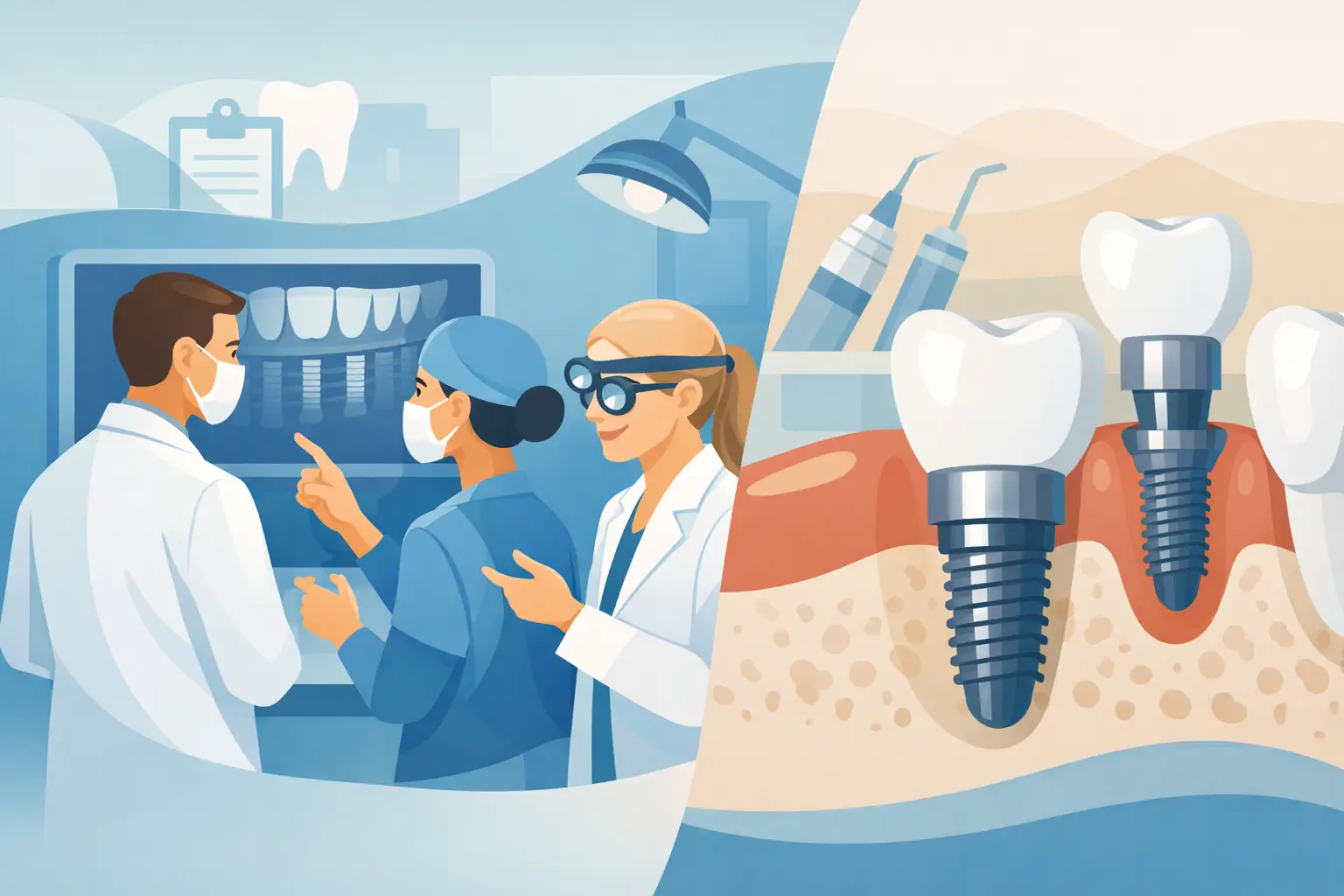
A dental implant needs more than a missing-tooth space. It needs enough healthy jawbone to hold the implant securely and support a natural-looking result. Ridge augmentation for dental implants can rebuild bone that has become too narrow or too short after tooth loss, infection, trauma, or long-term denture wear. While the idea of an added surgical step can feel discouraging, it may be the treatment that makes a durable implant possible.
At Seattle Oral Care, implant planning begins with a detailed examination and 3D imaging when appropriate. That allows our coordinated team to evaluate the bone, gums, bite, and final restoration before recommending treatment. The goal is not simply to place an implant. It is to create a stable foundation for a tooth that feels comfortable, functions well, and is designed to last.
What is ridge augmentation?
The alveolar ridge is the part of the jawbone that surrounds and supports your teeth. After a tooth is removed, this ridge naturally shrinks. The greatest changes often occur in the first several months, particularly in the width of the bone. If too much bone is lost, an implant may not have adequate support or may need to be positioned in a way that compromises appearance, bite, or long-term cleansability.
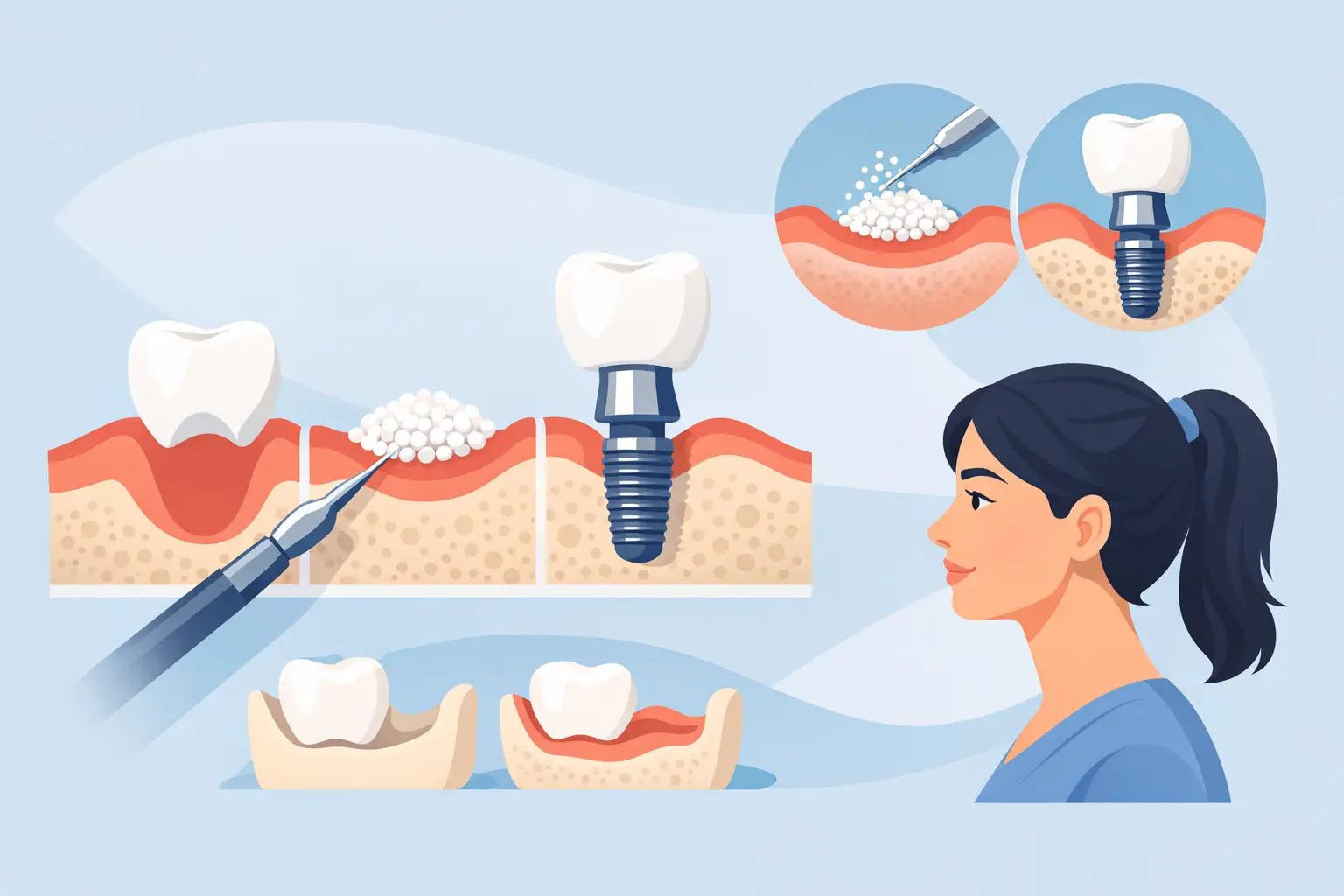
Ridge augmentation is a procedure that rebuilds this lost bone. A surgeon or periodontist places grafting material in the area where bone volume is needed, then protects it with a membrane and, in some cases, small fixation screws. Over time, your body incorporates the graft and forms new bone.
The material may come from your own bone, a donor source processed for medical use, a mineral-based source, or a synthetic material. There is no single “best” graft for every patient. The choice depends on the defect, the implant site, your medical history, and the clinician’s treatment plan.
Ridge augmentation vs. bone graft: What is the difference?
“Bone graft” is a broad term. It describes the use of grafting material to support new bone formation. Ridge augmentation is one type of bone grafting, specifically used to restore the shape and volume of the jaw ridge for an implant.
A bone graft might also be used for a sinus lift in the upper back jaw, to fill a jaw defect after infection, or to preserve bone after an extraction. Ridge augmentation is more targeted: it is intended to create sufficient bone width, height, or contour where an implant is planned.
The distinction matters because treatment timing and healing can differ. A small graft placed at the same time as an implant is not the same as rebuilding a significantly collapsed ridge before implant placement. Your 3D scan and clinical exam determine which approach is appropriate.
Socket preservation vs. ridge augmentation
Socket preservation, also called alveolar ridge preservation, happens at the time a tooth is removed. Grafting material is placed in the empty socket to reduce the normal bone loss that follows extraction. It is a preventive step and can make future implant treatment more straightforward.
Socket preservation does not guarantee that no further grafting will be needed. If a tooth was removed because of severe infection, fracture, gum disease, or pre-existing bone loss, the ridge may still need additional rebuilding later. Ridge augmentation is generally used when bone volume is already inadequate or when socket preservation alone cannot create the foundation an implant requires.
Do I need ridge augmentation before an implant?
Not everyone does. Many patients have enough bone for an implant without added grafting, and others need only a minor graft at the time of implant placement . You may be more likely to need ridge augmentation if the tooth has been missing for a long time, you had advanced gum disease or an abscess, the tooth was lost through trauma, or a denture has pressed on the area for years.
A narrow ridge can also be a concern in visible areas. Even when an implant can technically be placed, limited bone may make it harder to achieve natural gum contours around the final crown. In the back of the mouth, the concern may be strength and safe spacing from nearby roots, nerves, or the sinus cavity.
A consultation should answer more than “Can an implant fit?” It should address whether the bone and gum support are adequate for the final tooth you want. Careful jaw preparation for implants reduces the need for compromises later.
Horizontal vs. vertical ridge augmentation
Horizontal ridge augmentation increases the width of the jawbone. This is the more common type because bone often becomes thin from the outer side inward after extraction. A wider ridge helps the implant sit within bone rather than too close to the outside surface.
Vertical ridge augmentation increases bone height. It is more technically demanding because rebuilding height requires the graft to remain stable against gravity and pressure from surrounding tissues. Vertical defects may require a more complex approach, a longer healing period, or alternative implant strategies in selected cases.
Some patients need both horizontal and vertical augmentation. Others may be candidates for a shorter, narrower, or angled implant that avoids extensive grafting. Those alternatives are not automatically better or worse. They involve trade-offs involving esthetics, bite forces, cleaning access, treatment time, and long-term predictability.
Ridge augmentation before implants: Timeline and recovery
Your ridge augmentation before implants timeline depends on the size and location of the graft. In some cases, a small graft and implant can be placed during the same visit. When more bone must be rebuilt, augmentation is usually completed first, followed by a healing period before implant placement.
For many patients, the graft needs about four to six months to mature sufficiently. Larger or vertical grafts can require six to nine months or longer. Once the implant is placed, it commonly needs additional healing time before the final crown, bridge, or denture is attached. Your treatment plan may also include temporary tooth replacement during healing, so you are not left with an unwanted gap.
Ridge augmentation recovery time is often easier than patients expect. Tenderness, swelling, minor bruising, and light bleeding are most common during the first few days. Many people return to non-strenuous work within one to three days, depending on the procedure and their comfort level. The deeper healing process takes months, even after you feel normal.
Protecting the graft is essential. Follow instructions about medications, gentle brushing, prescribed rinses, eating softer foods, and avoiding smoking or nicotine. Do not pull at your lip or cheek to inspect the surgical area, and avoid vigorous rinsing or chewing directly on the site. Contact your dental team promptly if swelling worsens after several days, bleeding is persistent, fever develops, or you notice a membrane or graft material becoming exposed.
What does ridge augmentation cost?
Ridge augmentation cost varies widely because no two defects are exactly alike. A limited socket graft is typically less involved than rebuilding a broad horizontal defect or adding vertical height. The total may reflect diagnostic imaging, surgical time, graft material, membrane materials, sedation options, follow-up care, and whether implant placement occurs at the same appointment.
In the Seattle area, patients should expect a detailed estimate after an examination rather than relying on a single advertised price. Insurance may contribute when grafting is connected to an extraction or medically necessary treatment, but implant-related procedures often have limited coverage. A written plan should separate the extraction, grafting, implant, abutment, and final restoration costs so you understand the full investment.
Choosing the least expensive option without considering experience and planning can be costly if a graft fails to create enough bone or the implant position is compromised. At the same time, extensive grafting is not always necessary. A trustworthy recommendation explains why the procedure is needed, what alternatives exist, and what each path means for your result.
Ridge augmentation success rate and long-term care
Ridge augmentation has a high success rate when patients are properly evaluated, the graft is stabilized and protected, and healing instructions are followed. Still, no surgical procedure is guaranteed. Smoking or vaping, uncontrolled diabetes, active gum disease, poor oral hygiene, certain medications, and excessive pressure on the graft can raise the risk of delayed healing or graft loss.
Success also means more than seeing bone on an X-ray. The rebuilt ridge needs to support implant placement in a position that works with your bite, smile, gums, and future cleaning routine. That is why coordination between the surgical and restorative sides of implant care matters.
If you are considering an implant after a recent extraction or years of tooth loss, the most helpful next step is a consultation before the bone changes further. You deserve a clear explanation of your options, a realistic timeline, and a plan built around your comfort as well as your long-term oral health.