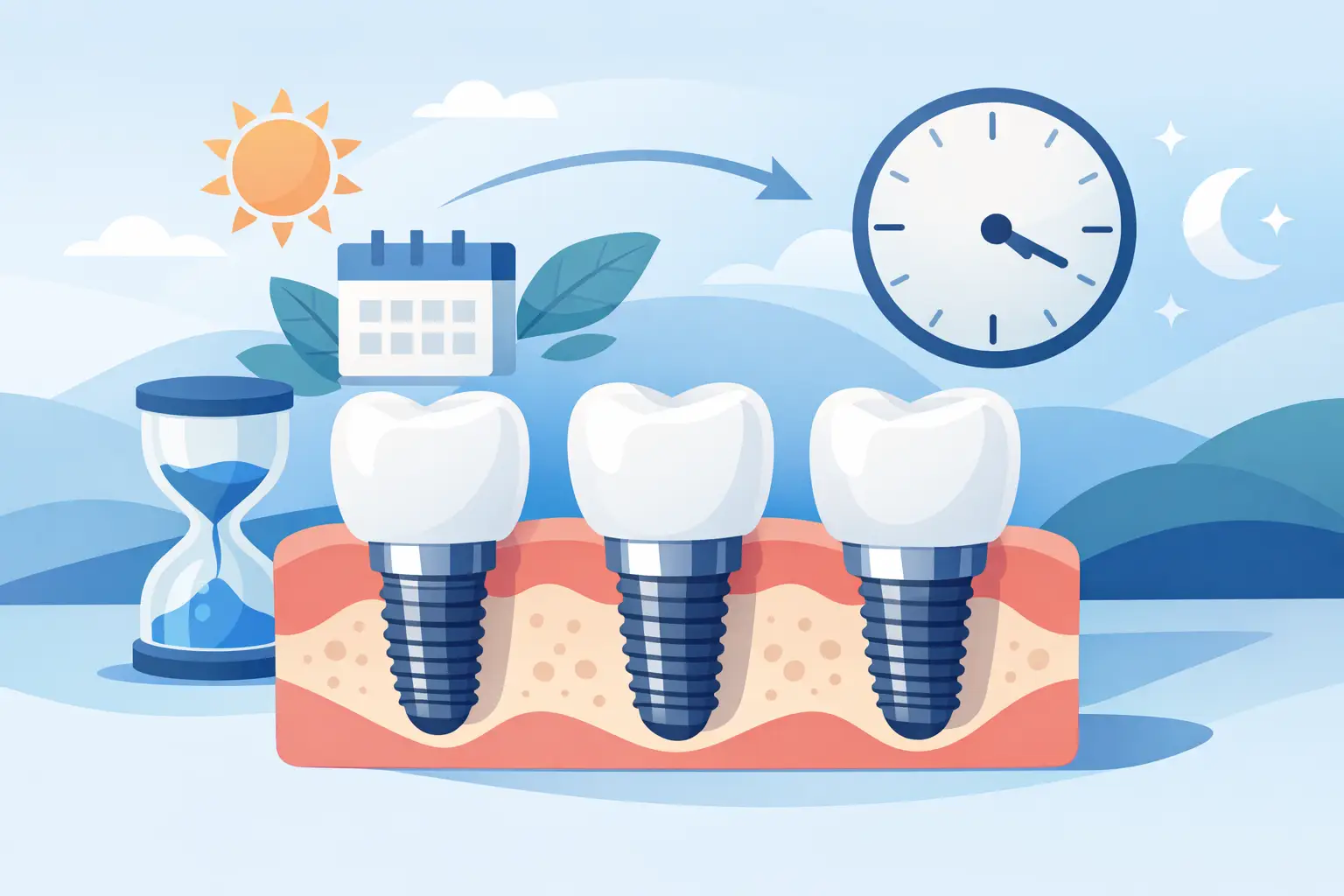
A dental implant is designed to be a long-term replacement for a missing tooth, not a short-term fix. So, how long do dental implants last? With healthy gums, sufficient bone support, and consistent care, the implant post itself can last decades and may last a lifetime. The visible crown attached to it typically has a shorter lifespan and may need replacement after 10 to 15 years.
That distinction matters. An implant restoration has several parts, and each has different demands placed on it every day when you chew, speak, and clean your teeth.
How long do dental implants last?
The implant is the small titanium post placed in the jawbone. During healing, the bone grows closely around the implant in a process called osseointegration. Once that connection is stable, the post functions much like a natural tooth root.
Research and long-term clinical experience show high implant survival rates over many years. Still, no dental treatment comes with a lifetime guarantee. Your individual outcome depends on your health, bite, oral hygiene, and the quality of ongoing maintenance.
The crown, bridge, or denture supported by the implant sits above the gumline and absorbs much of the daily wear. Porcelain can chip, cement can weaken, and the materials may eventually show signs of age. Replacing a worn crown does not usually mean replacing the implant underneath it.
What determines implant longevity?
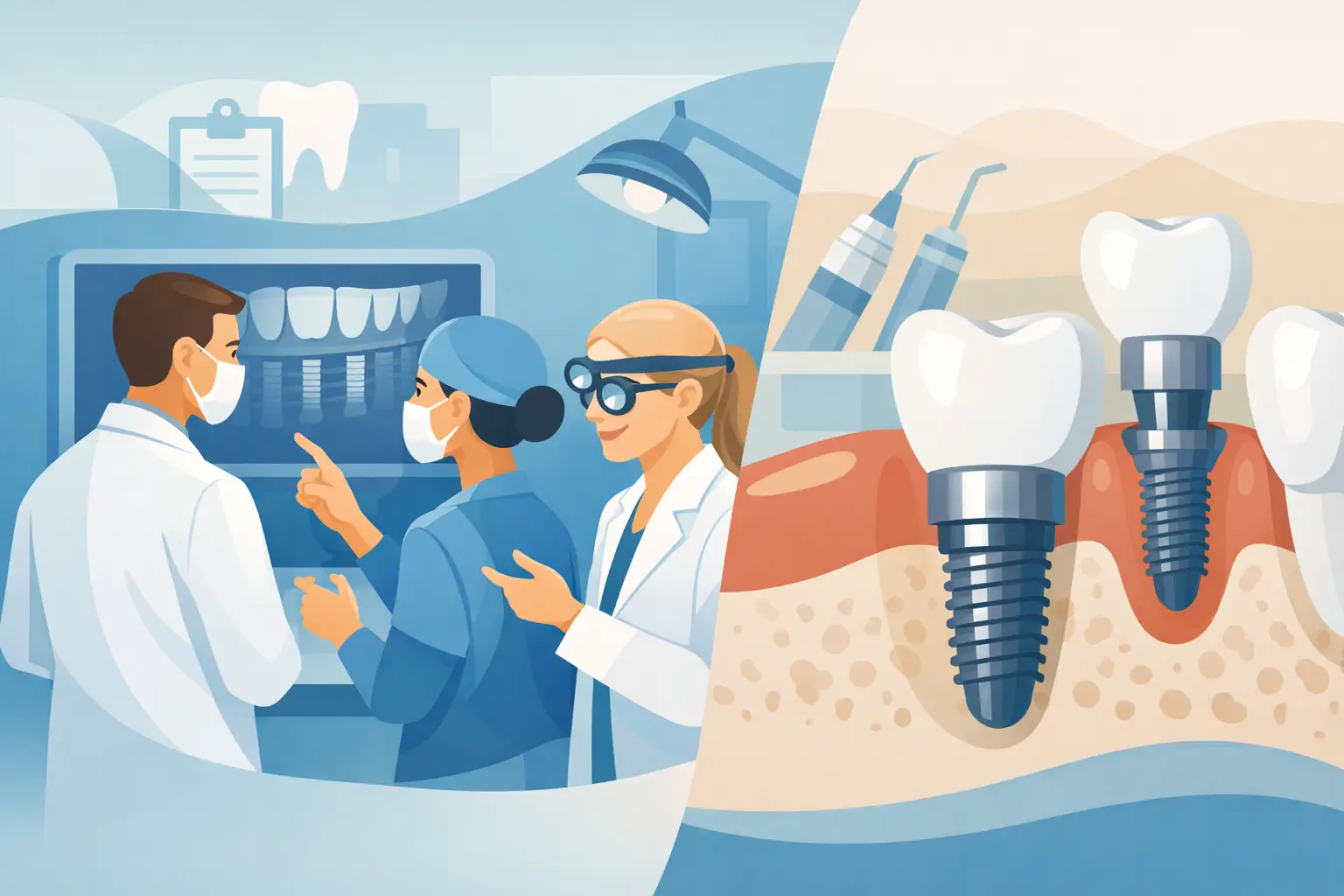
A well-planned implant begins before surgery. Your dentist needs to evaluate bone volume, gum health, bite forces, neighboring teeth, and any medical factors that could affect healing. This is particularly important when replacing several teeth or rebuilding a full smile.
Gum health is one of the biggest factors in long-term success. Bacteria can collect around implants just as they do around natural teeth. If inflammation is not addressed, it can progress to peri-implantitis, an infection that can damage the bone supporting the implant. It is often painless at first, which is why regular professional visits are essential.
Your bite also plays a major role. Clenching or grinding can put excessive force on an implant crown, bridge, or denture. A carefully designed restoration distributes that force appropriately, and a night guard may be recommended for patients who grind their teeth while sleeping.
Smoking, uncontrolled diabetes, and certain medical conditions can increase healing and gum-health risks. These factors do not automatically rule out implants, but they should be discussed openly during treatment planning so care can be tailored to your needs.
Daily care protects your investment
Dental implants cannot get cavities, but they still require daily cleaning. Plaque around the gumline can lead to inflammation and bone loss, putting the implant at risk over time.
Brush twice daily with a soft toothbrush and clean between teeth every day. Depending on your restoration, your dental team may recommend floss, interdental brushes, a water flosser, or specialized threaders to clean beneath an implant bridge. The right tool is the one you can use consistently and effectively.
Professional cleanings and exams help catch small problems early, including loose components, changes in your bite, early gum inflammation, and wear on the crown. X-rays may also be used periodically to monitor the bone around the implant.
When an implant needs attention
Call your dental office if you notice bleeding gums around an implant, swelling, discomfort when biting, a loose crown, a change in how your teeth fit together, or a persistent bad taste. These symptoms do not always mean an implant has failed. Sometimes the issue is limited to the crown, an attachment screw, or gum inflammation and can be addressed before it becomes more serious.
Implants can be especially valuable because they help preserve jawbone and do not require neighboring teeth to be reshaped for a traditional bridge. But the best result comes from treating the implant as part of your whole oral health, not as a replacement tooth that can be ignored.
At Seattle Oral Care, implant planning brings together prosthodontic, surgical, periodontal, and general dentistry perspectives when needed. That coordinated approach helps ensure the implant, restoration, gums, and bite are working together for the long term.
If you are considering an implant or want an existing implant checked, a thorough exam can give you a clearer picture of its health and what it needs to keep serving you comfortably for years ahead.