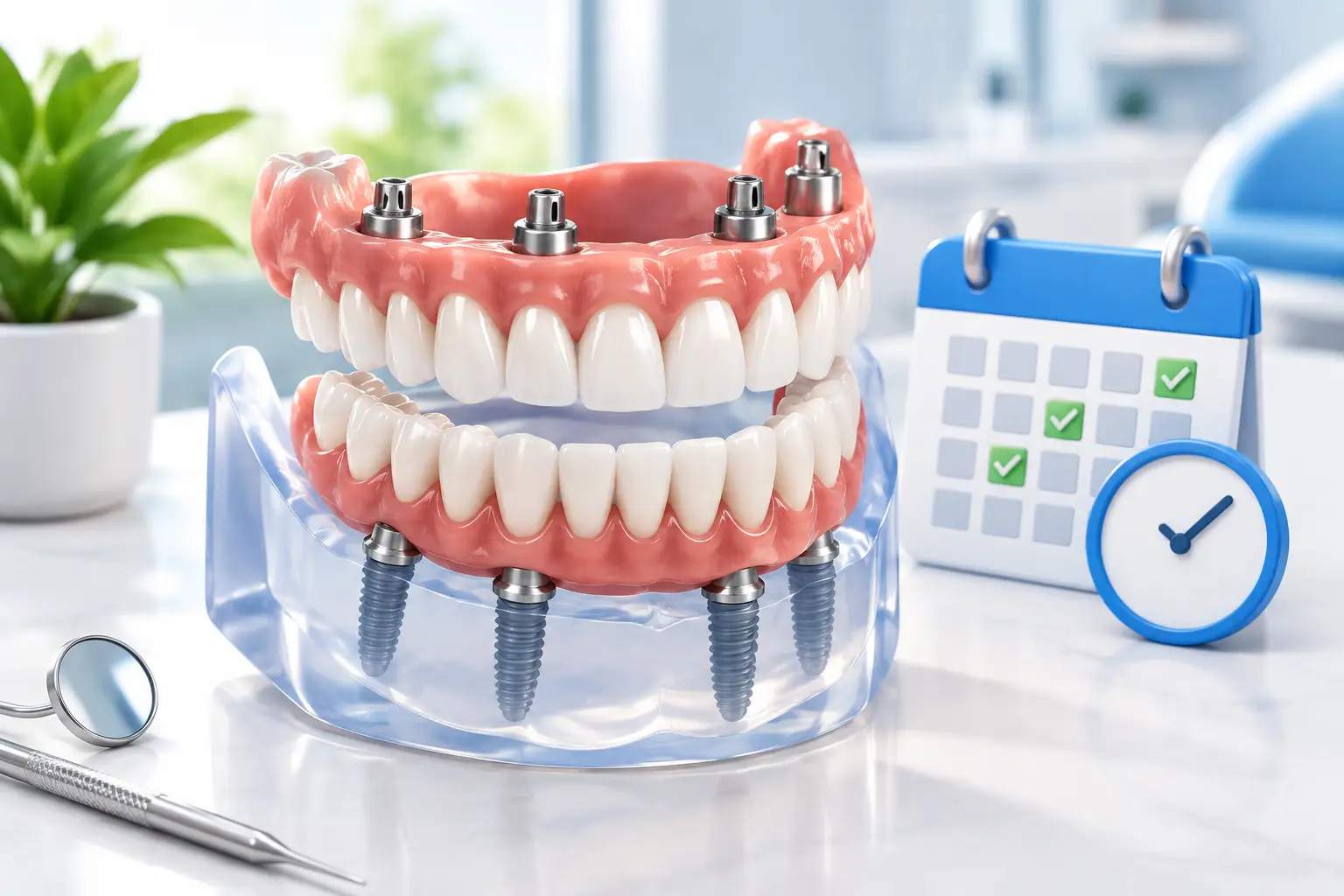
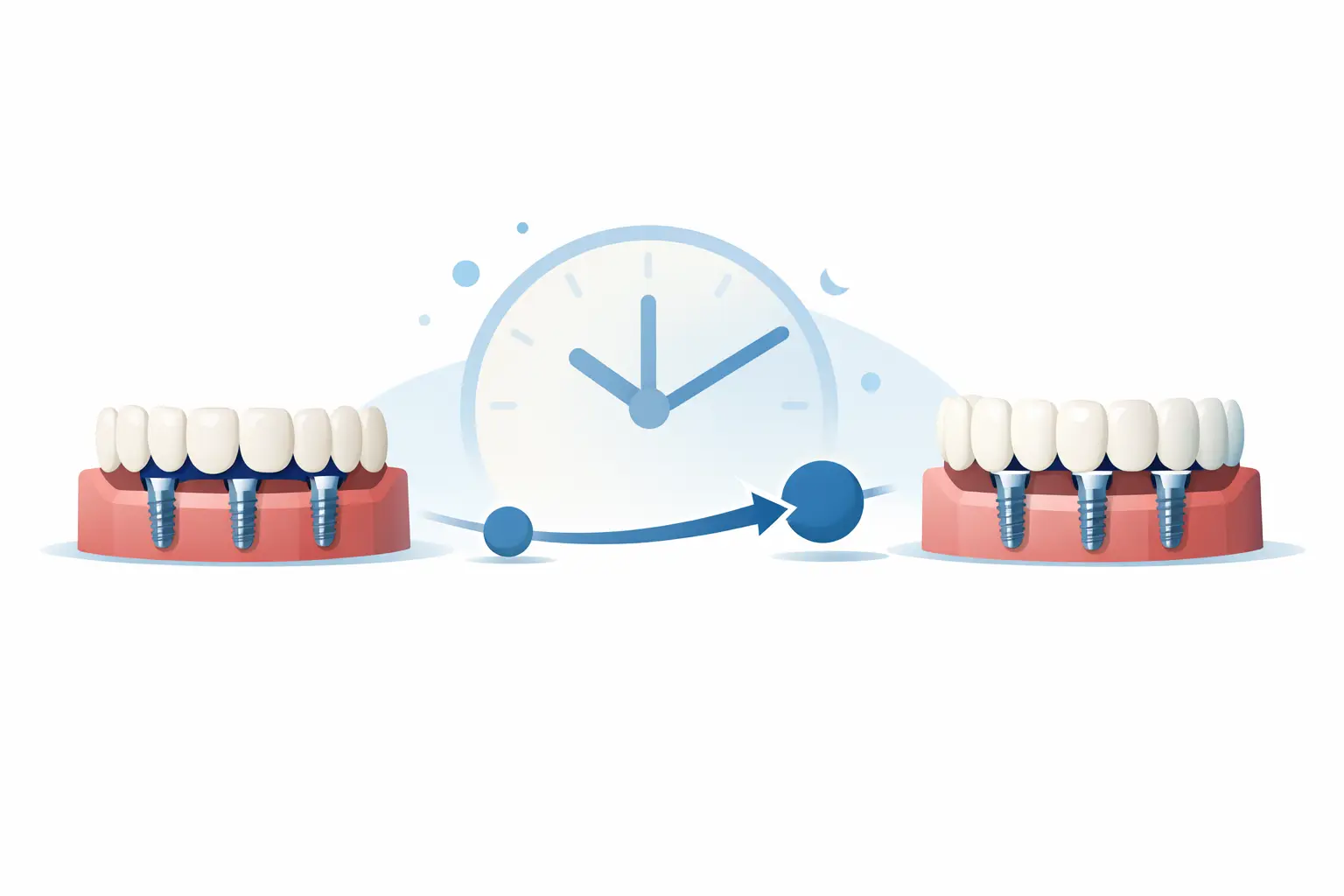
A new smile can often be placed the day of All-on-4 surgery, but that does not mean treatment is finished that day. The All-on-4 timeline from temporary to final teeth has two equally valuable phases: giving you teeth to use right away and giving your implants time to form a stable bond with your jawbone. Knowing what happens in each phase can make the process feel far more manageable.
For many patients, a temporary fixed bridge is placed immediately after surgery. You leave with a complete smile, but you still need to protect the implants while your mouth heals. Your final teeth are made only after your care team confirms that healing and implant stability support a lasting result.
The All-on-4 recovery timeline week by week
Every mouth heals at its own pace. The health and density of your jawbone, whether teeth need to be removed, your medical history, and how closely you follow aftercare instructions all affect timing. Still, this is a realistic picture of what many patients experience.
Surgery day through week one
All-on-4 treatment uses four strategically placed implants to support a full arch of teeth. If you are a candidate for immediate loading, your temporary bridge is secured on the day of surgery. This bridge is designed for appearance, speech, and very gentle function while healing is underway.
Swelling, soreness, minor bruising, and fatigue are common in the first several days. Prescribed or recommended medications, cold packs, rest, and a soft diet can help. Most patients find that swelling peaks around day two or three and begins improving afterward. Avoid smoking, alcohol if directed, vigorous exercise, and any pressure or chewing that your surgical team has asked you to avoid.
A follow-up visit during this period lets your dentist check the surgical sites, bite, comfort, and temporary bridge. Call promptly if pain becomes more severe instead of improving, you develop a fever, have persistent bleeding, or notice a loose temporary bridge.
Weeks two through four
By the second week, many patients are back to their normal routines, though the mouth is still healing beneath the surface. Tenderness and swelling should continue to settle. Your care team may adjust your temporary teeth if they create a sore spot or if your bite needs refinement.
This is also when patients are reminded that feeling better is not the same as being fully healed. Even if your temporary teeth feel secure, biting into an apple, chewing steak, or testing hard foods can place too much force on the implants before they are ready. Continue the recommended soft-food plan and keep the bridge exceptionally clean using the tools and techniques your dental team demonstrates.
Months one through three
During the next several months, the visible healing is usually well advanced, while the most critical healing is happening out of sight. You may gradually expand food choices only when your provider clears you to do so. Many patients can eat a satisfying range of softer foods, but crunchy, sticky, and hard foods still require caution.
Follow-up appointments are not merely formalities. Your team checks gum health, implant stability, bite forces, and the condition of the temporary bridge. Small bite adjustments can protect the implants and reduce strain on the temporary material.
All-on-4 osseointegration timeline: what your implants are doing
Osseointegration is the process in which living bone grows around and bonds to the implant surface. It is the biological foundation that allows implants to support final teeth long term. Because this process cannot be judged by appearance alone, your care team monitors it through examinations, imaging when appropriate, and clinical stability testing.
For many All-on-4 patients, initial integration takes about three to six months. The lower jaw often heals somewhat faster because its bone tends to be denser, while the upper jaw can require more time. That is a general pattern, not a deadline. Patients with lower bone density, a history of gum disease, diabetes that is not well controlled, smoking habits, or additional surgical needs may need a longer healing period.
This is why a careful plan matters more than a fast calendar date. Rushing into final teeth before the implants are ready can compromise comfort, bite function, and the long-term investment you have made in your smile.
Temporary teeth All-on-4: how long will you wear them?
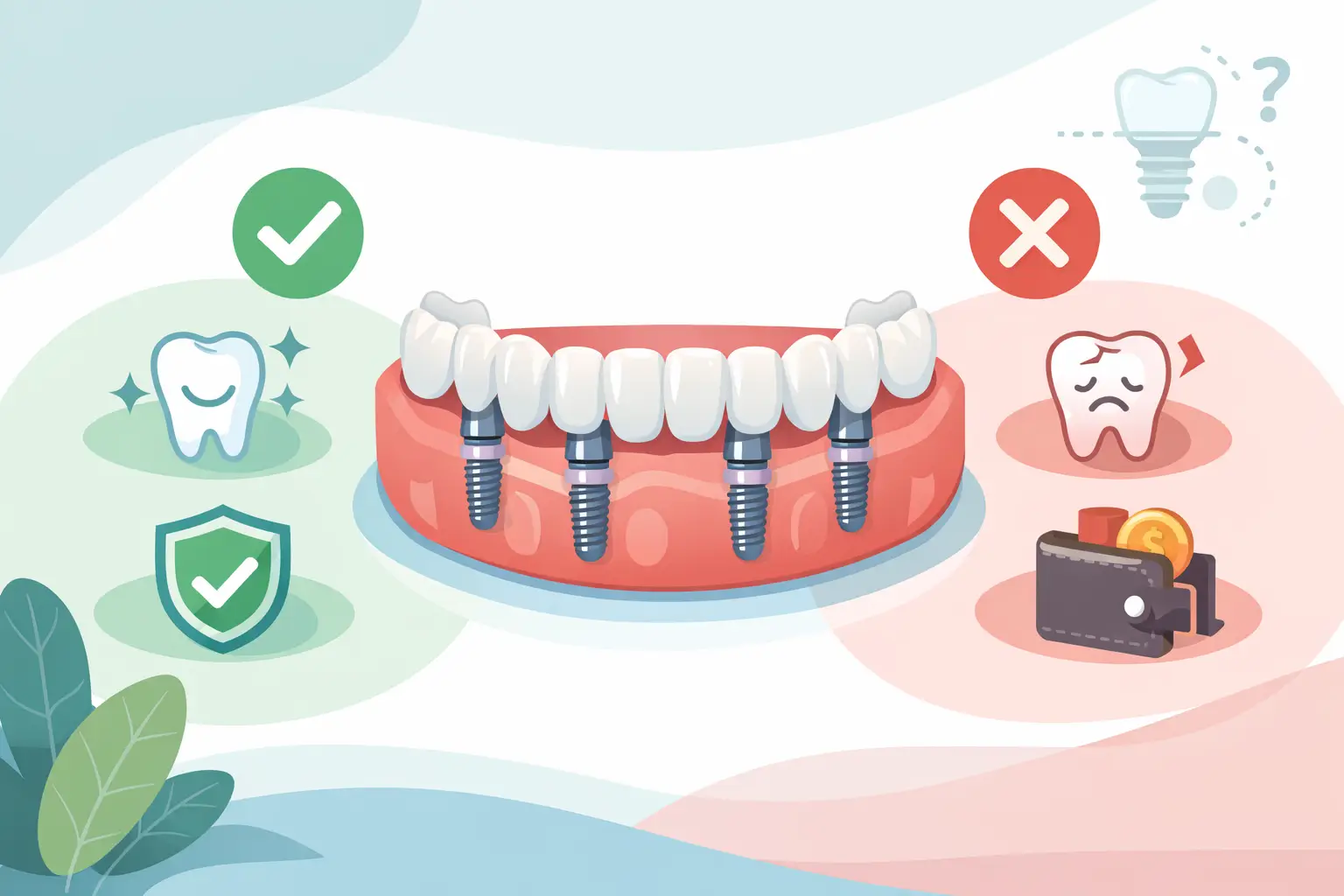
The answer to temporary teeth All-on-4 how long is usually three to six months. In some cases, patients wear a temporary bridge longer while the implants integrate, the gum tissue matures, or the clinical team fine-tunes the bite and appearance. A longer temporary phase is not necessarily a setback. It can be the safer choice for a predictable final result.
Temporary teeth are generally made from acrylic or a similar provisional material. They are strong enough for their intended purpose but are not meant to withstand the same forces as a final prosthesis. They also give your dentist useful information about tooth length, lip support, speech, bite position, and smile appearance before those details are transferred to your final bridge.
That trial period is valuable. If a word feels difficult to pronounce, a tooth looks too long, or your bite feels uneven, it is much easier to make adjustments to a provisional bridge than to a final restoration.
When do you get final teeth with All-on-4?
When patients ask, “When do you get final teeth with All-on-4?” the most accurate answer is: when your implants, gums, and bite are ready. For a straightforward case, the final bridge is often delivered around four to six months after surgery. Some patients need six to nine months, particularly when healing is slower, bone grafting or more complex surgical care is involved, or the bite needs additional refinement.
Before the final bridge is made, your dental team evaluates the implants and records detailed impressions or digital scans. The final restoration is then designed around your facial features, speech, bite, gum contours, and goals for color and tooth shape. Depending on the treatment plan, final teeth may be made from zirconia, porcelain fused to zirconia, or another durable material selected for function and esthetics.
The delivery appointment includes more than attaching new teeth. Your dentist confirms that the bridge fits precisely, checks how your teeth come together, evaluates your speech, and reviews home care. Periodic maintenance remains essential after placement. Implant-supported teeth can develop inflammation if plaque accumulates around the implants, even though the teeth themselves cannot decay.
What can change your All-on-4 healing time?
A personalized timeline protects your health better than a one-size-fits-all promise. Healing may take longer if you need extractions, have active periodontal disease, have limited bone volume, clench or grind your teeth, use tobacco, or have health conditions that affect healing. A temporary bridge may also need repair or adjustment if it chips or if your bite changes as swelling resolves.
Your role matters, too. Keep every follow-up appointment, follow diet guidelines, clean under and around the bridge as instructed, and wear any protective night guard your provider recommends. Do not try to “test” the implants with hard foods. The goal is not simply to get through recovery. It is to give your implants the best conditions for years of comfortable function.
At Seattle Oral Care, implant treatment is planned with coordinated restorative and surgical expertise, so decisions about timing are based on your healing rather than a preset schedule. A thoughtful temporary phase can feel like a pause, but it is where the foundation for confident final teeth is built.