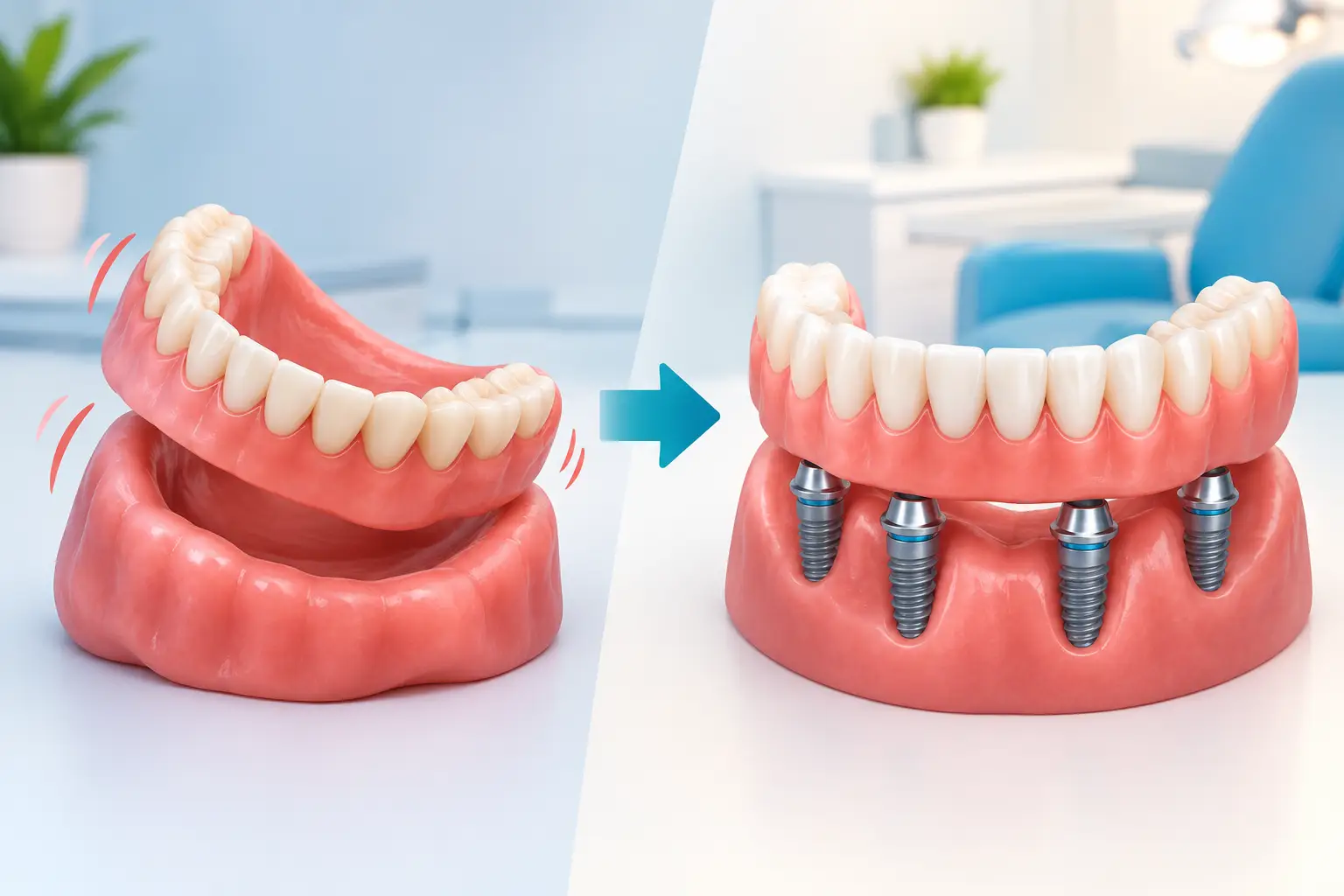
A denture wearer whose lower plate moves when eating knows the feeling well: a bite of food shifts the denture, speech becomes less clear, and the day can start to revolve around avoiding certain meals. If your lower denture keeps slipping, implants may provide the stable foundation a traditional lower denture cannot achieve on its own.
This is not a matter of doing something wrong or failing to use enough adhesive. The lower jaw presents a unique challenge. Its supporting bone is narrower than the upper jaw, the tongue is constantly in motion, and there is no palate for the denture to create suction against. A loose lower denture is common, but it does not have to be something you simply tolerate.
Why a loose lower denture moves
A conventional lower denture sits on top of the gums and jawbone. It is shaped carefully to follow the contours of the mouth, but it is still a removable appliance that relies on the available ridge of bone, the surrounding muscles, and your ability to control it with your tongue and cheeks.
After teeth are lost, the jawbone no longer receives the chewing forces that once helped maintain it. Over time, the ridge can become lower and flatter. As that foundation changes, a denture that once fit reasonably well may begin to rock, lift, or slide forward during meals.
Saliva, facial muscle movement, and changes in weight or overall health can affect fit as well. Even a well-made denture may become less secure if the gums and bone beneath it change. Denture adhesive can offer short-term help for minor movement, but it cannot restore lost support or correct a denture that no longer fits properly.
A moving lower denture can lead to more than frustration. Pressure points may cause sore spots. Some people limit nutritious foods that require more chewing. Others become self-conscious about speaking, laughing, or eating around family and friends. These concerns deserve a thoughtful clinical solution, not a quick dismissal.
When a lower denture keeps slipping, implants can help
Dental implants are small posts placed in the jawbone to act as stable anchors for replacement teeth. For someone with a lower denture that moves, implants can secure the denture in a way that gum-supported appliances cannot.
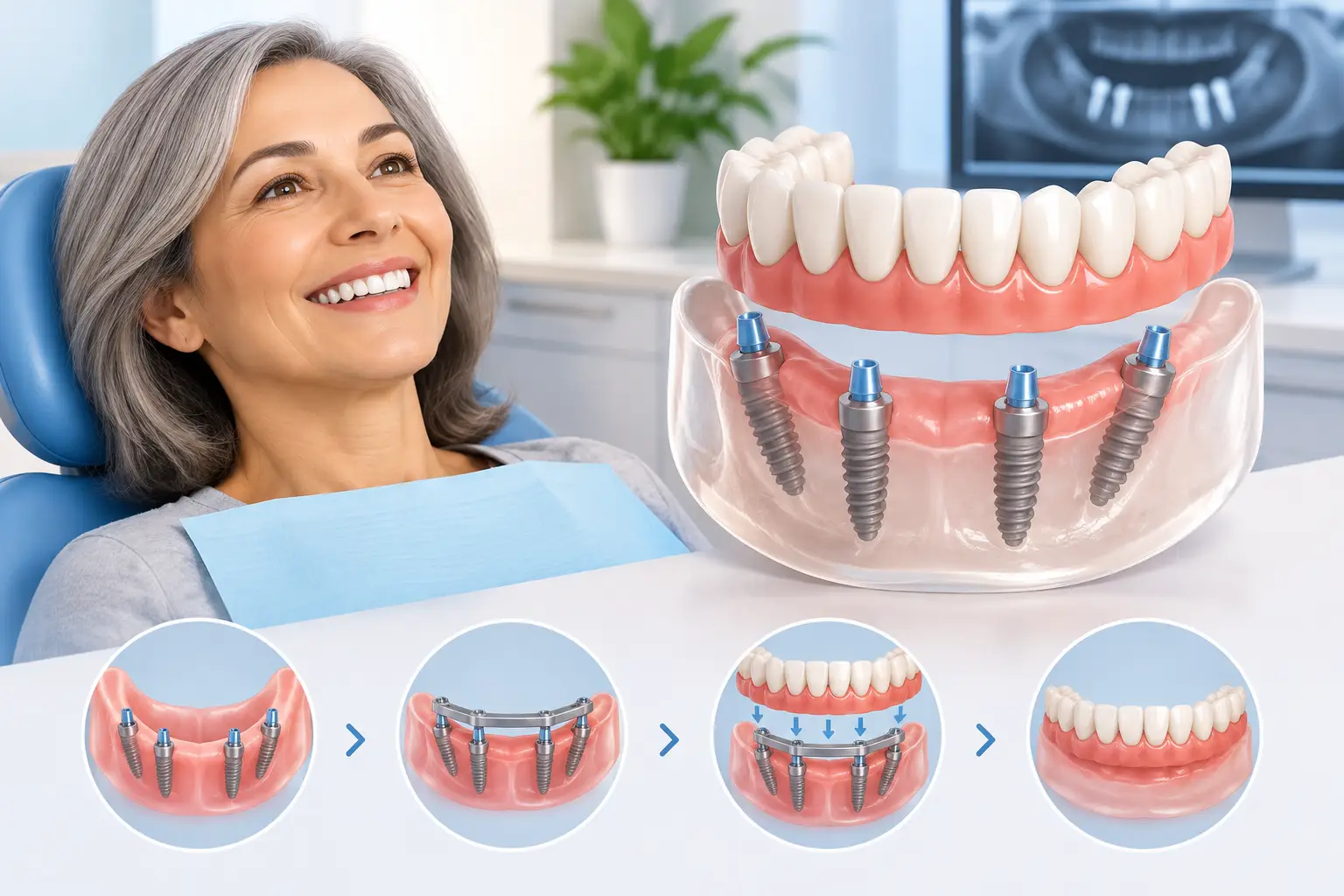
The most common option is an implant-retained overdenture. The denture remains removable for cleaning, but it connects to implants through specialized attachments. Rather than floating on the gums, it has defined points of support and retention. Many patients find that this substantially reduces unwanted movement while eating and speaking.
In some cases, a fixed full-arch restoration may be appropriate. This type of restoration is attached to multiple implants and is removed only by the dental team for professional maintenance. It can offer a more tooth-like experience, but it also requires careful home hygiene and may not be the best choice for every patient.
The right design depends on your goals, jawbone health, bite, dexterity, medical history, and the condition of any existing denture. A removable implant-supported denture may be an excellent choice for someone who values easier cleaning and a more straightforward appliance. A fixed restoration may suit someone seeking a non-removable option and who can commit to detailed daily care.
How to stabilize a lower denture safely
The first step is not automatically placing implants. A comprehensive examination should identify why the denture is moving and whether the current appliance can be improved. Sometimes relining, adjusting, or remaking a denture can improve comfort. If the bone ridge is very limited, however, a new conventional denture alone may still have difficulty staying in place.
A careful evaluation typically includes an examination of the gums, jaw relationship, bite, existing denture, and available bone. Imaging helps the dental team assess where implants can be placed safely and predictably. Your overall health and medications also matter, especially when planning any surgical care.
If implants are a good fit, treatment is planned around the final denture rather than treating implant placement as a separate event. This prosthetically driven approach matters. The implant positions, attachment style, tooth arrangement, and bite all need to work together so the result feels stable, comfortable, and natural.
For patients who feel anxious about treatment, the care team should explain each stage in plain language and make room for questions. You should understand why a particular number of implants or attachment system is being recommended, what home care will involve, and what alternatives are available.
Existing dentures may or may not be usable
Some patients ask whether their current lower denture can be converted to attach to implants. In certain situations, it can serve as a temporary or transitional appliance. In others, the acrylic base, tooth position, bite, or overall fit does not provide a reliable starting point.
A new implant-supported denture is often designed to account for the precise implant locations and your facial support, speech, and bite. The goal is not simply to make the denture snap in. It is to create a restoration that supports comfortable function and protects the surrounding tissues.
What implant support can change at mealtimes
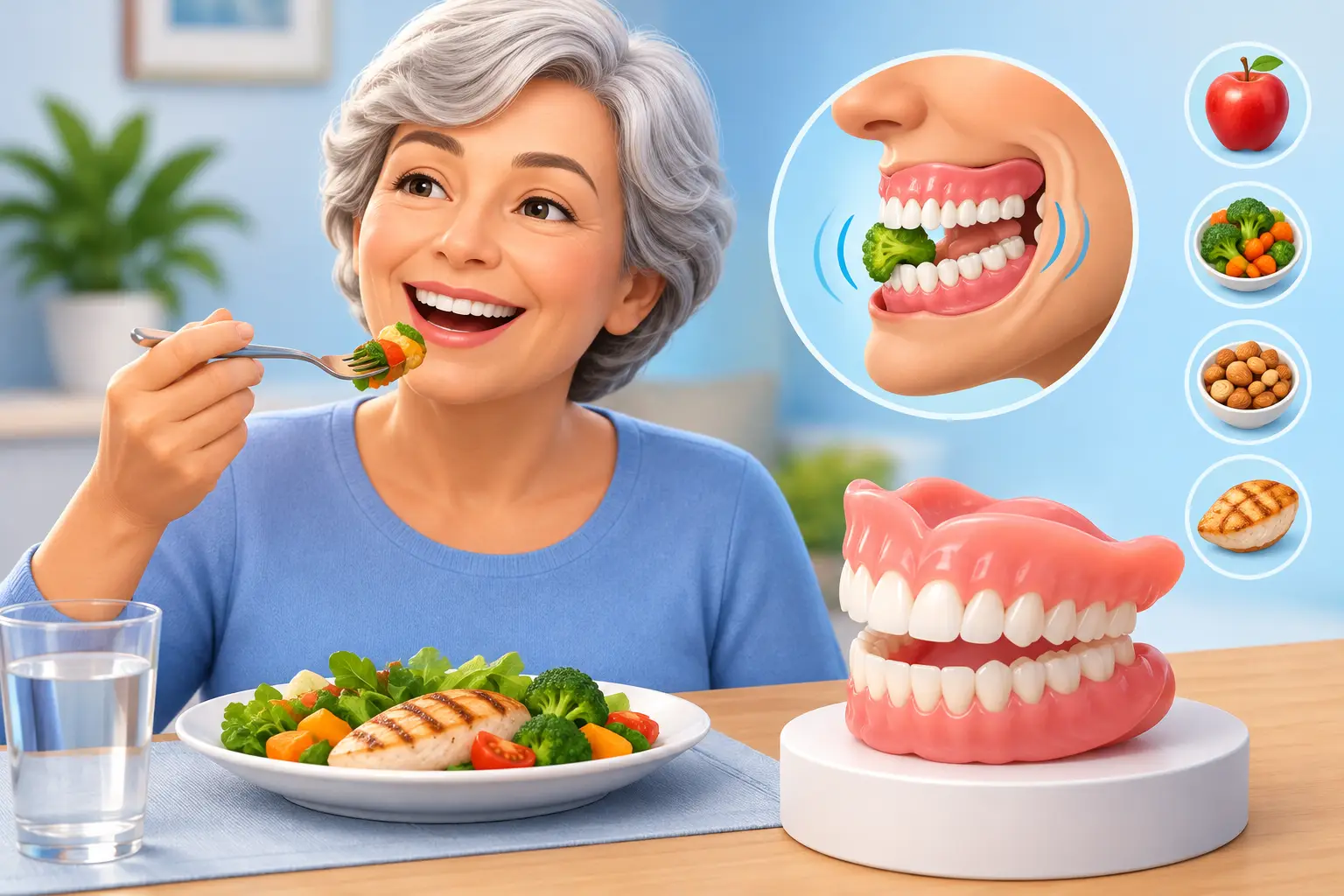
No dental treatment can recreate natural teeth exactly, and adjusting to an implant-supported denture still takes patience. Yet the difference in stability can be significant. With less rocking and lifting, many people feel more confident biting into food, chewing on both sides, and speaking without fearing that the denture will shift.
Implants can also reduce the rubbing that occurs when a denture slides repeatedly across the gums. That does not mean the gums no longer need attention. A removable implant-retained denture continues to rest partly on the tissues, so a precise fit and regular maintenance remain essential.
It also helps to keep expectations realistic. Implant attachments have components that can wear with normal use and may need professional servicing. A fixed restoration requires cleaning beneath the bridge and around the implants every day. The long-term success of either option depends on the quality of planning, careful hygiene, routine professional follow-up, and avoiding habits that overload the restoration.
Is everyone with a loose lower denture a candidate?
Many people are candidates, including those who have worn dentures for years, but candidacy is individual. Adequate bone is helpful, although limited bone does not automatically rule out implant treatment. A clinician may be able to use available bone strategically or discuss whether preparatory treatment could improve the foundation.
Medical conditions, smoking or nicotine use, dry mouth, gum disease, grinding, and certain medications can influence planning and healing. These factors should be discussed openly, not treated as reasons for embarrassment. A coordinated team that includes restorative and surgical expertise can evaluate the full picture and help you understand the benefits and limitations of each option.
If implants are not appropriate right now, there may still be ways to improve denture stability and comfort. A well-fitted denture, proper adhesive use when recommended, treatment for sore areas, and regular evaluation can make a meaningful difference.
Daily care for a stabilized lower denture
A secure denture still needs consistent care. Remove a removable implant-retained denture as instructed, clean the denture thoroughly, and clean around the implant attachments and gums with the tools recommended by your dental team. Do not use abrasive household products that can scratch the appliance or damage its components.
For fixed implant restorations, cleaning under and around the restoration is especially important. Interdental brushes, flossing aids, and water-cleaning devices may be recommended based on the design of your teeth and your comfort using them. Professional visits allow the team to check your bite, tissue health, attachment wear, and the fit of the restoration before small concerns become larger ones.
You deserve to enjoy meals and conversations without constantly managing a denture that feels unpredictable. A personalized implant consultation can clarify why your lower denture moves, whether it can be improved, and which path can give you a steadier, more comfortable smile.