Losing most or all of your teeth can change more than your smile. Eating may become difficult, speaking can feel less certain, and removable dentures may shift when you want to feel comfortable and present. All-on-4 dental implants offer a fixed full-arch replacement option designed to restore the look, feel, and function of a complete set of teeth with a carefully planned number of implants.
For many people, this treatment can be life-changing. It is also a significant clinical and financial decision. Understanding how the process works, where the trade-offs are, and what long-term care involves can help you decide whether it is the right path for your health and goals.
How All-on-4 Dental Implants Work
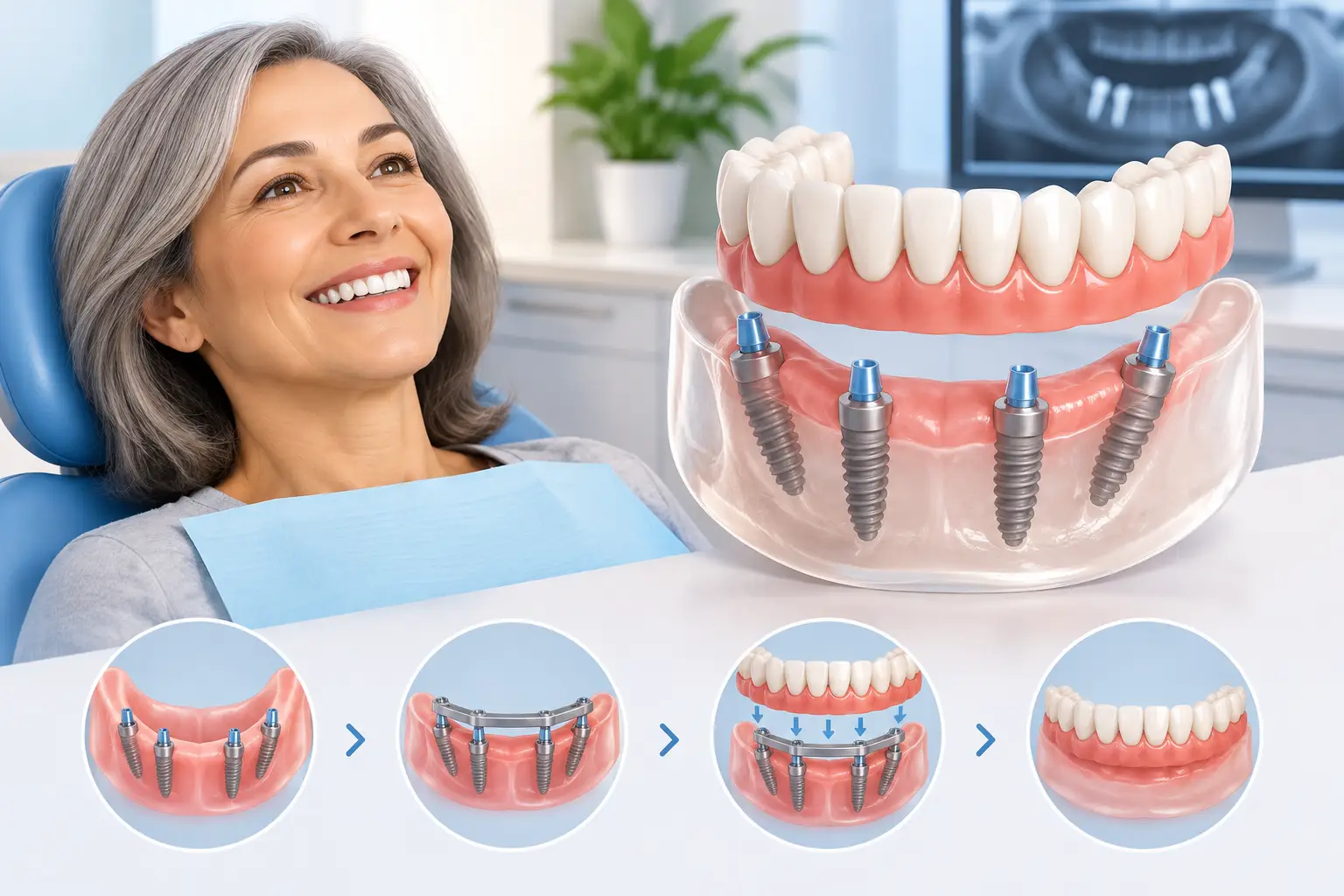
All-on-4 treatment replaces a full upper or lower arch of missing teeth using four strategically positioned dental implants. The implants are placed in the jawbone, where they serve as stable anchors for a full-arch prosthesis - a custom restoration that replaces the visible teeth and, when needed, lost gum tissue.
The back implants are often placed at an angle to make the best use of available bone. This approach can reduce the need for bone grafting in some patients, particularly in the upper jaw where bone volume may be limited after years of tooth loss. It does not eliminate the need for grafting in every case. A 3D scan and thorough examination are needed to determine what your anatomy will support safely.
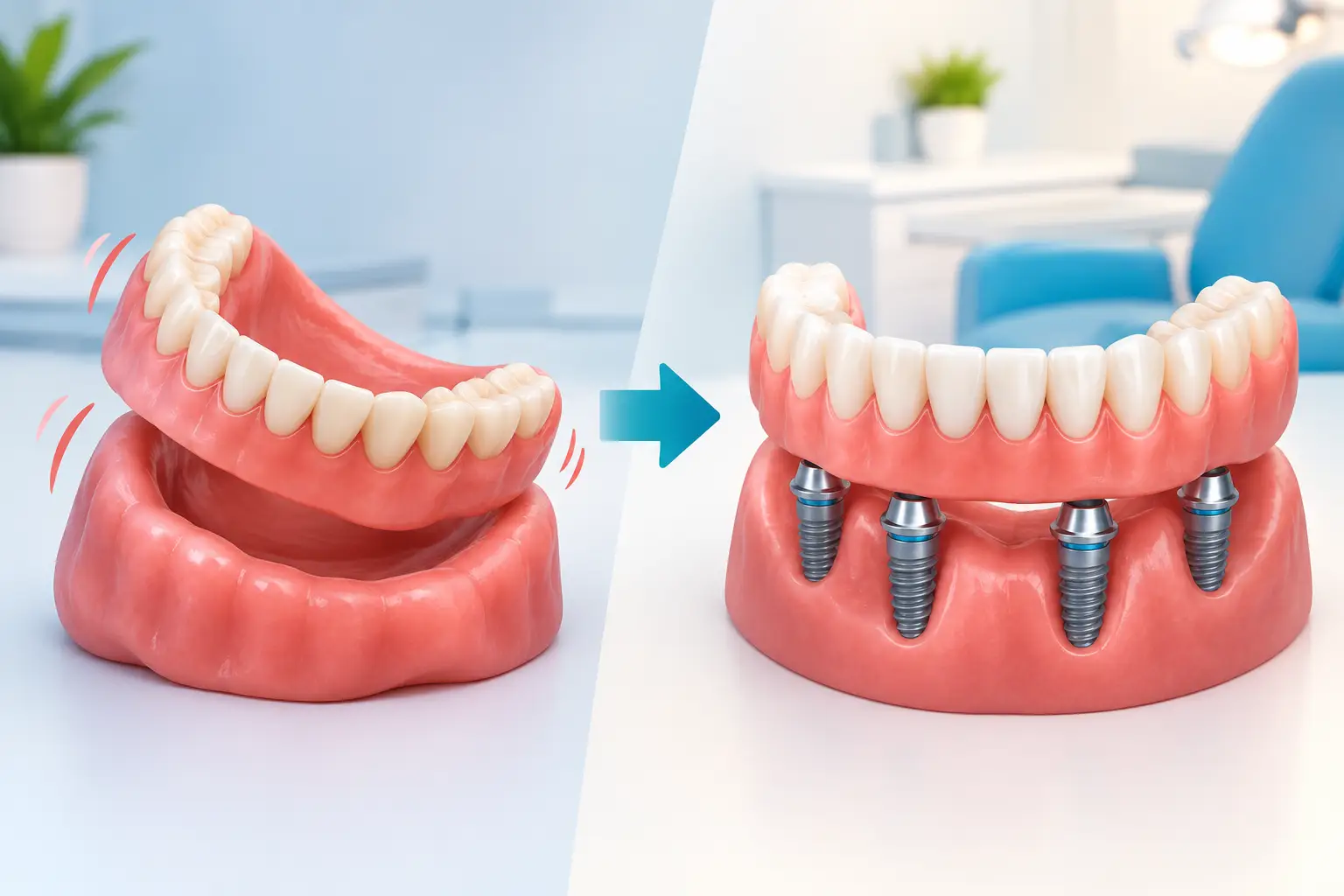
Unlike a traditional removable denture, a fixed All-on-4 restoration is secured to the implants. It does not come out at home. Your dental team can remove it periodically for professional maintenance, but day to day, it is designed to feel stable while you eat, speak, and smile.
Who May Be a Candidate for All-on-4 Dental Implants?
All-on-4 dental implants may be an option for adults who have lost most or all teeth in one arch, have failing teeth that cannot be predictably restored, or are frustrated by loose conventional dentures . Candidates should be healthy enough for oral surgery and committed to ongoing hygiene and follow-up care.
Healthy gums and adequate bone matter, but candidacy is not always as simple as being told you have "bone loss." Modern imaging allows the care team to assess bone quality, nerve locations, sinus anatomy, bite forces, and the position of your jaw. Some patients can proceed without grafting. Others need periodontal treatment, grafting, extractions, or healing time before implants can be placed.
Smoking, uncontrolled diabetes, untreated gum disease, and certain medications can affect healing and implant success. These factors do not always rule out treatment, but they should be discussed openly. A good consultation is not about rushing someone toward a procedure. It is about identifying risks early and creating a plan that gives the restoration the best chance to last.
A full-arch solution is not always the only solution
If several healthy teeth remain, keeping and restoring them may be the more conservative choice. In other cases, individual implants or an implant-supported bridge may better fit a patient's needs. All-on-4 is most valuable when a full arch needs replacement, not simply because it is a well-known treatment name.
What the Treatment Process Usually Looks Like
Planning comes first. Your dentist will evaluate your teeth, gums, jawbone, bite, facial proportions, and medical history. Digital imaging and photographs help the team plan implant placement and design teeth that support both function and a natural appearance.
If failing teeth must be removed, extractions and implant placement can sometimes occur during the same surgical appointment. Many patients receive a temporary fixed bridge shortly after surgery, so they do not have to go without teeth during healing. This temporary restoration is attractive and functional, but it is not a license to return immediately to chewing anything you want. A soft-food diet protects the healing implants while they integrate with the bone.
Over the following months, the implants gradually bond with the jawbone in a process called osseointegration. During this period, your team monitors healing, adjusts the temporary restoration if needed, and makes sure your bite is balanced. Once healing is complete, records are taken for your final full-arch prosthesis.
The final bridge is designed for durability, comfort, speech, and appearance. It may be made from materials such as zirconia or layered ceramic, depending on your bite, cosmetic goals, and clinical needs. Material selection is not just about appearance. Patients who clench or grind, for example, may benefit from a design that prioritizes strength and repairability.
Recovery: What Feels Normal and What Needs Attention
Most patients experience swelling, tenderness, and bruising after surgery. These effects are expected and usually improve over the first several days. Your doctor may recommend pain medication, cold compresses, a modified diet, and specific cleaning instructions to support comfortable healing.
The emotional adjustment can take time, too. Even when a temporary bridge is placed right away, speaking and eating may feel unfamiliar at first. Small speech changes often improve as your tongue and facial muscles adapt. Patients who have lived with missing or loose teeth for years may also need time to become comfortable with the feeling of a stable bite.
Call your dental team promptly if you have increasing pain after initial improvement, persistent bleeding, fever, a loose temporary bridge, or swelling that worsens rather than settles. Early communication helps prevent minor concerns from becoming larger problems.
The Long-Term Commitment Behind a Lasting Smile
Dental implants cannot get cavities, but the tissues around them still require consistent care. Plaque buildup can lead to inflammation and, in more serious cases, bone loss around an implant. Daily home care and regular professional maintenance are essential parts of protecting your investment.
You will need to brush the bridge and gumline carefully, clean beneath the restoration with the tools recommended by your care team, and attend periodic hygiene visits. Many patients benefit from a water flosser, implant-safe flossing aids, or small interdental brushes. The right routine depends on the shape of the bridge and how much space exists beneath it.
Your bite also needs monitoring. Full-arch restorations are engineered to handle normal function, but heavy clenching, grinding, or chewing hard objects can chip materials, loosen components, or place excess force on implants. A night guard may be recommended for patients with signs of grinding.
At Seattle Oral Care, complex implant cases can be planned with coordinated input from a prosthodontist, oral surgeon, periodontist, and general dentist. That collaboration matters because a successful full-arch result depends on more than surgery. It requires thoughtful restoration design, healthy gums, a stable bite, and a maintenance plan that fits your life.
Questions to Ask Before Moving Forward
A consultation should leave you with clear answers, not pressure. Ask whether grafting is likely, whether you will receive a temporary restoration, how long you should expect to follow a soft-food diet, and what the final bridge material will be. It is also reasonable to ask how maintenance appointments work, what repairs may involve, and how your bite or teeth grinding will be managed.
Ask about the experience and roles of the clinicians involved as well. Full-mouth rehabilitation is a team effort. The planning should account for surgical placement, gum health, tooth shape, speech, facial support, and the way your upper and lower teeth meet.
All-on-4 treatment is not about creating a perfect smile overnight. It is about building a stable, healthy foundation for eating, talking, and smiling with greater confidence for years to come. The right next step is a thorough conversation with a team that listens closely to your concerns and explains every option at a pace that feels comfortable.