For people living with failing teeth, loose dentures, or widespread tooth loss, the decision can feel much bigger than choosing a dental procedure. When people search for Pros and Cons of All-on-4 Dental Implants , they are usually asking a personal question: Can this treatment help me eat, speak, smile, and feel comfortable again without creating new problems down the road?
All-on-4 treatment can be life-changing for the right patient. It can also be a major financial, surgical, and long-term commitment. A thoughtful consultation should cover both sides clearly, so you can make a decision based on your health, goals, anatomy, and budget rather than a promising advertisement alone.
What All-on-4 Dental Implants Actually Involve
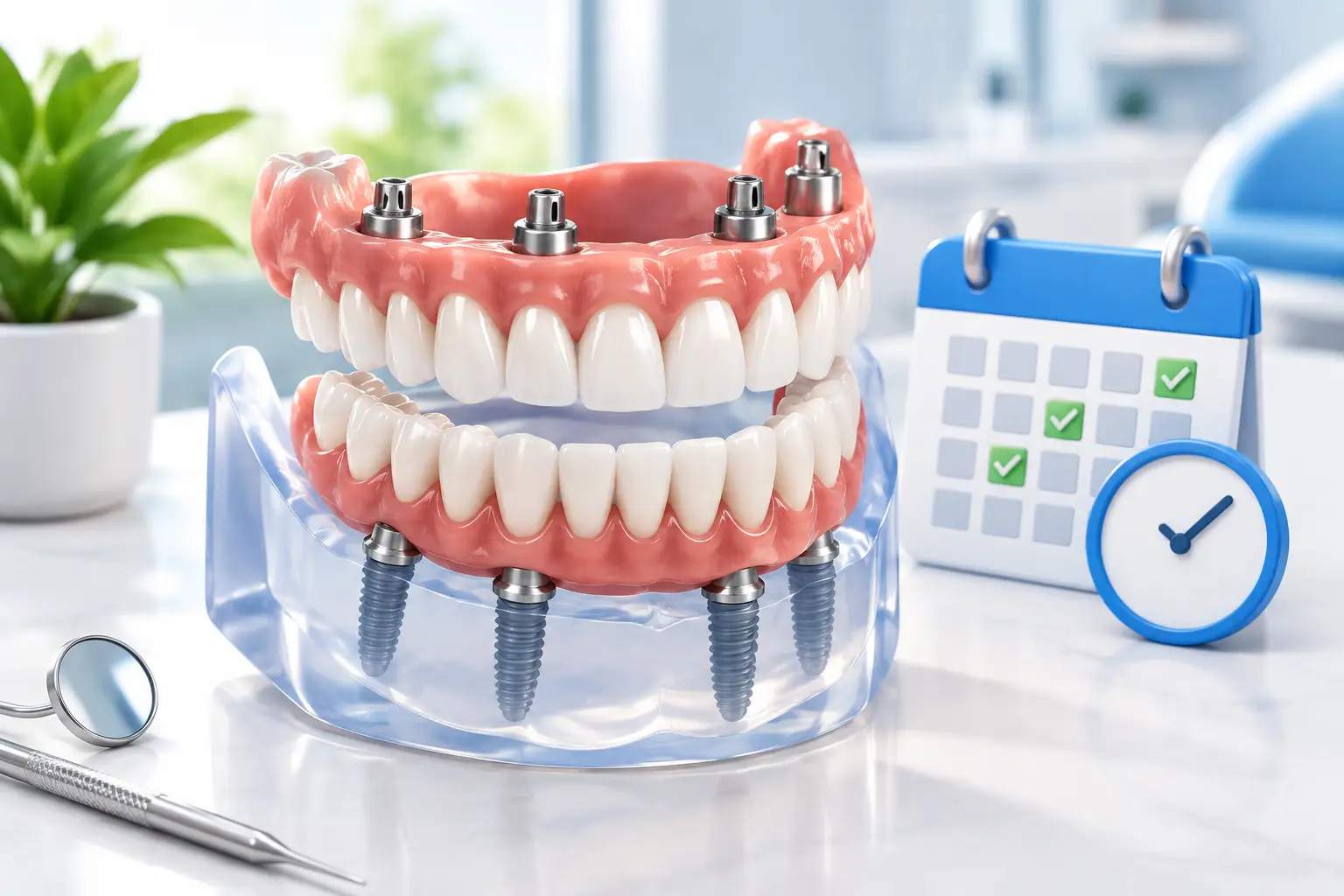
All-on-4 is a full-arch restoration that uses four dental implants to support a fixed bridge of replacement teeth. The implants are placed strategically in the jaw, often with the back implants angled to make use of available bone. This approach can allow some patients to avoid more extensive bone grafting.
After teeth are removed, if needed, implants are placed and a temporary fixed bridge may be attached the same day or soon afterward. Once the implants heal and integrate with the jawbone, a final bridge is made. It is designed to restore the appearance and function of a full upper or lower arch of teeth.
The name can be misleading. All-on-4 is not a one-size-fits-all treatment, and four implants are not automatically the best number for every person. Some patients need additional implants, grafting, or a different restorative approach to create stable, lasting support.
Benefits of All-on-4 Dental Implants
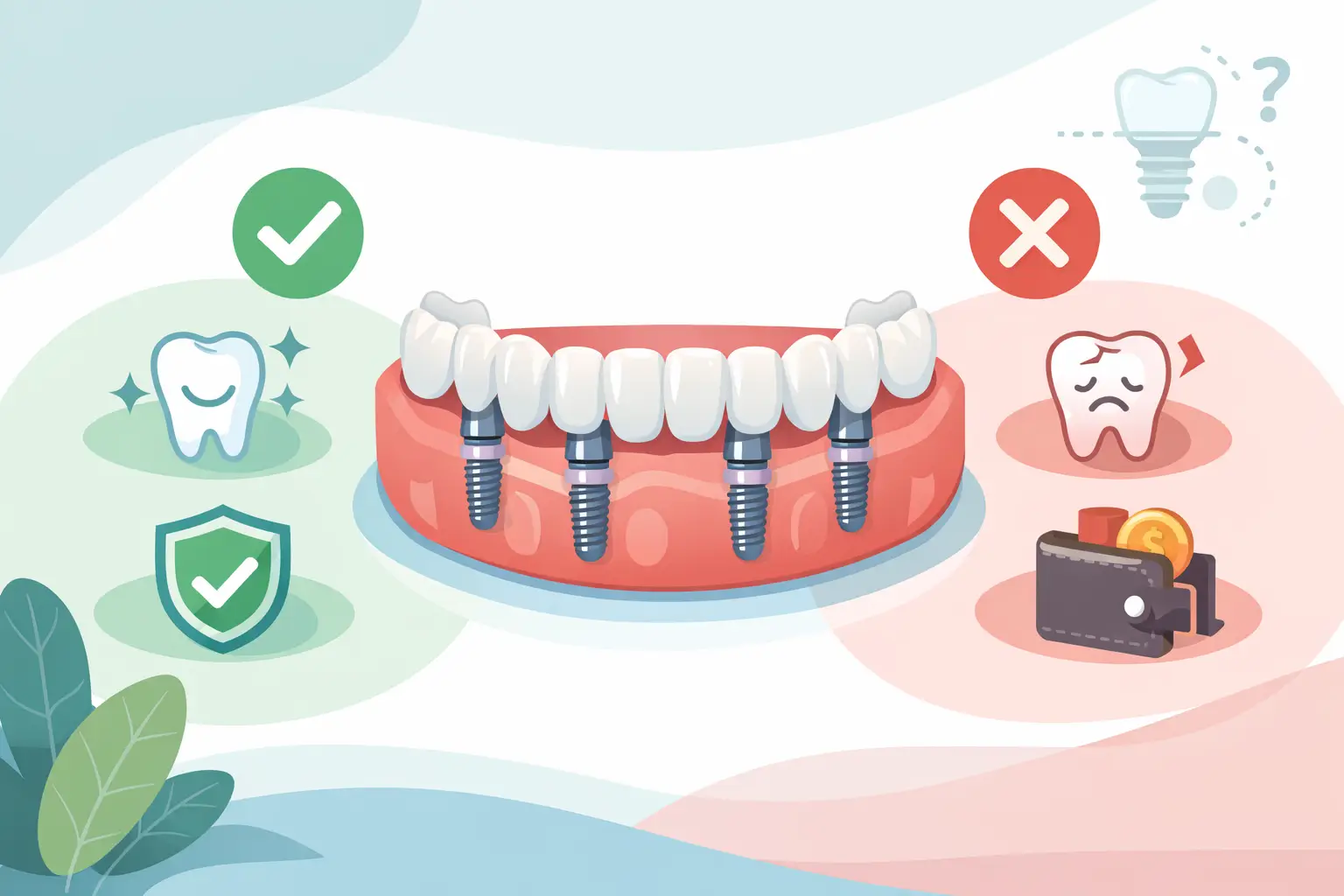
The most meaningful benefits of All-on-4 dental implants are stability, function, and freedom from a removable denture . Because the bridge is fixed to implants, it does not rely on suction, denture adhesive, or the pressure points that can make traditional dentures uncomfortable.
Many patients find they can return to eating a wider variety of foods after treatment. Speech often feels more natural because the teeth are anchored in place. A well-designed bridge can also support facial appearance by replacing missing teeth and providing lip support where appropriate.
All-on-4 can be especially helpful for someone with severely damaged teeth throughout an arch. Rather than repeatedly repairing teeth with a poor long-term outlook, full-arch treatment may provide a more predictable plan. In select cases, angled implants can reduce the need for bone grafting and shorten the overall path to fixed teeth.
There is an emotional benefit, too. People who have spent years hiding their smile or worrying that a denture will move often value the confidence of having teeth that feel secure. That confidence matters, but it should be paired with realistic expectations about healing, cleaning, and maintenance.
Disadvantages of All-on-4 Implants to Consider
The largest disadvantage is that All-on-4 is irreversible. If natural teeth are removed to make room for the restoration, they cannot be put back. When teeth can be predictably treated and maintained, preserving them is often worth discussing before choosing a full-arch solution.
The treatment also requires surgery and a healing period. Even when temporary teeth are placed promptly, they are not the same as receiving a final, fully healed restoration. You will need to follow dietary restrictions and be gentle with the temporary bridge while the implants stabilize.
A fixed bridge can be harder to clean than individual teeth. Patients need to brush carefully around the bridge, clean beneath it with specialty tools, and keep regular professional maintenance visits. Without consistent hygiene, inflammation and bone loss can develop around implants.
Finally, full-arch treatment can be technically demanding. Implant position, bite design, bridge material, gum contours, and facial support all affect the outcome. This is one reason coordinated care from an experienced restorative dentist, oral surgeon, and periodontist can be valuable for complex cases.
All-on-4 Dental Implants Cost: What Changes the Price?
The all on 4 dental implants cost varies substantially because the treatment plan is not simply four implants and a bridge. Cost may include diagnostic imaging, extractions, sedation, bone grafting when necessary, implant surgery, a temporary bridge, the final bridge, follow-up visits, and long-term maintenance.
The type of final restoration matters as well. Acrylic, composite, zirconia, and other materials differ in appearance, durability, repairability, and cost. A lower initial price may not include a final bridge or may use materials that need more frequent repair or replacement.
Ask for a written treatment plan that explains what is included and what may create additional costs. It is reasonable to ask about the temporary restoration, final restoration, sedation, expected maintenance, warranty policies, and what happens if an implant does not integrate successfully. Clear answers protect you from comparing estimates that cover very different levels of care.
The All-on-4 Dental Implants Timeline
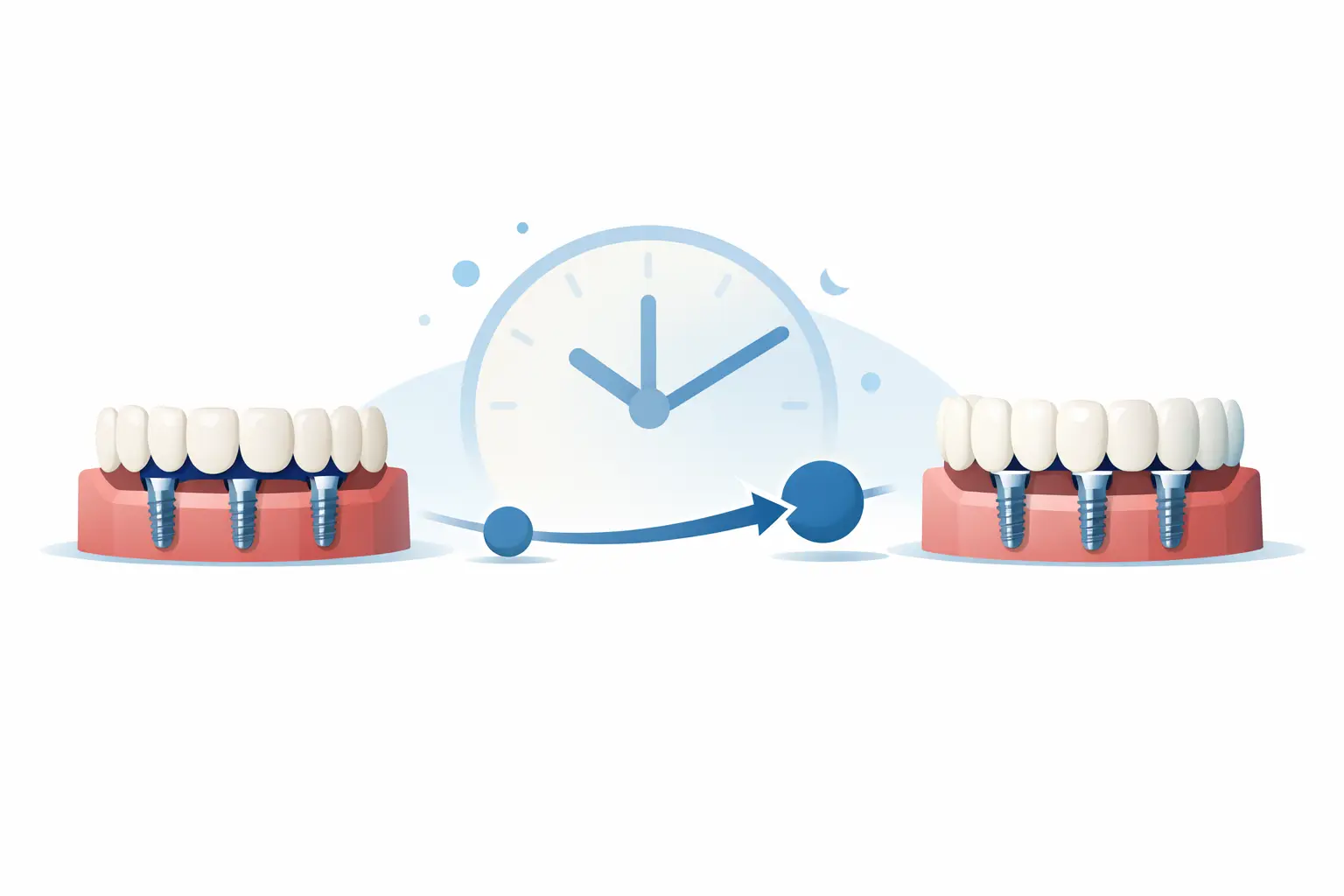
An all on 4 dental implants timeline begins with planning, not surgery. Your dental team will evaluate your medical history, gums, bone levels, bite, existing teeth, and goals. Digital scans and imaging help determine whether an immediate fixed temporary is appropriate and whether grafting or other treatment is needed first.
On surgery day, remaining unhealthy teeth may be removed, implants are placed, and a temporary bridge may be delivered. The first several weeks are focused on comfort, healing, and a soft-food diet. Even if your teeth look complete, the implants are still forming a biologic connection with the jawbone.
Healing commonly takes several months. During this period, the team monitors the implants and adjusts the temporary if needed. The final bridge is made only after the implants, gums, and bite are stable enough to support a precise long-term result. For many patients, the complete process takes about four to eight months, though it can be longer when grafting, medical conditions, or healing concerns are involved.
All-on-4 Implants Risks and Long-Term Problems
All surgery carries risk. With All-on-4, potential complications include infection, swelling, bleeding, discomfort, nerve irritation in the lower jaw, sinus concerns in the upper jaw, and failure of an implant to integrate with bone. Careful planning reduces risk, but no provider can honestly promise that complications will never occur.
All-on-4 implants long-term problems may include peri-implant disease, gum recession, bone loss around implants, loosening of screws, chipping or fracture of bridge material, wear from grinding, and changes in bite over time. These issues are not inevitable, but they are reasons to view implant treatment as a lifelong commitment rather than a permanent, maintenance-free product.
Smoking and uncontrolled diabetes can raise the risk of poor healing and implant complications. Untreated gum disease, heavy clenching or grinding, poor daily hygiene, and skipping professional maintenance can also affect long-term success. A nightguard may be recommended for patients who grind their teeth.
Who Should Not Get All-on-4 Implants?
There is no single rule for who should not get All-on-4 implants, but some people should delay treatment or consider alternatives. Patients with uncontrolled diabetes, active periodontal infection, significant untreated medical issues, or an inability to maintain oral hygiene need their health stabilized first.
People who smoke or use tobacco are not automatically excluded, but they should understand the higher complication risk. Heavy smokers may be advised to stop or substantially reduce tobacco use before and after surgery. Severe bone loss may also require grafting, additional implants, or a different design rather than a standard four-implant approach.
All-on-4 may not be the best choice for a person who still has many healthy, restorable teeth. It may also be a poor fit for someone who cannot attend follow-up appointments or is not prepared for the financial and maintenance responsibilities of fixed full-arch care.
Is All-on-4 Worth It?
Is All-on-4 worth it? For many people with failing teeth or unstable dentures, the answer can be yes. The value is often found in everyday improvements: eating with more confidence, speaking without worrying about movement, and smiling without trying to hide damaged teeth.
But the right answer depends on whether the plan protects your long-term health. Before moving forward, ask whether any natural teeth can be saved, what the final bridge will be made from, how your bite will be managed, and what maintenance will be required. You should also feel comfortable asking about the experience of each clinician involved in surgery and restoration.
At Seattle Oral Care, complex implant cases can be planned with restorative, surgical, and periodontal expertise working together. The goal is not to push every patient toward one solution. It is to help you understand your choices, feel heard, and choose a treatment plan you can care for with confidence for years to come.