Losing most or all of the teeth in an arch can affect far more than a smile. Meals become limited, dentures may move at the wrong moment, and it can be hard to feel like yourself in photos or conversations. All on 4 dental implants , also called all on four dental implants, can provide a fixed full-arch replacement designed to feel more stable, look natural, and support everyday confidence.
This treatment is not simply a new denture. It is a carefully planned full-mouth restoration that combines surgical placement, prosthodontic design, and long-term maintenance. For the right patient, it can be life-changing. It also requires thoughtful evaluation, healing time, and a commitment to ongoing care.
What Are All-on-4 Dental Implants?
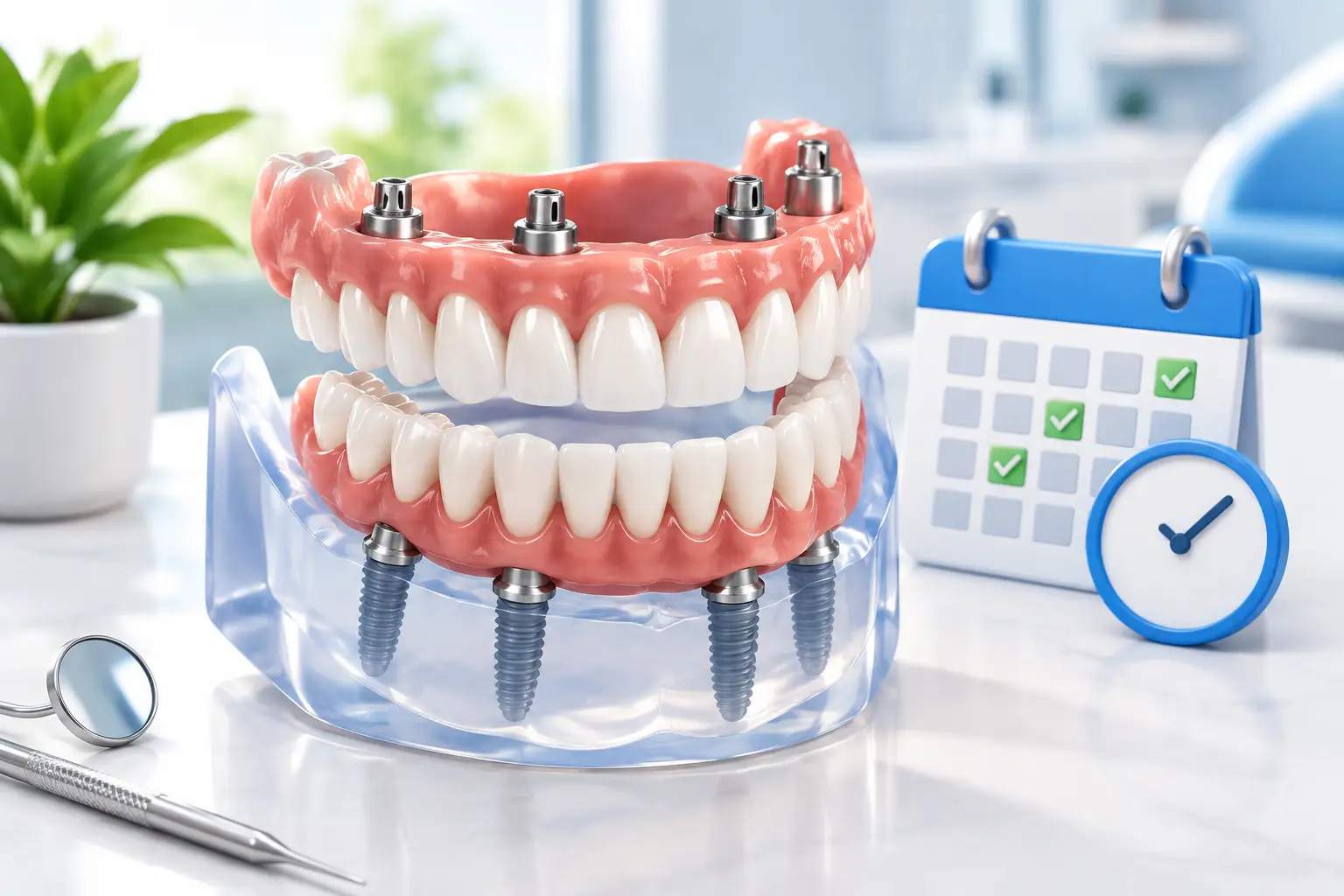
All-on-4 treatment replaces a full upper or lower arch of missing or failing teeth with a prosthetic bridge supported by four dental implants. Implants are small, biocompatible posts placed in the jawbone. They function as anchors for a fixed set of teeth, meaning the bridge is secured in place rather than resting on the gums like a traditional removable denture.
The placement approach often uses two implants toward the front of the jaw and two implants toward the back, where they may be angled to make use of available bone. This can help some patients avoid more extensive bone grafting, but it does not mean every patient can bypass grafting or that four implants are automatically the best answer.
Your final bridge is custom-designed around your facial features, bite, speech, gum display, and goals. The objective is not to create a generic “perfect” smile. It is to restore comfortable function and a natural appearance that fits you.
Who May Be a Good Candidate?
People considering full-arch treatment often have loose, broken, heavily decayed, or missing teeth. Others are tired of a removable denture that shifts, creates sore spots, or makes eating difficult. All-on-4 may be considered when saving the remaining teeth would require repeated treatment with an uncertain long-term outcome.
A good candidate needs more than missing teeth. Your care team will assess bone volume, gum health, bite forces, medical history, medications, smoking or vaping habits, and ability to maintain the restoration. A 3D scan is commonly used to evaluate the jaw and plan implant positions with precision.
Healthy healing matters. Conditions such as uncontrolled diabetes, active gum infection, or certain medications may change the treatment timeline or require coordination with your physician. Heavy clenching or grinding does not necessarily rule out implants, but it may influence the materials used and make a protective nightguard especially valuable.
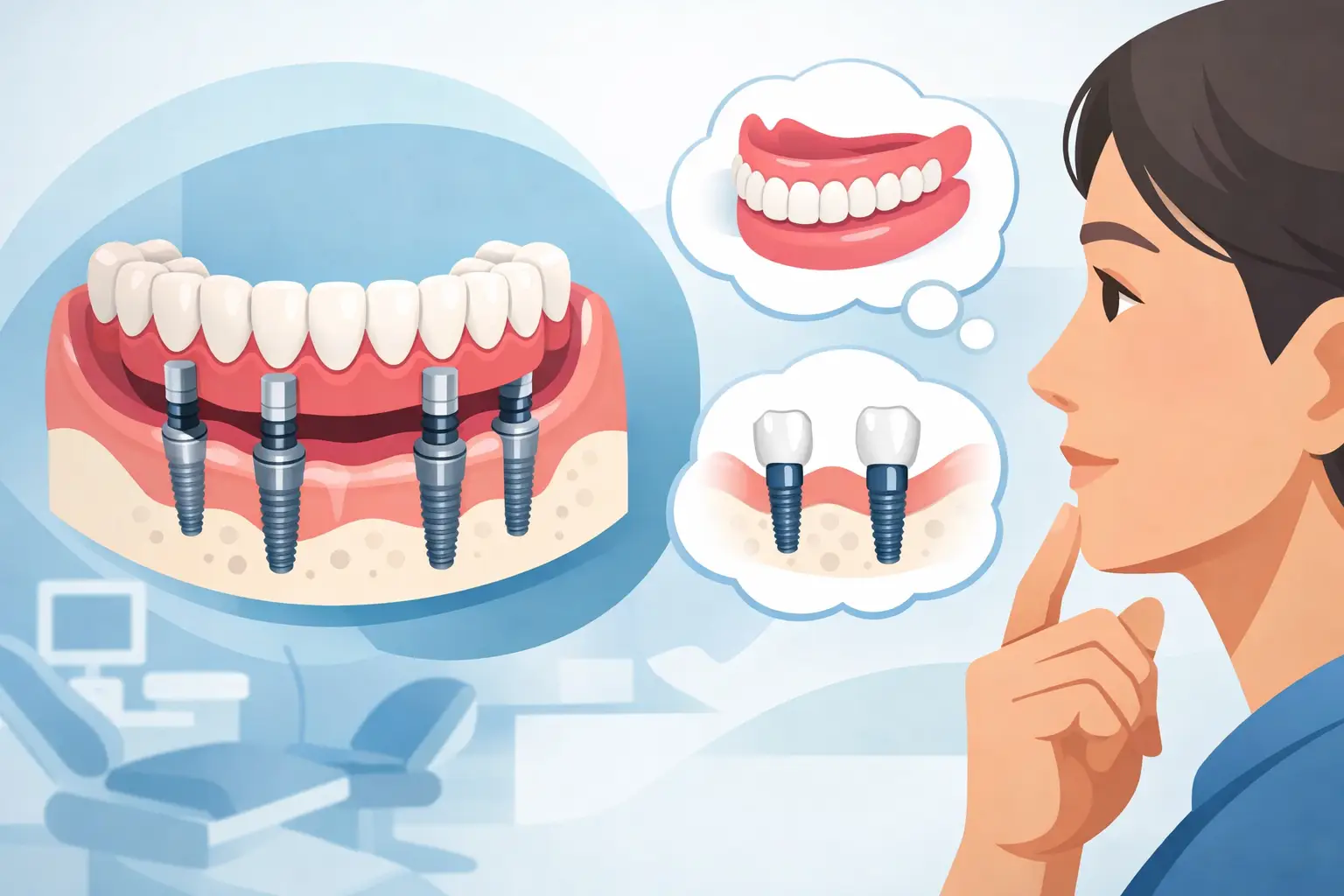
For some patients, individual implants , an implant-supported bridge, or a removable implant overdenture may be a better fit. A trustworthy consultation should explain why a recommendation fits your situation, not treat one solution as right for everyone.
How the All-on-4 Process Usually Works
Treatment begins with a comprehensive exam and conversation. This is the time to discuss what is bothering you, what you hope to change, prior dental experiences, and any concerns about discomfort or sedation. Detailed records, photographs, digital scans, and imaging help create a plan that considers both health and appearance.
If teeth need to be removed, extractions and implant placement can sometimes happen during the same surgical visit. In many cases, a temporary fixed bridge is placed soon after surgery. This provisional bridge gives you teeth while the implants integrate with the jawbone and your gums heal. It is not yet the final restoration, so it is made for healing and appearance rather than full chewing force.
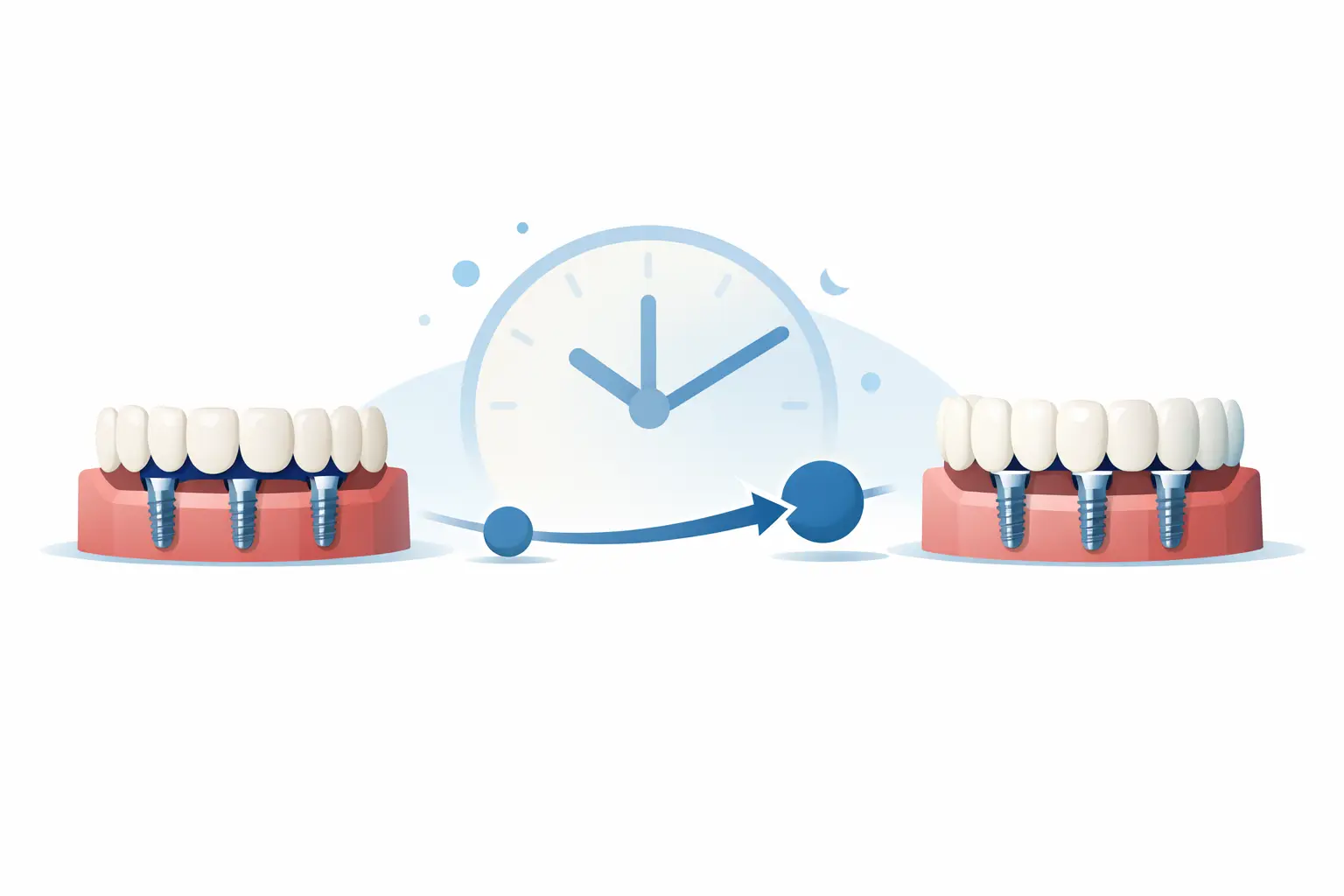
During the healing period, patients generally follow a softer diet and attend follow-up visits. The exact timeline varies based on bone quality, healing, the need for extra procedures, and how well the implants remain stable after placement. Once healing is complete, the final bridge is designed, tried in, refined, and secured.
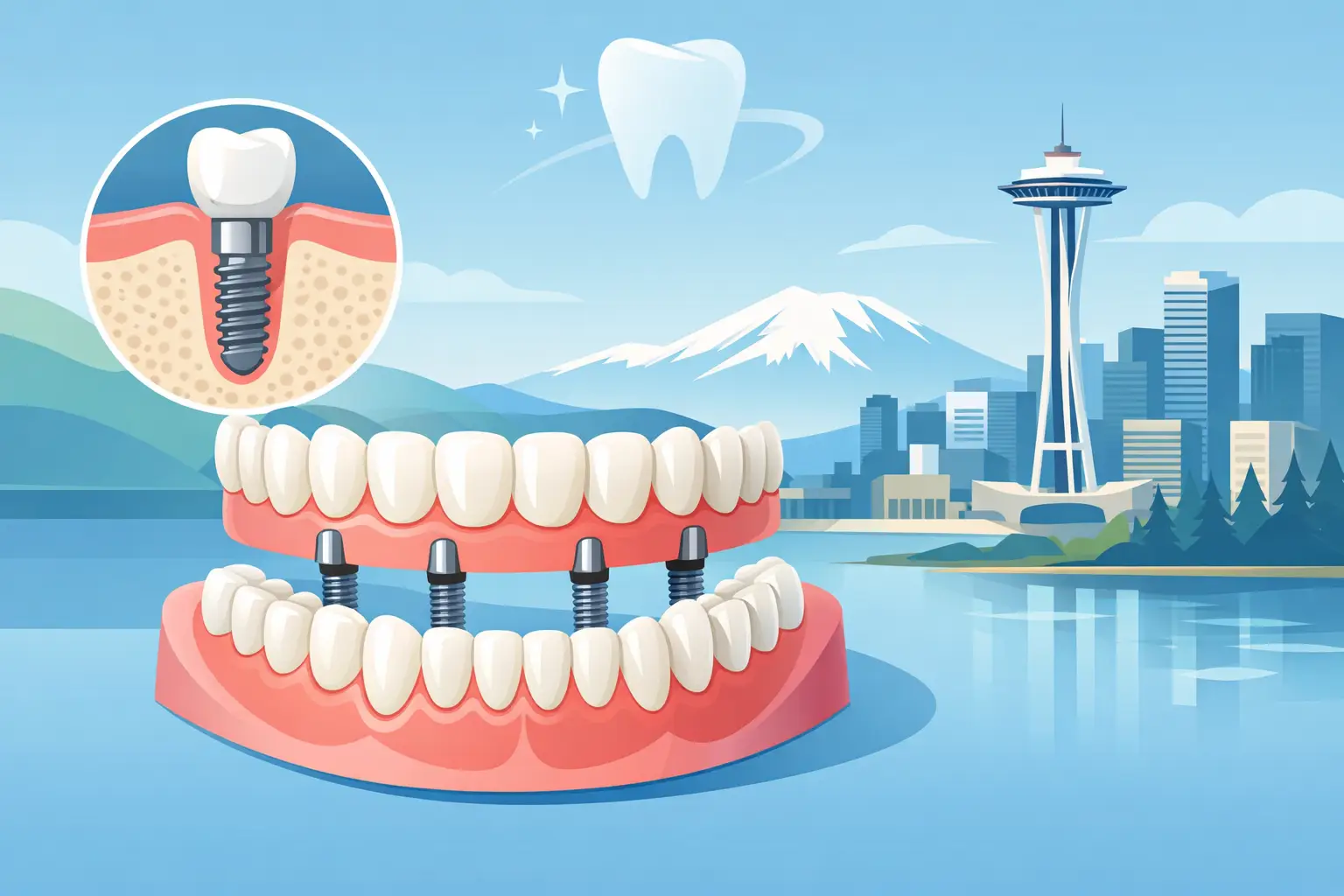
Coordinated care is particularly helpful in complex cases. At Seattle Oral Care, a prosthodontist, oral surgeon, periodontist, and general dentist can work together on planning and long-term care, rather than asking you to manage separate offices and disconnected recommendations.
What Can You Expect During Recovery?
Most people experience swelling, tenderness, and fatigue after implant surgery. These effects are usually most noticeable in the first few days and gradually improve. Your team will give you personalized guidance on medications, oral hygiene, food choices, and activity restrictions.
The first phase of recovery requires patience. Even if you leave surgery with a temporary set of teeth, the implants are still healing beneath the gums. Biting into crusty bread, nuts, raw vegetables, or other hard foods too early can put excess pressure on the healing sites. Following dietary instructions protects the investment you are making in your new smile.
Call your dental team if pain increases rather than improves, swelling becomes severe, a temporary bridge feels loose, or you develop fever or drainage. Patients should never feel they have to “tough it out” or guess whether a symptom is normal.
Benefits and Trade-Offs to Understand
The appeal of all-on-4 is easy to understand. A fixed arch can improve stability for speaking and eating, eliminate the need for denture adhesive, and create a more secure-feeling smile. Because implants stimulate the jawbone, they may also help preserve bone better than a conventional denture alone.
Still, this is major restorative treatment, not a quick cosmetic fix. It involves surgery, healing, financial planning, and a permanent commitment to professional maintenance. The bridge can be strong, but it is not indestructible. Like natural teeth, it can chip, wear, or need repair over time.
It is also worth asking about the material planned for the final teeth. Options differ in appearance, durability, repairability, cost, and how they wear against opposing teeth. There is no single material that is best for every mouth. Your bite, smile goals, grinding habits, and available space all shape that decision.
Caring for All-on-Four Dental Implants
Fixed does not mean maintenance-free. Food debris and plaque can collect where the bridge meets the gums, and inflammation around implants can threaten the supporting bone if it is not addressed early. Home care typically includes brushing the bridge and gums, cleaning underneath the bridge with specialized floss or an oral irrigator as recommended, and keeping regular hygiene visits.
Your dental team may periodically remove the bridge for a more thorough cleaning and examination. These visits allow the team to check implant stability, bite balance, gum health, and the condition of the prosthesis. Consistent maintenance is one of the best ways to protect a full-arch restoration for the long term.
If you grind your teeth, wear the nightguard your dentist recommends. If you smoke, consider support to quit or reduce use. Both habits can affect healing and long-term implant health.
Questions to Ask at Your Consultation
A full-arch consultation should leave you feeling informed, not pressured. Ask whether all remaining teeth need to be removed or whether any can be predictably saved. Ask what temporary teeth will be like, how long healing is expected to take, and what happens if an implant does not integrate as planned.
You may also want clarity about the final bridge material, sedation options, follow-up schedule, warranty policies, and the full anticipated cost of treatment. Request an explanation of what is included now and what maintenance or future repairs could involve. Transparent answers help you compare treatment plans fairly.
The best result begins with a plan built around your health, comfort, and long-term goals. If you are ready to explore whether a fixed full-arch restoration could help you eat, speak, and smile with greater confidence, schedule a consultation and bring every question you have. You deserve care that is both technically thoughtful and personally reassuring.