A gap left by several missing teeth can change more than your smile. It can make chewing less comfortable, affect speech, and allow nearby teeth to shift over time. Many patients ask, “can implants support bridges?” The answer is yes. Dental implants can provide secure support for a bridge without relying on the healthy teeth beside the space.
For many people, an implant-supported bridge offers a durable, natural-looking way to replace multiple missing teeth. The right design depends on where teeth are missing, the condition of your jawbone and gums, your bite, and your long-term goals. A thoughtful evaluation helps ensure the bridge feels comfortable, functions well, and is made to last.
Can implants support bridges for several missing teeth?
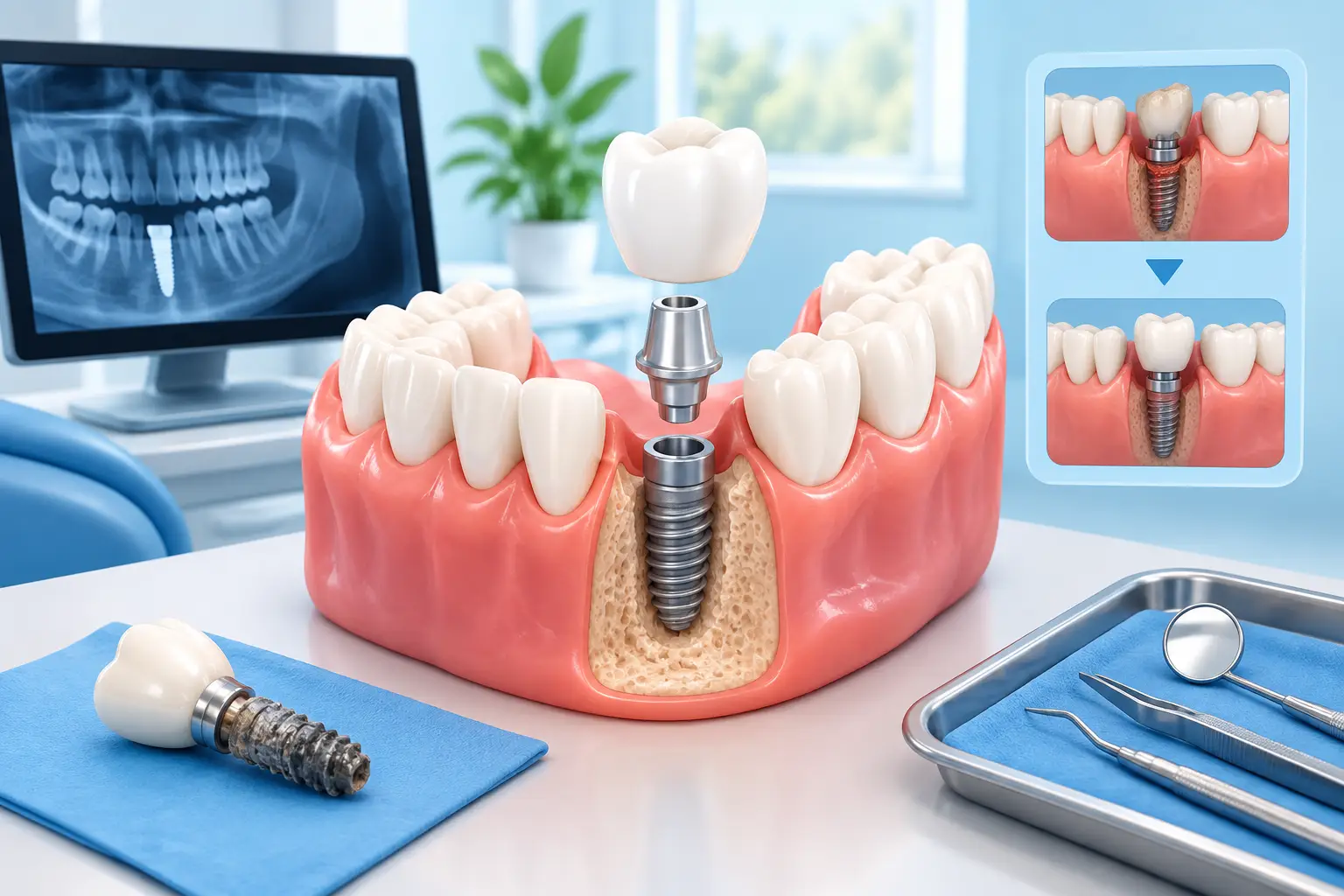
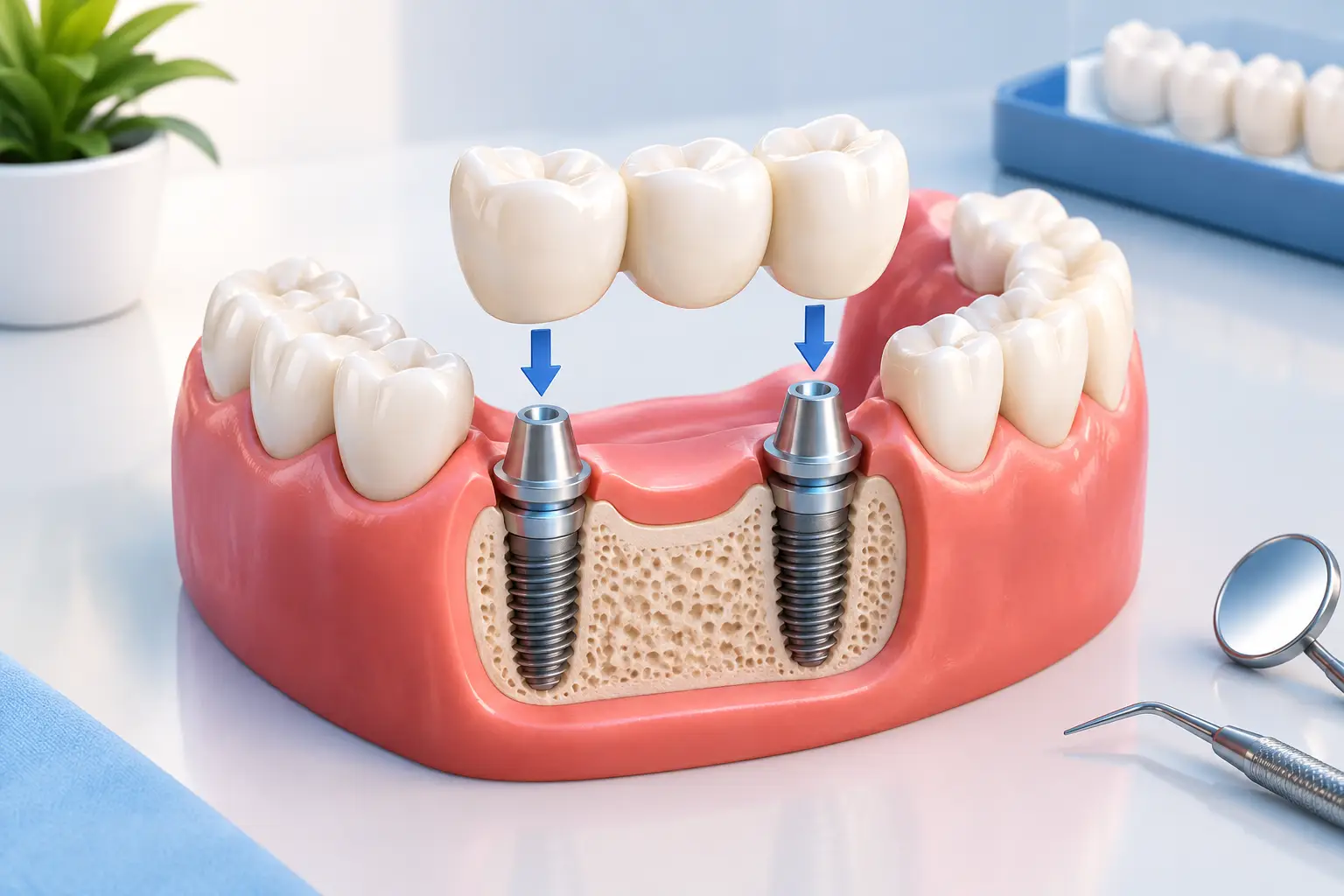
Yes. An implant-supported bridge uses dental implants as the foundation for replacement teeth. Instead of filing down neighboring natural teeth to hold a traditional bridge, implants are placed in the jawbone at carefully selected locations. After healing, a custom bridge is attached to the implants.
For example, if three adjacent teeth are missing, a dentist may place two implants - one toward each end of the space - and connect them with a three-tooth bridge. The middle replacement tooth is supported by the bridge structure rather than having its own implant. This approach can restore the appearance and function of several teeth while limiting the number of surgical sites.
The exact number of implants is not determined by tooth count alone. The back of the mouth handles more chewing force than the front, and bone quality varies from person to person. Your dentist will consider these details before recommending a design.
How an implant-supported bridge differs from a traditional bridge
A conventional dental bridge is typically held in place by crowns on the teeth next to the gap. Those supporting teeth must be reshaped, even if they are otherwise healthy. An implant-supported bridge is anchored to implants instead.
That difference can offer meaningful benefits. Because the implants transfer chewing pressure into the jawbone, they can help preserve bone in the area where teeth were lost. They also allow healthy neighboring teeth to remain untouched. Many patients appreciate the stability of an implant-supported bridge, especially when eating foods that can challenge a removable appliance.
A traditional bridge can still be a good option in certain situations. It may involve less treatment time, cost less initially, or be appropriate when the adjacent teeth already need crowns. The best choice is not always the most complex one. It is the one that fits your oral health, timeline, budget, and goals.
When implants may be a good foundation for a bridge
Implants are often considered when two or more teeth in a row are missing. They may be especially helpful when the teeth beside the gap are healthy and you would prefer not to alter them.
Candidates generally need healthy gum tissue and enough jawbone to support implants securely. Good overall health and a commitment to daily oral hygiene are also important. Conditions such as uncontrolled diabetes, untreated gum disease, or heavy smoking can affect healing and implant success, but they do not automatically rule out treatment. They simply mean planning needs to be more individualized.
If bone has shrunk after a tooth has been missing for a long time, bone grafting may be recommended before implant placement. This can sound discouraging, but it is often a practical step toward creating a stable foundation. A detailed exam and 3D imaging can show whether grafting is needed and help your care team plan the safest position for each implant.
How many implants does a bridge need?
There is no one-size-fits-all answer. A two- or three-tooth bridge may often be supported by two implants, while a longer span may require additional implants. The position of the bridge matters greatly. Replacing molars usually calls for more support than replacing front teeth because molars absorb stronger biting forces.
Your bite also matters. If you clench or grind your teeth, the bridge and implants may need a stronger design, additional support, or a protective nightguard. A bridge should not simply fill a visible space. It should be designed around how your teeth come together, how you chew, and how force moves through your jaw.
Placing an implant for every missing tooth is not always necessary or advisable. Well-positioned implants can support multiple replacement teeth, but too few implants can place excess stress on the bridge. The goal is a balanced plan that protects both your restoration and the surrounding bone.
What about a full arch of missing teeth?
Implants can also support a full upper or lower bridge for people missing all of their teeth in one arch. In these cases, several implants are placed strategically to support a fixed bridge that does not come out at night. This can be a life-changing option for patients who struggle with loose dentures , but it requires careful planning, sufficient bone, and ongoing maintenance.
What treatment usually involves
Implant bridge treatment happens in stages because the jawbone needs time to heal around the implants. The first step is a consultation that includes a review of your health history, an exam of your teeth and gums, and diagnostic imaging. If you have an existing bridge, failing teeth, or gum disease, those concerns are addressed as part of the overall plan.
During implant placement, implants are positioned in the jawbone. Most patients are surprised by how manageable recovery is with proper planning and instructions. Some tenderness, swelling, and dietary adjustments are normal in the first few days. Sedation options may be available for patients who feel anxious about treatment.
Over the following months, the bone bonds with the implant surface in a process called osseointegration. Depending on your situation, you may receive a temporary tooth replacement during healing. Once the implants are stable, your final bridge is custom-made to match your smile, bite, and facial proportions.
The timeline varies. Some patients can receive teeth quickly under specific clinical conditions, while others benefit from a slower approach that allows for grafting or full healing. A careful timeline is not a delay for its own sake. It is part of protecting the long-term result.
What an implant-supported bridge feels like
A well-made implant bridge is fixed in place and feels much closer to natural teeth than a removable denture. You should be able to speak, smile, and eat with confidence once you have adjusted. Because implants do not have the same ligament connection as natural tooth roots, the sensation is slightly different, but most people adapt quickly.
Your bridge should feel comfortable, not bulky or painful. Mild adjustment after delivery is common as you get used to your new bite. Persistent pressure, pain when chewing, looseness, or changes in your bite should be evaluated promptly rather than ignored.
Caring for an implant-supported bridge
Implants cannot get cavities, but the gums and bone around them still need daily care. Plaque buildup can lead to inflammation around implants, which may threaten their long-term stability. Brushing twice daily, cleaning beneath and around the bridge with the tools recommended by your dental team, and keeping regular professional visits all matter.
Your dentist may suggest an interdental brush, floss threader, water flosser, or another method based on the shape of your bridge. The best home-care routine is one you can do consistently. Regular maintenance appointments also allow the team to check your bite, bridge fit, gum health, and any signs of wear before a small concern becomes more complicated.
Choosing the right plan for your smile
An implant-supported bridge is not just a replacement for missing teeth. It is a long-term restoration that should support your comfort, confidence, and oral health. The most successful plans account for the condition of your gums and bone, the forces in your bite, the appearance you want, and the care you can maintain at home.
At Seattle Oral Care, coordinated planning between restorative and surgical providers can be especially valuable when tooth loss is complex or several treatments are needed. You deserve time to ask questions, understand your options, and move forward at a pace that feels right. A consultation can turn uncertainty about missing teeth into a clear, personalized path toward a smile that feels like your own again.