A bite that feels off can affect far more than the appearance of your smile. You may notice uneven tooth wear, jaw soreness, difficulty chewing, or a tooth that chips repeatedly. So, can Invisalign treat bite problems? For many adults, yes. Clear aligners can correct certain bite concerns by gradually moving teeth into healthier positions. The right answer, however, depends on what is causing the bite problem in the first place.
At Seattle Oral Care, we look beyond whether teeth appear crooked. A comfortable, stable bite requires the teeth, gums, jaw joints, and any existing dental work to function well together. That is why a thoughtful evaluation matters before beginning Invisalign treatment.
What does a bite problem mean?
Your bite is the way your upper and lower teeth meet when your mouth closes. Ideally, the teeth come together in a way that supports comfortable chewing and spreads pressure across the smile. When they do not, some teeth may take on more force than they were designed to handle.
Bite problems can develop as teeth shift over time, after tooth loss, because of childhood growth patterns, or as a result of habits such as clenching and grinding. They can also occur when older crowns, bridges, or fillings no longer match the way the teeth meet. Some people have no symptoms at all, while others become aware of their bite only after recurring sensitivity, worn enamel, or broken dental work.
Can Invisalign treat bite problems caused by tooth position?
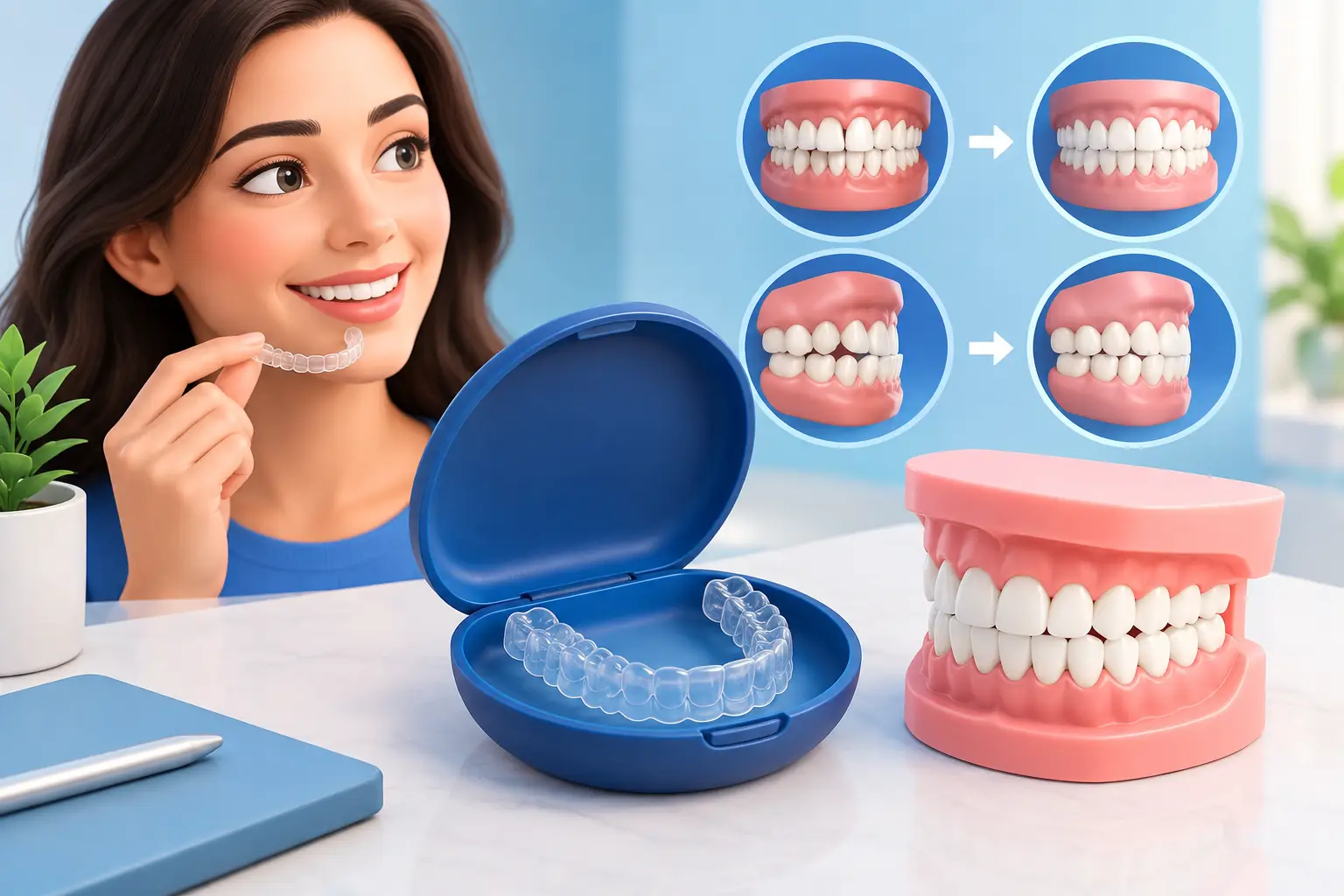
Invisalign is often a good option when the bite issue is primarily related to tooth position. The aligners are custom-made trays that apply controlled pressure, moving teeth in small stages. As teeth are repositioned, the upper and lower arches can meet more evenly.
Overbite and deep bite
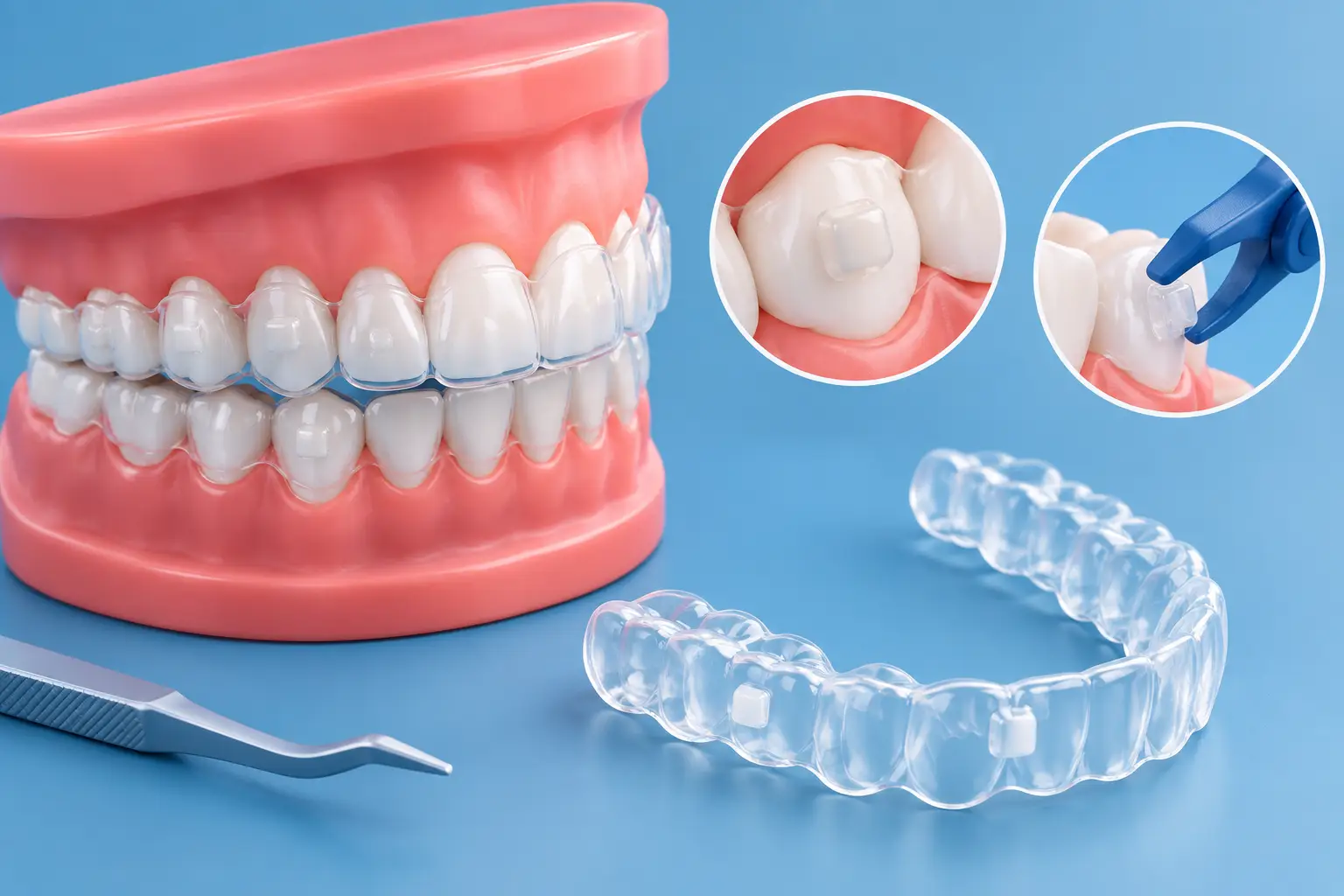
An overbite occurs when the upper front teeth overlap the lower front teeth. A certain amount of overlap is normal, but a deep bite can place excessive pressure on the lower teeth or the roof of the mouth. Invisalign may help by moving front and back teeth into a more balanced relationship, sometimes with small tooth-colored attachments that give the aligners additional control.
Underbite
With an underbite, the lower front teeth sit in front of the upper front teeth. If the concern is mild and caused mainly by the angle or position of the teeth, clear aligners may be effective. If the lower jaw itself is significantly farther forward than the upper jaw, aligners alone may not fully correct the issue. That type of jaw-based discrepancy may require a different plan, which can include orthodontic treatment coordinated with other care.
Crossbite
A crossbite happens when one or more upper teeth sit inside the lower teeth rather than outside them. It can affect front teeth, back teeth, or both. Invisalign can often address dental crossbites by widening or reshaping the dental arches and moving individual teeth. Correcting a crossbite can also reduce uneven wear and make chewing feel more natural.
Open bite
An open bite means the upper and lower teeth do not touch in a particular area when the mouth closes, often at the front. Some open bites respond well to clear aligners, especially when tooth position or habits such as tongue thrusting have contributed. Lasting success may also require addressing the underlying habit. Without that step, teeth can gradually drift back toward their previous positions.
Crowding and spacing that affect the bite
Crowded or widely spaced teeth are not always just cosmetic concerns. When teeth are rotated, tipped, or out of the dental arch, they can interfere with the way the bite closes. Invisalign can create room, align the teeth, and improve how they fit together. In some cases, small amounts of enamel shaping or carefully planned space creation may be recommended to achieve a stable result.
When clear aligners may not be enough
Clear aligners are highly capable, but they are not the right answer for every bite problem. The key distinction is whether the issue is dental or skeletal. Dental problems involve the position of the teeth. Skeletal problems involve the size or relationship of the upper and lower jaws.
For example, a pronounced underbite caused by jaw growth may improve only partially with aligners. A severe open bite, major facial asymmetry, or significant jaw-joint concerns may call for additional evaluation. Traditional braces can also be a better choice for some complex tooth movements because they offer different levels of control.
Gum health matters, too. Teeth need healthy bone and gums for orthodontic movement to be safe. Active gum disease should be treated and stabilized before Invisalign begins. If teeth are loose, badly worn, or compromised by untreated decay, those concerns need attention first.
Adults with crowns, bridges, implants, or missing teeth can still be candidates for Invisalign, but their treatment needs careful planning. Natural teeth can move with aligners; implants do not. When restorative treatment is part of the picture, orthodontics may be planned before a final crown, bridge, or implant restoration is completed so the result looks natural and functions properly.
Why a bite assessment should come before Invisalign
A clear aligner consultation should be more than a quick scan and a preview of straighter teeth. A complete assessment includes an examination of your teeth and gums, bite relationship, jaw comfort, existing restorations, and X-rays or digital imaging when needed. Your dentist may also ask about headaches, grinding, snoring, sleep apnea , or previous orthodontic treatment.
This broader view helps identify what aligners can realistically accomplish. It also helps prevent a common frustration: improving the appearance of the front teeth while leaving a functional concern unresolved.
At Seattle Oral Care, coordinated care can be especially valuable for patients whose bite concerns overlap with gum health, tooth loss, worn teeth, or restorative needs. Rather than treating each issue in isolation, the care team can plan the sequence of treatment around the health and long-term stability of your whole smile.
What Invisalign treatment for a bite problem involves
Once Invisalign is determined to be appropriate, digital records are used to create a custom plan. You will see the intended tooth movements and discuss the goals of treatment, including what can be improved and any limitations that may remain.
Most patients wear their aligners for 20 to 22 hours a day, removing them to eat, drink anything other than water, and brush and floss. New aligners are worn on a prescribed schedule, and periodic visits allow your dentist to confirm that teeth are tracking as planned. Some bite corrections require attachments, small temporary tooth-colored shapes placed on selected teeth, or elastics that help guide the upper and lower teeth into a better relationship.
Treatment time varies. Mild alignment concerns may take several months, while bite correction often takes longer. Consistent wear is one of the biggest factors in staying on schedule. Aligners only work while they are in your mouth.
After treatment, retainers are essential. Teeth can shift throughout adulthood, particularly after orthodontic treatment. Wearing retainers as instructed protects the investment you have made and helps maintain a comfortable bite.
Questions worth asking at your consultation
A good consultation should leave you feeling informed, not pressured. Ask whether your bite concern is caused by tooth position, jaw position, or both. Ask what Invisalign can reasonably correct in your case, whether any restorative or periodontal treatment should happen first, and what retention will look like once active treatment ends.
If you clench or grind your teeth, mention it. Bruxism can contribute to tooth wear and bite discomfort, and it may affect how your treatment and long-term protection are planned. If you have jaw pain, recurring broken teeth, or older crowns that feel uneven, those details are useful as well.
A straighter smile can be a meaningful benefit of Invisalign, but a well-planned bite is about comfort, function, and protecting your teeth for years to come. If your teeth do not meet comfortably or you are wondering whether aligners fit your needs, a personalized examination can give you a clear, calm path forward.