
A busy morning should not derail orthodontic treatment. If you are asking, “can you eat and drink with Invisalign, what are the Invisalign eating rules, and is Invisalign coffee safe?” the short answer is simple: remove your aligners for meals and for anything other than plain water. That small habit protects both your trays and your teeth while keeping treatment moving as planned.
Clear aligners are designed to fit closely around your teeth, making them a discreet option for adults who want to straighten their smile without brackets and wires. They are also removable, which means you do not have a long list of permanent Invisalign food restrictions. The responsibility shifts to a consistent routine: take trays out, eat or drink, clean your mouth when you can, and put the aligners back in promptly.
Invisalign Eating Rules That Protect Your Progress
For most patients, the main rule is to remove Invisalign aligners before eating. Even relatively soft foods can place pressure on the plastic, stain it, or allow food particles to become trapped against your teeth. Chewing with aligners in can also cause cracks, warping, or a poor fit. An aligner that no longer fits precisely may not guide your teeth as intended.
Store your trays in their protective case whenever they are out of your mouth. Wrapping them in a napkin may seem convenient at lunch, but it is one of the most common ways aligners get accidentally thrown away. Keep the case with you at work, school, or while traveling.
Because Invisalign treatment generally calls for wearing aligners about 20 to 22 hours each day, meals and drinks should not turn into long tray-free stretches. This does not mean rushing through food or skipping social meals. It means being mindful of time. Many patients find that planned meals and fewer all-day snacks make the routine easier.
After You Eat, Clean Before Reinserting When Possible
Brushing after every meal is ideal, especially after foods with sugar, starch, or strong color. If you cannot brush right away, rinse your mouth thoroughly with water before putting the aligners back in. A quick rinse is not a substitute for brushing and flossing, but it is much better than placing trays over food residue.
Trapped plaque and sugar can increase the risk of cavities, gum irritation, and unpleasant odor. This is particularly relevant when aligners are worn for most of the day. Floss once daily, and follow the preventive-care schedule recommended by your dental team.
Can You Drink Coffee With Invisalign?
Coffee deserves its own conversation because it is part of many Seattle mornings. You can drink coffee during Invisalign treatment, but it is best to remove your aligners first. Coffee can stain clear plastic, especially if you sip it slowly over an hour. It may also stain your teeth, and adding sugar, flavored syrups, or cream creates a more cavity-friendly environment when residue is sealed beneath aligners.
If you choose to drink coffee with trays in during an occasional time-sensitive moment, understand the trade-off. Let it cool first, as very hot beverages can potentially distort thermoplastic aligner material. Avoid sweetened coffee, do not make it a daily habit, and rinse your mouth and aligners afterward. Taking the trays out remains the safer choice for their appearance, fit, and cleanliness.
The same guidance applies to tea, red wine, soda, sports drinks, juice, and flavored sparkling water. These beverages can stain aligners, expose teeth to acid or sugar, or both. Plain water is the only drink that is consistently safe with aligners in place.
Are There Any Invisalign Food Restrictions?
There are fewer food restrictions with Invisalign than with traditional braces because you remove the aligners before meals. You can generally enjoy crunchy vegetables, popcorn, nuts, crusty bread, and other foods that might damage brackets or wires.
That said, Invisalign treatment is still an investment in your oral health, so a few practical limits can help. Very sticky candies and frequent sugary snacks raise cavity risk for everyone, with or without aligners. Hard candies and ice can crack natural teeth or existing dental work. Highly pigmented foods such as curry, tomato sauces, berries, and red wine may also leave temporary staining on teeth or attachments if you do not clean well afterward.
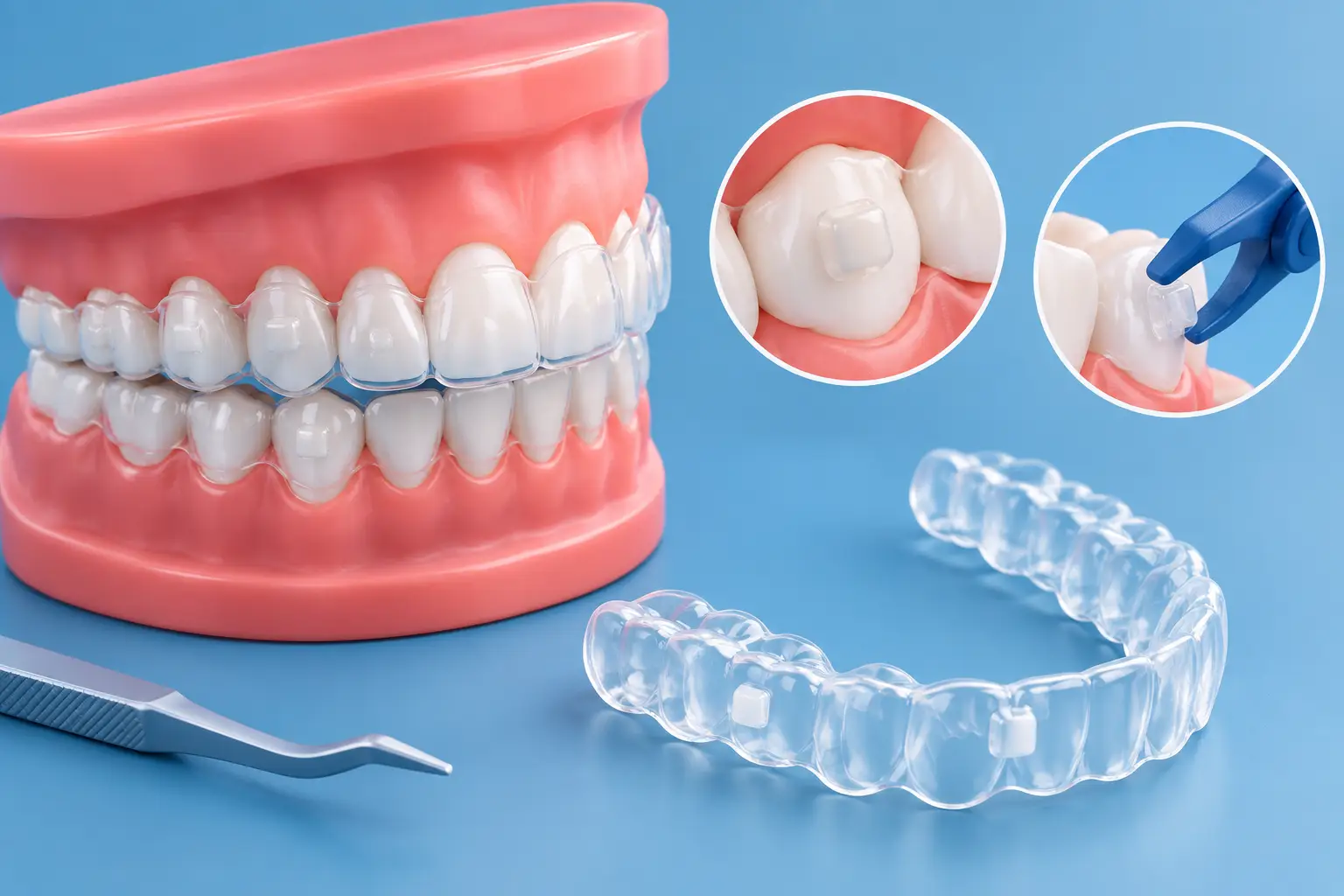
Attachments are small, tooth-colored shapes that may be placed on certain teeth to help aligners create more precise movements. They are bonded securely, but they are not indestructible. Biting directly into exceptionally hard foods can occasionally dislodge one. Cutting hard foods into smaller pieces and chewing thoughtfully is a sensible precaution, particularly early in treatment when attachments feel unfamiliar.
What About Gum, Mints, and Snacks?
Remove aligners before chewing gum. Gum can stick to the trays and make cleaning difficult. Sugar-free mints can be helpful for fresh breath, but take the aligners out first and rinse before reinserting them. The same applies to quick snacks. Even a handful of crackers or a bite of fruit counts as eating.
Frequent grazing is often the toughest Invisalign habit to adjust. If you are used to sipping sweet coffee throughout the morning or snacking at your desk, you may need a new pattern. Set meal times when possible, carry a travel toothbrush, and keep water nearby. These small changes make it easier to meet daily wear-time goals without feeling restricted.
How to Keep Aligners Clear and Fresh
Your aligners need care too. Rinse them with cool or lukewarm water when you remove them, and clean them gently each day using the method recommended by your dental provider. Do not use hot water, which can change the shape of the plastic. Avoid toothpaste with abrasive particles, as it can create tiny scratches that make trays look cloudy and hold odor.
A soft toothbrush reserved for aligners can be useful. Clean the trays before reinserting them at night, and never leave them exposed where pets, heat, or accidental disposal can cause damage. If an aligner cracks, becomes loose, or is lost, contact your dental office promptly. Do not guess about whether to move to the next tray. Your treatment plan may need a specific adjustment.
When Eating Feels Difficult With Invisalign
Some tenderness is common for a day or two after switching to a new aligner set. Teeth are responding to gentle, controlled pressure, and biting into firm foods may feel uncomfortable at first. Choose softer options temporarily, such as eggs, yogurt, soups, fish, cooked vegetables, or smoothies consumed with aligners removed.
If pain is sharp, persistent, or focused on one tooth, call your dental team. The same is true if an attachment falls off or an aligner suddenly will not seat fully. Clear aligner treatment should be monitored, not managed alone. Regular visits allow your provider to confirm that your teeth, bite, gums, and aligner fit are all progressing appropriately.
At Seattle Oral Care, we want Invisalign to fit into real life, including work lunches, coffee routines, and family dinners. A clear plan for meals, cleaning, and wear time can make the process feel far more manageable. Bring your everyday questions to your appointments - practical guidance is part of building a healthy, lasting smile.