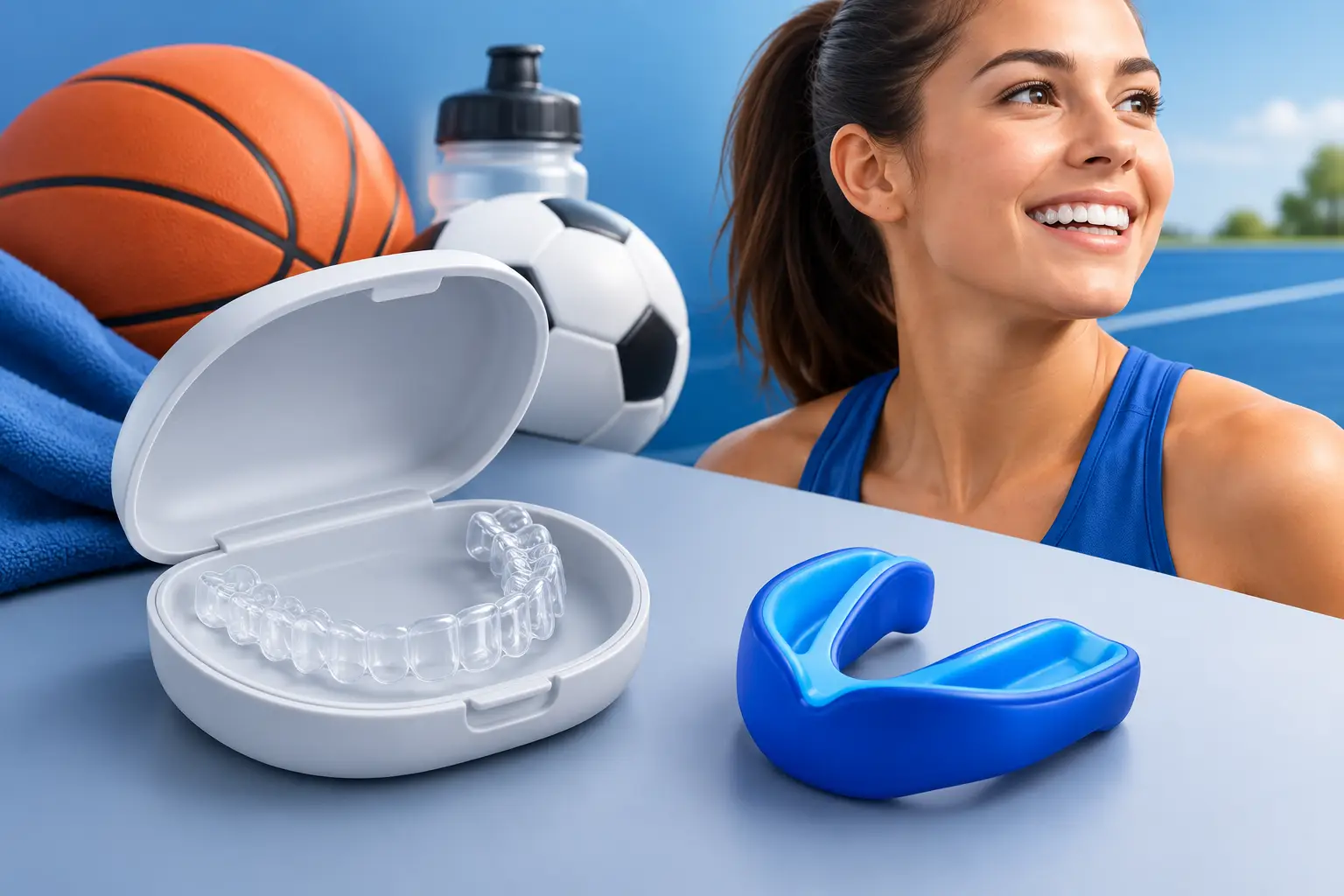
A clear aligner can look clean and still collect the bacteria, plaque, and food residue that cause odor, staining, and irritation. Knowing how to clean Invisalign aligners is one of the simplest ways to protect the progress you are making toward a healthier, straighter smile. The same attention matters after treatment, when your retainer becomes responsible for holding that result in place.
Clear aligners are designed to fit precisely. A little daily care helps them stay clear, comfortable, and effective - and helps keep your teeth and gums healthier along the way.
How to Clean Invisalign Aligners Safely
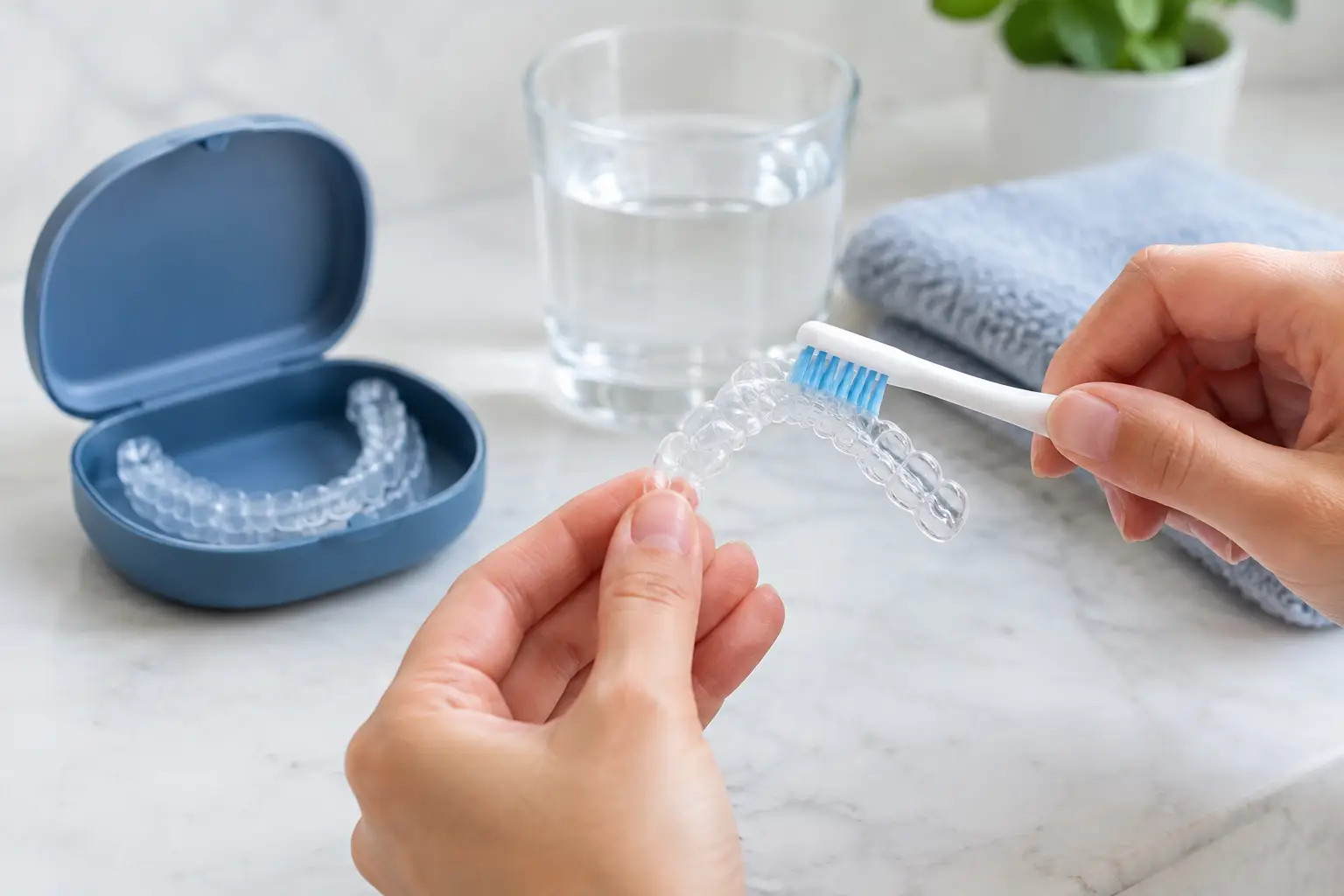
Clean your aligners every time you remove them for meals and before putting them back in. At minimum, rinse them under cool or lukewarm running water, then gently brush them with a soft toothbrush reserved for aligner care. This removes fresh saliva and food debris before it has time to dry onto the plastic.
For a more thorough clean, use an aligner-cleaning product recommended by your dental team or a mild clear soap. Follow the product directions, rinse thoroughly, and make sure no residue remains before wearing the aligners again. If you have a cleaning device designed for clear aligners, it may be a helpful addition, but it does not replace brushing and rinsing.
Avoid hot water. Heat can distort clear plastic, even if the change is too subtle to see. A warped aligner may no longer fit correctly, which can affect both comfort and tooth movement. Toothpaste is also usually too abrasive for clear plastic. It can create tiny scratches that make aligners look cloudy and give bacteria more places to cling.
Do not use bleach, harsh household cleaners, or colored mouthwash. These products can damage or discolor the material, and they are not meant to be worn against your teeth and gums.
Clean Your Teeth Before Reinserting Aligners
Cleaning the aligner is only half the routine. Brush and floss after meals before putting it back in whenever possible. Trapping food particles, sugar, or acidic drinks between your teeth and an aligner can increase the risk of cavities, gum inflammation, and unpleasant breath.
If you are away from home and cannot brush right away, rinse your mouth with water and rinse the aligner before reinserting it. Then brush and floss as soon as you reasonably can. This is not an ideal everyday substitute, but it is a practical option during a busy workday or while traveling.
Invisalign Aligner Care Tips That Protect Your Treatment
Your aligners work best when they are worn as prescribed, commonly about 20 to 22 hours each day during active treatment. Take them out only for meals, anything other than water, and your normal brushing and flossing routine unless your dentist has given you different instructions.
Always place aligners in their protective case when they are out of your mouth. Many lost aligners are wrapped in a napkin at a restaurant, tucked into a pocket, or left within reach of a pet. Replacing an aligner can add cost and may interrupt your treatment schedule, so the case is more than a convenience.
A few everyday habits make a meaningful difference:
- Drink plain water while wearing aligners. Remove them for coffee, tea, wine, soda, sports drinks, and other beverages that can stain the plastic or expose teeth to sugar and acid.
- Keep each aligner set labeled and organized, especially when you are changing trays on a regular schedule.
- Do not chew gum with aligners in place, unless your dental team has specifically recommended a product for seating them.
- Bring your current and next aligner sets to appointments if your provider asks, particularly if a tray feels unusually tight, loose, cracked, or uncomfortable.
A new aligner often feels snug for the first day or two. That can be normal. Sharp edges, a crack, a tray that will not seat fully, or pain that does not improve deserves a call to your dental office. Do not try to reshape the aligner yourself.
Invisalign Retainer Cleaning After Treatment
Once orthodontic treatment is complete, retainers help prevent teeth from gradually shifting back. Invisalign retainer cleaning follows many of the same principles as aligner care: rinse after removal, gently brush with a soft toothbrush and mild clear soap or an approved cleaner, and store it in its case.
Because retainers are often worn overnight, it is easy to overlook them during the morning rush. Build cleaning into your routine. When you take your retainer out to brush your teeth, clean the retainer as well. Letting saliva dry on it day after day can lead to a cloudy appearance, odor, and hardened buildup that is more difficult to remove.
If buildup has already developed, avoid scraping it with sharp objects or aggressively scrubbing it. Bring the retainer to your dental visit and ask your dental team for guidance. Depending on the retainer material and condition, professional cleaning or replacement may be the safer choice.
How Often to Wear an Invisalign Retainer
The answer depends on your teeth, the type of movement completed, your bite, and your dentist's instructions. Immediately after Invisalign treatment, many patients are asked to wear retainers full-time, typically removing them only to eat and clean their teeth. This allows the bone and surrounding tissues time to adapt to the teeth's new positions.
After that initial period, many people transition to nighttime wear. For most adults, nighttime retainer wear is a long-term commitment. Teeth can shift throughout life due to natural aging, bite forces, grinding, and changes in the gums and bone. A retainer is the practical way to protect the time and investment you put into orthodontic treatment.
If you stop wearing a retainer for several days or weeks and it suddenly feels very tight, do not force it into place. Contact your dental provider. A tight retainer may mean your teeth have started to move, and forcing it can crack the appliance or cause unnecessary discomfort.
Retainers and Nighttime Grinding
Some patients clench or grind at night. Clear retainers can provide a degree of tooth coverage, but they are not always the same as a custom night guard designed to manage significant grinding forces. If you wake with jaw soreness, headaches, or notice wear holes or cracks in your retainer, mention it at your appointment. Your provider can help determine whether a different appliance or treatment approach is appropriate.
When to Consider Invisalign Retainer Replacement
No clear retainer lasts forever. The timing of Invisalign retainer replacement varies with the material, how often it is worn, whether you grind your teeth, and how carefully it is cleaned and stored. Some retainers remain serviceable for years, while others need replacement sooner.
Schedule an evaluation if your retainer is cracked, warped, loose, persistently cloudy, rough at the edges, or no longer fits fully over your teeth. A retainer that has become thin or develops small holes may not hold teeth as reliably. Replacement is also wise after a retainer has been lost, chewed by a pet, damaged by heat, or exposed to harsh cleaning chemicals.
Keeping a backup retainer can be especially helpful for people who travel frequently or have a history of losing appliances. Your dental team can advise whether this makes sense for your situation and can document your current tooth position before a replacement is needed.
Clear aligners and retainers ask for a little consistency, not perfection. Clean them gently, wear them as directed, and speak up early if something changes. Those small habits help preserve a treatment result you can feel good about for years to come.