A straighter smile can feel like a personal goal, but adult orthodontic treatment is also a health decision. When comparing Invisalign vs braces for adults , the best choice is rarely about appearance alone. It depends on how your teeth bite together, the movement they need, your daily routine, and whether other dental work should be planned first.
Clear aligners and braces can both create excellent results. The right treatment is the one that can move your teeth predictably while fitting your life and protecting the long-term health of your smile.
Invisalign vs braces for adults: the main difference
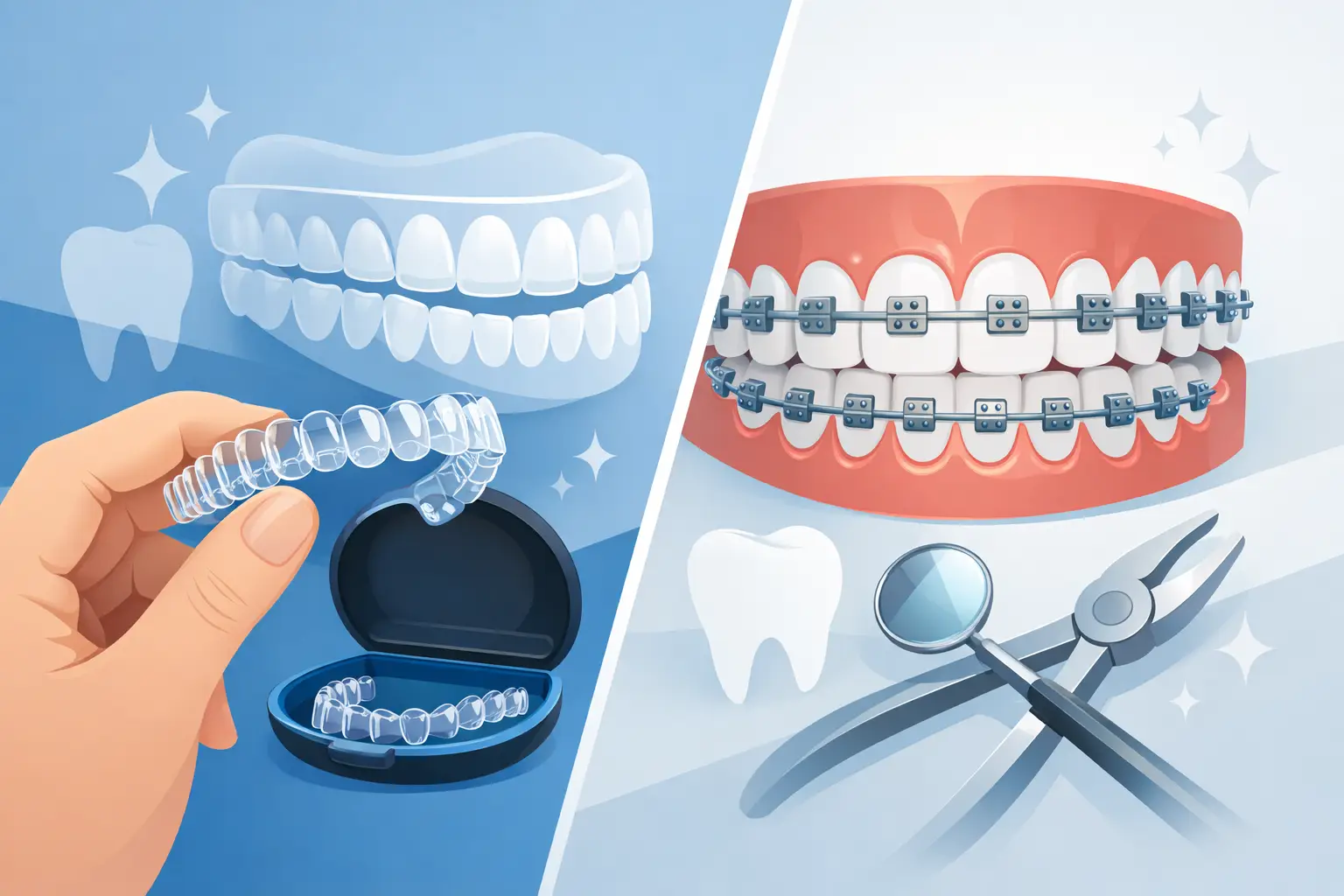
Invisalign treatment uses a series of clear, removable aligners that gradually guide teeth into their planned positions. You typically wear each set for most of the day, removing it for meals, drinks other than water, brushing, and flossing. Attachments, which are small tooth-colored shapes placed on selected teeth, may help the aligners create more precise movements.
Traditional braces use brackets bonded to the teeth and connected by a wire. Because braces stay in place, they apply consistent force around the clock. Your dentist or orthodontic provider adjusts the system periodically as teeth move.
Both treatments begin with records, including photographs, digital scans or impressions, and X-rays when needed. That diagnostic phase matters. Straight teeth are valuable, but a treatment plan should also consider bite function, gum health, existing crowns or implants, jaw comfort, and future restorative needs.
Why many adults choose Invisalign
For working adults, the most noticeable advantage of Invisalign is discretion. Clear aligners are difficult to see in everyday conversations, meetings, photos, and social settings. They are also removable, so there are no food restrictions. You can continue enjoying crunchy vegetables, popcorn, or an occasional caramel treat without worrying about damaging a bracket or wire.
The ability to remove aligners makes daily hygiene easier, too. You can brush and floss normally rather than cleaning around fixed hardware. That can be especially appealing for adults who already have gum concerns, restorations, or a strong preventive-care routine.
Comfort is another common reason people prefer aligners. Aligners do not have wires or brackets that can rub the cheeks or lips. Still, they are not discomfort-free. Teeth can feel tender for a day or two when you begin a new set of aligners, particularly during the first several weeks.
The trade-off is commitment. Invisalign works only when it is worn as prescribed, often about 20 to 22 hours a day. Leaving aligners out for long lunches, evening events, or weekends can slow treatment and affect results. For someone who knows they may struggle with consistent wear, braces may be the more reliable option.
When braces may be the better choice
Braces remain a highly effective treatment for adults, including people with more complex tooth movement needs. They can be especially useful when teeth need significant rotation, vertical movement, major bite correction, or careful coordination before restorative treatment. Modern braces can be smaller and more comfortable than many adults remember from childhood.
Because braces are fixed, they do not rely on remembering to put them back in after meals. That built-in consistency can be a real advantage. Adults with demanding schedules, frequent travel, or a tendency to misplace removable items may appreciate that the treatment is always working.
Braces can also offer useful control in cases involving substantial crowding, spacing, crossbites, open bites, or deep bites. Clear aligners can address many of these concerns, sometimes with additional tools such as attachments or elastics. But there are situations where braces provide a more direct and predictable path.
Their drawbacks are practical rather than minor. Food choices need to change, brushing and flossing take more effort, and occasional wire or bracket irritation can occur. Regular professional cleanings and careful home care are particularly important during fixed orthodontic treatment.
Treatment time depends on your starting point
Adults often ask which option is faster. The honest answer is that treatment time is driven more by the complexity of your case and your consistency than by the name of the appliance. Minor alignment cases may be completed in months, while more involved bite correction can take a year or longer with either approach.
Invisalign treatment may take longer if aligners are not worn consistently, if planned refinements are needed, or if teeth do not track exactly as expected. Refinements are additional aligners used to fine-tune the result. They are common and do not mean treatment has failed.
Braces work continuously, but appointments still matter. Missed adjustments, broken brackets, and poor oral hygiene can complicate progress. In either case, the goal should not be the shortest possible timeline. It should be stable tooth movement and a bite that functions comfortably after treatment.
Cost is about more than the appliance
The cost of Invisalign and braces for adults can be similar, but the final investment varies with treatment complexity, length, necessary records, retainers, and any additional procedures. Insurance plans may offer orthodontic benefits, though adult coverage is often more limited than coverage for children.
A meaningful estimate should explain what is included. Ask whether retainers, refinement aligners, emergency visits, replacement aligners, and follow-up care are part of the quoted fee. It is also reasonable to ask about financing options before treatment begins.
Choosing solely on the lowest initial price can create frustration later. Orthodontic treatment is a planned biological process, not a one-size-fits-all product. Thorough diagnosis and attentive monitoring help protect the outcome you are investing in.
Your dental health can change the recommendation
Adults often have dental histories that make planning especially important. A crown, bridge, implant, worn teeth, missing teeth, gum recession, or past periodontal treatment does not automatically rule out Invisalign or braces. It does mean the treatment should be coordinated thoughtfully.
Teeth can move with orthodontics, but dental implants do not move once they have integrated with the jawbone. If you are considering an implant , crown, bridge, or full-mouth restorative work, orthodontic planning may need to happen before the final restoration is made. Moving natural teeth first can create the right space, improve bite relationships, and support a more durable restorative result.
Healthy gums are also essential. If bleeding gums, active gum disease, untreated decay, or a painful tooth is present, those concerns should be addressed before orthodontic treatment starts. Moving teeth through unhealthy supporting tissues can put results at risk.
For patients with jaw symptoms, clenching, or sleep-disordered breathing, a comprehensive conversation is valuable as well. Orthodontic treatment is not a substitute for treatment of obstructive sleep apnea. If snoring, daytime fatigue, or witnessed pauses in breathing are part of your health picture, bring them up during your visit so they can be considered appropriately.
How to decide between Invisalign and braces
Invisalign may be an excellent fit if you want a low-visibility option, can wear aligners consistently, and have a case that can be treated predictably with clear aligners. It is also appealing if you value removing your appliance for meals and home care.
Braces may be the stronger choice if your case requires more complex movement, you prefer a fixed appliance, or you would rather not manage the responsibility of removable aligners. Some adults simply feel more confident knowing their treatment continues without relying on daily wear habits.
The most useful question is not, “Which treatment is better?” It is, “Which treatment will give me the healthiest, most stable result for my specific smile?” A consultation should give you a clear answer, explain the alternatives, and leave room for your priorities.
What happens after treatment matters, too
Whether you choose Invisalign or braces, retainers protect the result. Teeth naturally have a tendency to shift over time, particularly in the lower front teeth. Wearing retainers as recommended is part of treatment, not an optional extra at the end.
Your ongoing dental care also helps preserve the work. Regular exams and cleanings make it easier to monitor gum health, restorations, bite changes, and any signs of wear. At Seattle Oral Care, treatment planning can be coordinated with general, periodontal, surgical, and restorative care when your needs extend beyond straightening alone.
You do not need to decide based on online photos or a quick price comparison. A careful examination can show what your teeth, bite, and long-term dental goals truly require, then help you move forward with a plan that feels comfortable and clear.