A straighter smile should not begin with a mouthful of impression material and uncertainty about what comes next. If you are researching an Invisalign 3D scan, Invisalign digital scan vs impressions, or an iTero scan for Invisalign, you may also be a first-time patient wondering what the free first visit includes. The answer is reassuring: the visit is designed to help you understand your options, ask questions without pressure, and see whether clear aligners fit your smile goals and oral health needs.
At Seattle Oral Care, we believe good orthodontic care starts with listening. Your concerns may be cosmetic, practical, or both. Perhaps you have one crowded lower tooth, a gap that has always bothered you in photos, or teeth that have shifted since you wore braces years ago. Your consultation should account for the details that matter to you.
What Happens at a Free Invisalign First Visit?
Your first visit is a conversation as much as an evaluation. A dental team member will ask what you would like to change, how long you have noticed the issue, and whether you have concerns about comfort, appearance, or treatment timing. If you have had orthodontic treatment before, bring up what worked and what did not.
The clinical portion generally includes an examination of your teeth, gums, bite, and jaw function. Invisalign can be an excellent option for many adults, but healthy teeth and gums provide the foundation for predictable movement. Active gum disease, untreated decay, a cracked tooth, or an old restoration that needs attention may need to be addressed before aligner treatment begins. That is not a setback. It is how your care team helps protect your long-term result.
Depending on the appointment and your clinical needs, the visit may include photographs, digital images, X-rays, and a 3D scan. Your provider can explain whether your concerns are likely treatable with aligners, discuss the expected complexity of treatment, and outline the next steps toward a personalized plan. A free consultation may not include every diagnostic record for every patient, so it is reasonable to ask when you schedule exactly what is included and whether any imaging has a separate fee.
You should also have time to discuss practical questions: how often you will wear aligners, how long treatment may take, what attachments are, and how retainers protect your finished result. There is no benefit in rushing this conversation. Clear aligners work best when the plan is understood and realistic for your daily routine.
How an Invisalign 3D Scan Works
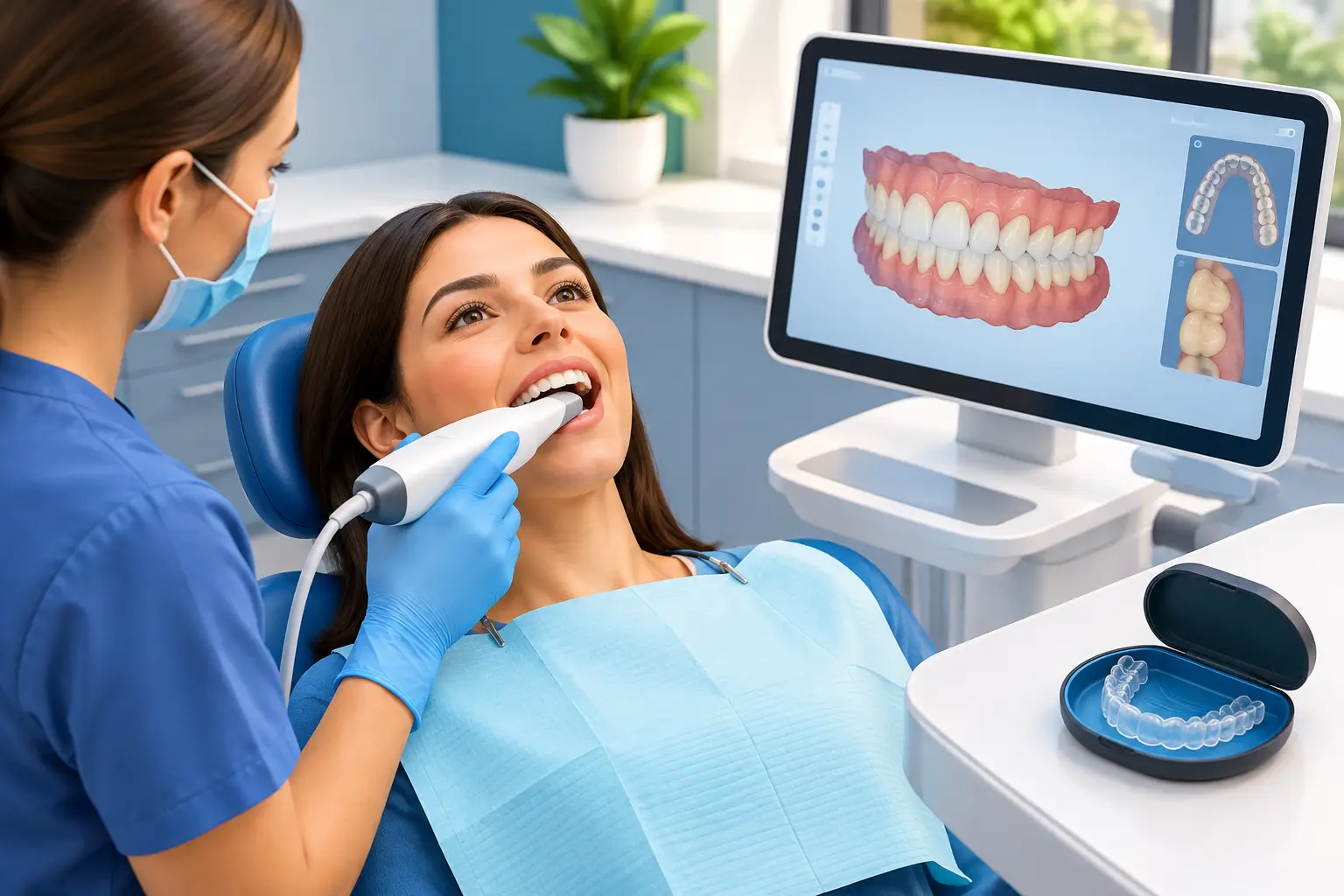
An Invisalign 3D scan uses a small handheld camera to capture detailed images of your teeth and bite. With an iTero scan for Invisalign, the scanner moves gently around the mouth while creating a digital model on a screen. There are no trays filled with putty and no need to wait for impression material to set.
For many patients, especially those with a sensitive gag reflex or dental anxiety, the difference is significant. You can breathe normally, pause if you need to, and see the model of your teeth take shape in real time. The scan is noninvasive and usually takes only a few minutes once the process begins.
The digital model gives the provider a precise starting point for planning tooth movement. It can also make the conversation more visual. Instead of trying to picture what crowding or bite imbalance means, you can look at a model of your own smile and review the areas under discussion.
A scan is not a guarantee that you will be an Invisalign candidate, nor is it a substitute for a thorough exam. Your dentist still evaluates gum health, bone support, bite forces, existing crowns or fillings, and the way your teeth function together. The technology supports clinical judgment. It does not replace it.
Can You See a Smile Preview?
In some cases, digital planning tools can offer a simulation of potential tooth movement. It can be exciting to see a possible future smile, but it should be viewed as an educational preview rather than a promise. Final outcomes depend on the biology of tooth movement, consistent aligner wear, the condition of your teeth and gums, and whether refinements are needed near the end of treatment.
A thoughtful provider will explain what is likely, what is less predictable, and whether another option may better serve your goals. That transparency matters more than a dramatic computer image.
Invisalign Digital Scan vs. Impressions
Traditional impressions have been used successfully in dentistry for decades. They involve placing a tray of soft material over the teeth, then using the hardened impression to create a model. For some procedures and situations, conventional impressions remain appropriate.
For Invisalign planning, a digital scan often offers advantages in comfort, efficiency, and detail. The main comparison looks like this:
- Comfort: A digital scan avoids bulky trays and impression material, which can be easier for patients with gagging concerns.
- Accuracy: Digital images can capture a highly detailed model and allow the team to review the scan immediately.
- Convenience: If a small area needs to be captured again, it can often be rescanned right away instead of repeating the entire impression.
- Communication: A 3D model makes it easier to show you crowding, spacing, or bite concerns during your appointment.
Still, the best choice depends on the procedure, your anatomy, and the information needed for your treatment. The key question is not whether technology is newer. It is whether the records support an accurate plan for your specific smile.
What the Scan Can Reveal Beyond Crooked Teeth
Many people arrive focused on one visible tooth. A digital scan can help show the broader picture. Mild crowding may be connected to a bite that places extra force on certain teeth. Spacing can affect how teeth contact each other. Teeth that appear straight may still have a bite relationship that makes them difficult to clean or more vulnerable to uneven wear.
For adults with crowns, bridges, implants, or extensive dental work, this broader assessment is especially valuable. Teeth can move with Invisalign, but implants do not move like natural teeth. Existing restorations may also influence how attachments are placed or how the treatment is sequenced. A coordinated dental team can evaluate orthodontic movement alongside your restorative needs rather than treating each issue in isolation.
If you grind your teeth, experience jaw discomfort, or have a history of gum problems, mention it during your visit. These factors do not automatically rule out Invisalign, but they may affect the plan, the timeline, or the type of retainer recommended after treatment.
Questions Worth Asking at Your Consultation
You do not need to know orthodontic terminology to have a productive first visit. Ask whether Invisalign can address your specific concern, how many hours per day you will need to wear aligners, and what happens if you lose one. Ask whether attachments, enamel shaping, or retainers are likely to be part of your treatment.
It is also reasonable to ask about the estimated treatment length, total cost, payment options, and what is included in the quoted fee. Some cases need refinement aligners after the first series to fine-tune the result. Knowing how refinements and retainers are handled can help you compare plans clearly.
Most importantly, ask what happens if the scan shows Invisalign is not the best fit. A patient-first practice should be comfortable recommending a different approach when it will better protect your health or deliver a more stable outcome.
A More Comfortable Starting Point
Your first Invisalign visit is not a commitment to treatment. It is an opportunity to replace guesswork with clear information about your smile, your bite, and your options. Whether your records begin with an iTero digital scan or another diagnostic step, you deserve an explanation that feels calm, honest, and personal.
Bring your questions, share what has made dental care difficult in the past, and let the conversation move at a pace that feels comfortable. The right plan begins with being heard.