A straighter smile can change more than photographs. It can make brushing easier, improve how teeth come together, and help you feel less self-conscious in conversations and meetings. When considering clear aligners versus braces , the best choice is rarely about appearance alone. It comes down to your bite, the complexity of tooth movement needed, your daily routine, and how reliably you can follow the plan.
Both treatments can create healthy, attractive results. The right option is the one that can move your teeth predictably while fitting your life and protecting your long-term oral health.
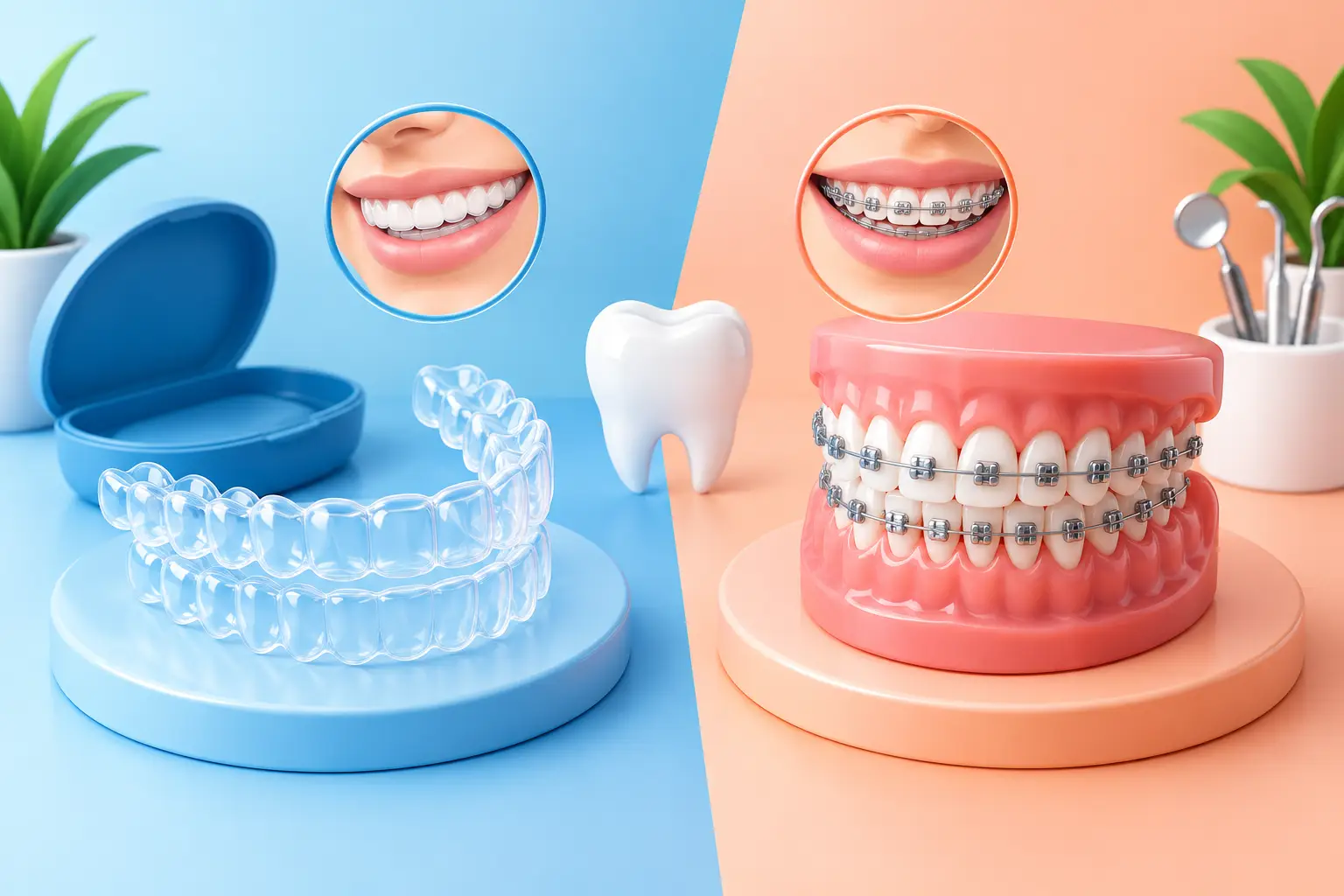
Clear Aligners Versus Braces: The Key Difference
Traditional braces use brackets attached to the teeth and a wire that applies steady pressure. Your dentist adjusts the wire over time to guide teeth into their planned positions. Braces stay in place throughout treatment, so they continue working whether you are thinking about them or not.
Clear aligners are removable, custom-made trays that fit over the teeth. Each set is designed to make small, planned movements. You typically wear each set for a prescribed period before moving to the next one. Invisalign is a well-known clear-aligner system, but the treatment's success still depends on careful planning and consistent wear.
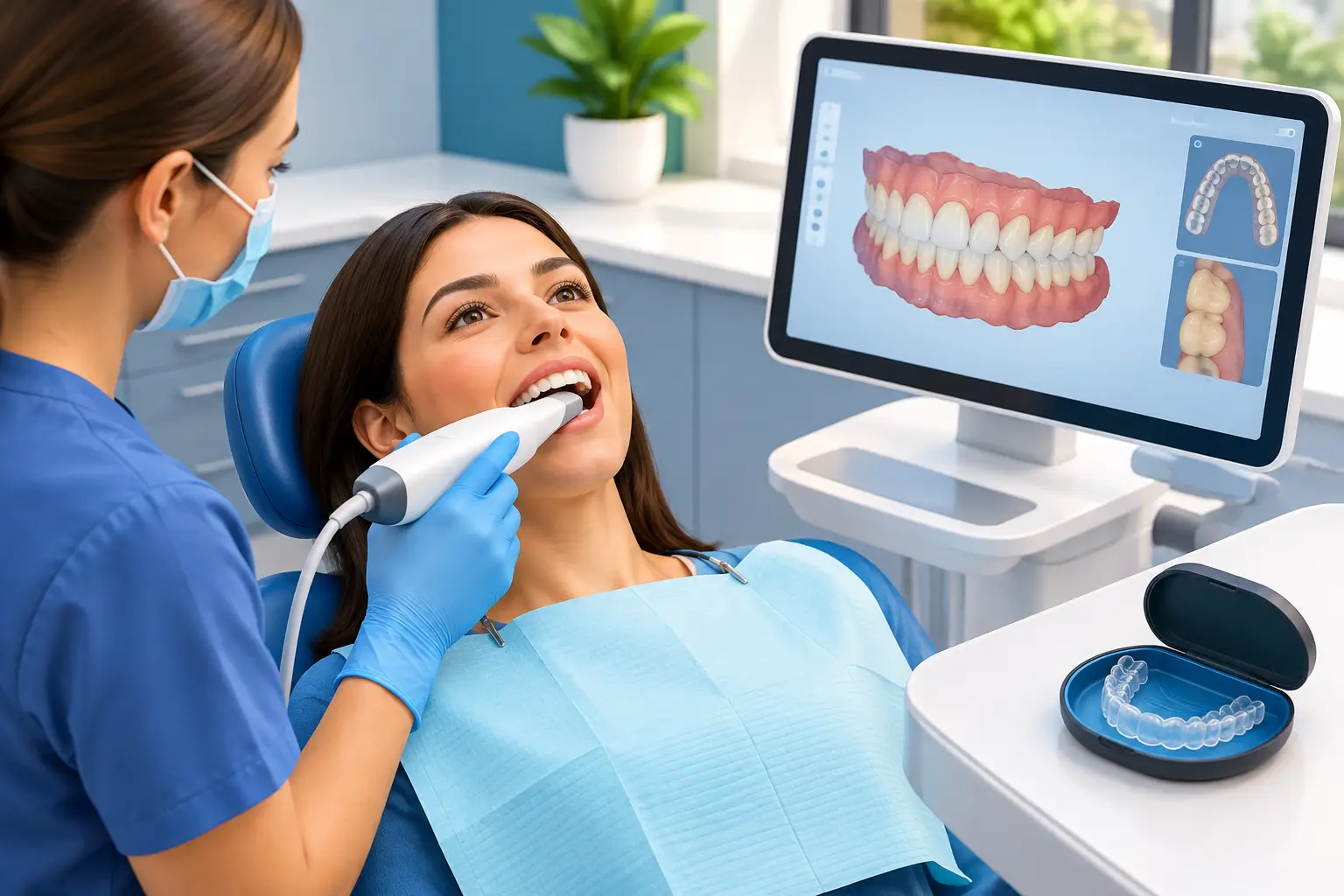
Neither option is automatically better. Clear aligners can be an excellent choice for many adults and teens, while braces may offer more control for certain complex movements. A thorough exam, digital imaging, and bite evaluation give your dentist the information needed to recommend a treatment with confidence.
When Clear Aligners May Be the Better Fit
Clear aligners are popular with adults who want orthodontic treatment to be less noticeable. The trays are clear and closely fitted to the teeth, which can make them easier to wear during work, school, and social events.
They are also removable. You take aligners out to eat and drink anything other than water, then brush and floss as usual before placing them back in. For patients who value being able to clean around every tooth without working around brackets and wires, this is a meaningful advantage.
Comfort is another common reason people choose aligners. There are no metal brackets rubbing against the lips or cheeks, and no wire ends that may occasionally need attention. Some pressure is normal when starting a new set of trays because teeth are moving, but many patients find aligners gentle and manageable.
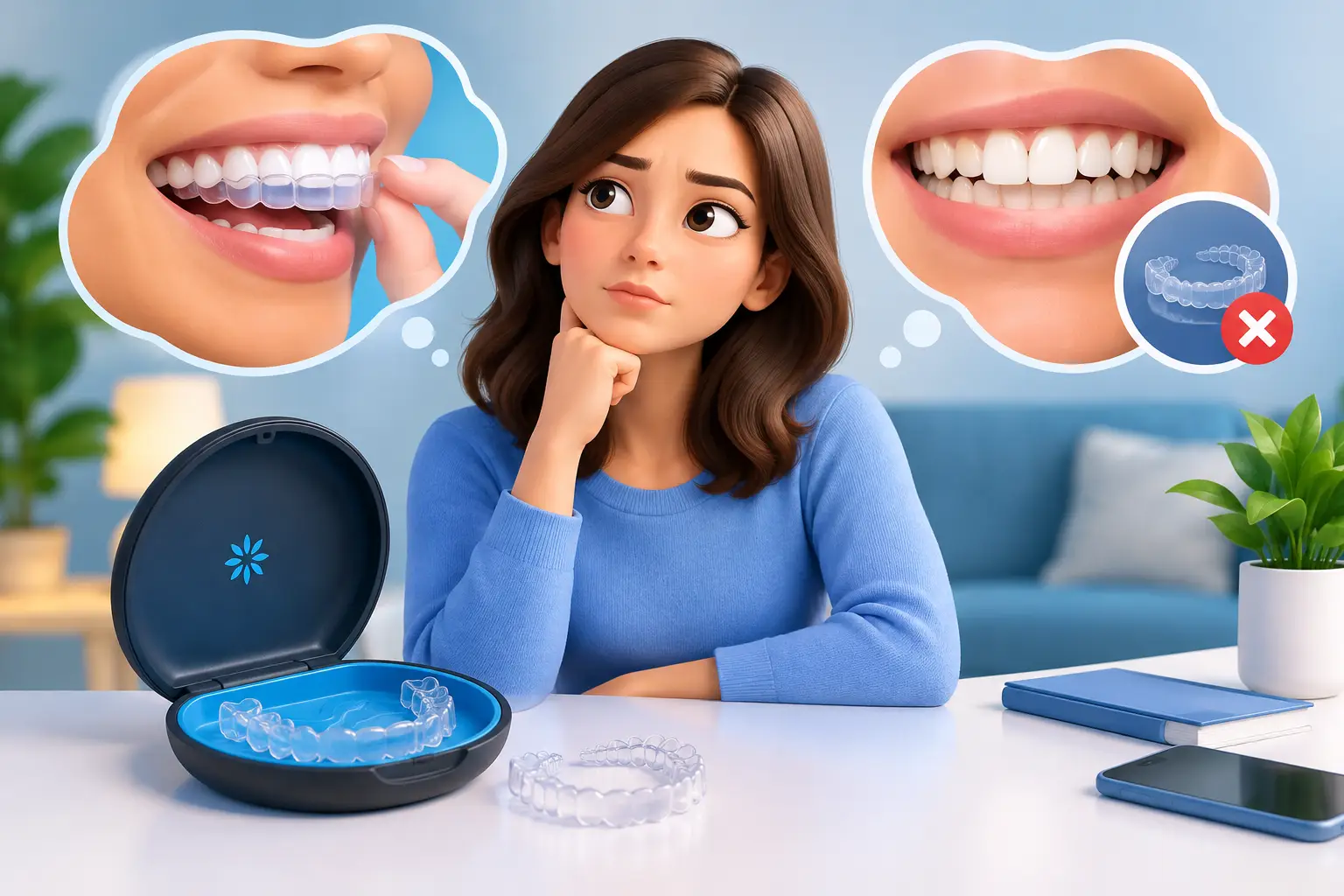
Clear aligners work especially well when the treatment involves mild to moderate crowding, spacing, or relapse after earlier orthodontic care. They can also address many bite concerns. However, they only work as intended when worn consistently, often about 20 to 22 hours each day. Taking them out frequently or forgetting to put them back in can slow treatment and affect the final result.
The responsibility factor matters
An aligner is easy to remove, which is both its strength and its limitation. If you tend to misplace small items, snack often throughout the day, or know that a demanding schedule makes routines difficult, braces may provide more dependable day-to-day progress.
Clear aligners may also require small tooth-colored attachments. These are temporary shapes placed on selected teeth to help the trays grip and guide specific movements. They are subtle, but they are part of many successful aligner plans. Some patients also need brief periods of elastic wear to improve the bite.
When Braces May Be the Better Choice
Braces remain a highly effective orthodontic treatment for patients of all ages. Because they are fixed in place, they can apply continuous force and give the dentist detailed control over tooth position. This can be especially useful for more significant crowding, teeth that need to rotate or move vertically, complex bite discrepancies, and cases where teeth need substantial repositioning.
For children and teens, braces can remove the burden of remembering to wear trays. For adults, they can be the more reliable choice when a complex case calls for maximum control or when aligner wear would be difficult to maintain.
Modern braces are smaller and more comfortable than many people remember. Still, they require a period of adjustment. Foods such as popcorn, hard candy, sticky candy, and ice can damage brackets or wires. Brushing and flossing also take more attention because food and plaque can collect around the hardware.
A broken bracket or poking wire does not usually mean an emergency, but it may require an extra visit. Patients who choose braces should be prepared for regular adjustment appointments and consistent home care.
Appearance, Comfort, and Daily Life
The visible difference between clear aligners and braces is often the first consideration. Aligners are generally more discreet, while metal braces are noticeable when you smile or speak. Some people are comfortable with that look, and others strongly prefer a less visible treatment.
Daily habits can be more important than appearance. With aligners, you can eat normally after removing the trays, but you must clean your teeth before putting them back in. Drinking coffee, tea, red wine, or sugary beverages while wearing aligners can stain the trays or increase the chance of decay if sugars remain against the teeth.
With braces, the appliance stays put, so there is no risk of forgetting it at a restaurant or wrapping it in a napkin and throwing it away. The trade-off is a more careful diet and a more detailed brushing routine. A water flosser, interdental brush, and fluoride toothpaste can make cleaning easier.
Speech changes are usually minor with either option. Some aligner patients notice a slight lisp for a few days while their tongue adapts to the trays. Braces may feel bulky at first, especially along the inner lips and cheeks. These adjustments are temporary for most people.
Treatment Time and Results
Treatment time varies more by the starting condition than by the appliance. Simple cases may take several months, while more involved bite corrections can take 18 months or longer. Clear aligners can be efficient when worn as directed. Braces can be especially predictable when complicated movements are required.
The most reliable way to estimate treatment time is to evaluate your teeth, gums, jaw relationship, and goals in person. A dentist should also consider dental work already in place. Crowns, bridges, implants , and missing teeth may affect how orthodontic treatment is planned.
Adults with gum disease , active decay, or untreated dental infection should address those concerns before moving teeth. Orthodontics is not just a cosmetic service. Healthy gums and stable teeth provide the foundation for a result that lasts.
Cost Is Personal, Not One-Size-Fits-All
The cost of clear aligners and braces can overlap. Price depends on the complexity of your case, the estimated length of treatment, the type of appliance selected, needed records, and whether refinement trays or retainers are included.
Do not assume clear aligners are always more expensive or that braces are always the lower-cost option. A short, straightforward aligner case may cost less than a more involved braces case, while complex treatment can require a larger investment with either approach. During a consultation, ask for a clear explanation of what your treatment fee includes and how follow-up care will be handled.
Dental insurance may offer orthodontic benefits, although coverage varies widely. Payment options can also make treatment more manageable. The value lies in a plan that is appropriate for your health and realistic for your schedule, not simply in choosing the lowest initial number.
Retainers Protect the Result
Whether you choose aligners or braces, the active phase is not the end of orthodontic care. Teeth naturally have a tendency to shift over time. Retainers hold them in their new positions while the supporting tissues adapt and help preserve the work you have invested in.
Most patients need a retainer plan that includes regular wear, particularly after treatment is complete. Your dentist can recommend the right type and schedule based on your case. Skipping retention is one of the most common reasons a smile begins to move again.
Choose the Treatment That Supports Your Health
The decision between clear aligners and braces should feel informed, not pressured. If discreet, removable treatment fits your habits and orthodontic needs, clear aligners may be a comfortable and effective option. If your teeth need more complex movement or you prefer an appliance that works around the clock without relying on wear time, braces may be the wiser choice.
At Seattle Oral Care, treatment planning begins with listening to your goals, evaluating the health of your teeth and gums, and explaining the options in plain language. A thoughtful consultation can replace uncertainty with a plan that feels manageable. The best orthodontic treatment is the one that helps you care for your smile with confidence long after the final tray or bracket is gone.