A noticeable overbite can affect far more than a photo. Some people feel self-conscious about front teeth that look prominent. Others deal with uneven tooth wear, biting discomfort, or teeth that repeatedly chip. If you are considering Invisalign for overbite correction, the key question is not simply whether clear aligners can straighten your teeth. It is whether they can improve the way your upper and lower teeth meet in a healthy, stable way.
For many adults, the answer is yes. Invisalign can be an effective option for certain overbites when treatment is carefully planned and worn consistently. But an overbite is not one-size-fits-all, and the cause of yours matters as much as its appearance.
Does Invisalign Fix Overbite?
Invisalign can fix or significantly improve many overbites by moving teeth into more balanced positions. An overbite describes how much the upper front teeth overlap the lower front teeth vertically. A small amount of overlap is normal. When the overlap is excessive, it may affect your smile, bite function, and the long-term health of your teeth.
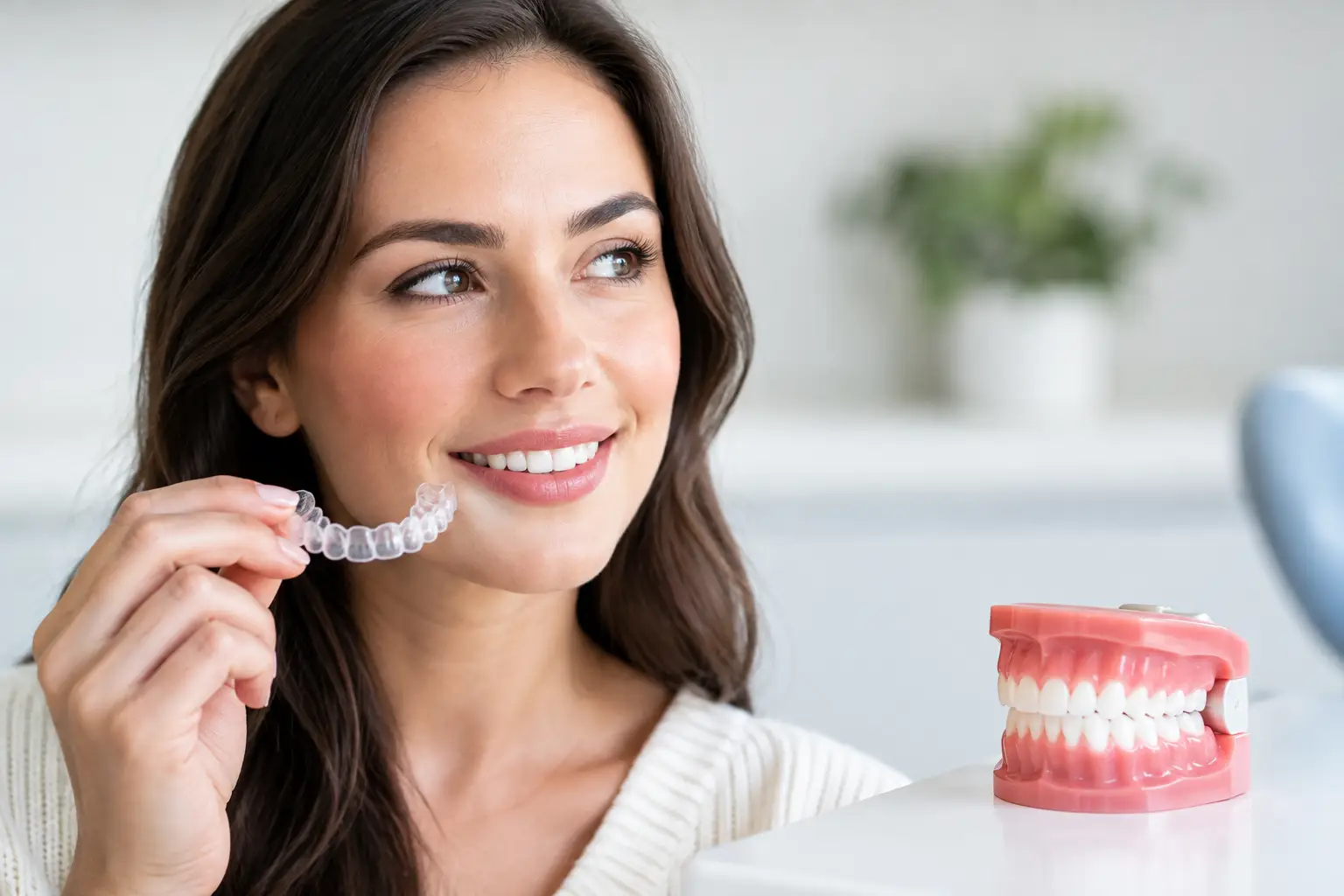
Clear aligners use a series of custom trays to apply controlled pressure. Depending on your needs, they may intrude upper front teeth slightly, move lower teeth upward or forward, create space for crowded teeth, or coordinate both arches so they fit together more comfortably. Small tooth-colored attachments on selected teeth often give aligners the grip needed for these more precise movements.
Some patients also wear small elastics that connect the upper and lower aligners. These can help guide the bite relationship while the teeth move. They are discreet, but they do require commitment. Aligners and elastics only work when they are worn as prescribed.
The important distinction is between a dental overbite and a skeletal overbite. A dental overbite is primarily related to tooth position and is often well suited to Invisalign. A skeletal overbite is related to the size or position of the upper and lower jaws. Aligners may still improve the tooth alignment and bite appearance in some cases, but they cannot change adult jawbone structure in the same way jaw surgery can. A thorough examination helps determine which factors are involved.
Mild vs. Severe Overbite Invisalign Treatment
Mild vs. severe overbite Invisalign treatment is less about a single measurement and more about the whole clinical picture. Your dentist will look at the amount of overlap, crowding or spacing, tooth wear, gum health, jaw relationship, and how your teeth contact when you bite and chew.
A mild to moderate dental overbite is often a strong candidate for clear aligners. These cases may involve front teeth that have gradually shifted, lower teeth that are crowded, or an upper arch that has narrowed over time. Invisalign can address these concerns while offering the discretion many working adults prefer.
More severe overbites may be treatable with Invisalign, but they require realistic expectations and more detailed planning. If the bite problem is caused largely by the jaw relationship, if teeth are significantly worn, or if there are missing teeth and existing crowns or implants, orthodontic movement must be coordinated with restorative care. In some cases, braces offer more control for complex tooth movements. In others, Invisalign combined with restorative treatment provides a thoughtful path forward.
Severe jaw discrepancies may call for an orthodontic and surgical evaluation. That does not mean aligners have no role. It means your treatment should be based on what will protect your teeth, joints, and overall function, rather than on the most convenient appliance alone.
Invisalign Overbite Before and After: What Changes to Expect
When looking at Invisalign overbite before and after results, it helps to look beyond straighter front teeth. A successful result may show less vertical overlap, improved alignment, a more even smile, and better contact between the upper and lower teeth. For patients with crowding, there may also be more room for thorough brushing and flossing.
The most meaningful improvements are often functional. When teeth meet more evenly, force can be distributed across more teeth rather than concentrated on the front edges. This may help reduce ongoing chipping and uneven wear. Of course, existing damage does not repair itself once teeth move. Worn or chipped teeth may need bonding, crowns, or other restorative care after orthodontic treatment to restore proper shape and strength.
Before-and-after photos can be encouraging, but they are not a treatment plan. Two smiles can look similar at the start and need very different approaches. Photos do not show bone support, bite forces, jaw position, or the health of previous dental work. A consultation with diagnostic records, photographs, and digital scans offers a far clearer picture of what is possible for you.
Your Overbite Invisalign Timeline
An overbite Invisalign timeline commonly ranges from about 12 to 24 months, although simpler cases may take less time and complex cases may take longer. The timeline depends on the movements needed, how consistently aligners are worn, and whether refinements are necessary.
At the beginning, your dentist gathers records and creates a detailed treatment plan. Once your aligners are ready, you will usually change to a new set every one to two weeks. Each set builds on the movement from the last one. Most patients wear aligners 20 to 22 hours per day, removing them for meals and for brushing and flossing.
Regular progress visits are still part of treatment, even with clear aligners. They allow your care team to confirm that teeth are tracking as planned, make adjustments when needed, and monitor bite changes. It is common to need refinement aligners near the end of treatment. This is not a failure. Refinements allow the final result to be more precise.
After active treatment, retainers are essential. Teeth have a natural tendency to shift over time, especially in areas that were crowded or rotated. Wearing retainers as directed protects the time, commitment, and investment you have made in your new bite.
Invisalign vs. Braces for Overbite Correction
When comparing Invisalign vs. braces for overbite correction, neither option is automatically better. The right choice depends on the type of overbite, the movements required, your daily routine, and your ability to follow treatment instructions.
Invisalign is appealing because the trays are removable, nearly transparent, and easier to take out for meals and oral hygiene. For adults who attend meetings, speak with clients, or simply prefer a less noticeable orthodontic option, that can be a meaningful benefit. The removable design also makes it easier to brush around every tooth, which matters for gum health throughout treatment.
Braces are fixed to the teeth, so they work around the clock without requiring you to remember to put them back in. They can provide exceptional control for complex movements and may be recommended when a patient has a severe bite discrepancy, needs significant vertical correction, or is unlikely to wear aligners consistently. Braces require more care around brackets and wires, but they remain an excellent, proven treatment option.
The trade-off is straightforward: Invisalign offers discretion and flexibility, while braces offer fixed, continuous force and may be more predictable for certain complex cases. The best recommendation comes after evaluating your bite, not after choosing a treatment based on appearance alone.
Getting a Clear Answer for Your Smile
An overbite can change gradually, which is why many adults are surprised to learn how much their bite has shifted since their teens. If you have noticed increasing tooth wear, chips, crowding, or discomfort when biting, it is worth having it evaluated before those concerns become more difficult to restore.
At Seattle Oral Care, Invisalign planning considers the health of your gums, teeth, existing dental work, and bite together. For patients who need restorative care as well as orthodontics, coordinated treatment can help ensure that every step supports a comfortable, lasting result. A thoughtful consultation can replace uncertainty with a clear plan and help you decide whether Invisalign, braces, or another approach is the right fit for your smile.