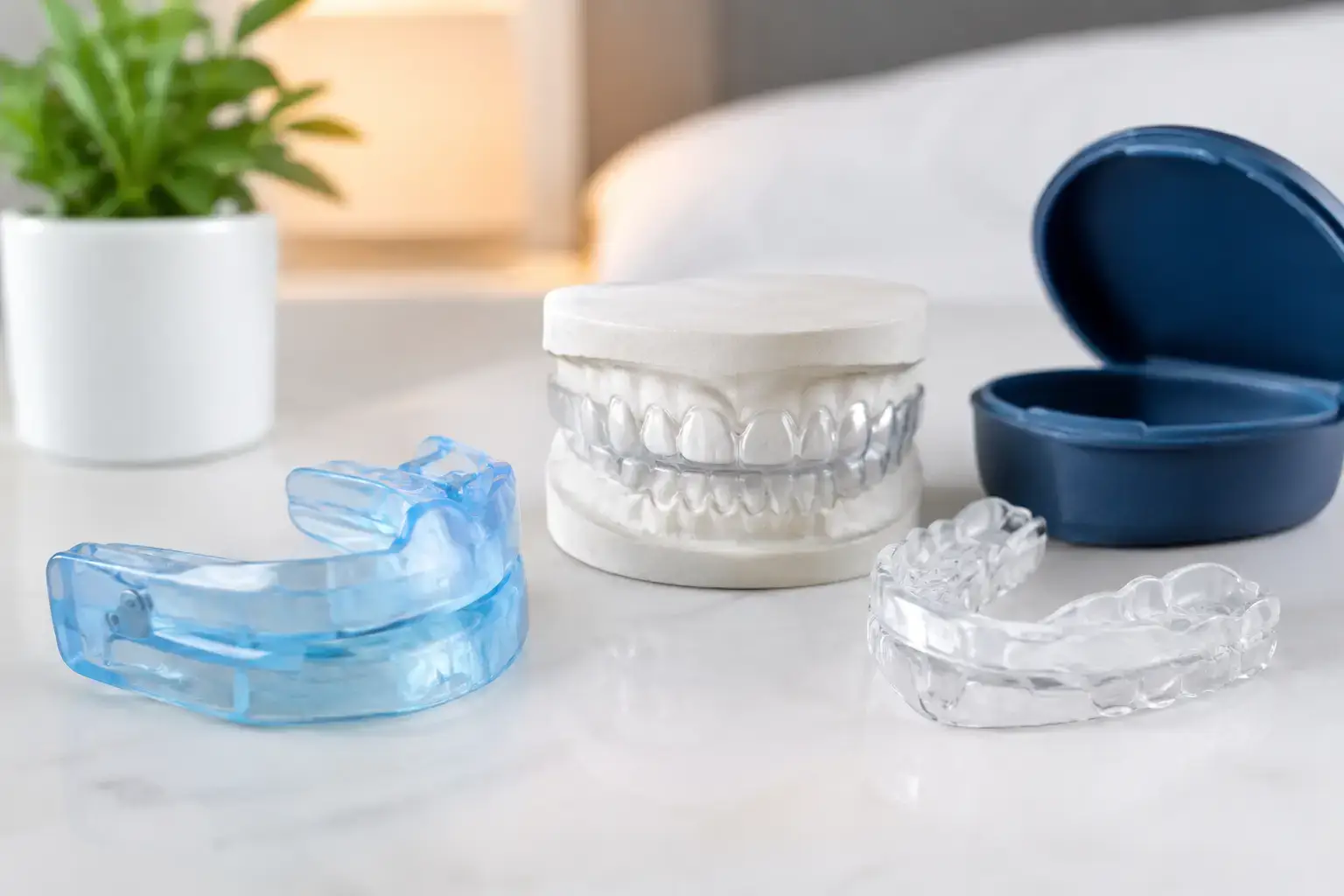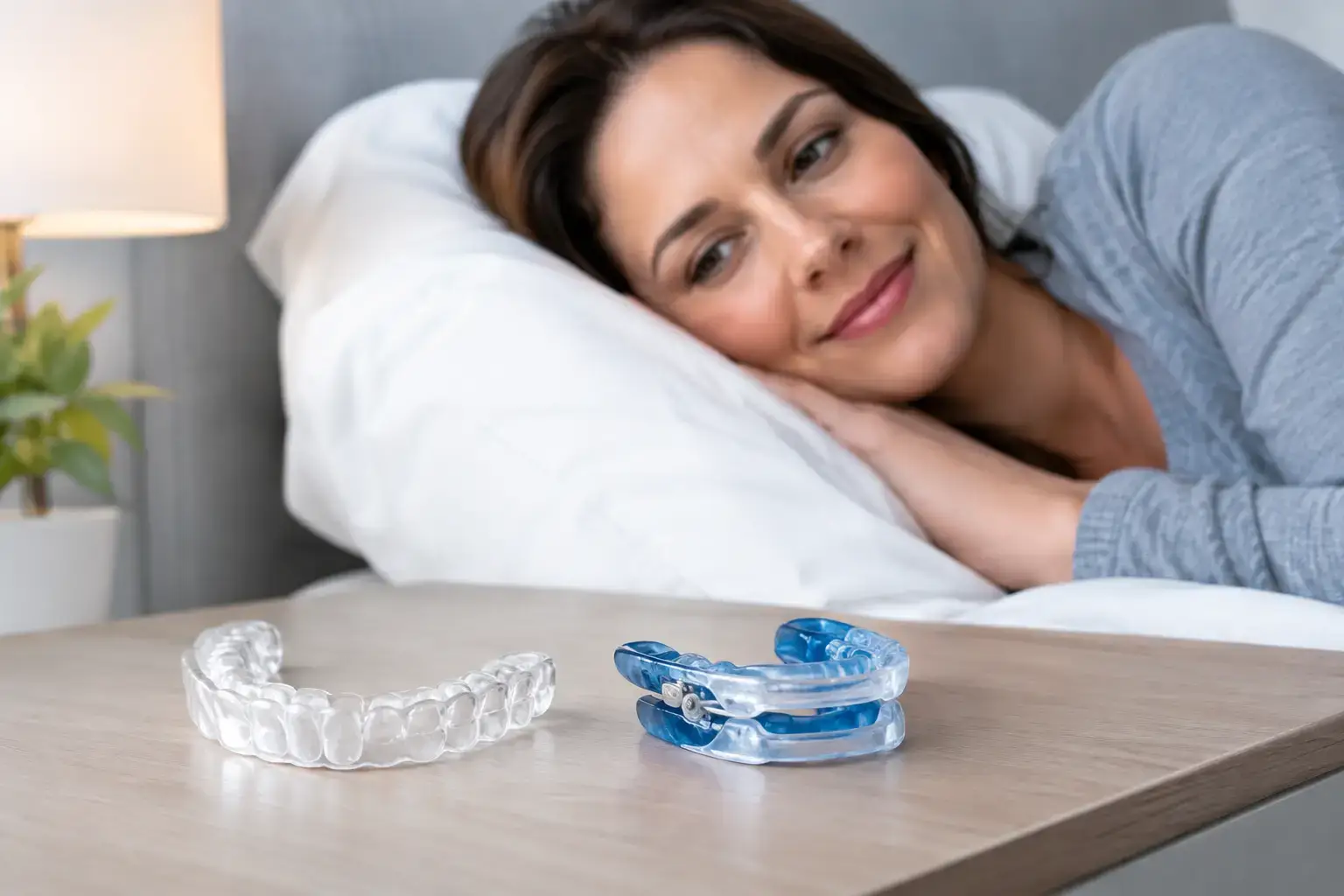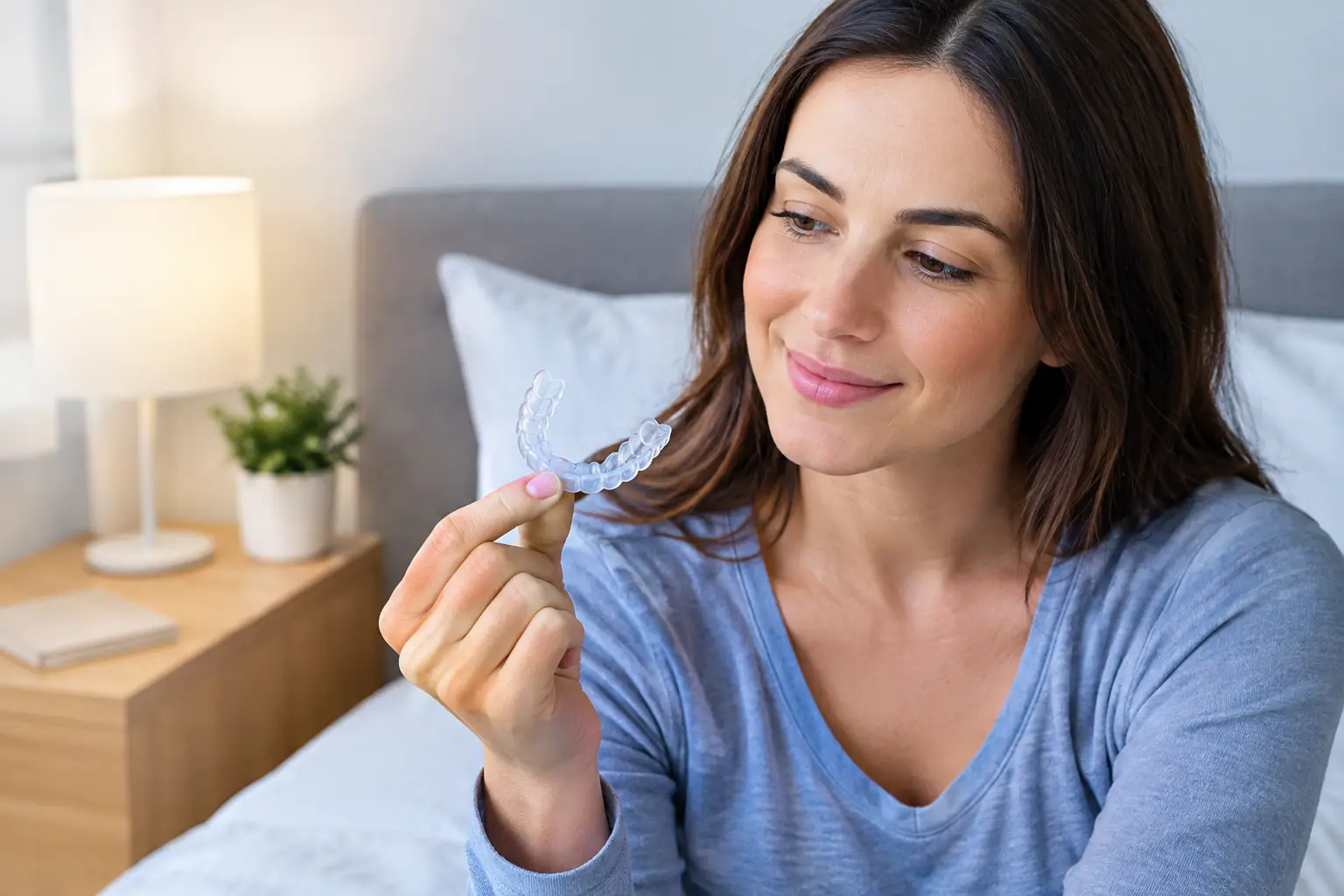
A sleep appliance spends hours against your teeth, gums, and saliva each night, so a quick rinse alone is not enough. Cleaning and maintaining an oral appliance protects your investment, helps it stay comfortable, and reduces the buildup that can cause unpleasant odors or irritation. If you are a new wearer asking how to keep the device clean, a simple daily routine is usually all it takes.
Your appliance was made specifically for your bite and airway. Treat it more like a precision dental device than a sports mouthguard. The right care helps preserve its fit, moving parts, and smooth surfaces while giving your mouth a cleaner start each morning.
How to Clean a Sleep Apnea Mouthpiece Each Morning
Remove your appliance carefully when you wake up. If it has adjustable hardware, avoid twisting, bending, or forcing the sides apart. Rinse it under cool or lukewarm running water right away to remove saliva and loosen any film before it can dry onto the appliance.
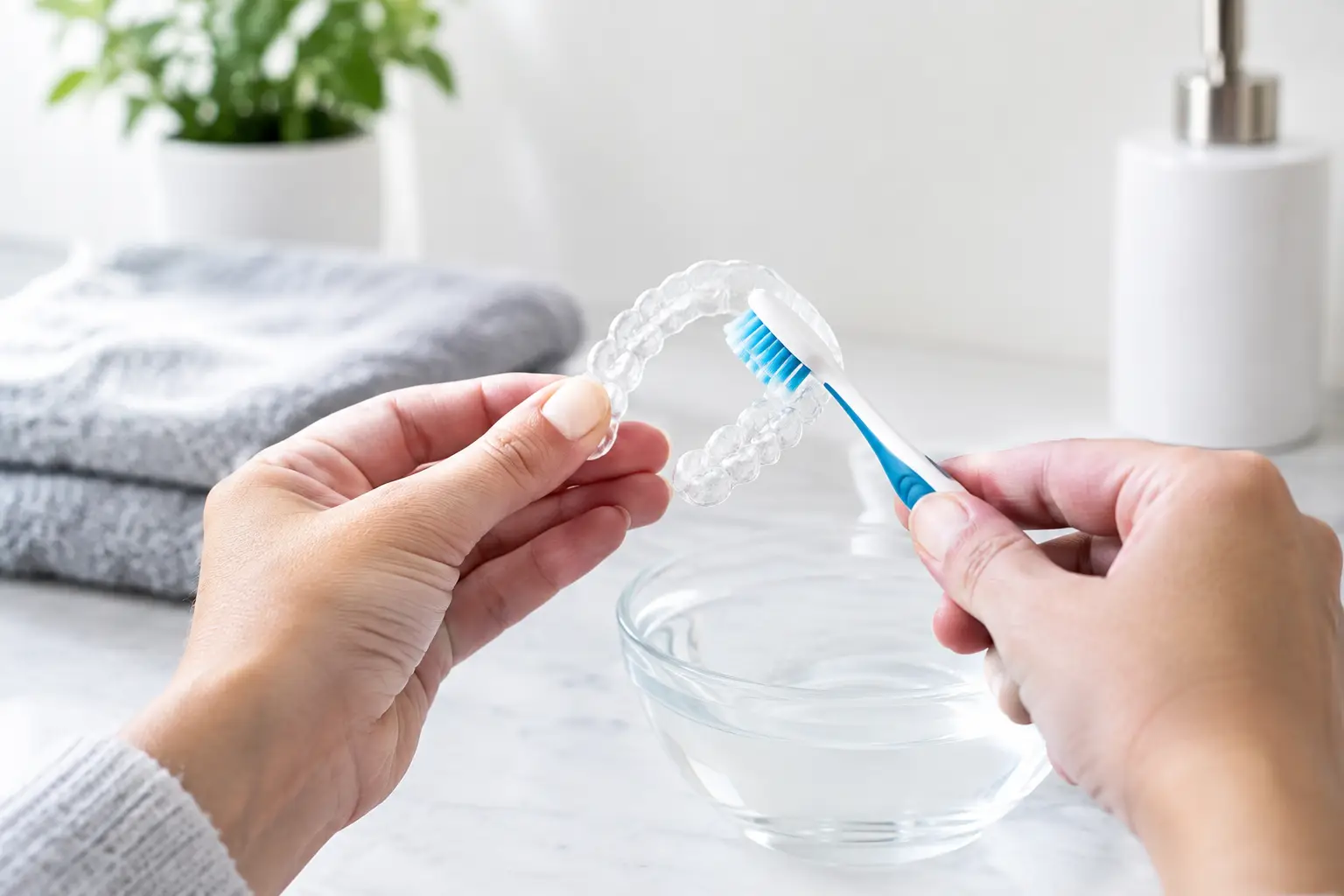
Next, use a soft toothbrush reserved only for your appliance and a small amount of mild, clear liquid hand soap or dish soap. Gently brush every surface, including the inside areas that sit against your teeth and gums. If your appliance has hinges, connectors, or adjustment mechanisms, clean around them gently without digging bristles into the hardware.
Rinse thoroughly until no soap remains. Then allow the appliance to air-dry completely before placing it in its protective case. A clean, dry appliance is less likely to develop odor-causing bacterial buildup. Wipe out the case as needed, too. A freshly cleaned device placed in a damp, dirty case can quickly pick up the same film you just removed.
Do not use hot water. Heat can warp the acrylic or plastic portions of an oral appliance and may affect how it fits. Avoid the dishwasher, washing machine, microwave, and boiling water for the same reason.
Oral Appliance Care Instructions: What to Avoid
Many common bathroom products are too harsh for a sleep apnea mouthpiece. Toothpaste may seem like the obvious choice, but most toothpaste contains abrasives that can leave tiny scratches in the appliance. Those scratches make it easier for bacteria, plaque, and discoloration to collect over time.
Bleach, alcohol-based mouthwash, denture cleaners not approved by your dental provider, and strong household cleaners can also damage appliance materials or metal components. Do not use a hard-bristled brush, toothpicks, or sharp tools to scrape off buildup. They can alter the smooth surfaces that make the appliance comfortable against your teeth and soft tissues.
Some appliances can be used with cleaning tablets or soaking solutions, while others should not be soaked regularly because of their materials or mechanical components. This is one area where the instructions for your specific appliance matter. Follow the cleaning recommendation provided by your sleep dentist, and ask before trying a new product.
Keep Your Mouth Clean, Too
An appliance cannot stay clean if it is placed into an unclean mouth each night. Brush for two minutes and clean between your teeth before bed. If you wear a retainer, partial denture, or other removable device, keep each item clean and stored separately.
Nighttime brushing is particularly valuable for people who snack late, drink sweetened beverages, or take medications that cause dry mouth. Food particles and plaque can become trapped beneath an appliance, increasing the chance of tooth decay, gum inflammation, or morning breath.
If you use a prescribed fluoride product, mouth rinse, or dry-mouth treatment, ask your dentist when to use it in relation to your appliance. In many cases, it is best to complete your oral hygiene routine first, then insert the clean appliance just before sleep.
A Weekly Check Can Prevent Bigger Problems
Once a week, inspect your appliance in good light. Look for cloudy areas, white mineral deposits, cracks, rough edges, loose hardware, or discoloration that does not brush away. Check that the device still seats fully and evenly on your teeth without unusual pressure.
It is normal for an appliance to feel slightly different if you are congested, have had dental work, or are adjusting to treatment. It is not normal to keep wearing a device that is cracked, painful, loose, or suddenly difficult to fit. Do not attempt to repair it with glue or adjust the hardware yourself unless your provider has specifically taught you how to make an approved adjustment.
A persistent odor can also be a sign that the appliance needs a more thorough professional cleaning or that its case needs attention. Bring the appliance and its case to your dental visits so your care team can inspect both.
Store It Safely When You Travel or Skip a Night
Use the protective case provided with your appliance whenever it is not in your mouth. The case helps prevent accidental damage from pets, children, heat, and the all-too-common habit of wrapping an appliance in a napkin. Many appliances are accidentally thrown away this way.
Before closing the case, let the appliance dry unless your dentist has given you different instructions. Keep it away from direct sunlight, a hot car, radiators, and bathroom counters where it could be knocked into the sink or exposed to cleaning products.
For travel, bring the case, your dedicated soft brush, and any provider-approved cleaning product. If you use CPAP on some nights and an oral appliance on others, keep both therapies clean and ready. Your treatment plan may change based on travel, nasal congestion, sleep-study results, or comfort, but consistency remains the goal.
When to Call Your Sleep Dentist
Contact your dental provider if your appliance develops a crack, a sharp edge, loose pieces, or a change in fit. You should also call if you develop jaw pain, tooth pain, gum soreness, bite changes that do not settle shortly after removing the appliance, or ongoing dry mouth and irritation.
Some morning bite changes are expected with mandibular advancement appliances because the device holds the lower jaw forward overnight. Your provider may have given you a morning repositioner or exercises to help your bite return to its normal position. Use these exactly as directed, and mention any changes that last longer than usual.
Regular follow-up visits are part of effective oral appliance therapy. Your sleep dentist can assess the appliance's condition, monitor your teeth and jaw joints, confirm that the device is still helping your breathing, and make careful adjustments when needed. At Seattle Oral Care, patients receive guidance tailored to their appliance and their oral health, not a one-size-fits-all cleaning script.
A few calm minutes each morning can keep your appliance fresh, comfortable, and ready to support better sleep. If something seems different, trust that observation and let your dental team help before a small concern becomes an interruption to your care.