Waking with a sore jaw, sensitive teeth, or a tired partner beside you can make two dental devices sound interchangeable. They are not. In the night guard versus sleep appliance conversation, the right choice depends on what happens while you sleep: tooth grinding, airway blockage, or sometimes both.
A night guard is designed to protect teeth and reduce strain from clenching and grinding. A sleep appliance is designed to support a more open airway for people with obstructive sleep apnea or certain cases of snoring. Both are custom dental devices worn at night, but they address very different health concerns.
What a Night Guard Is Designed to Do
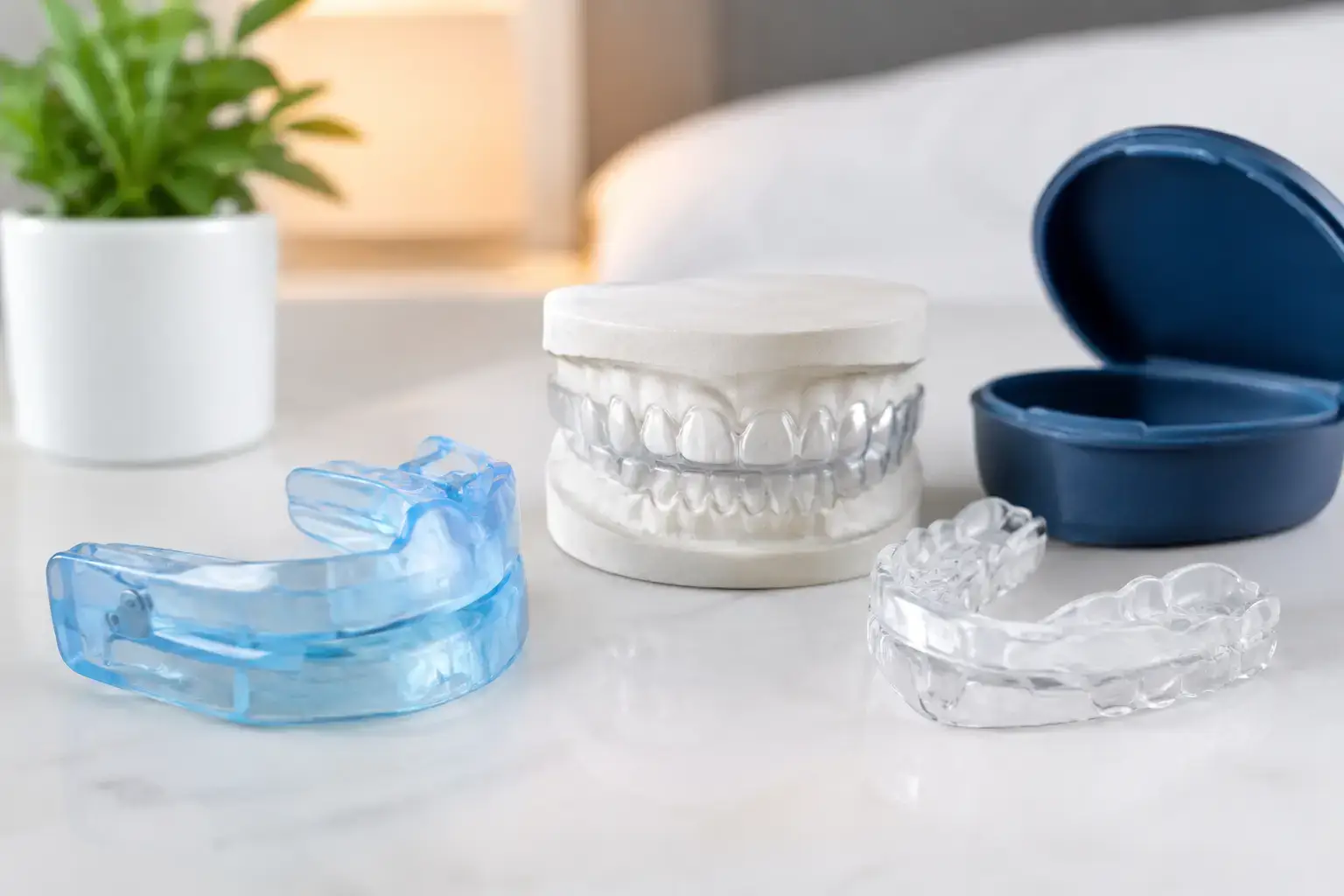
A night guard, also called an occlusal guard or bite splint, creates a protective barrier between your upper and lower teeth. It is commonly recommended for bruxism, the habit of clenching or grinding teeth during sleep.
Bruxism can be surprisingly destructive over time. It may cause worn or chipped teeth, cracked fillings or crowns, jaw-muscle soreness, morning headaches, and tenderness around the jaw joints. For patients with veneers, crowns, implants, or other restorative dentistry, protecting the bite can be especially valuable.
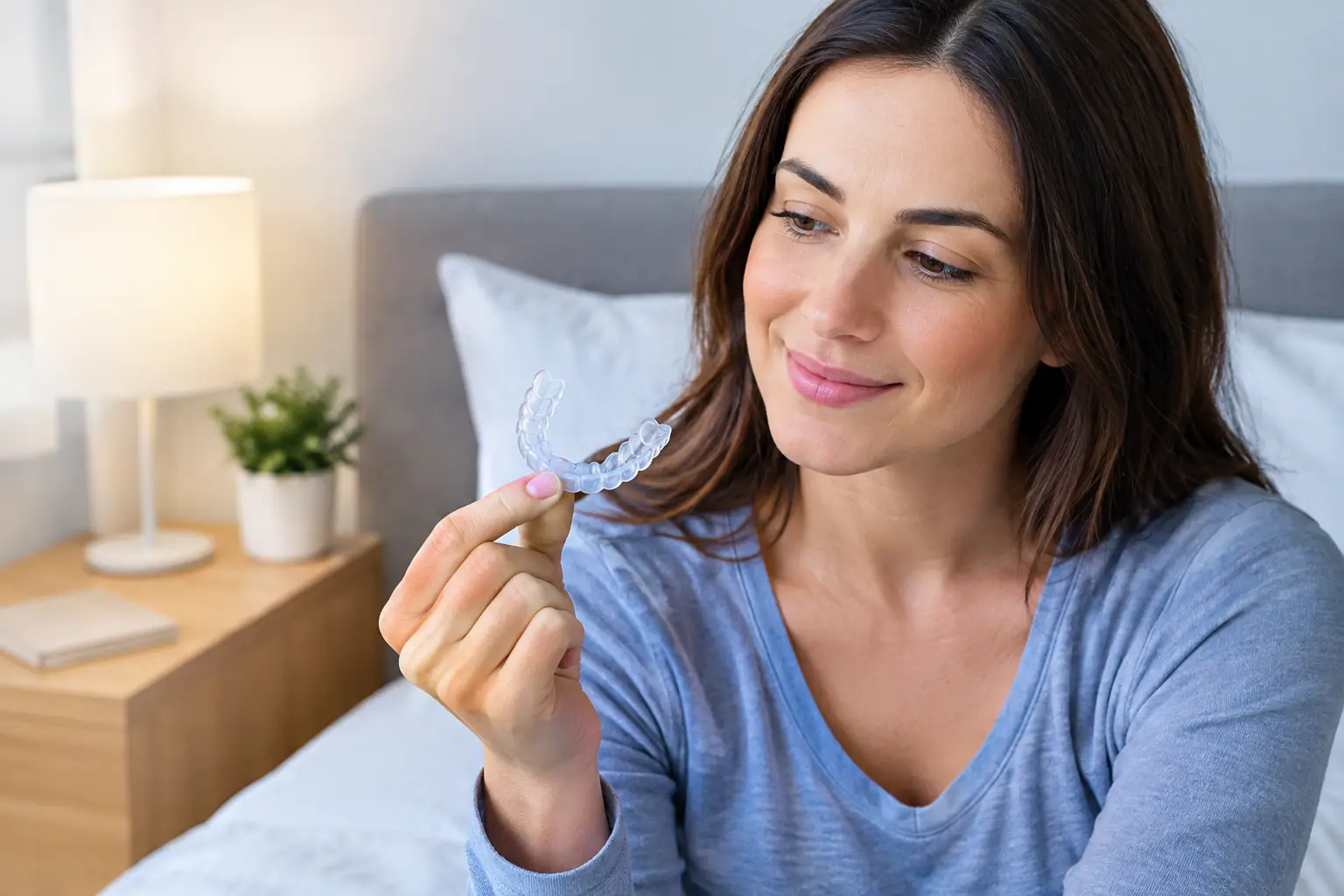
A custom night guard is made from impressions or a digital scan of your teeth. It is shaped to fit your bite precisely, which helps it stay in place comfortably and distributes biting forces more evenly. While a guard does not necessarily stop a person from grinding, it helps limit the damage that grinding can cause.
Over-the-counter guards can seem like a simple solution, but their bulky or uneven fit may be uncomfortable and can affect the way your teeth meet. A professionally made guard is more durable, more comfortable, and easier to adjust if your bite changes.
What a Sleep Appliance Is Designed to Do
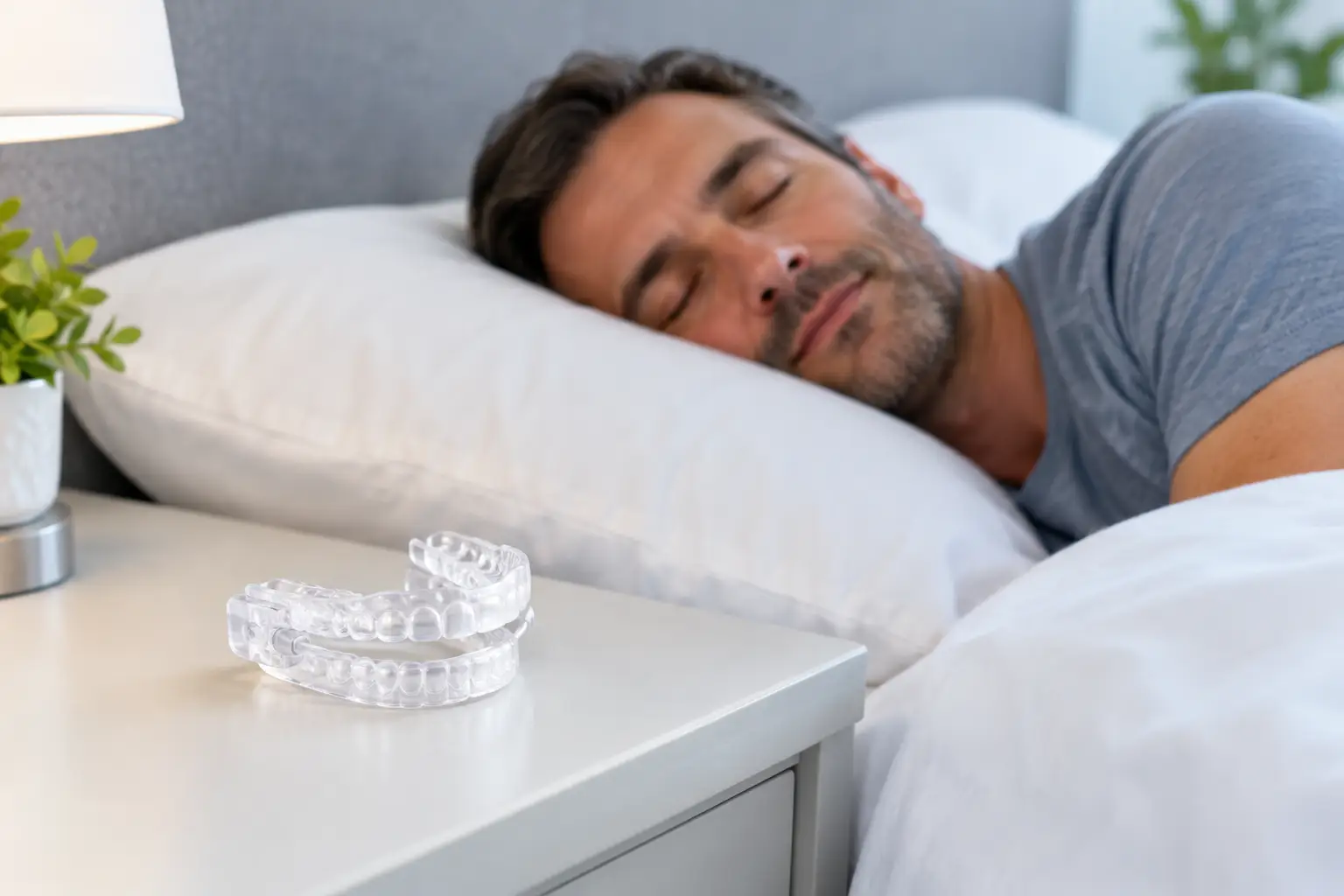
A sleep appliance, often called an oral appliance for sleep apnea, is a custom device that gently positions the lower jaw forward during sleep. This forward position can help keep the tongue and soft tissues from narrowing the airway.
For the right patient, this can reduce airway obstruction, improve snoring, and help manage obstructive sleep apnea . Obstructive sleep apnea occurs when breathing repeatedly slows or stops during sleep because the airway becomes blocked. Common signs include loud habitual snoring, gasping or choking during sleep, frequent awakenings, daytime fatigue, morning headaches, and difficulty concentrating.
A sleep appliance is not simply a snoring guard. It is a medical device prescribed as part of a sleep apnea treatment plan. Diagnosis generally requires a sleep evaluation and sleep test ordered or interpreted by a qualified medical provider. Dental providers with training in dental sleep medicine then work with the medical team to create, fit, and adjust the appliance.
Many people appreciate oral appliance therapy because it is small, quiet, and portable. It may be an effective alternative for adults with mild to moderate obstructive sleep apnea who cannot tolerate CPAP, as well as for some patients with more severe sleep apnea who cannot use CPAP consistently. For others, CPAP remains the most appropriate treatment. The best recommendation should be based on the severity of the condition, your anatomy, medical history, and treatment response.
Night Guard Versus Sleep Appliance: The Key Difference
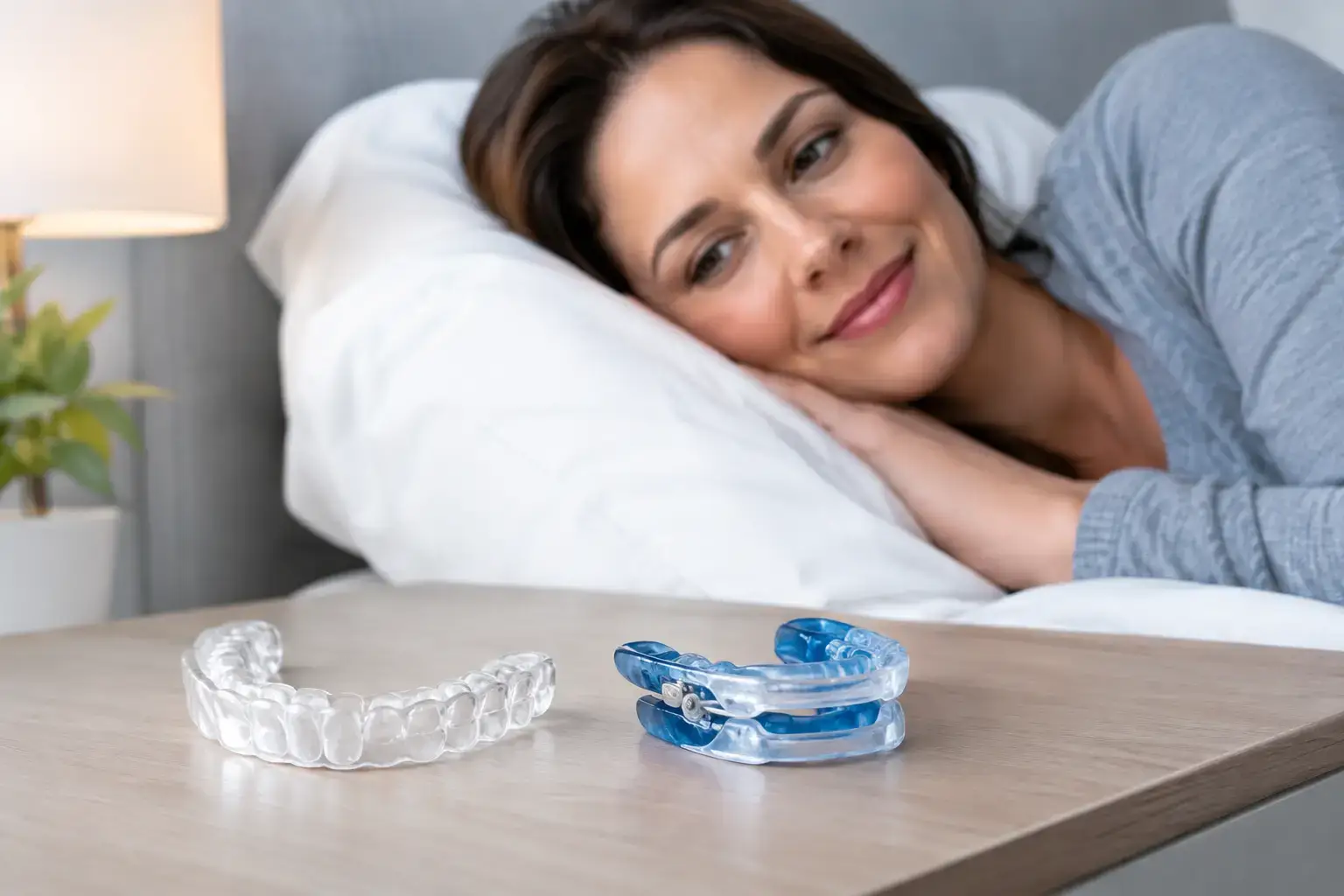
The main difference is purpose. A night guard protects your teeth and jaw from the forces of grinding. A sleep appliance is intended to improve airflow during sleep by changing the position of the jaw.
That distinction matters because using a night guard when you need sleep apnea treatment can leave the underlying airway problem untreated. It may protect your enamel while daytime fatigue, oxygen changes, and disrupted sleep continue. On the other hand, wearing a sleep appliance when the primary issue is grinding may not be appropriate, particularly if there is no evidence of airway obstruction.
The devices also fit differently. A night guard may cover the upper teeth, lower teeth, or both, depending on the design. A mandibular advancement sleep appliance usually engages both the upper and lower teeth and connects them in a way that holds the lower jaw forward. It is adjustable so the position can be refined gradually for comfort and treatment effectiveness.
Can You Have Grinding and Sleep Apnea at the Same Time?
Yes. Teeth grinding and sleep-disordered breathing can occur together. Some people clench or grind during brief awakenings associated with breathing disturbances, although grinding can also have other causes, including stress, medication effects, bite concerns, and jaw-muscle activity.
This overlap is one reason a careful evaluation matters. If you have a history of grinding but also snore loudly, wake up gasping, or feel exhausted despite a full night in bed, a standard night guard may not be the whole answer. Let your dental and medical providers know about all of your symptoms, not only your tooth wear.
For patients with both concerns, the treatment plan may need to prioritize airway health while also protecting the teeth and joints. The design of an oral appliance, the condition of your teeth and restorations, and the health of your jaw joints all deserve attention before treatment begins.
How to Tell Which Device You May Need
Your symptoms offer useful clues, though they cannot replace a professional diagnosis. A night guard discussion often begins with visible tooth wear, fractured teeth or restorations, jaw soreness, tight facial muscles, or reports of grinding from a partner.
A sleep appliance discussion often begins with snoring, witnessed pauses in breathing, choking sounds, poor sleep quality, daytime sleepiness, or an existing diagnosis of obstructive sleep apnea. High blood pressure, weight changes, nasal obstruction, and certain anatomical factors may also be part of the larger clinical picture.
If you already use CPAP but find it difficult to wear consistently, do not stop treatment on your own in favor of an online device. Ask your sleep physician and dental sleep medicine provider whether oral appliance therapy is clinically appropriate. Follow-up testing is often needed to confirm that the appliance is effectively managing the airway condition.
Why Custom Care Makes a Difference
A device that fits well is more likely to be worn consistently. It should also be monitored. Teeth can move, dental work can change, and jaw comfort can shift over time. Sleep appliances require periodic adjustments and follow-up because the goal is not only comfort, but effective breathing support.
At Seattle Oral Care, an individualized evaluation considers your teeth, bite, jaw joints, existing restorations, and sleep concerns together. For sleep apnea care, an AADSM-certified prosthodontist can coordinate with your physician and sleep team so your oral appliance supports a medically informed plan.
Patients who feel nervous about dental treatment often find reassurance in knowing what each step is for. Whether you need protection from grinding or support for better breathing, there should be a clear reason for the device, a comfortable fit, and a plan for follow-up.
A Better Next Step Than Guessing
If you are deciding between a night guard and a sleep appliance, start with the symptoms that are affecting your life. Bring up jaw pain, worn teeth, snoring, fatigue, and any prior sleep testing at your dental visit. A thoughtful conversation can prevent you from treating the visible symptom while missing the cause underneath.
Better sleep and healthier teeth often begin with the same simple step: asking the right question before choosing the device.