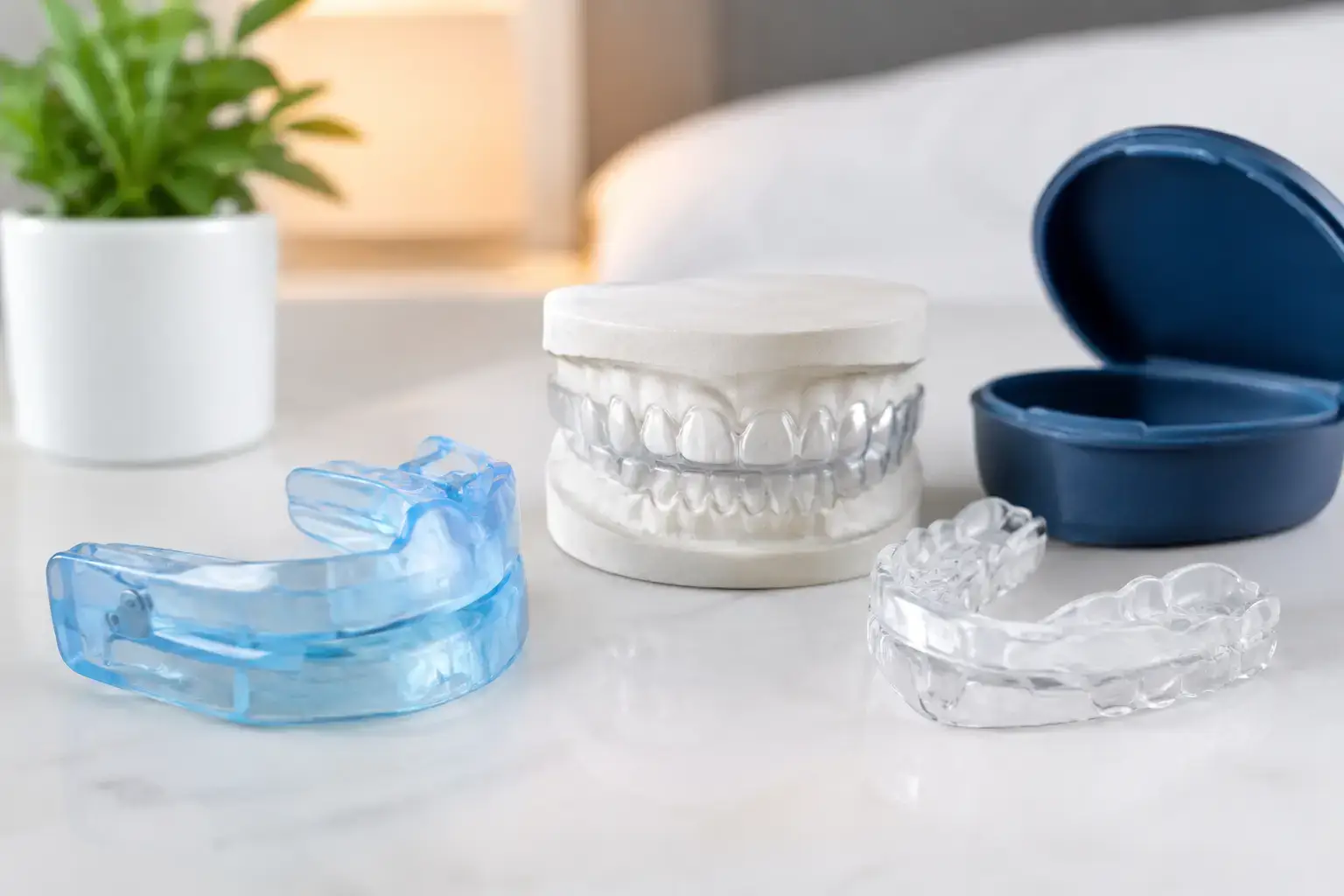
A partner may notice the snoring first. You may notice the afternoon exhaustion, morning headaches, dry mouth, or the feeling that a full night in bed did not produce real rest. For many people, learning about the types of dental sleep appliances is an encouraging next step - especially when CPAP has been difficult to tolerate or when snoring is disrupting sleep at home.
Dental sleep appliances are custom oral devices worn while you sleep. They are designed to support a more open airway by changing the position of the lower jaw, tongue, or both. The right device depends on your sleep diagnosis, airway anatomy, dental health, comfort needs, and whether you have a history of jaw pain or teeth grinding.
Why appliance type matters
Not every snoring device is appropriate for obstructive sleep apnea. Snoring can occur on its own, but it can also be a sign of obstructive sleep apnea, a condition in which the airway repeatedly narrows or closes during sleep. That is why a proper evaluation matters before choosing an appliance.
For adults with mild to moderate obstructive sleep apnea, a custom oral appliance may be an effective treatment option. It can also help some patients with severe sleep apnea who cannot use CPAP consistently, although this decision should be made with a sleep physician. A professionally made appliance is different from an over-the-counter mouthguard: it is fitted to your teeth, adjusted gradually, and monitored to protect your bite and jaw joints over time.
The main types of dental sleep appliances
Mandibular advancement devices
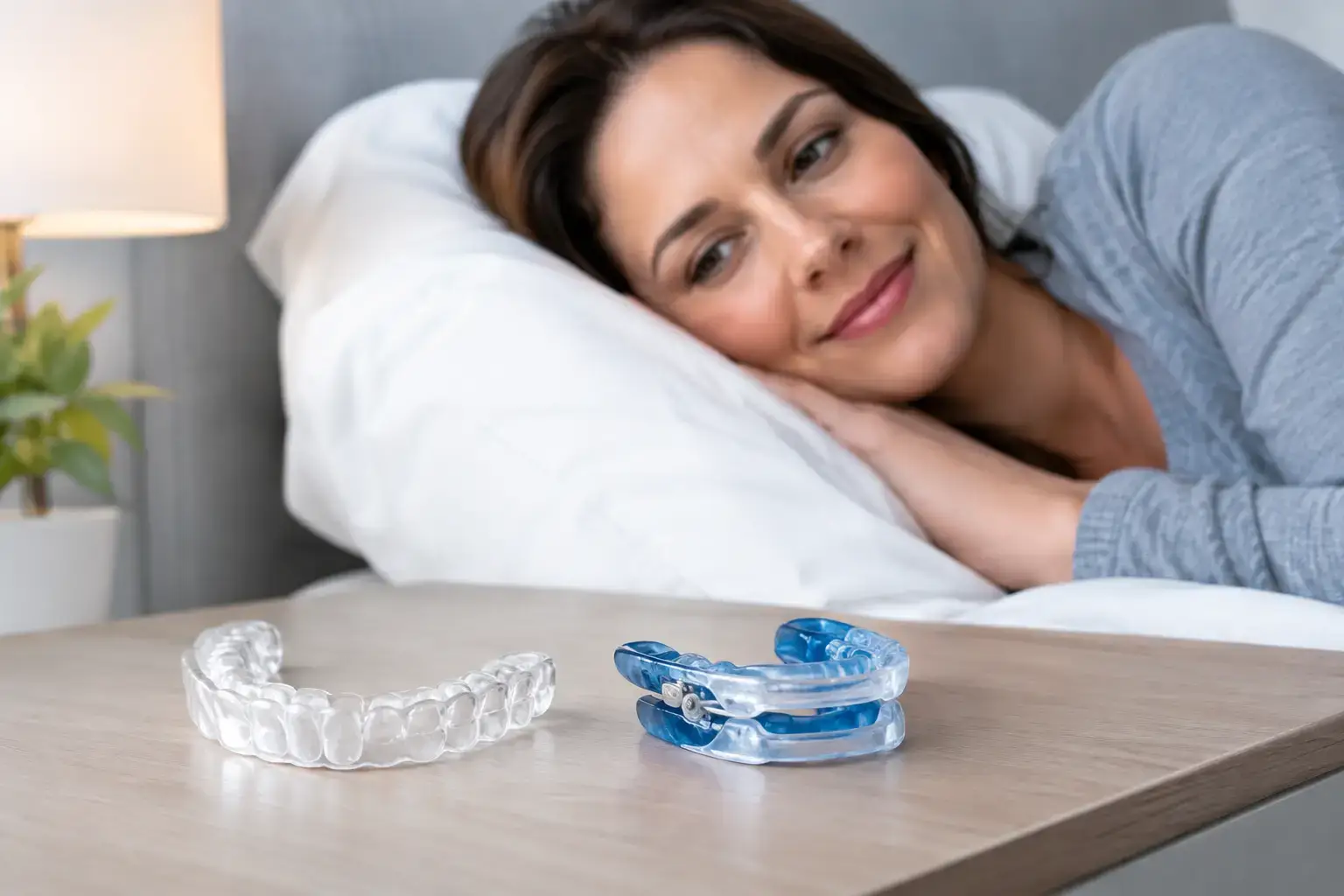
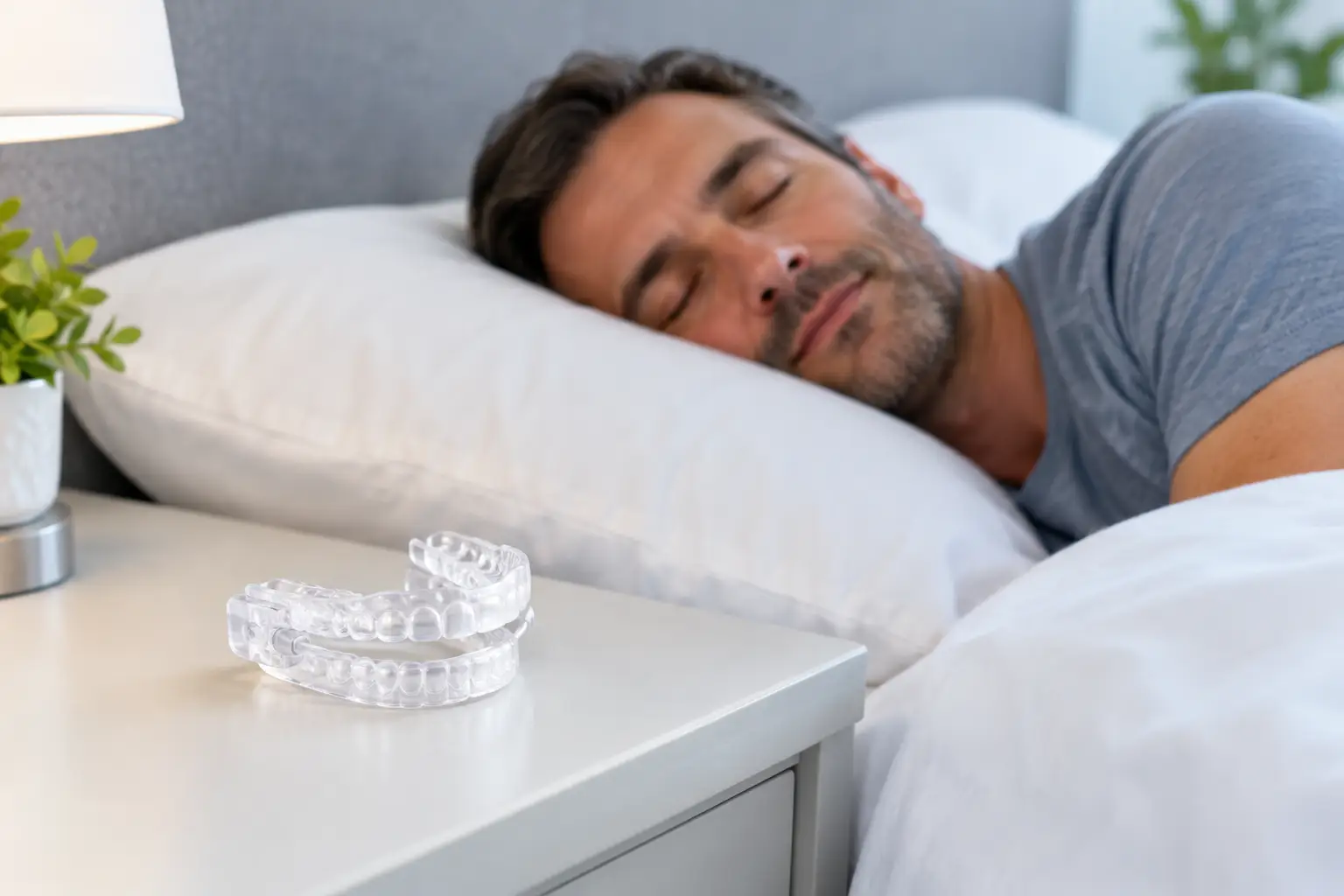
A mandibular advancement device, often called a MAD, is the most common dental appliance used for obstructive sleep apnea and snoring. It covers the upper and lower teeth, much like two slim, connected retainers. The device gently brings the lower jaw forward while you sleep.
Moving the jaw forward helps create more room behind the tongue and can reduce the collapse of soft tissues in the throat. For many patients, this reduces snoring and breathing interruptions without requiring a mask, hose, or machine.
Most custom mandibular advancement devices are adjustable. Your dentist can make small changes over time to find a position that improves airflow while remaining as comfortable as possible. This adjustability is a meaningful advantage because advancing the jaw too little may not help enough, while advancing it too far can create jaw soreness or muscle fatigue.
MADs are often a good choice for people who have adequate, stable teeth and healthy gums to support the appliance. They may also work well for patients who travel frequently or want a quieter, more portable alternative to CPAP. If you have significant tooth loss, loose teeth, untreated gum disease, or active TMJ symptoms, the design and suitability of the appliance need extra consideration.
Tongue-retaining devices
A tongue-retaining device, sometimes called a tongue-stabilizing device, uses a soft silicone bulb to gently hold the tongue forward. Rather than repositioning the jaw, it helps prevent the tongue from falling backward and narrowing the airway during sleep.
This type of appliance can be useful when a patient cannot comfortably advance the lower jaw, has limited lower-jaw movement, or does not have enough teeth to retain a traditional mandibular advancement device. It may also be considered when the tongue appears to be a major contributor to airway blockage.
The trade-off is that tongue-retaining devices can take time to get used to. Some people find the sensation uncomfortable or experience temporary tongue tenderness, excess saliva, or difficulty keeping the device in place. They are not the first choice for every patient, but they can be a valuable option in the right clinical situation.
Combination and specialized appliances
Some patients need a more individualized design. A combination appliance may incorporate jaw advancement with features intended to better control tongue position or accommodate unique dental conditions. In certain cases, an appliance may be designed around crowns, bridges, implants, partial dentures, or areas of missing teeth.
This is where a comprehensive dental evaluation becomes especially important. A device should not simply fit over the teeth. It must also work with your existing restorations, bite, gum health, and jaw function. For a person with a complex restorative history, careful planning can help avoid unnecessary pressure on vulnerable teeth or dental work.
Specialized designs may also be used alongside other treatment approaches. For example, some patients use an oral appliance when traveling but use CPAP at home. Others may use oral appliance therapy in coordination with positional therapy, weight-management support, nasal treatment, or CPAP at a lower pressure. Sleep apnea treatment is not always an either-or decision.
Custom appliances versus store-bought snoring guards
Store-bought boil-and-bite devices may seem like a simple solution, but they do not offer the same precision, comfort, or clinical follow-up as a custom appliance. Generic devices can feel bulky, shift during sleep, or hold the jaw in an unsuitable position. They also cannot confirm whether your breathing interruptions are improving.
A custom appliance is created from detailed records of your teeth and bite. It is fitted specifically for you, then adjusted based on your response and comfort. Follow-up visits are part of treatment, not an extra step. Your dentist checks the appliance, reviews symptoms, evaluates your teeth and jaw joints, and watches for changes in your bite.
For patients with diagnosed sleep apnea, treatment effectiveness should also be confirmed through follow-up testing ordered or coordinated by a sleep physician. Feeling less tired is encouraging, but it does not always tell the full story about nighttime breathing.
What to expect from oral appliance therapy
The process begins with a conversation about your sleep concerns, medical history, and dental health. If you have not had a sleep study, you may need an evaluation with a physician or sleep specialist before treatment. A diagnosis helps determine whether an oral appliance is appropriate and what goals the device should meet.
Once oral appliance therapy is recommended, your dentist will examine your teeth, gums, jaw joints, bite, and existing dental work. Digital scans or impressions are used to create the appliance. At delivery, you will receive instructions for wearing, cleaning, and storing it, along with a plan for gradual adjustments.
Early adjustment is normal. You may notice more saliva, slight tooth pressure, or temporary jaw stiffness in the morning. Many patients adapt over several weeks. Persistent pain, bite changes, loose teeth, or headaches should be addressed promptly rather than ignored. A well-managed appliance is intended to support better sleep without compromising long-term oral health.
Choosing the right appliance for your needs
The best option is not necessarily the smallest device or the one a friend uses successfully. It is the one that addresses your airway needs while respecting your teeth, jaw, and comfort. A mandibular advancement device is often the preferred option for many adults with mild to moderate obstructive sleep apnea, but tongue-retaining and specialized designs have an important place when jaw advancement is not ideal.
At Seattle Oral Care, sleep appliance treatment is guided by careful planning and delivered by an AADSM-certified prosthodontist. That combination matters when sleep concerns overlap with crowns, implants, missing teeth, bite changes, or dental anxiety. You deserve clear answers about what the appliance can do, what it cannot do, and how your progress will be monitored.
Better sleep often begins with a conversation, not a one-size-fits-all device. If snoring, daytime fatigue, or a sleep apnea diagnosis is affecting your health or your household, a thoughtful evaluation can help you move toward quieter nights and more energized days.