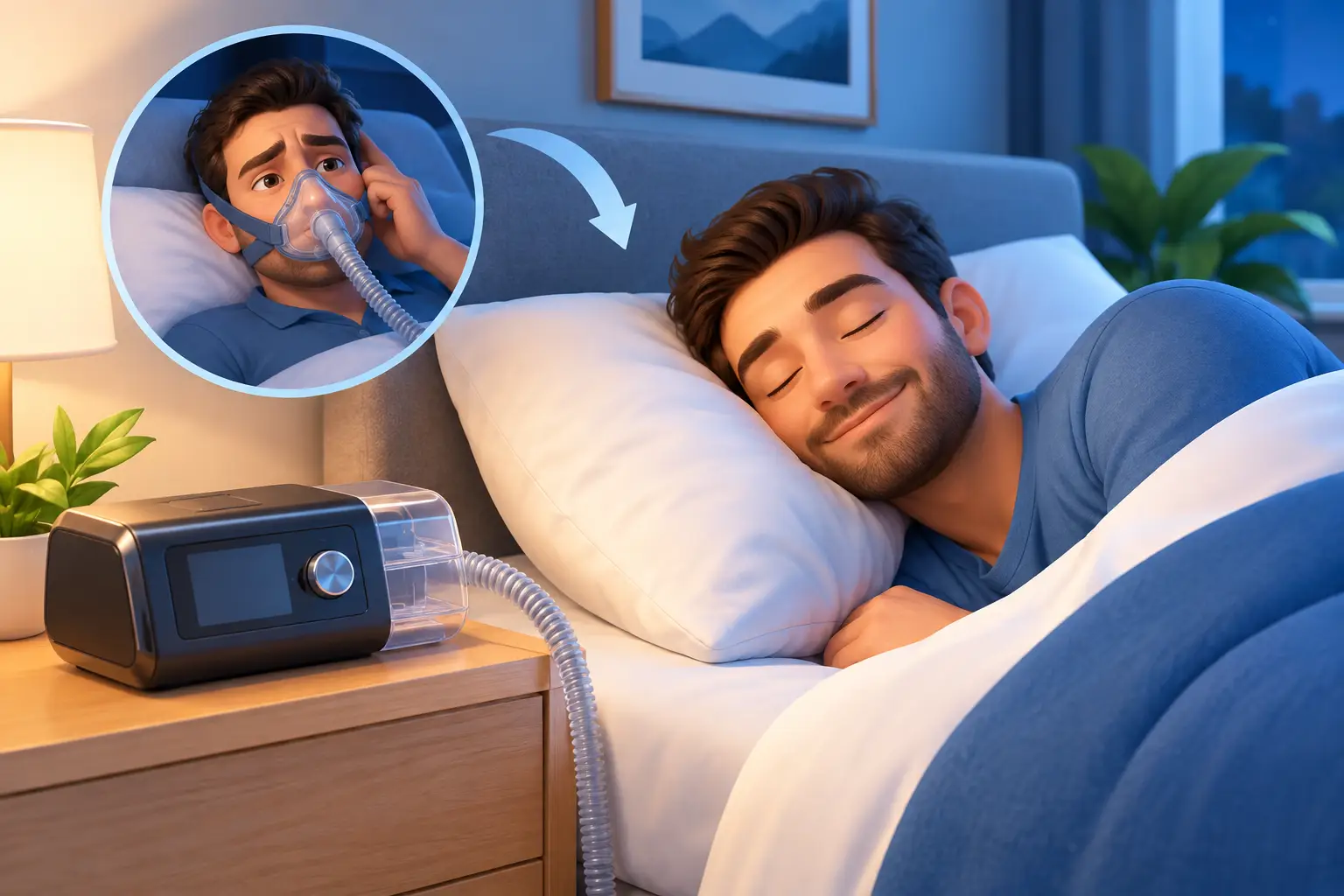
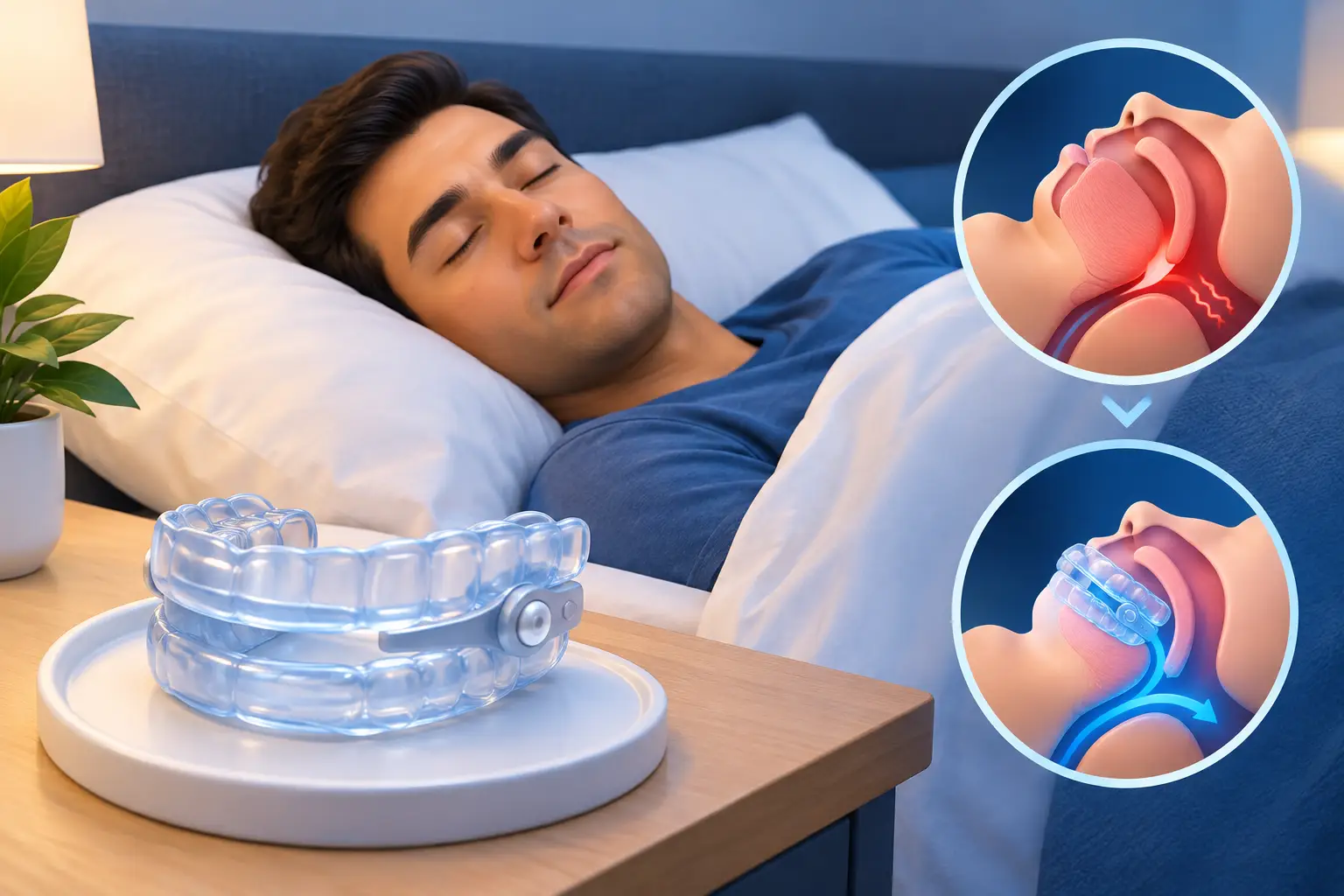
For a person with severe sleep apnea who cannot tolerate CPAP, the question is often practical and urgent: is there another treatment worth discussing? Oral appliance therapy for severe sleep apnea may be considered in selected situations, but it is not a simple replacement for CPAP. CPAP remains the first-line treatment, and a sleep physician should determine whether an oral appliance is appropriate for your individual needs.
That answer can feel less direct than you hoped for, especially after difficult nights with a mask, tubing, pressure, or a device that never quite becomes comfortable. Still, a careful evaluation matters. The goal is not to choose the easiest-looking option. It is to find a treatment plan you can use consistently and that is clinically appropriate for you.
Can an oral appliance treat severe sleep apnea?
An oral appliance is a custom-made device worn over the teeth during sleep. Most sleep appliances work by gently positioning the lower jaw forward, which can help keep the airway more open. They are fitted and adjusted by a dentist with training in dental sleep medicine, then evaluated as part of ongoing care with the sleep physician.
Can an oral appliance treat severe sleep apnea? In some cases, it may be part of the treatment plan when CPAP cannot be tolerated. Whether it is a reasonable option depends on more than the label of “severe.” Your sleep physician considers your sleep study, symptoms, medical history, airway anatomy, and prior experience with CPAP. Your dentist also needs to evaluate your teeth, gums, bite, jaw joints, and ability to wear and maintain an appliance.
An oral appliance is not an over-the-counter mouthguard. A properly designed device is custom fitted, adjustable, and intended to be monitored over time. That distinction is especially important when the treatment decision involves severe sleep apnea.
Why CPAP is still first-line
CPAP is first-line because it is designed to deliver pressurized air that supports the airway throughout sleep. For many people, it is effective and becomes manageable with the right mask, pressure settings, humidification, coaching, and follow-up.
Before moving away from CPAP, it is often worthwhile to identify what is making it difficult. Some people struggle with mask leaks or facial pressure. Others feel confined by the mask, wake because of dryness, or find the equipment hard to travel with. These concerns are real, and they deserve a thoughtful conversation rather than a rushed decision.
Sometimes a different mask style, a refitting appointment, or adjustments through the sleep care team can improve the experience. In other cases, despite genuine effort and support, CPAP remains intolerable. That is when a severe sleep apnea CPAP alternative may be discussed with the physician overseeing your care.
The key point is that the decision belongs within a coordinated treatment plan. A dentist can assess and provide an oral appliance, but the sleep physician determines whether this approach fits the overall sleep apnea diagnosis and care plan.
When an oral appliance may be considered
Oral appliance therapy may be considered when a patient has been unable to tolerate CPAP or has not been able to use it consistently, and the sleep physician believes an appliance is a suitable option. It can also be considered as part of a broader plan that may include continued work with CPAP, positional strategies, or other physician-directed care.
There is no one-size-fits-all answer. A person with severe sleep apnea who cannot tolerate CPAP may be an appropriate candidate for an appliance, while another person with a similar diagnosis may need a different path. The details matter.
Your dental evaluation is equally important. An appliance rests on the teeth and relies on stable oral structures for support. Existing crowns, bridges, implants, missing teeth, gum concerns, jaw soreness, grinding, or a changing bite do not automatically rule treatment out. They do, however, affect appliance design and whether any dental care should happen first.
At Seattle Oral Care, this evaluation is approached with the same care given to other complex dental decisions. The focus is on understanding your mouth, your comfort, and your long-term ability to use the appliance - not simply making a device and sending you home.
What the process should look like
A safe oral appliance process begins with communication between your sleep physician and dental sleep provider. Your physician confirms the diagnosis and helps establish whether oral appliance therapy is appropriate. The dental provider then performs a detailed oral examination and discusses what treatment would involve.
If you move forward, impressions or digital scans are used to create a custom appliance. At delivery, the appliance is fitted carefully and you receive clear instructions for wearing, cleaning, and storing it. Adjustments are usually gradual. The goal is a device that fits securely while respecting your comfort, jaw function, and bite.
Follow-up is not optional. Your dentist checks the fit, comfort, tooth contact, jaw movement, and any changes that may develop over time. Your sleep physician also remains involved to assess the treatment plan after the appliance has been adjusted. This shared follow-up helps ensure that the appliance is being used as intended rather than treated as a one-time purchase.
Trade-offs to understand before choosing an appliance
Many patients are drawn to an oral appliance because it is compact, quiet, and does not require a mask or tubing. Those are meaningful benefits, particularly for people who have found CPAP difficult to live with. But an appliance also has trade-offs.
It needs to be worn every night as directed, cleaned regularly, and brought to follow-up visits. Some people notice temporary tooth pressure, jaw stiffness, saliva changes, or bite changes. These concerns should be addressed early rather than ignored. An experienced dental provider can make adjustments and monitor your oral comfort, but no treatment is completely maintenance-free.
It is also reasonable to ask direct questions before beginning: How will my physician and dentist coordinate care? What should I do if my jaw feels sore? How often will my bite be checked? What happens if the appliance needs repair or replacement? Clear answers are part of good care.
A conversation worth having
If CPAP has been difficult, do not assume that you have failed treatment or that your only choice is to give up. Bring the problem back to your sleep physician and explain exactly what is not working. Specific details - mask discomfort, pressure intolerance, frequent removal during sleep, dry mouth, or travel challenges - can guide the next step.
Ask whether a referral for dental sleep medicine makes sense in your situation. A consultation can clarify whether your mouth and bite can support an appliance, what adjustments may be needed, and how follow-up would be coordinated with your physician.
The most helpful next step is an honest, individualized discussion. CPAP remains first-line, but when it is not tolerated, a custom oral appliance may be a carefully considered option. You deserve a plan that respects both the clinical decision and the reality of what you can comfortably use night after night.