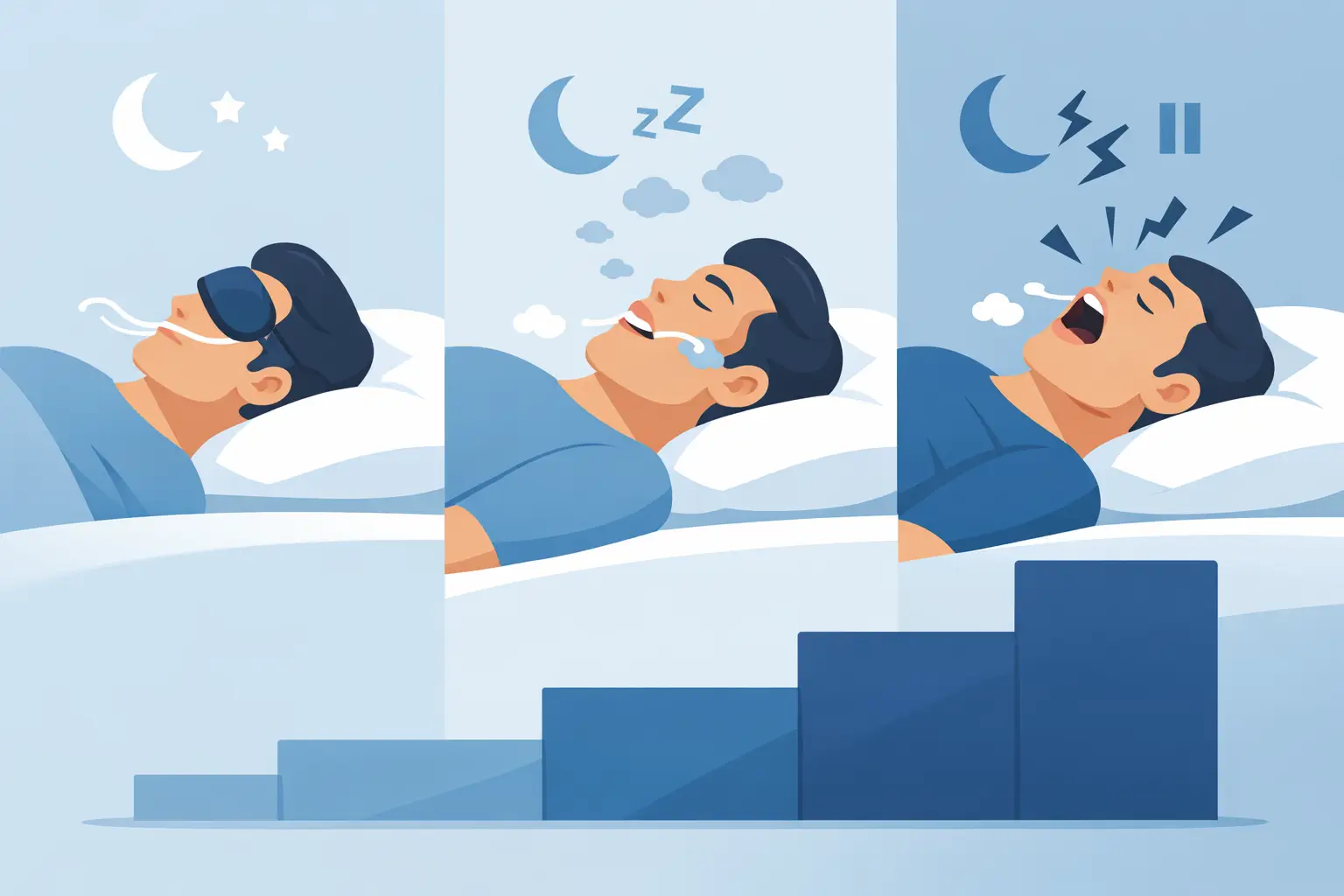
A sleep apnea result can feel confusing, especially when the report says “mild” but you wake up exhausted, snore loudly, or struggle to stay alert at work. When people ask about mild vs moderate vs severe sleep apnea, sleep apnea severity levels, what counts as mild sleep apnea, and sleep apnea classification , they are usually looking for more than a number. They want to know what that number means for their health and what to do next.
How sleep apnea severity levels are measured
Obstructive sleep apnea, or OSA, occurs when the airway repeatedly narrows or closes during sleep. Your brain briefly wakes you enough to restore breathing, often without you remembering it the next morning. These interruptions can fragment sleep, reduce oxygen levels, and place added strain on the body over time.
Sleep specialists usually classify OSA using the apnea-hypopnea index, called the AHI. This measures the average number of breathing disruptions per hour of sleep. An apnea is a near-complete pause in breathing. A hypopnea is a partial reduction in breathing that still affects oxygen levels or causes an arousal from sleep.
What counts as mild sleep apnea?
For adults, an AHI of 5 to 14.9 events per hour is classified as mild sleep apnea. An AHI below 5 is generally considered within the normal range.
“Mild” describes the frequency of events recorded during the study. It does not automatically mean the condition is unimportant or that you should simply live with the symptoms. Someone with an AHI of 8 who wakes with headaches, has severe daytime sleepiness, or has high blood pressure may need prompt, active treatment. A person with a similar score and no noticeable symptoms may have a different conversation with their provider.
Moderate sleep apnea
Moderate sleep apnea is an AHI of 15 to 29.9 events per hour . At this level, breathing interruptions are occurring about once every two to four minutes on average throughout the night.
Many people with moderate OSA report persistent snoring, witnessed pauses in breathing, restless sleep, dry mouth, morning headaches, low energy, and difficulty concentrating. Some do not recognize these symptoms until a bed partner points them out. Others assume fatigue is caused by a demanding job, stress, aging, or poor sleep habits.
Severe sleep apnea
Severe sleep apnea is an AHI of 30 or more events per hour . That means breathing may be disrupted 30 times or more each hour of sleep. Some patients have substantially higher scores.
Severe OSA deserves timely medical attention because frequent breathing disruptions and oxygen changes may increase risks related to blood pressure, heart health, stroke, insulin resistance, mood, and driving safety. Severity should not be treated as a reason to panic. It is useful information that helps your sleep physician and dental sleep medicine provider build an appropriate care plan.
Why the AHI number does not tell the whole story
Sleep apnea classification is useful, but it is only one part of the clinical picture. Two people can have the same AHI and feel very different during the day.
Your provider also considers how low your oxygen levels fall, how long they remain low, whether events are worse during REM sleep or when sleeping on your back, and how disrupted your sleep becomes. Your medical history matters, too. High blood pressure, atrial fibrillation, diabetes, insomnia, reflux, jaw concerns, nasal obstruction, and certain medications can all influence treatment decisions.
Symptoms also matter. Loud snoring, gasping or choking during sleep, unrefreshing sleep, frequent nighttime urination, morning headaches, irritability, and daytime drowsiness can all be signs that sleep-disordered breathing is affecting your life. Falling asleep while driving or having trouble staying awake in meetings is not something to brush off, regardless of whether a report uses the word “mild.”
A home sleep apnea test may report a respiratory event index, or REI, rather than an AHI. Because a home test often estimates total sleep time instead of directly measuring it, it can sometimes underestimate the number of events. An in-lab sleep study may be recommended when results do not match symptoms, when another sleep disorder is suspected, or when medical factors make a more detailed evaluation appropriate.
Mild vs moderate vs severe sleep apnea: treatment is individualized
There is no single treatment that fits every severity level or every person. Treatment should address the sleep study findings, symptoms, overall health, anatomy, and what you can realistically use consistently.
CPAP therapy uses gentle air pressure to keep the airway open and is a highly effective option for many patients, particularly those with moderate or severe OSA. Success depends on finding a mask and pressure setting that are comfortable enough to use every night. If CPAP is difficult to tolerate, that does not mean you have failed treatment. It means the care plan may need adjustment.
Oral appliance therapy is another evidence-based option for many adults with mild to moderate obstructive sleep apnea and for patients who cannot tolerate CPAP or prefer an alternative when clinically appropriate. A custom oral appliance gently positions the lower jaw forward to help keep the airway more open during sleep. It is different from an over-the-counter mouthguard: a therapeutic appliance is designed for your bite, jaw movement, teeth, and airway needs.
For some patients with severe OSA, an oral appliance may be considered when CPAP is not tolerated or as part of coordinated care with a sleep physician. Follow-up testing is especially important. Feeling better is encouraging, but a repeat sleep study or home test helps confirm that treatment is controlling breathing events.
Lifestyle measures can support treatment, but they are not substitutes for care when sleep apnea is present. Weight changes, reducing evening alcohol, addressing nasal congestion, changing sleep position, and maintaining consistent sleep habits may help some people. Their effect varies, and not every patient with OSA has excess weight or obvious lifestyle risk factors.
What a dental sleep medicine evaluation can add
A dentist trained in dental sleep medicine can assess whether an oral appliance may be a good fit and can examine factors that affect comfort and long-term success. This includes your teeth, gum health, bite, jaw joints, existing restorations, and ability to move the jaw forward safely.
That evaluation matters because an appliance should protect your oral health while treating your airway. Patients with missing teeth, implant restorations, crowns, active gum disease, jaw pain, or a history of clenching may still have options, but planning may require additional care and closer monitoring.
At Seattle Oral Care, an AADSM-certified prosthodontist can work in coordination with your sleep physician to create and adjust a custom oral appliance when it is appropriate. Regular follow-up allows the appliance to be refined, symptoms to be reviewed, and bite changes or jaw discomfort to be addressed early.
When to seek an evaluation
Consider talking with a medical provider about sleep testing if you snore regularly, wake up gasping, have witnessed pauses in breathing, or remain tired despite spending enough time in bed. An evaluation is particularly worthwhile if sleepiness affects driving, work performance, mood, or relationships.
If you already have a sleep study, bring the full report to your appointment rather than relying only on the severity label. The AHI, oxygen data, type of events, symptoms, and treatment history all help create a plan that is clear, comfortable, and built around better sleep for the long term.