A red-eye flight, an early client meeting, and a hotel room with unfamiliar sounds can make good sleep feel harder to protect. For many patients, traveling with an oral appliance for sleep apnea is a practical way to continue treatment without making room for a CPAP machine, hose, mask, power cord, and distilled water. The right travel plan can help you arrive rested while keeping your appliance clean, protected, and effective.
An oral appliance is small, but it is still a prescribed medical treatment. It should travel with the same care you would give eyeglasses, medication, or a retainer. A few thoughtful habits before you leave can prevent an uncomfortable night away from home.
Why frequent travelers often prefer an oral appliance
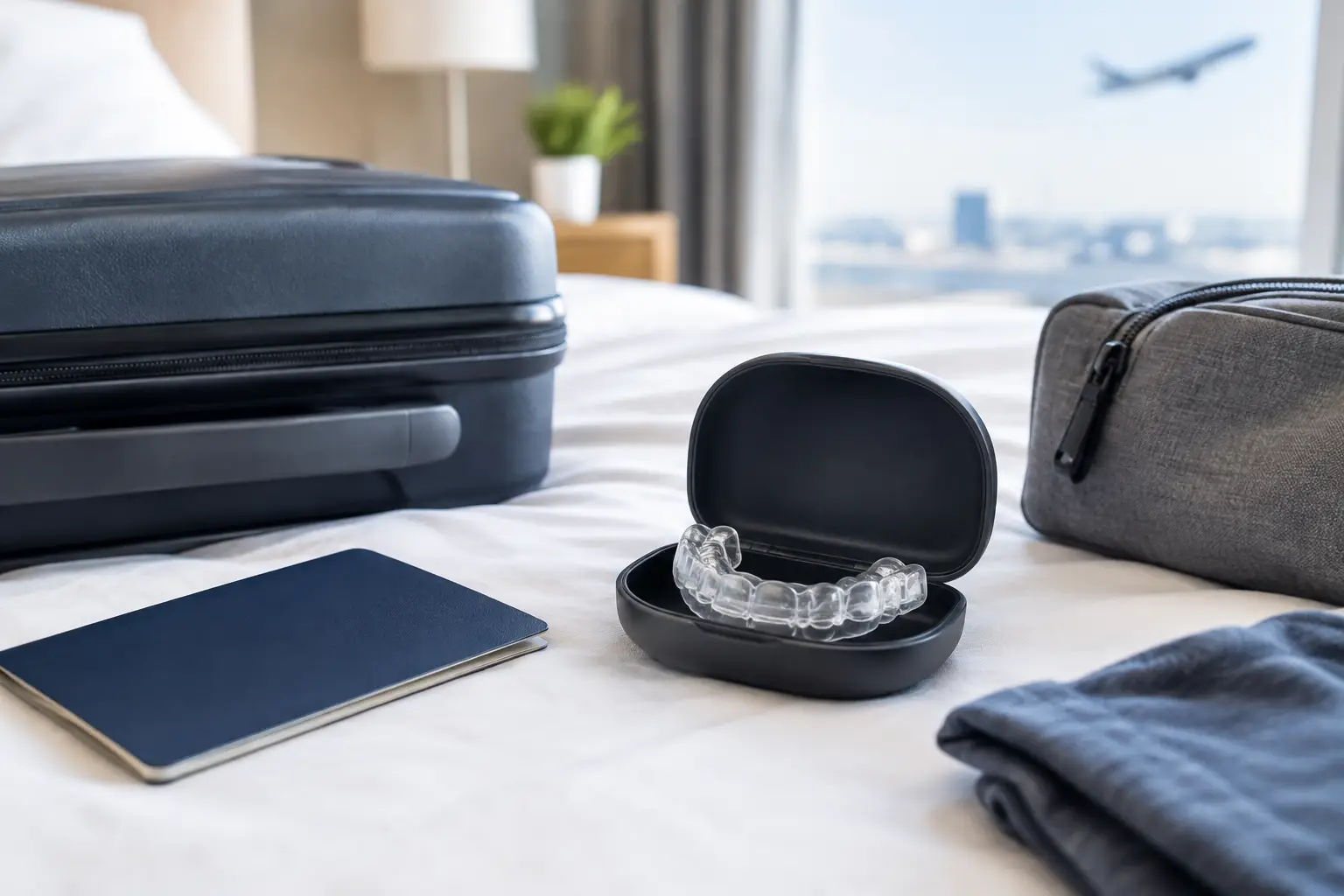
For a frequent traveler who dislikes packing a CPAP, an oral appliance may feel refreshingly manageable. Most custom sleep apnea appliances fit in a compact protective case that can slip into a personal item or carry-on bag. There are no batteries to charge, no need to find an outlet near the bed, and no concerns about hotel-room water quality.
That convenience matters when a trip includes multiple flights, a long drive, camping, or an overnight stay that was not on the calendar. It can also reduce the stress of explaining equipment at airport security or worrying that a checked bag may be delayed.
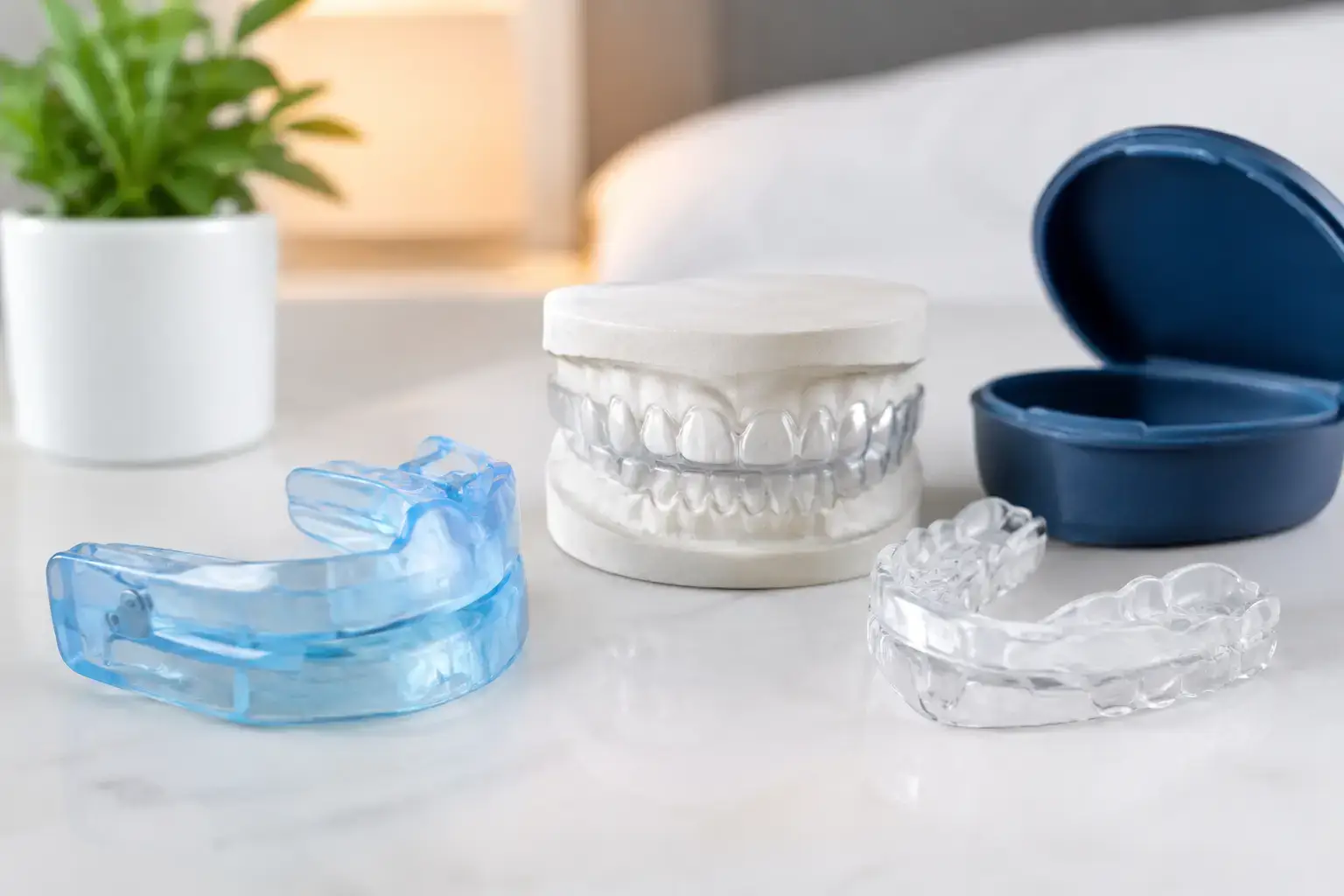
Comfort is another reason some people prefer a custom appliance for travel. A properly fitted device is designed to gently position the lower jaw forward, helping keep the airway more open during sleep. For patients with appropriate types of obstructive sleep apnea, this can reduce snoring and breathing disruptions without a mask over the face.
Still, compact does not automatically mean right for everyone. Oral appliance therapy is commonly used for snoring and mild to moderate obstructive sleep apnea, and it may be appropriate for some patients with severe sleep apnea who cannot tolerate CPAP. Your sleep physician and qualified dental sleep provider should guide that decision based on your diagnosis, symptoms, anatomy, and response to treatment.
Flying with a sleep apnea mouthpiece
Flying with a sleep apnea mouthpiece is generally simple, especially when you keep it in your carry-on. Checked luggage can be exposed to temperature changes, rough handling, or unexpected delays. More importantly, if your bag goes missing, you do not want to spend several nights without the treatment you rely on.
Before your flight, clean the appliance as instructed by your dental provider and place it in its ventilated storage case. Do not wrap it loosely in a napkin or tuck it into a pocket. Oral appliances are easy to misplace, and a napkin is an all-too-common way for a device to end up in a restaurant trash bin.
If you plan to sleep on the plane, keep expectations realistic. A mouthpiece can support your normal treatment routine, but sleeping upright in a crowded seat may still be difficult. A travel pillow, eye mask, and reasonable effort to avoid alcohol before sleeping can make the experience more comfortable. Alcohol can relax throat muscles and worsen airway obstruction, especially when you are already tired.
It can be helpful to carry a photo of your appliance and the contact information for your dental sleep provider. This is not usually necessary for security, but it makes replacement or identification easier if the appliance is lost. If your appliance includes metal components, it can remain in your case during routine screening unless security personnel ask otherwise.
Oral appliance vs CPAP for travel
When considering an oral appliance vs CPAP for travel, convenience is a meaningful advantage, but it should not be the only factor. CPAP remains the most consistently effective treatment for many people with moderate to severe obstructive sleep apnea. It uses pressurized air to prevent airway collapse and may be the best option when apnea is more severe or when an oral appliance does not adequately control symptoms.
A custom oral appliance may be easier to bring and use consistently away from home. That matters because a treatment only helps when it is used. Someone who leaves a CPAP in its case during every work trip may do better with a dentist-supervised oral appliance, provided testing confirms it is effective.
Some patients use both therapies. They may wear CPAP at home and an oral appliance for short trips, or use the appliance in combination with CPAP at a lower pressure. Others use an oral appliance as their primary treatment. There is no one-size-fits-all answer, and switching treatments on your own is not a good idea.
If you have already been diagnosed with sleep apnea and are thinking about replacing CPAP for travel, ask for an evaluation first. A custom device is very different from an over-the-counter boil-and-bite mouthguard. A professionally fitted appliance can be adjusted gradually and monitored for comfort, bite changes, jaw symptoms, and treatment effectiveness.
Pack your appliance to protect it
A simple packing routine keeps your device in good condition and saves you from scrambling at bedtime. Place these items together in a small pouch or zippered section of your carry-on:
- Your oral appliance in its hard, ventilated case
- A soft toothbrush and the cleaning product recommended for your appliance
- A small container or case for storing it safely during meals
- Your provider's phone number and a recent photo of the appliance
Avoid leaving the appliance in a hot car, on a sunny windowsill, or near a hotel-room heat source. High temperatures can warp certain materials and change the fit. Never clean it with hot water unless your provider has specifically instructed you to do so.
At your destination, rinse and clean the appliance each morning according to your care instructions. Let it dry before returning it to the case. If you are moving between hotels, do a quick bedside check before checkout. Look in the bathroom, on the nightstand, and inside bedding folds before you leave.
What if your appliance is lost or damaged?
Call your dental provider as soon as possible. If you are away for an extended period, they can advise you based on the type of appliance and your treatment needs. Do not try to reshape a cracked, bent, or suddenly tight appliance yourself. A poor fit can cause tooth pressure, jaw discomfort, or reduced effectiveness.
If you use CPAP as your primary treatment and your oral appliance is only a travel alternative, bring your CPAP when your provider has advised that it is necessary. A small bag is inconvenient, but untreated sleep apnea can leave you tired and less alert the following day, which matters most when you are driving.
Give yourself a travel-day sleep plan
Travel itself can interfere with sleep apnea treatment. Jet lag, late dinners, alcohol, nasal congestion, and exhaustion can all make breathing more difficult at night. Wearing your appliance consistently is a strong start, but it helps to plan for the rest of the evening as well.
Try to allow enough time for sleep, especially before a day of driving or an important presentation. If congestion makes it hard to breathe through your nose, speak with your medical provider about safe options before travel. Persistent morning headaches, loud snoring while wearing the appliance, gasping episodes, or ongoing daytime sleepiness are reasons to check in with your sleep care team.
At Seattle Oral Care, oral appliance therapy is planned around the person wearing it, not just the device. A careful evaluation, custom fit, and follow-up testing can help confirm that treatment is protecting your sleep at home and on the road. When your travel routine supports your treatment, your carry-on can stay lighter without asking your health to take a back seat.