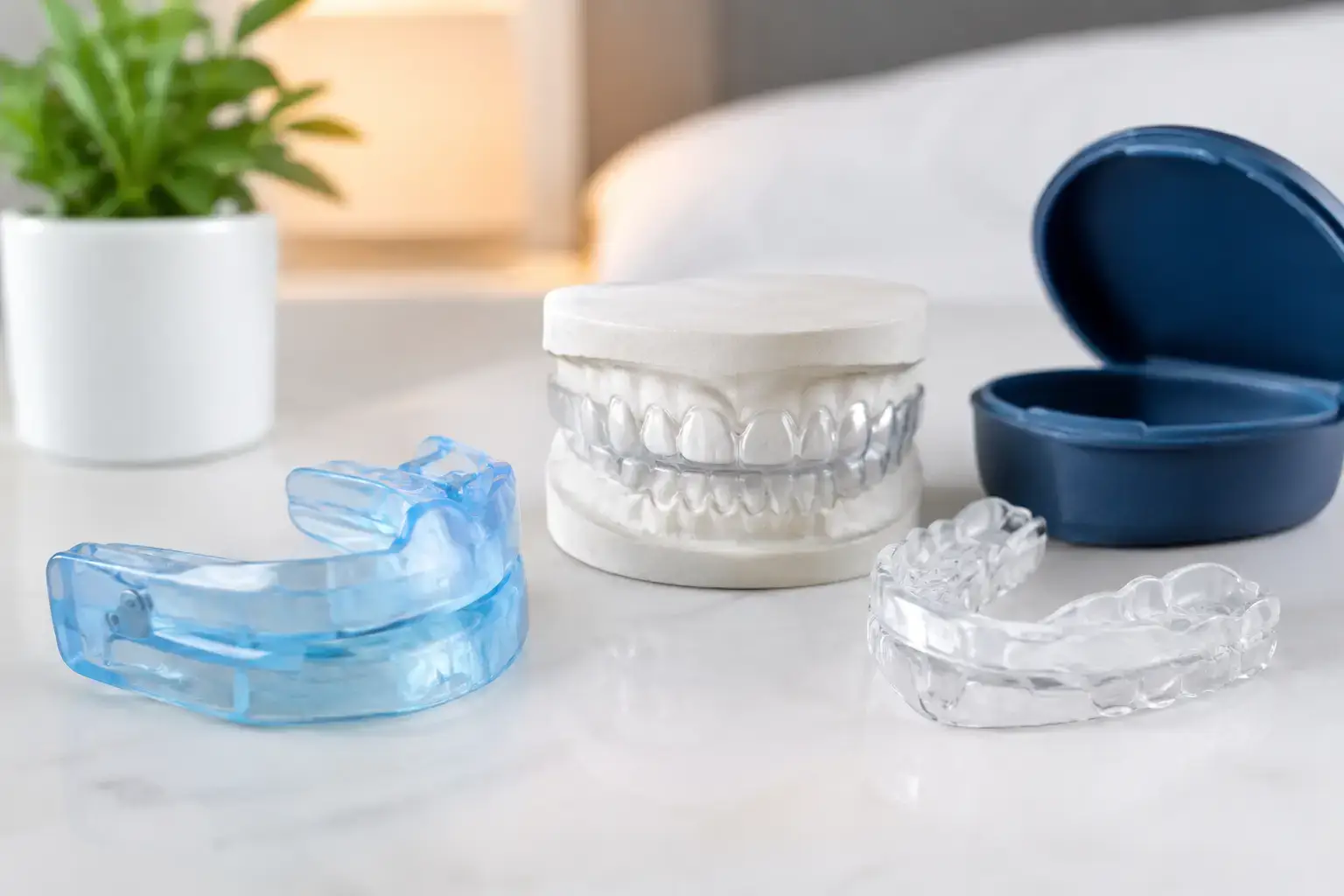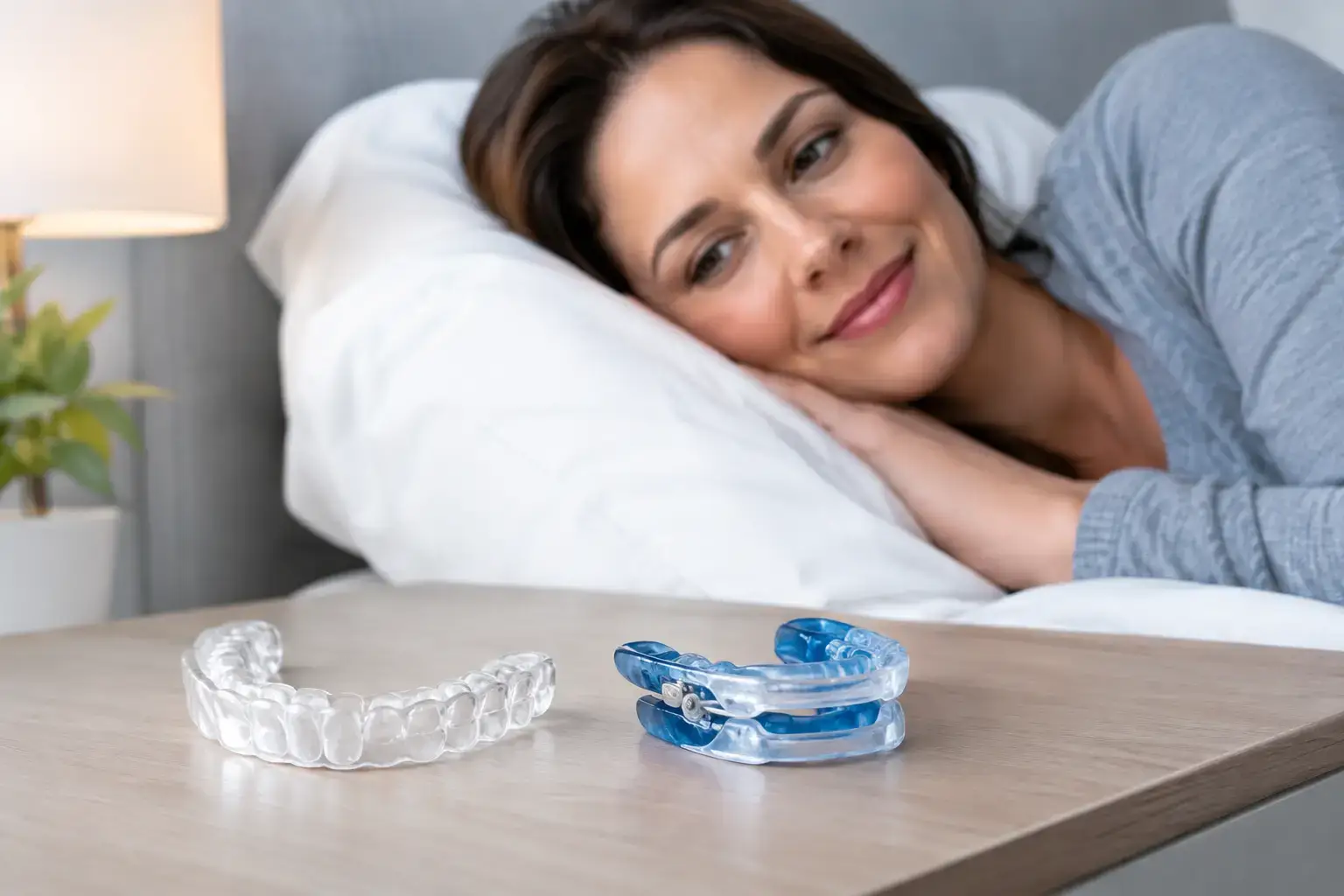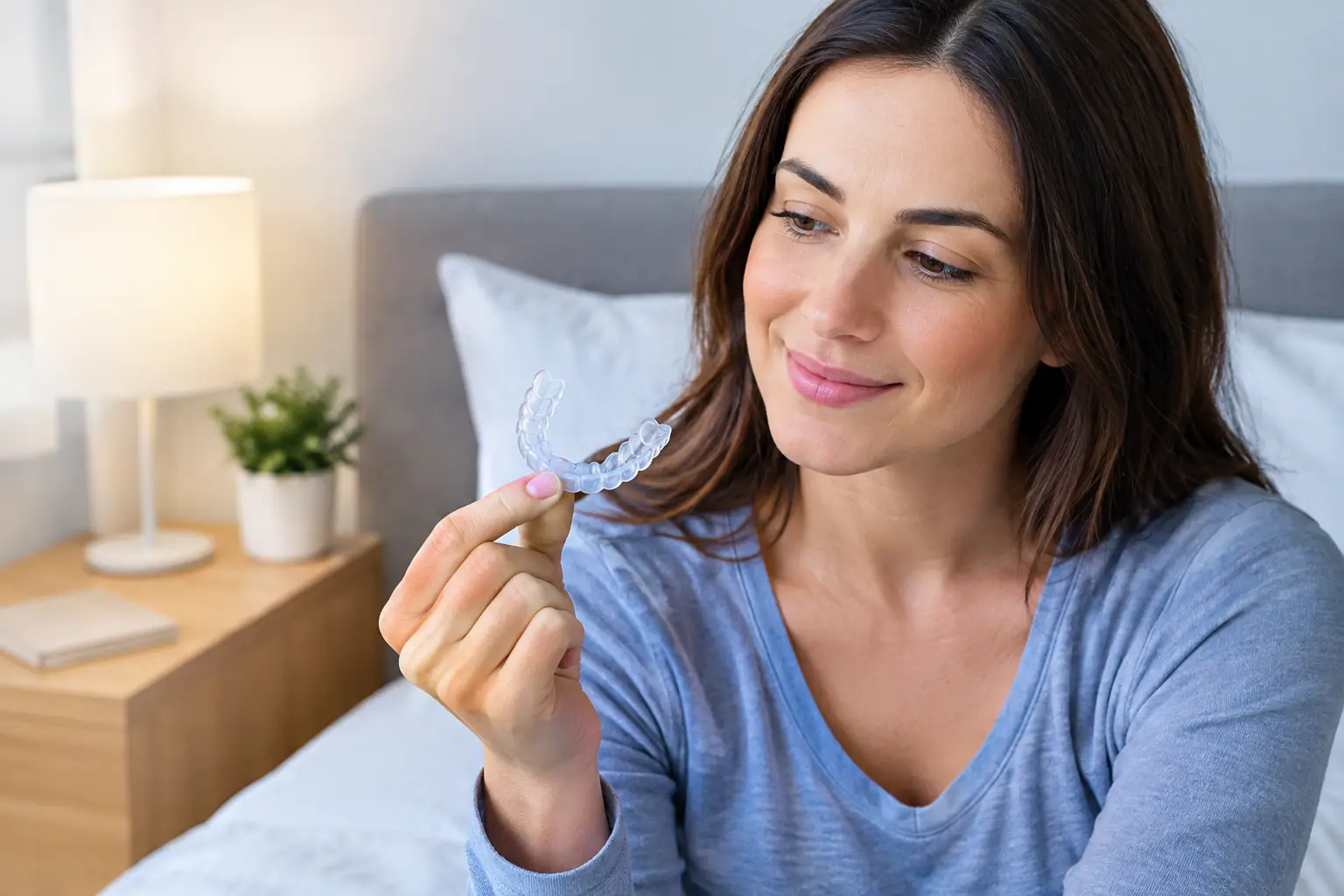
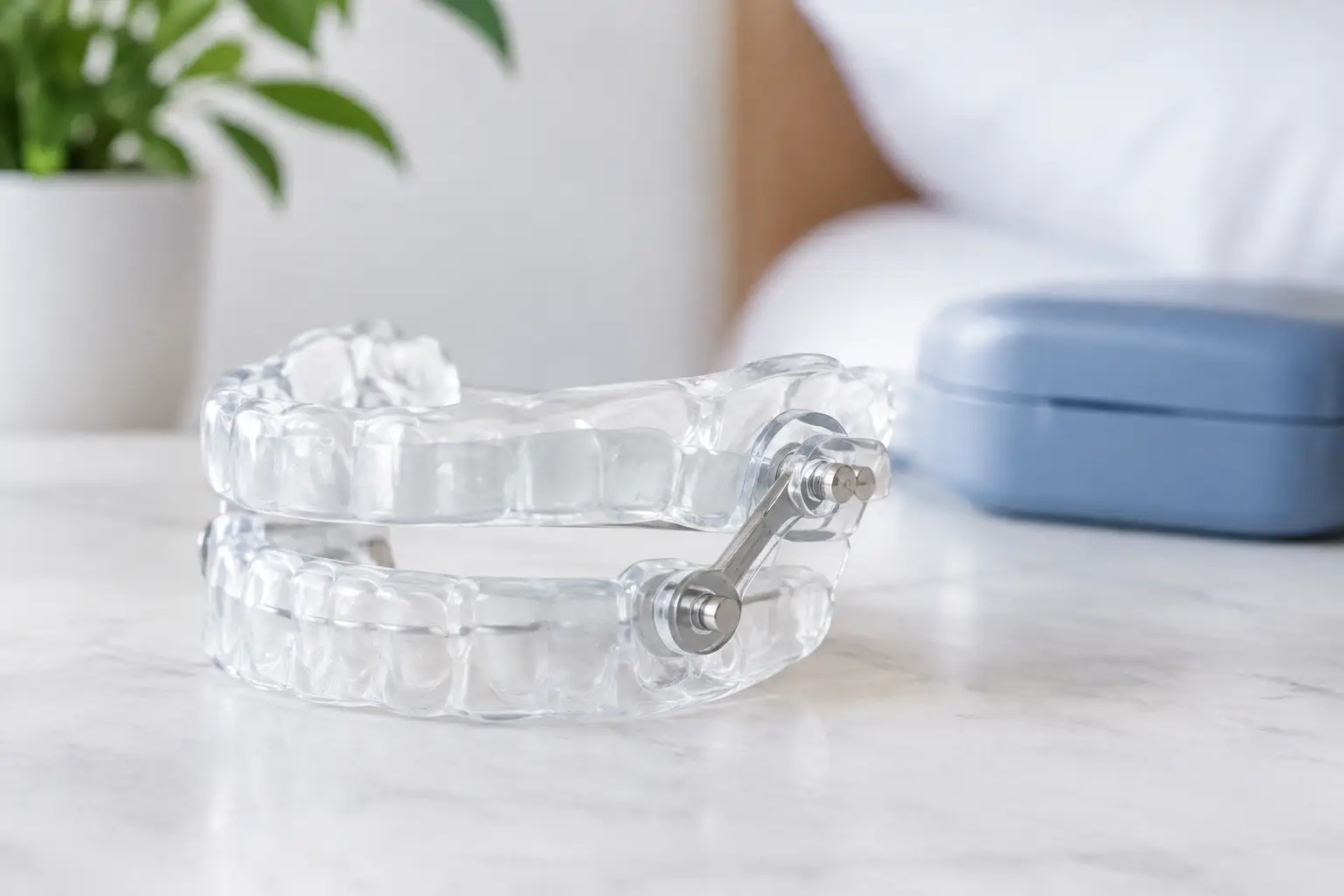
A loud snore can be more than an annoyance. When it is paired with gasping, pauses in breathing, morning headaches, dry mouth, or daytime exhaustion, it may point to obstructive sleep apnea. So, what is a mandibular advancement device? It is a custom-made oral appliance worn during sleep that gently brings the lower jaw forward to help keep the airway more open.
For many adults, this small device offers a comfortable, travel-friendly alternative to CPAP or an important part of a broader sleep apnea treatment plan . The right choice depends on your diagnosis, anatomy, dental health, and ability to use treatment consistently.
How a Mandibular Advancement Device Works
A mandibular advancement device, often called a MAD or oral appliance, fits over the upper and lower teeth much like two slim, connected retainers. Its design holds the lower jaw slightly forward while you sleep. Moving the jaw forward can also move the tongue and soft tissues away from the back of the throat, making it less likely that the airway will narrow or collapse.
This matters because obstructive sleep apnea occurs when airway tissues repeatedly block or restrict airflow during sleep. Your body briefly wakes to reopen the airway, sometimes dozens of times an hour. You may not remember those awakenings, but disrupted sleep can leave you tired, unfocused, and less refreshed in the morning.
A custom device is adjustable. Rather than moving the jaw dramatically all at once, a qualified dental sleep medicine provider makes small, measured changes over time to find a position that supports breathing while remaining comfortable for your jaw and teeth.
Who May Benefit From an Oral Appliance?
Mandibular advancement devices are commonly prescribed for adults with primary snoring or mild to moderate obstructive sleep apnea. They may also be appropriate for some people with severe sleep apnea who cannot tolerate CPAP, although this decision should be made with a sleep physician and qualified dental provider.
An oral appliance can be especially appealing if a CPAP mask feels difficult to sleep in, if you travel often, or if you want a treatment that is compact and easy to pack. Many patients also appreciate that a custom appliance is quiet and does not require electricity.
Still, convenience should not replace proper diagnosis. Snoring alone cannot tell you whether you have sleep apnea or how severe it is. A sleep study , ordered or interpreted by a physician, provides the information needed to choose treatment safely. Untreated sleep apnea can affect energy, mood, blood pressure, cardiovascular health, and driving safety when daytime sleepiness is significant.
Custom Device vs. Store-Bought Snoring Guard
Over-the-counter devices may look similar, but they are not the same as a professionally fitted mandibular advancement device. Boil-and-bite guards are made from generic materials and are not designed around your bite, jaw movement, gums, or existing dental work. They may feel bulky, fit poorly, or place uneven pressure on teeth and jaw joints.
A custom appliance is created from precise impressions or digital scans of your teeth. Your provider evaluates your bite, tooth stability, gum health, jaw joints, and any crowns, bridges, implants, or missing teeth before recommending a design. This is particularly valuable for patients with complex restorative needs, because an appliance should protect the long-term health of the mouth while supporting better sleep.
Custom care also includes follow-up. Your appliance may need small adjustments as your jaw adapts, and your provider will monitor for changes in your bite or tooth movement. A device that is effective and comfortable at the start still needs periodic evaluation.
What Does Wearing a MAD Feel Like?
Most people need an adjustment period. During the first days or weeks, you may notice extra saliva, mild tooth pressure, temporary morning bite changes, or jaw stiffness. These symptoms often improve as you become accustomed to the appliance and as adjustments are made carefully.
A well-fitted device should not cause ongoing pain. Persistent jaw pain, tooth pain, headaches, or a bite that does not settle after removing the appliance are reasons to contact your provider. You should not try to solve discomfort by making major adjustments on your own.
People with significant jaw-joint concerns, loose teeth, active gum disease, or too few stable teeth may need treatment or a different sleep therapy first. This does not automatically rule out oral appliance therapy, but it makes a thorough dental evaluation essential.
Mandibular Advancement Device or CPAP: Which Is Better?
CPAP is highly effective because it uses gentle air pressure to keep the airway open, and it is often the first recommendation for moderate to severe obstructive sleep apnea. For some patients, CPAP remains the best option, particularly when apnea is severe or when other medical factors are involved.
But treatment only works when it is used. Some patients struggle with a mask, air pressure, noise, dryness, or the practical challenge of traveling with CPAP equipment. A mandibular advancement device may be a more realistic option for consistent nightly use. Others use both therapies in coordination with their medical team.
The goal is not to declare one treatment universally better. It is to find a therapy that adequately treats your condition, fits your life, and can be monitored over time. Follow-up sleep testing is often used to confirm that an oral appliance is improving breathing as intended.
What to Expect During Oral Appliance Treatment
The process begins with a conversation about your sleep symptoms, medical history, sleep study results, and dental health. Your dental provider examines your teeth, gums, bite, and jaw joints, then discusses whether an oral appliance is appropriate for you.
If it is, digital scans or impressions are used to create a device that fits precisely. At the delivery visit, you will learn how to insert, remove, clean, and adjust it as directed. Follow-up appointments allow your provider to gradually refine the jaw position and check how your teeth and bite are responding.
At Seattle Oral Care, oral appliance therapy is provided with a careful, whole-mouth perspective. An AADSM-certified prosthodontist can coordinate sleep-focused care with your existing restorative treatment, whether you have natural teeth, crowns, bridges, implants , or a more complex dental history.
Caring for Your Appliance and Your Smile
Clean the appliance each morning with a soft brush and the cleaner recommended by your provider. Rinse it after use, let it dry thoroughly, and store it safely away from heat and pets. Avoid using toothpaste unless your provider recommends it, as some toothpastes can scratch appliance materials.
Continue routine dental cleanings and exams. Because a mandibular advancement device applies gentle, consistent forces to the teeth and jaw, regular monitoring helps identify small changes before they become more significant. Bring the appliance to dental visits so its fit and condition can be checked.
If snoring returns, daytime fatigue continues, or your bed partner notices breathing pauses, do not assume the device has stopped working or simply increase the setting on your own. Your dental sleep provider and sleep physician can help determine whether the appliance needs adjustment, replacement, or additional evaluation.
Better sleep should feel like support, not another source of stress. With a clear diagnosis, a properly fitted device, and follow-up care that respects both your breathing and your dental health, oral appliance therapy can be a meaningful step toward quieter nights and more energized mornings.