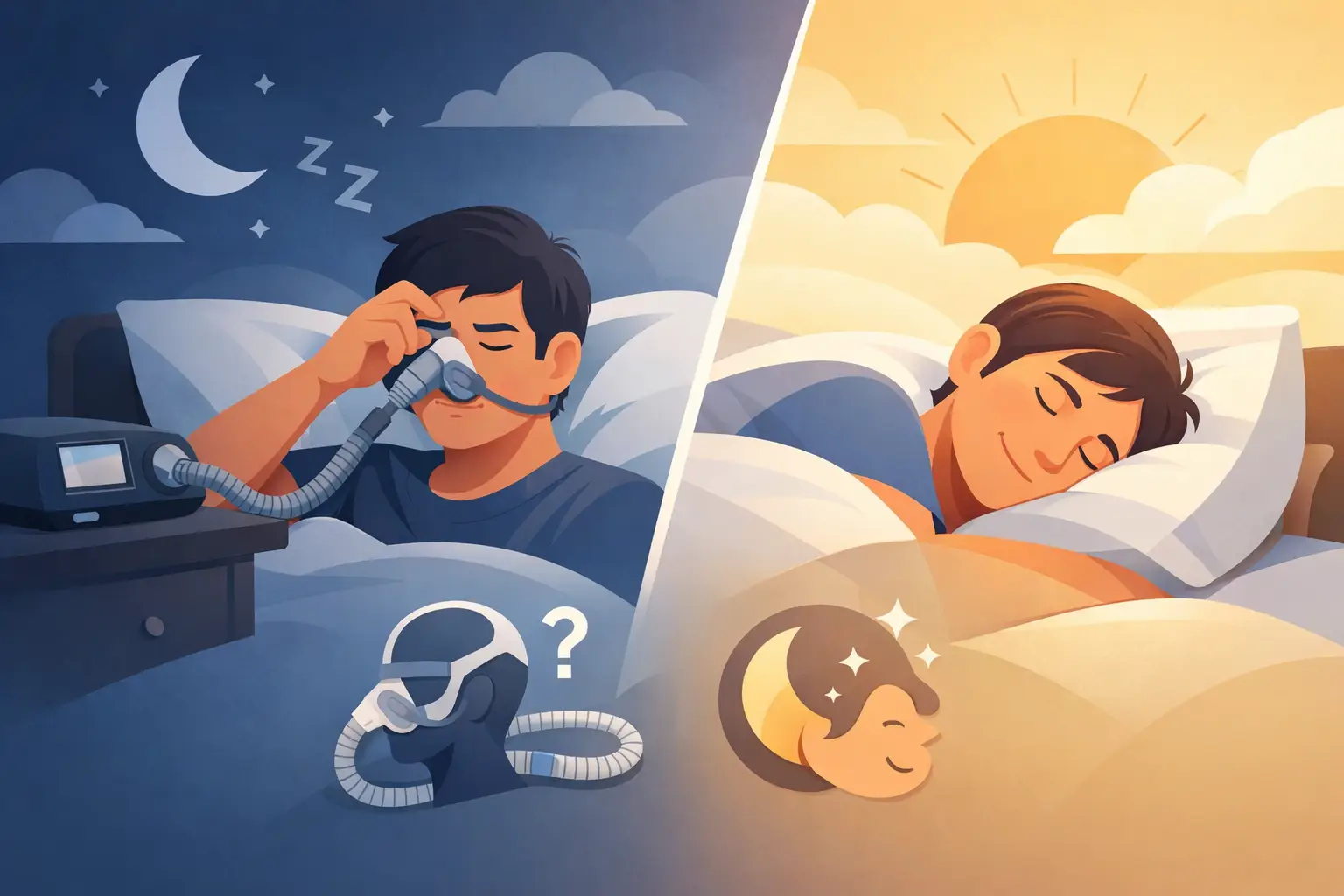
A CPAP machine can be highly effective for obstructive sleep apnea, but it only works when you can use it consistently. If the mask comes off in the middle of the night, air pressure makes you feel panicked, or you wake up more tired than before, you are not failing treatment. You need CPAP intolerance help that identifies the barrier and gives you a realistic path forward.
Sleep apnea deserves attention because untreated breathing interruptions can affect daytime focus, mood, blood pressure, heart health, and safety behind the wheel. The goal is not to force yourself through an unpleasant night. It is to find treatment that protects your health and fits your life well enough to use night after night.
Why CPAP Can Be Hard to Tolerate
CPAP delivers pressurized air through a mask to help keep the airway open during sleep. For many people, it becomes comfortable with time and careful adjustment. For others, one or more issues make regular use difficult.
Common problems include a mask that leaks or leaves sore marks, pressure that feels too strong, dry mouth, nasal congestion, skin irritation, claustrophobia, and difficulty sleeping in a preferred position. Some patients also find that the sound, tubing, or sensation of air changes their ability to fall asleep. A person who already feels anxious about sleep can become especially frustrated when bedtime starts to feel like a medical task.
It is also possible that the equipment is not matched well to your needs. A mask that works for a mouth breather may not work for someone who sleeps on their side. Fixed pressure may feel different from automatic pressure adjustments. Humidity settings, tubing temperature, and mask size can make a meaningful difference.
Before assuming CPAP has failed, it helps to separate a solvable equipment issue from a true inability to tolerate the therapy.
CPAP Intolerance Help: Start With the Right Adjustments
If you have stopped using CPAP or use it only occasionally, speak with the sleep physician or equipment provider managing your therapy. Do not simply abandon treatment without a plan, especially if you have moderate or severe sleep apnea, significant daytime sleepiness, or cardiovascular concerns.
A focused review can often uncover practical changes. Your care team may check the machine data, pressure range, leak rate, and how often the device is actually being worn. That information is more useful than trying to power through discomfort alone.
The first adjustments often involve mask fit. A mask should create a stable seal without being tightened so much that it presses into the skin. Different styles include nasal masks, nasal pillows, and full-face masks. If nasal congestion is forcing you to breathe through your mouth, treating the congestion or considering a different mask design may help.
Dryness is another frequent issue. Heated humidification, a heated tube, or changes to the humidity level can reduce dry nose and mouth symptoms. Patients who feel overwhelmed by pressure may benefit from a ramp feature, which starts at a lower pressure and gradually increases, or a discussion about whether another PAP mode is appropriate.
Give each reasonable adjustment enough time to evaluate it, but do not ignore persistent discomfort. The right treatment is one you can sustain.
When an Oral Appliance May Be an Option
For some adults with obstructive sleep apnea, a custom oral appliance can be an effective alternative to CPAP. This small device is worn over the teeth during sleep. It gently positions the lower jaw forward, which can help keep soft tissues from narrowing the airway.
Oral appliance therapy is commonly considered for adults with mild to moderate obstructive sleep apnea who prefer an alternative to CPAP or cannot tolerate it. It may also be considered for selected patients with more severe obstructive sleep apnea when CPAP is not workable, though the decision should be made with the sleep physician and dental sleep medicine provider. The severity of your sleep apnea, anatomy, symptoms, medical history, and treatment goals all matter.
A professionally made appliance is different from an over-the-counter mouthguard or a generic anti-snoring device. A custom, adjustable appliance is designed from precise records of your teeth and bite, then gradually adjusted to find a position that improves breathing while protecting comfort and jaw function.
At Seattle Oral Care, oral appliance therapy is provided by an AADSM-certified prosthodontist who understands how airway treatment, jaw health, teeth, and restorative dentistry fit together. That perspective is particularly valuable for people with implants, crowns, bridges, missing teeth, dentures, jaw discomfort, or a history of tooth wear.
Oral Appliance Therapy Has Its Own Considerations
An oral appliance can be convenient, quiet, and easier to travel with than CPAP. Many patients appreciate that it does not require a mask, tubing, or electricity. Still, it is not the right fit for everyone, and it is not a one-size-fits-all solution.
You need enough healthy teeth and stable supporting structures to retain many appliance designs, although options may exist for people with restorative work or certain tooth-loss patterns. Active gum disease, untreated dental pain, limited jaw movement, or significant temporomandibular joint symptoms may need to be addressed first. Your dentist will also consider whether the appliance could affect your bite over time and will monitor you for changes.
Some patients experience temporary jaw soreness, tooth tenderness, excess saliva, or dry mouth during the adjustment period. These concerns are often manageable with careful fitting and follow-up. The appliance must also be adjusted and maintained over time, not simply made once and forgotten.
Most importantly, feeling better is encouraging but does not prove that sleep apnea is fully controlled. After the appliance is adjusted, your sleep physician may recommend follow-up testing to confirm that your breathing has improved adequately.
Why a Coordinated Evaluation Matters
Sleep apnea is a medical condition, while oral appliance therapy requires detailed dental knowledge. The strongest care plan connects both sides.
A sleep physician establishes the diagnosis, reviews the sleep study, and considers medical risks. A qualified dental sleep medicine provider evaluates your teeth, bite, jaw joints, and the practical feasibility of an appliance. Communication between these providers helps ensure you are treated for the correct condition and that the therapy is monitored properly.
This distinction matters because not all sleep-disordered breathing is obstructive sleep apnea. Central sleep apnea, for example, has a different cause and generally is not treated with a mandibular advancement oral appliance. Snoring alone can also have several causes. A proper evaluation prevents a well-intended device from delaying the care you actually need.
Ways to Prepare for a Sleep Appliance Consultation
Bring or request a copy of your sleep study and a list of your current medications. If you have tried CPAP, share exactly what happened: whether the problem was leaking, pressure, anxiety, congestion, dry mouth, or removing the mask unknowingly. Specific details help determine whether another CPAP adjustment, an oral appliance, or a combined approach makes the most sense.
Also mention any history of jaw clicking, headaches, grinding, missing teeth, implants, crowns, bridges, dentures , or gum treatment. These do not automatically rule out oral appliance therapy. They simply shape the design and monitoring needed for your care.
If you are exhausted, frustrated, or embarrassed that CPAP has not worked for you, remember that this is a common treatment challenge. The next step is not to settle for poor sleep. It is to have an informed conversation with a sleep physician and an experienced dental sleep medicine provider about an option you can use consistently.