A tooth can crack while biting a hard piece of food, after years of clenching, or around an older filling that no longer supports the remaining tooth. Sometimes the pain is immediate. Other times, it appears only when you release your bite or drink something cold. Cracked tooth treatment is most successful when the tooth is evaluated early, before bacteria can travel through the crack and cause deeper damage.
A crack does not automatically mean you will lose a tooth. Many cracked teeth can be stabilized and restored with a conservative plan. The right approach depends on where the crack starts, how far it extends, whether the dental pulp is affected, and how much healthy tooth structure remains.
Why a Cracked Tooth Needs Prompt Attention
Unlike a broken bone, a tooth cannot repair a crack on its own. Each time you chew, the two sides of the crack can flex slightly. That movement may make the crack longer, irritate the tooth's nerve, and create a pathway for bacteria.
The goal is to protect the tooth from further stress while preserving as much of your natural structure as possible. Waiting can turn a simple restoration into a situation that requires root canal treatment, or in some cases, tooth replacement.
It is especially worth calling your dentist if you notice sharp pain when chewing, sensitivity to cold or sweets that lingers, pain that comes and goes without an obvious cause, swelling near the tooth, or a visible line or missing piece. Not every crack is easy to see, and not every cracked tooth hurts consistently.
How Dentists Diagnose a Cracked Tooth
Finding a crack often takes more than an X-ray. Very fine cracks may not show on standard dental imaging, particularly if they run in the same direction as the X-ray beam. Your dentist may examine the tooth under magnification, use a bright light to illuminate it, test your bite in specific areas, and evaluate older fillings or crowns around the tooth.
X-rays remain valuable because they can show signs of infection, bone changes, decay, or problems near the root. Your symptoms also matter. Pain when releasing a bite, for example, can be a useful clue because pressure may briefly pull the crack open.
A thorough exam should also consider the reason the crack occurred. Nighttime grinding, a bite that places excess force on one tooth, large existing fillings, and chewing ice or hard candy can all contribute. Treating the crack without addressing the force behind it may put the restoration at risk.
Cracked Tooth Treatment Depends on the Type of Damage
The words "cracked tooth" can describe several different problems. A small surface line and a crack that reaches the root require very different care.
Craze lines and minor enamel damage
Tiny lines in the outer enamel are common, particularly on front teeth. They are often cosmetic and may not need treatment at all. If the line affects appearance, polishing, bonding, or cosmetic treatment may be discussed. A careful exam confirms that the line has not extended deeper into the tooth.
A chipped cusp or weakened area around a filling
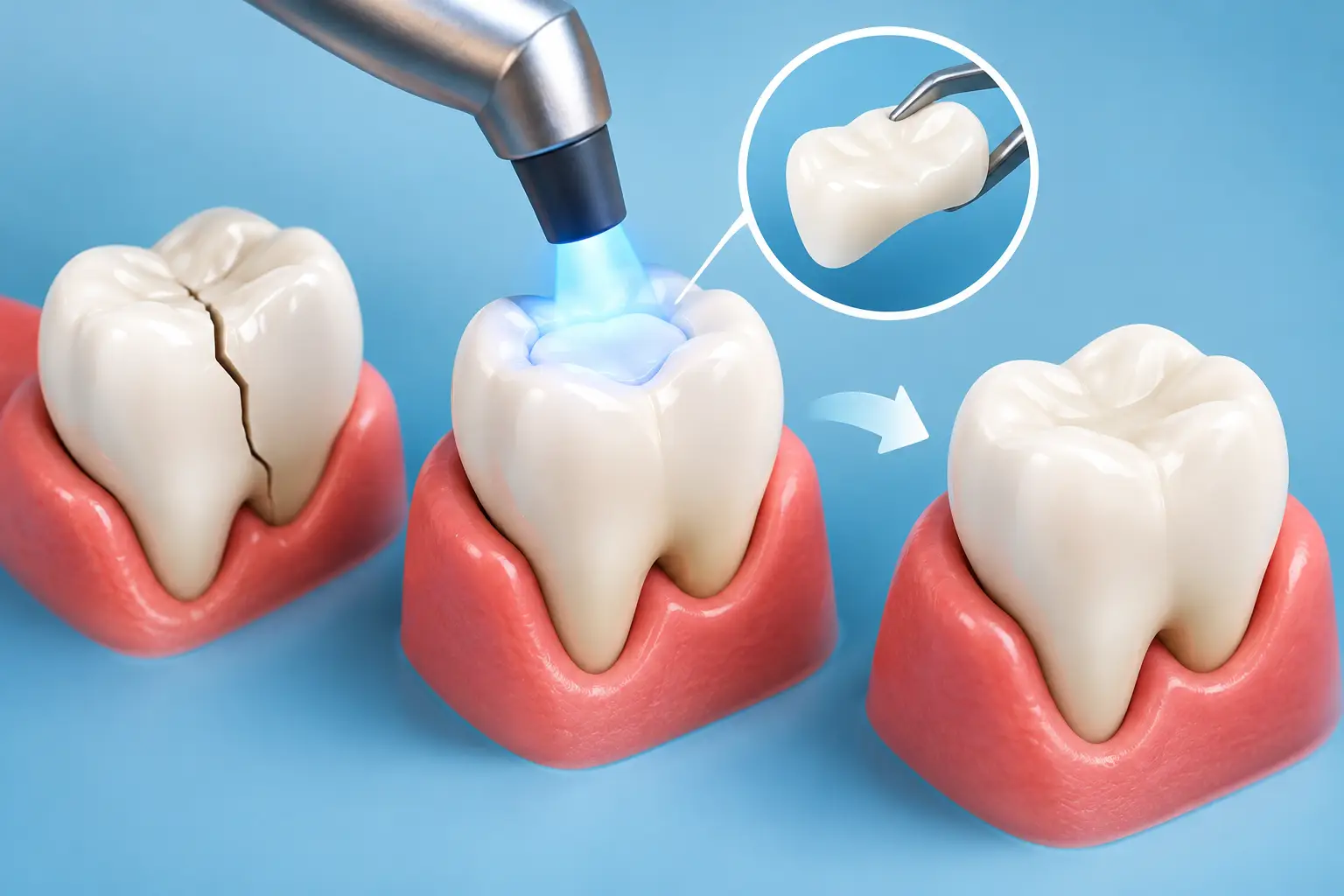
A cusp is one of the pointed chewing surfaces on a back tooth. When a cusp breaks, patients may notice a rough edge or lose a piece of tooth while eating. If the nerve is not affected, a bonded restoration or a crown may restore the tooth and protect it from future fracture.
The choice depends on how much tooth structure is missing. A small, contained area may be repaired conservatively. When a large portion of a molar is weak, a crown can cover and support the remaining tooth more reliably than a filling alone.
A crack that reaches into dentin
Dentin is the layer beneath enamel. Cracks that extend into dentin may cause sharp chewing pain or temperature sensitivity. A crown is often recommended because it holds the tooth together and reduces the pressure that makes the crack spread.
If the pulp, commonly called the nerve, has become inflamed or infected, root canal treatment may be needed before the tooth is restored with a crown. Root canal treatment removes damaged tissue inside the tooth, but it does not fix the external crack by itself. The final crown plays an essential role in protecting the tooth afterward.
A split tooth or vertical root fracture
When a crack separates the tooth into distinct segments or travels deep into the root, saving the entire tooth may not be possible. In some situations, one root of a multi-rooted tooth can be treated while another is removed. In others, extraction is the healthiest option.
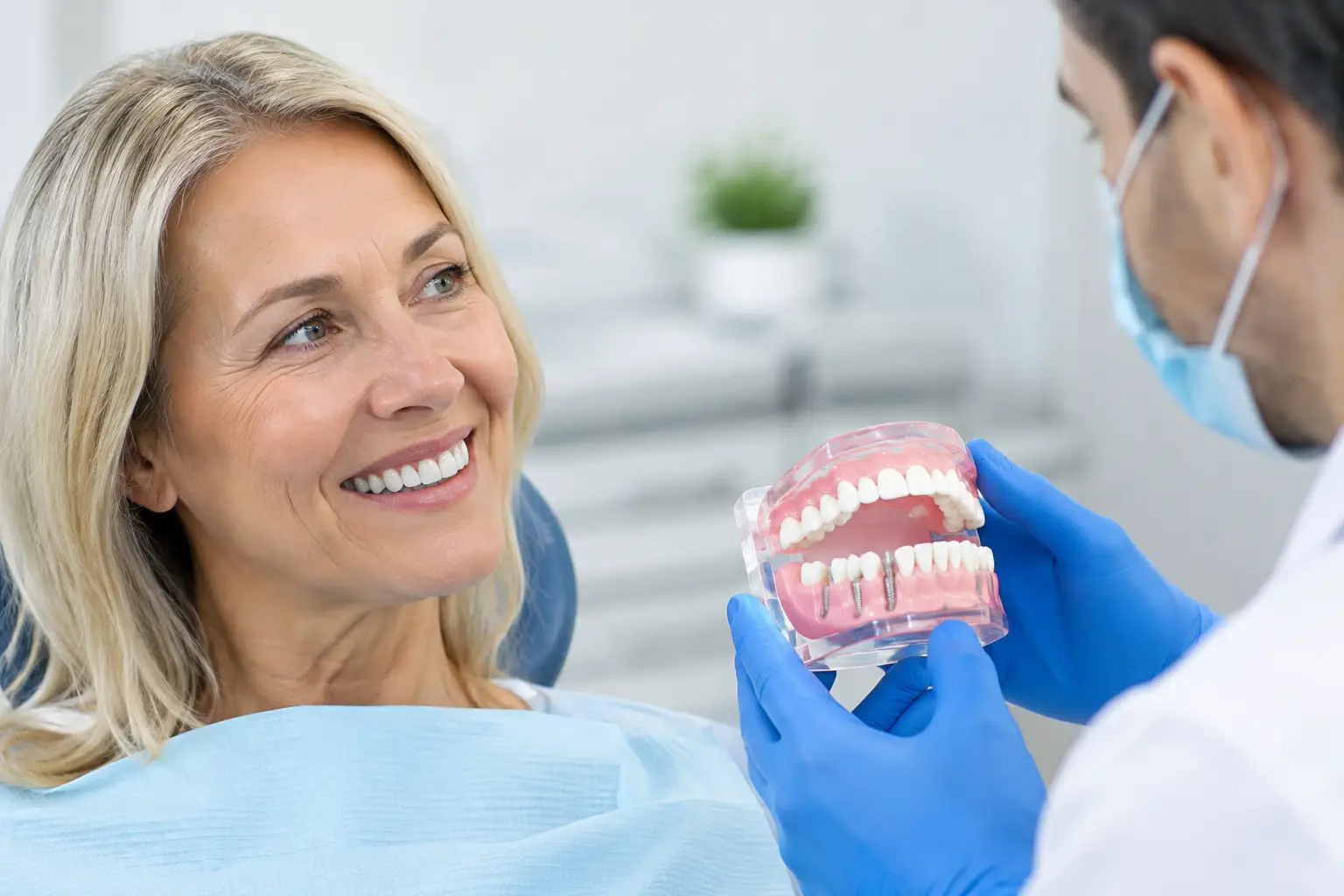
That can be disappointing to hear, but replacing a tooth thoughtfully can restore comfort, function, and confidence. Depending on your oral health and goals, options may include a dental implant with a crown, a bridge, or a removable partial denture. An implant is not automatically the right answer for every person, but it is often a durable option when a tooth cannot be saved.
What to Do Before Your Appointment
If you think you have cracked a tooth, protect the area until you can be examined. Avoid chewing on that side, especially hard, crunchy, sticky, or very hot and cold foods. Choose softer foods and keep the area clean with gentle brushing and flossing.
If a piece of tooth comes off, save it if you can. It may help your dentist understand the fracture, although it cannot always be reattached. Over-the-counter pain medicine may help when used as directed and when medically appropriate for you. Do not place aspirin directly against the gum or tooth, as it can irritate the tissue.
Call promptly for facial swelling, fever, drainage, a persistent bad taste, severe pain, or a tooth that feels loose after an injury. These symptoms can point to infection or trauma that should not wait. If facial swelling affects breathing or swallowing, seek emergency medical care immediately.
The Trade-Offs Between Bonding, Crowns, and Replacement
A good treatment plan is not about choosing the biggest procedure. It is about selecting the option that gives the tooth an appropriate level of protection.
Bonding preserves more tooth structure and can be an excellent choice for a small chip or limited fracture. However, it may not withstand the force placed on a heavily cracked molar. A crown requires more preparation of the tooth, but it can provide full coverage and significantly reduce the risk of further splitting when enough healthy tooth remains.
Root canal treatment can relieve pain and control infection when the pulp is involved, yet the tooth still needs a strong final restoration. Extraction removes the source of a non-restorable fracture, but it begins a different planning process: whether and when to replace the tooth, how to protect neighboring teeth, and how the bite will function long term.
For complex cases, coordinated care can be valuable. A general dentist, prosthodontist, periodontist, and oral surgeon may each contribute to a plan when a cracked tooth affects the gums, bone, root structure, or future implant needs. That team approach helps keep the focus on the healthiest long-term result, not simply the fastest short-term fix.
Protecting a Restored Tooth From Future Cracks
After treatment, the habits that caused the crack still deserve attention. If you grind or clench, a custom night guard can reduce damaging forces while you sleep. If a tooth cracks because it hits first when you close your mouth, adjusting the bite may help protect the restoration.
Regular exams also matter. Small changes around a crown, filling, or gumline can often be addressed before they become painful. Avoid using teeth to open packages, and be cautious with ice, popcorn kernels, hard candy, and similar foods that can place sudden force on a restored tooth.
At Seattle Oral Care, a cracked tooth evaluation begins with listening to what you are feeling and explaining what the exam shows. Whether your tooth needs a small repair, a protective crown, or a broader restorative plan, you deserve clear answers and gentle care. Acting early gives your natural tooth the best chance to remain part of your smile for years to come.