A missing tooth can lead to more than a gap in your smile. Over time, the jawbone in that area may shrink, leaving less support for a future implant. If you are researching bone graft cost dental implants, bone graft before implants cost, how much does bone grafting cost, or dental bone graft price , the most honest answer is that the price depends on the amount of bone support you need and the type of graft involved.
For many patients, a bone graft is a practical step that helps create a stable foundation for an implant built to last. It is not automatically necessary, and it should never be added to a treatment plan without a clear clinical reason. A careful exam and 3D imaging help your dental team explain whether grafting is needed, what it involves, and what it may cost before you commit to treatment.
What is a dental bone graft?
A dental bone graft replaces or reinforces bone that has been lost around a tooth root or in the jaw. After a tooth is removed, the body naturally begins to resorb bone in that area. Gum disease, infection, trauma, and long-standing tooth loss can also reduce the bone volume needed to hold an implant securely.
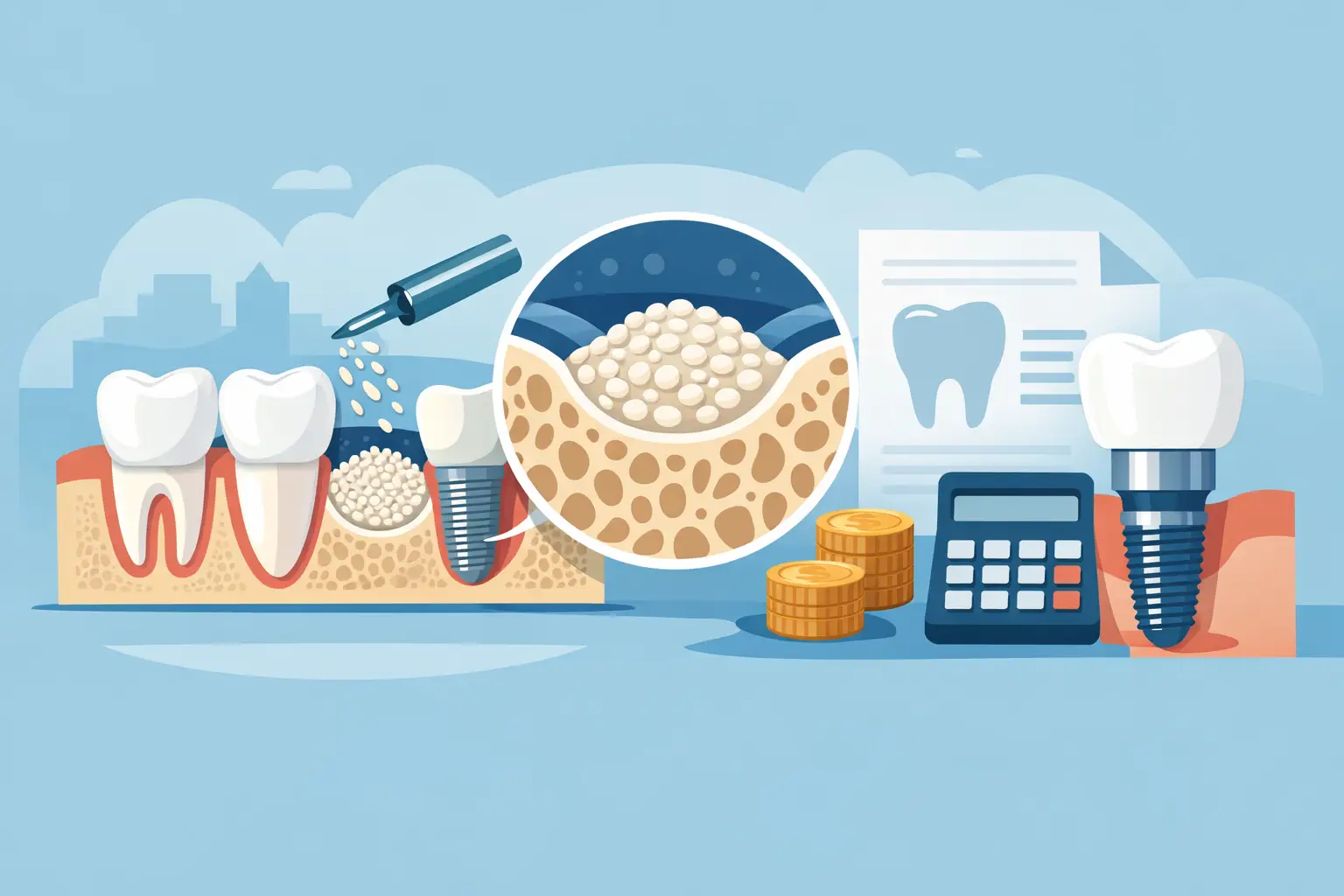
During grafting, a dentist or oral surgeon places grafting material in the area where more bone is needed. The material acts as a framework that supports your body's own bone healing. Depending on the procedure, the graft may come from processed donor tissue, animal-derived mineral material, synthetic material, or your own bone. A protective membrane may also be placed over the graft to support healing.
The goal is straightforward: create enough healthy bone for an implant to be placed in a position that supports chewing, appearance, and long-term stability.
How much does bone grafting cost?
Dental bone graft pricing can range widely because “bone graft” describes several very different procedures. A small graft placed at the time of an extraction is generally less involved than rebuilding a ridge that has been without a tooth for years. In the Seattle area, patients may see estimates such as these, though your individual plan will determine the actual fee:
- A socket preservation graft after an extraction may range from about $500 to $1,500.
- A small graft needed around an implant site may range from roughly $600 to $2,000.
- A larger ridge augmentation can cost $2,000 to $4,000 or more.
- A sinus lift, which builds bone beneath the sinus in the upper back jaw, may range from $2,000 to $5,000 or more depending on complexity.
These figures may or may not include the surgical visit, imaging, sedation, membrane, extraction, or follow-up care. That is why comparing one quoted number to another can be misleading. Ask what is included, what may be billed separately, and whether the estimate covers all planned phases of treatment.
Bone graft before implants cost: what changes the price?
The largest cost factor is the extent of bone loss. A small amount of grafting may be completed during a tooth extraction or implant placement. When bone loss is more significant, the graft often needs several months to heal before the implant can be placed. More appointments, materials, surgical time, and diagnostic planning can increase the overall investment.
The location in the mouth also matters. The upper back jaw can be especially challenging because the sinus sits above the roots of the molars. If there is not enough bone height for an implant, a sinus lift may be recommended. This is a common and predictable procedure in experienced hands, but it is more involved than a simple socket graft.
Material selection can affect the fee as well. Some clinical situations call for a particular graft material or membrane. Your health history, bone quality, gum condition, and the final restoration plan all guide that decision. The lowest-priced material is not necessarily the appropriate choice for your case.
Finally, the experience and coordination of the care team matter. Complex treatment may involve an oral surgeon or periodontist for grafting, a prosthodontist for the implant restoration plan, and a general dentist for ongoing care. Coordinated planning can prevent a frustrating situation where an implant is placed but cannot support the crown, bridge, or denture envisioned at the beginning.
Is a bone graft always needed before an implant?
No. Some patients have enough healthy bone to receive an implant without grafting, even if the tooth has been missing for a while. Others may be able to receive an implant and a minor graft during the same visit. Your dentist cannot determine this reliably from a visual exam alone.
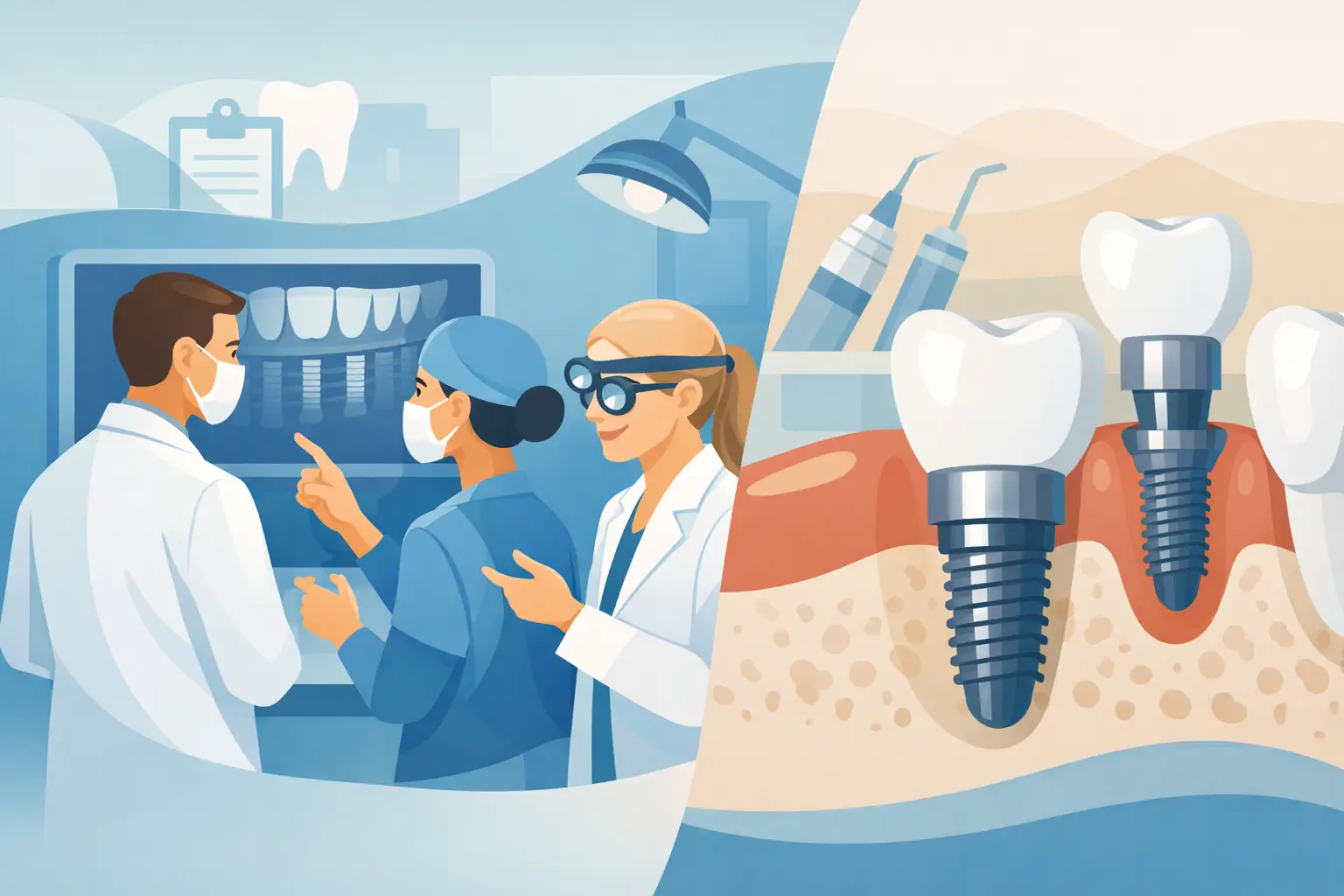
A cone beam CT scan provides a three-dimensional view of the jaw. It allows the team to measure bone height and width, identify the location of nerves and sinuses, and plan the implant position before surgery. This level of planning is particularly valuable when you are replacing a front tooth, restoring several teeth, or considering implant-supported dentures.
Grafting may not be recommended when it will not meaningfully improve the treatment outcome, when medical factors need to be addressed first, or when a different tooth-replacement option better fits your goals. A good consultation should include alternatives, not pressure.
What does the full dental implant process cost?
Bone grafting is only one part of the financial picture. A completed single-tooth implant commonly includes diagnostic records and imaging, extraction if needed, grafting if needed, the implant post, the abutment, and the final crown. Each phase has its own purpose, timing, and fee.
It can be tempting to focus only on the implant surgery price. However, the final crown is the part you see and chew with, while the planning determines how all the pieces work together. A treatment estimate should make clear whether it covers the surgical implant, restoration, and maintenance needs. It should also identify any anticipated additional procedures rather than presenting an unusually low starting price that leaves out necessary care.
For patients replacing multiple teeth or an entire arch, the range can be broader. Implant bridges and full-mouth restorations require detailed planning of bite, facial support, hygiene access, and temporary teeth. In these cases, grafting may be one component of a larger rehabilitation plan.
Can dental insurance help with bone graft costs?
Coverage varies substantially. Some dental insurance plans may contribute toward an extraction or grafting performed to preserve the jaw after tooth removal. Many plans do not cover implants or grafting associated with implant treatment, even when the procedure is clinically beneficial. Annual maximums can also limit the practical value of coverage.
Do not assume a procedure is excluded or covered based on a friend’s experience. Your plan may use different rules for accident-related tooth loss, periodontal treatment, extraction-site preservation, or medically necessary surgery. A dental team can help review available benefits and submit a pre-treatment estimate when appropriate, but the insurer makes the final coverage decision.
If insurance does not cover the full amount, ask about phased treatment and payment options. In some situations, completing an extraction and socket preservation promptly can help preserve future implant options while you plan the next phase. Delaying treatment is not always harmful, but waiting after an extraction can allow additional bone loss that makes later treatment more complex.
Questions to ask about your dental bone graft price
A clear conversation about fees should leave you feeling informed, not rushed. Before moving forward, ask whether grafting is necessary for your implant, what type of graft is being recommended, and whether it can be done at the same time as extraction or implant placement. Ask how long healing is expected to take and what signs would change the treatment timeline.
You should also ask for an itemized estimate. Confirm whether it includes imaging, anesthesia or sedation, graft material, membranes, surgical visits, medications, and follow-up appointments. If your plan includes an implant, ask whether the final crown or bridge is included in the total.
At Seattle Oral Care, implant treatment planning brings restorative and surgical perspectives together, so patients can understand the whole path before treatment begins. That means discussing the health of the gums and bone, the appearance of the final tooth, your comfort needs, and the financial details in one coordinated conversation.
A bone graft can add time and cost to implant treatment, but it may also protect the result you are investing in. The right next step is a personalized evaluation that explains whether your jaw needs added support and gives you a written plan with no guesswork.