A missing or failing tooth can affect far more than your smile. It can make meals stressful, change how you speak, and leave you wondering how long you will have to go without a complete set of teeth. Dental implants in a day, also called one day dental implants or Teeth in a Day dental implants, may allow qualified patients to leave surgery with a fixed temporary tooth or arch in place. The key word is qualified: a careful plan matters more than speed.
For many people, the appeal is immediate. You may be able to replace a visible tooth or stabilize a full arch on the same day implants are placed, rather than wearing a removable denture or living with a gap during early healing. But same-day treatment is not a shortcut around biology. Your jawbone and gums still need time to heal, and the final teeth are usually made after that healing period.
How Does Teeth in a Day Work?
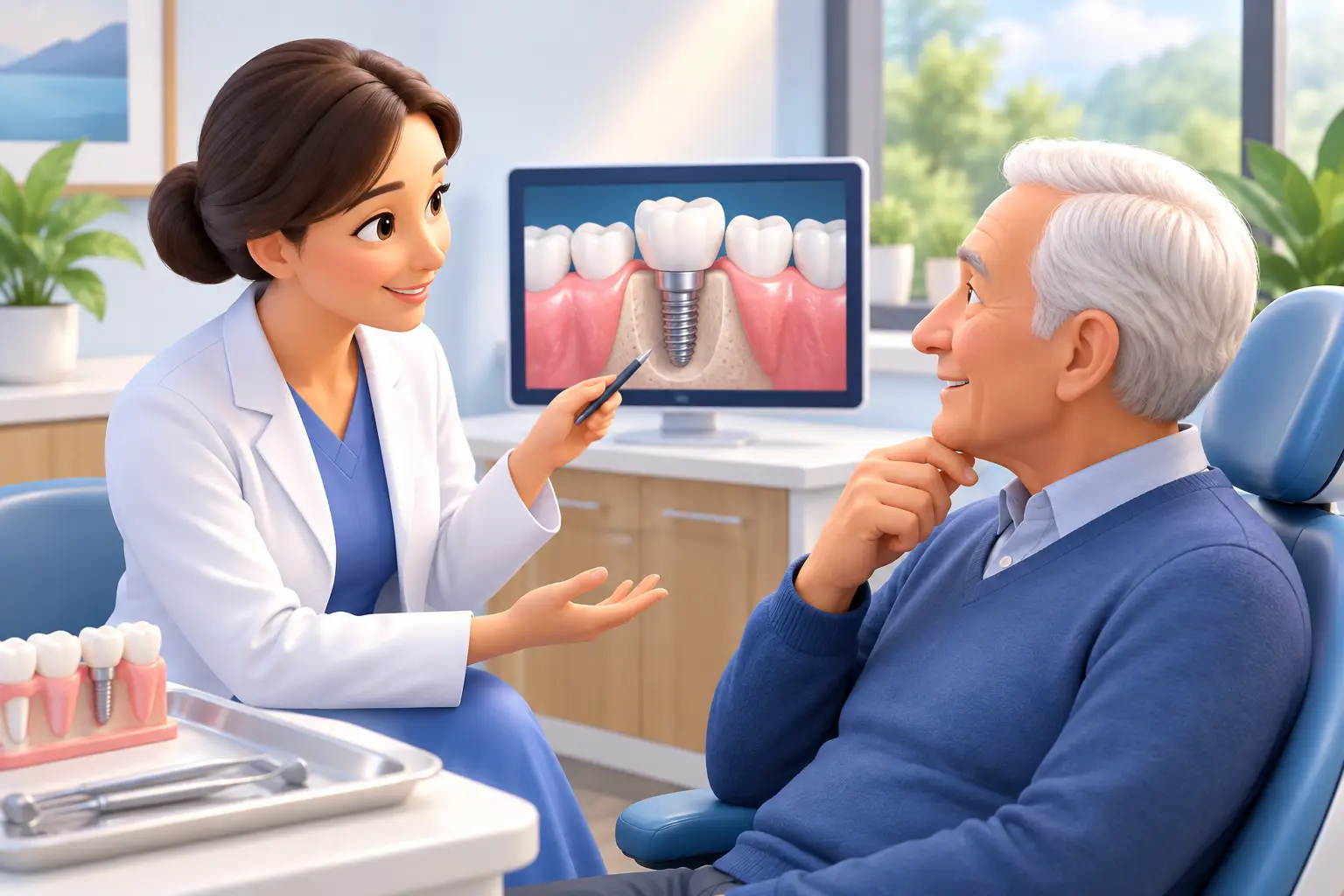
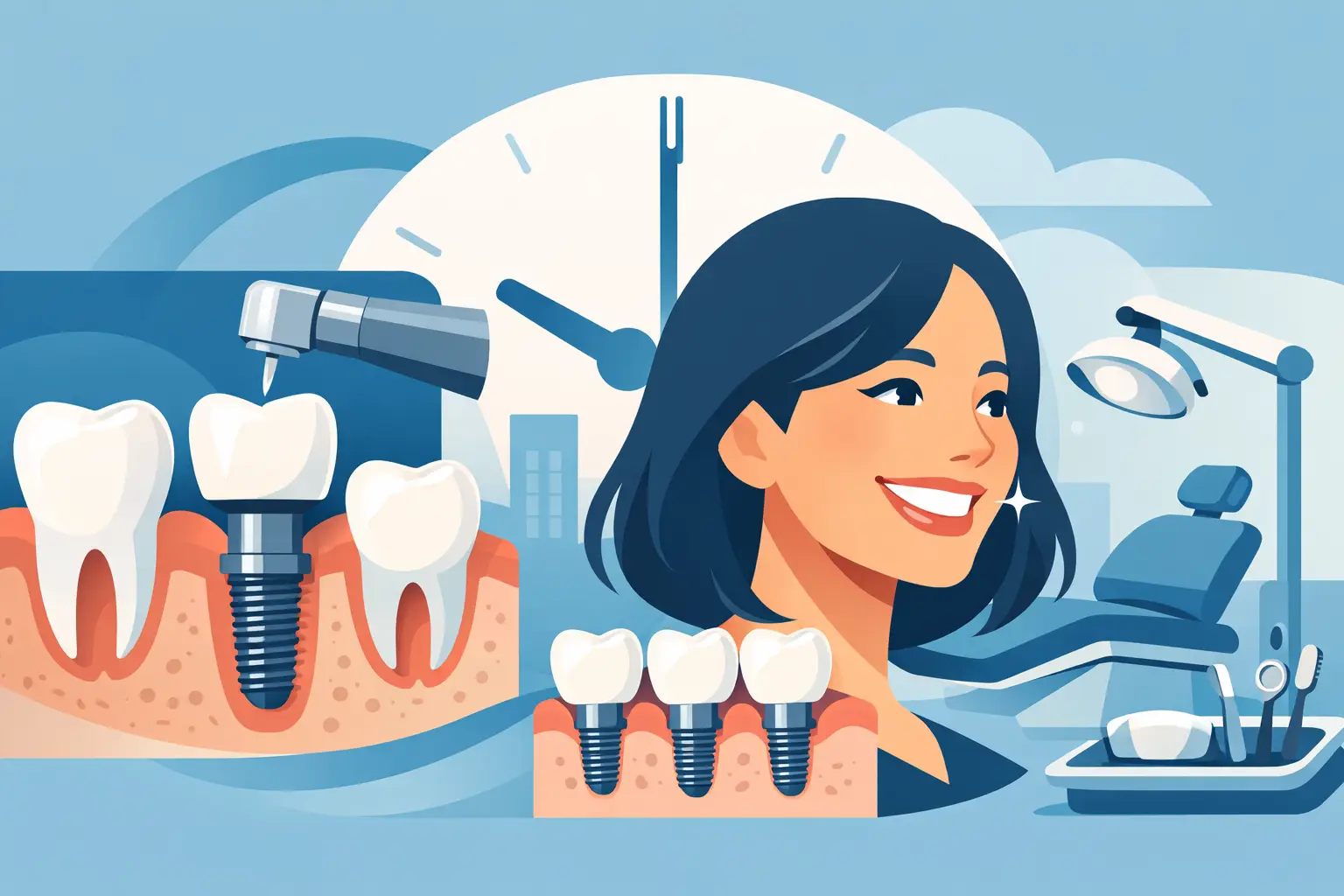
A dental implant is a small titanium post placed in the jawbone to act as a tooth root. In traditional implant treatment, the implant heals under the gum for a period before a crown, bridge, or denture is attached. With immediate loading, the care team places a provisional, or temporary, restoration shortly after surgery when the implant has enough initial stability and the bite can be carefully controlled.
That temporary tooth or bridge is designed for appearance and function, but it is not the final restoration. It is generally shaped to reduce heavy biting pressure while bone begins to integrate with the implant. After healing, detailed impressions or digital scans are used to create the final crown, bridge, or full-arch prosthesis.
For a single front tooth, same-day treatment may mean removing a damaged tooth, placing an implant in the extraction site, and attaching a temporary crown. For multiple missing teeth or a failing full arch, it may mean placing several strategically positioned implants and securing a fixed temporary bridge that day. The appropriate approach depends on bone quality, gum health, bite forces, and the overall condition of your mouth.
Teeth in a Day Procedure Steps
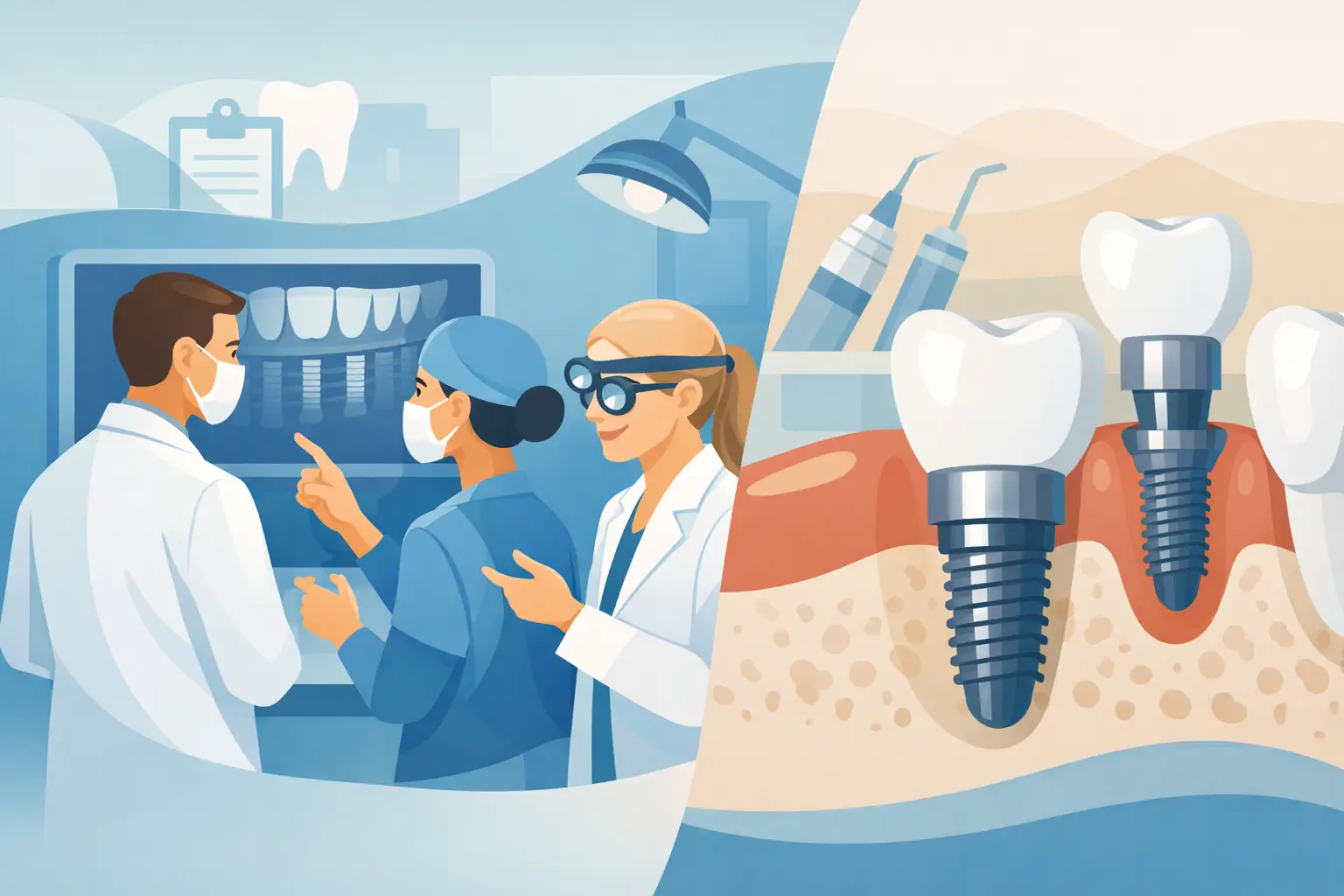
A predictable result begins well before the surgical appointment. A comprehensive consultation includes an exam, dental imaging, and a conversation about your health history, goals, concerns, and budget. Three-dimensional imaging can help the team evaluate bone volume, identify anatomical structures, and plan implant position with greater precision.
If Teeth in a Day is appropriate, your treatment is planned around both surgery and the final bite. That coordination is especially valuable when several teeth need to be replaced. At Seattle Oral Care, a prosthodontist, oral surgeon, periodontist, and general dentist can work within one coordinated practice when a case calls for that level of planning.
On treatment day, the process may include removing unsalvageable teeth, preparing the sites, placing implants, and attaching a temporary restoration. Sedation options may be discussed for patients who are anxious or having more extensive work completed. You will leave with written instructions, dietary guidance, and a plan for follow-up visits.
Over the next several months, the implants and bone form a stable connection. During this time, your care team monitors healing, adjusts the temporary teeth when needed, and protects the implants from excess force. Once healing is complete, the final restoration is created to support comfort, appearance, speech, and long-term function.
Am I a Candidate for Teeth in a Day?
The best candidates have sufficient bone for stable implant placement, healthy or treatable gums, and a bite that can be managed safely during healing. Good general health supports healing as well. Conditions such as uncontrolled diabetes, active periodontal disease, certain medications, heavy smoking, or untreated teeth grinding do not always rule out treatment, but they can change the timing, design, or expected risk.
Immediate placement is not automatically possible after every extraction. Infection, bone loss around a failing tooth, or a thin outer bone wall may make a staged approach safer. In some cases, bone grafting or gum treatment is needed before an implant can be placed. Waiting can feel disappointing, but it may be the choice that gives your implant the strongest long-term foundation.
Patients considering full-mouth treatment should also understand that “same day” does not mean every decision is made in one visit. The most successful cases include careful diagnostic work, a surgical plan, a provisional phase, and ongoing maintenance. Your care team should explain what can happen immediately and what still requires healing time.
Teeth in a Day vs. All-on-4
These terms are often used interchangeably, but they describe different parts of treatment. Teeth in a Day refers to the timing of receiving a temporary fixed restoration on the day implants are placed. All-on-4 is a full-arch treatment concept in which four implants support a complete arch of replacement teeth, often with the back implants angled to make use of available bone.
An All-on-4 case can include same-day temporary teeth, but not every Teeth in a Day case is All-on-4. A patient may need more than four implants because of bone quality, bite forces, or the desired restoration design. Others may be replacing one tooth with an immediate temporary crown, which is not an All-on-4 situation at all.
The right number and position of implants should be based on your anatomy and functional needs, not a one-size-fits-all label. Ask how the proposed design distributes chewing forces, how it will be cleaned, and what long-term maintenance it will require.
Same-Day Teeth Implants Cost: What Shapes the Investment?
Same-day teeth implants cost varies widely because the treatment can range from one implant and temporary crown to full-arch reconstruction. A meaningful estimate should account for diagnostics, extractions, sedation when selected, implant surgery, bone or gum grafting if needed, the temporary restoration, the final restoration, and follow-up care.
The least expensive initial quote is not always the best value if it excludes essential steps or uses a plan that does not address your bite and gum health. Implant treatment is intended to be long-term dentistry. Clear financial information should explain what is included now, what may be needed later, and which clinical findings could affect the final cost.
Recovery After Same-Day Implants
Most patients have swelling, tenderness, and some bruising for several days. Discomfort is usually most noticeable in the first 48 to 72 hours and can often be managed with the medications and instructions provided by the surgical team. Rest, hydration, and gentle oral hygiene support early recovery.
The most important restriction is protecting the implants while they heal. Even when your temporary teeth look and feel secure, you will typically need a soft-food diet for a period specified by your dentist. Avoid biting hard foods, chewing ice, or using the temporary teeth to tear or crunch food. Too much force during early healing can interfere with osseointegration, the bond between bone and implant.
Follow-up visits are part of recovery, not an optional extra. They allow the team to check healing, clean around the temporary restoration, make bite adjustments, and address concerns early. Call promptly if you have worsening pain after initial improvement, persistent bleeding, fever, a loose temporary restoration, or swelling that seems to increase rather than improve.
Risks of One-Day Dental Implants
Like any surgical procedure, one-day dental implants carry risks. These can include infection, swelling, bleeding, sinus-related concerns for upper back teeth, temporary or rarely lasting nerve-related changes for lower teeth, and implant failure. Immediate-loading cases have an additional consideration: if the temporary restoration receives too much pressure, the implant may move microscopically during healing and fail to integrate properly.
Risk can be reduced through thorough imaging, experienced surgical and restorative planning, good home care, tobacco cessation, management of gum disease, and following food restrictions. It cannot be eliminated completely. A trustworthy consultation includes a candid conversation about both the benefits and the limits of same-day treatment.
Finding Teeth in a Day Near Me
When searching for Teeth in a Day near me, look beyond the promise of getting teeth quickly. Ask who performs the surgery, who designs the final teeth, how complications are handled, and whether the practice has the diagnostic tools and specialist coordination needed for complex cases. Before-and-after photos can be useful, but your own bone, bite, and health history should drive your treatment plan.
A thoughtful consultation should leave you with a clear answer to a simple question: is same-day treatment the safest path for your smile, or would a staged approach provide a more reliable result? The best implant plan is the one that protects your health today and gives your new teeth the best chance to last.