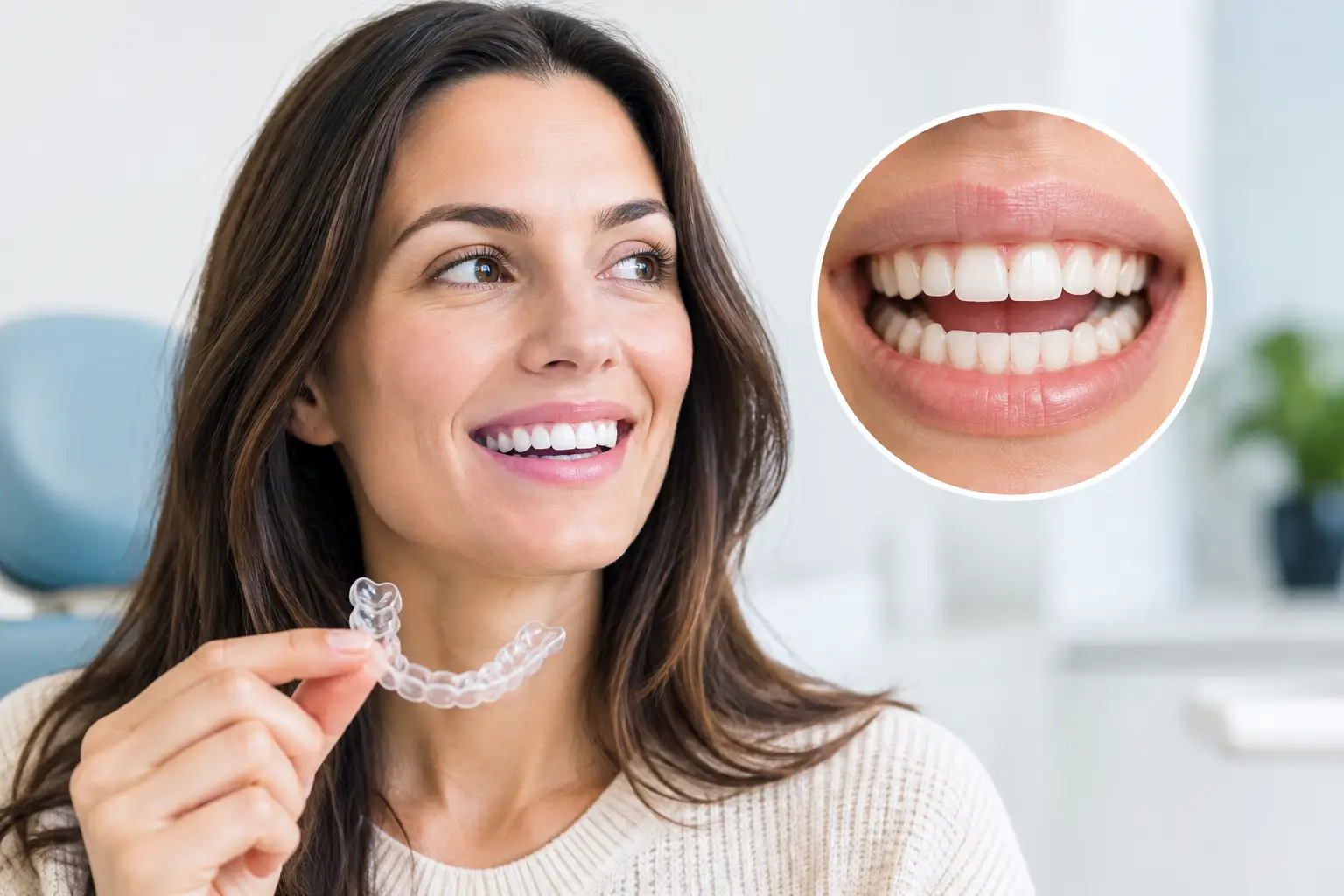
When you bring your back teeth together but the front teeth remain apart, it can be difficult to know what that means for orthodontic treatment. Invisalign for open bite is a common question from an adult whose front teeth do not meet, especially when they want a discreet option. The short answer is that clear aligners may be appropriate for some cases, but the answer depends on why the open bite is present and what movements are needed.
What is an anterior open bite in adults?
An anterior open bite is a space between the upper and lower front teeth when the back teeth are together. It may be small and noticeable only in certain positions, or it may be more obvious when you look in the mirror or speak.
For adults, this pattern can develop for different reasons. The position of the teeth may be the primary factor. In other cases, the relationship of the upper and lower jaws, tongue posture, swallowing patterns, or previous orthodontic treatment may contribute. Sometimes several factors are involved at once.
That distinction matters because teeth can be moved with orthodontic treatment, while a jaw-based concern may call for a different conversation about what aligners can realistically accomplish. A thoughtful evaluation should never begin with a one-size-fits-all promise.
Does Invisalign fix open bite?
Does Invisalign fix open bite? For selected cases, Invisalign can be used to move teeth in ways that reduce or close the space between the front teeth. Clear aligners are designed around a detailed digital treatment plan, with each set guiding specific tooth movements in sequence.
However, Invisalign is not automatically the right answer for every anterior open bite in adults. If the open bite is primarily related to the positions of the teeth, aligner treatment may be a suitable option. If the jaw relationship is a major part of the concern, aligners alone may have limits. A clinician may discuss other approaches, or explain what level of change is realistic with orthodontics alone.
The most useful question is not simply whether Invisalign can close an open bite. It is whether Invisalign is the right tool for your particular dental structure, goals, and treatment plan.
What an Invisalign evaluation looks for
A clear-aligner consultation begins with more than a quick look at the space between the front teeth. Your dental team will examine how your teeth fit together, the position of individual teeth, the condition of existing dental work, and the support around your teeth. Digital scans, photographs, and X-rays may be part of the planning process.
For an adult whose front teeth do not meet, the evaluation also considers whether the open bite is limited to the front teeth or reflects a broader jaw relationship. This information helps determine whether aligners can provide a predictable path forward and whether additional support, such as attachments or elastics, may be included in the plan.
Attachments are small, tooth-colored shapes placed on selected teeth. They give the aligners a more secure surface for certain planned movements. Elastics, when recommended, connect to designated points and are worn according to the instructions provided by your dental team. Not every open-bite plan includes either feature.
Why adult open bite treatment requires careful planning
Adults often come to orthodontic care with a more complex dental history than teens. You may have crowns, bridges, implants, older fillings, missing teeth, or teeth that have shifted after past orthodontic care. These details do not necessarily rule out Invisalign, but they need to be considered before treatment begins.
At Seattle Oral Care, coordinated planning can be especially valuable when orthodontic questions overlap with restorative dentistry. If a tooth has a crown or an implant, for example, its role in an aligner plan needs close attention. Natural teeth can move orthodontically, while implants do not move in the same way. Planning around existing restorations helps ensure the proposed approach makes sense for the full picture, not just the gap between the front teeth.
A clear explanation is part of good care. You should understand what your proposed aligner plan is intended to change, where its limits are, and what your responsibilities will be during treatment. If another option is more appropriate, that should be discussed plainly and without pressure.
Invisalign works best with consistent participation
Clear aligners are removable, which many adults appreciate for meals, brushing, and professional life. That flexibility also means they must be worn as directed for the plan to work as intended. Skipping wear, losing aligners, or moving ahead before an aligner fits properly can affect the planned sequence.
You will also return for check-ins so your dental team can evaluate fit and progress, answer questions, and make adjustments when needed. Some patients need additional aligners after an initial series to refine specific movements. This is not unusual, and it is one reason an individualized plan matters more than a generic promise.
After orthodontic movement, retainers are typically used to help hold teeth in their planned positions. Retainer recommendations vary by patient, and the details should be part of the conversation before you begin.
Questions to ask at your consultation
If you are considering Invisalign for open bite, it helps to arrive with practical questions. Ask what appears to be contributing to your open bite, whether your concern is mostly tooth-position related or jaw-related, and what aligners can reasonably address in your case.
You may also want to ask how existing crowns, implants, bridges, or missing teeth affect planning. If attachments or elastics are recommended, ask why they are included and what they require day to day. Finally, ask what follow-up and retainer care will look like after active orthodontic movement is complete.
The right consultation should leave you feeling informed, not rushed. Orthodontic decisions are personal, and a clear answer sometimes includes acknowledging that a particular approach has limitations.
A measured next step for front teeth that do not meet
An anterior open bite can be visually noticeable, but it is also highly individual. Two people with what appears to be the same space between their front teeth may need very different treatment plans. Photos and online examples can be useful for understanding the term, but they cannot replace an examination of your own teeth, restorations, and jaw relationship.
If you are an adult whose front teeth do not meet, consider scheduling a consultation focused on understanding the cause of the space and your available options. The best next step is a plan that is carefully designed around you, explained in plain language, and supported by a dental team that listens.