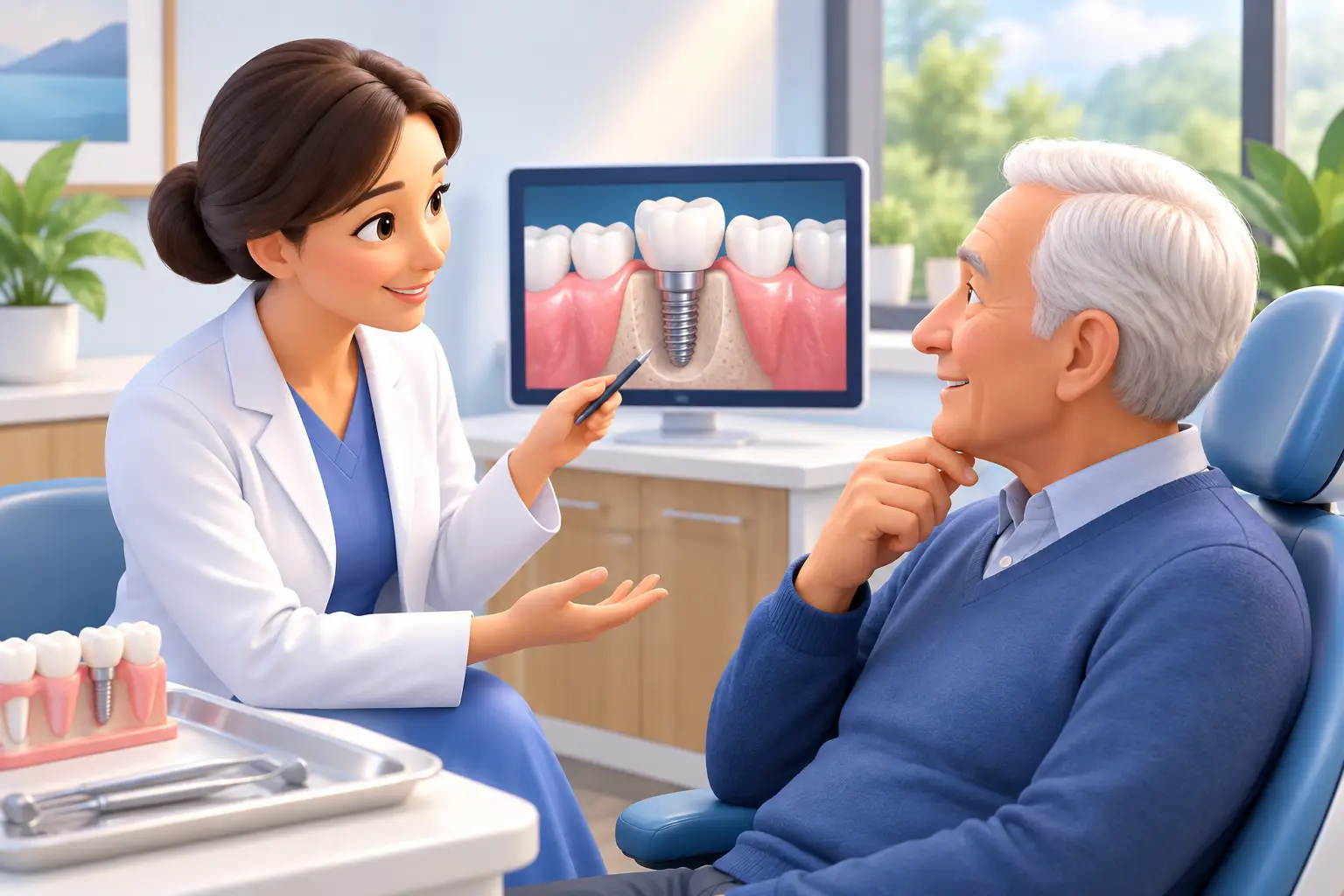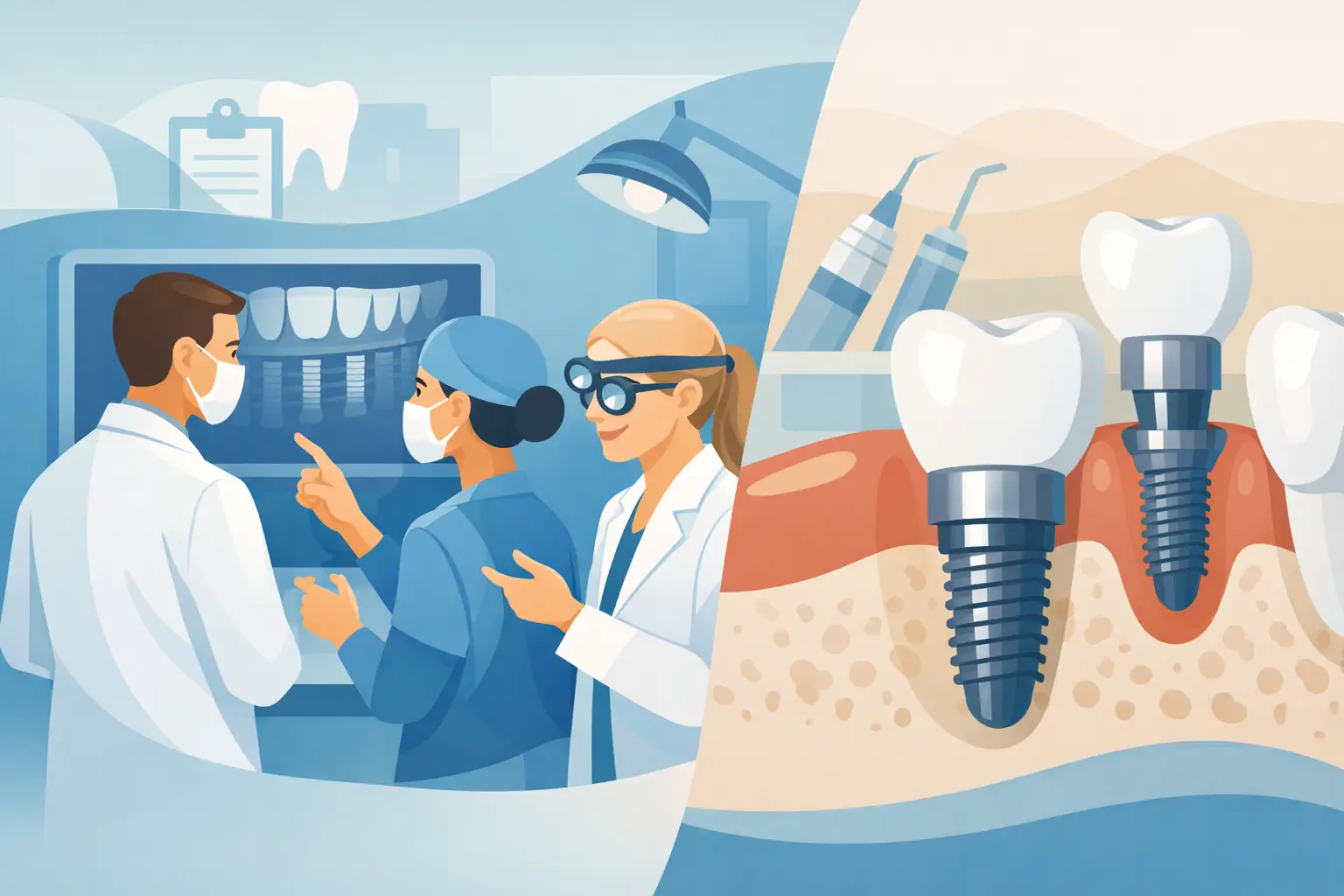
A dental implant needs more than a missing-tooth space. It needs enough healthy jawbone to hold the implant securely for years to come. Guided bone regeneration dental implants can help create that foundation when bone has been lost after an extraction, infection, gum disease, or years of wearing a denture.
For many patients, hearing that they need additional treatment before an implant can feel discouraging. In reality, bone regeneration is a common, carefully planned part of implant care. It may allow an implant to be placed safely, improve the appearance of the final tooth, and support a result designed to last.
What Is Guided Bone Regeneration?
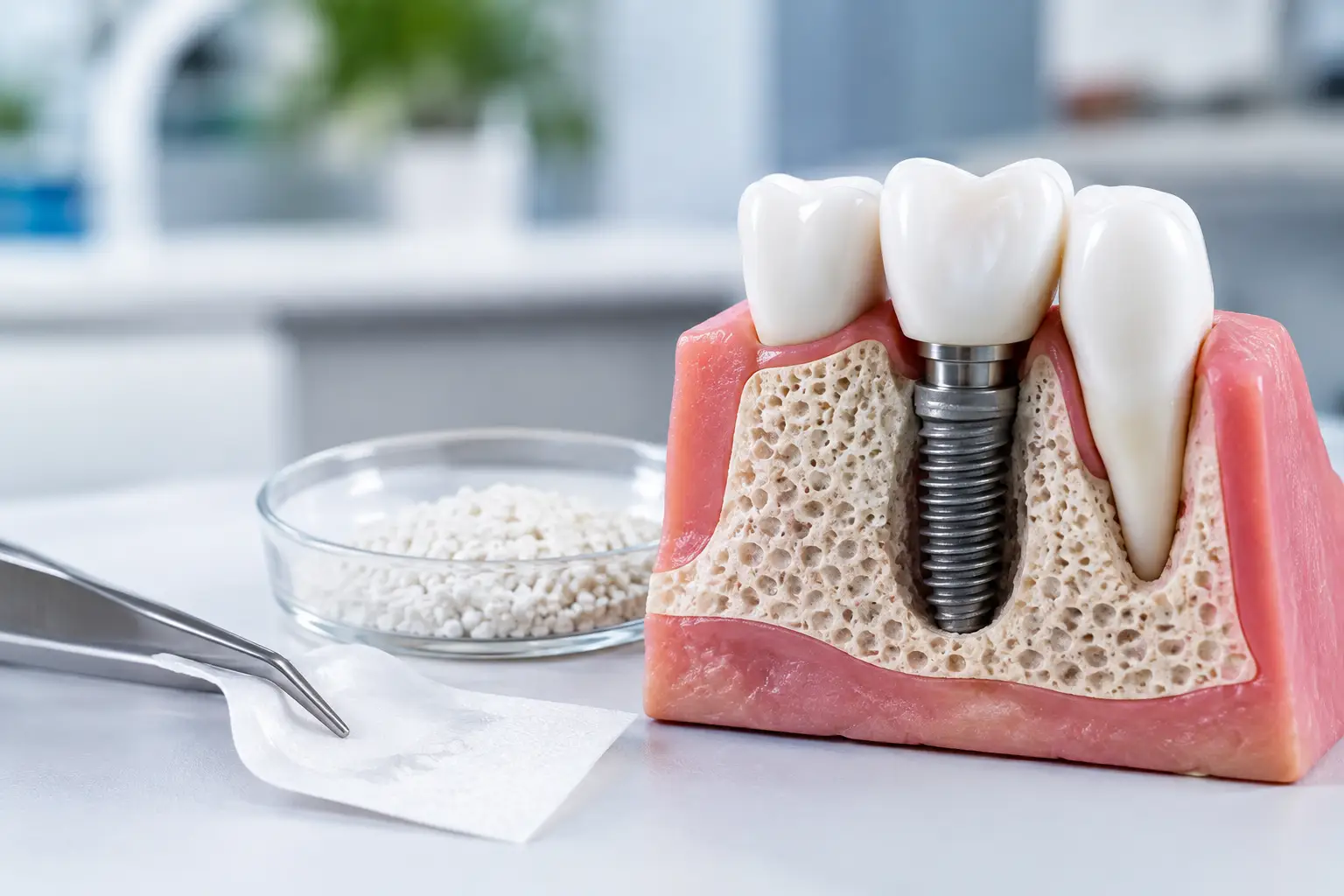
Guided bone regeneration, often called GBR, is a technique that helps your body rebuild bone in a specific area of the jaw. A dentist or specialist places bone graft material where more bone is needed, then covers it with a protective barrier called a bone regeneration membrane.
The membrane is an essential part of the process. It creates a protected space for bone-forming cells to grow while keeping faster-growing soft tissue, such as gum tissue, from filling the area first. Over time, your body incorporates the graft material and develops new bone.
This treatment is frequently used around planned implant sites. It can rebuild a narrow ridge, fill a defect left by an extraction or infection, or improve support around an implant that is being placed. The exact approach depends on how much bone is missing and where it is located.
Why Bone Matters for Dental Implants
Dental implants act as artificial tooth roots. They are placed in the jawbone, where the bone heals closely around the implant surface. This connection is what gives an implant-supported crown, bridge, or denture its stability.
When a tooth is lost, the jawbone in that area begins to change. The body no longer receives the chewing forces that helped maintain the bone, so the ridge may gradually become shorter and narrower. Bone loss can also occur more quickly after periodontal disease, trauma, infection, or difficult extractions.
Not every patient needs GBR dental implants. Some people have enough natural bone for immediate implant placement. Others benefit from grafting at the time of extraction, while some need a separate regeneration procedure before an implant can be placed. Detailed imaging and an in-person examination are the only reliable ways to determine which path is appropriate.
The Guided Bone Regeneration Procedure
A guided bone regeneration procedure is usually performed with local anesthetic. Sedation options may also be available for patients who feel anxious or are having more extensive surgical treatment. Your care team will review the plan, expected timeline, and comfort options before treatment begins.
After gently accessing the treatment area, the clinician prepares the site and places graft material into the bone deficiency. Graft materials may come from your own bone, a human donor source processed for medical use, an animal-derived mineral source, or a synthetic material. Each option has a different role, and the right choice depends on the size and location of the defect, your health history, and the treatment goal.
Next, a bone regeneration membrane is placed over the graft. Some membranes dissolve naturally as healing progresses. Others are designed to remain in place longer and may require a later appointment for removal. The gum tissue is then carefully closed over the area with sutures.
In certain cases, the implant can be placed during the same appointment as the graft. This is often possible when the implant can achieve strong initial stability and the graft is being used to fill or contour a smaller surrounding defect. When bone loss is more significant, it is usually safer to allow the regenerated area to heal before placing the implant.
Guided Bone Regeneration vs. Bone Graft
Patients sometimes hear these terms used interchangeably, but guided bone regeneration vs. bone graft is not quite an either-or comparison. A bone graft is the material placed to support new bone growth. Guided bone regeneration is the broader technique that often combines graft material with a membrane to control how the area heals.
A simple socket graft after a tooth extraction may involve graft material placed into the socket to preserve the ridge. GBR is more often used when a larger or more defined bone defect needs to be rebuilt, particularly for implant planning. The membrane helps protect the grafted space during the early phases of healing.
Neither approach is automatically better. A small extraction site may only need a socket-preservation graft, while a narrow ridge or a defect near the front of the mouth may benefit from GBR. Your clinician should explain not just what is recommended, but why it supports the long-term position and stability of your implant.
What Guided Bone Regeneration Recovery Is Like
Guided bone regeneration recovery is generally manageable, but it requires patience and careful home care. Mild swelling, tenderness, bruising, and minor bleeding during the first few days are common after oral surgery. Your provider may recommend prescription or over-the-counter pain medication, depending on the procedure and your health needs.
For the first several days, choose softer foods and avoid chewing directly on the treated area. Keep the area clean according to your post-operative instructions, which may include a gentle rinse and modified brushing. Do not pull at your lip or cheek to inspect the site, and avoid smoking or vaping, as nicotine can significantly interfere with healing.
Protecting the membrane and graft is especially important. Avoid vigorous rinsing, spitting, drinking through straws, or any activity that could disrupt the surgical area. If you wear a removable denture or partial denture, it may need to be adjusted so it does not press on the graft site.
Initial gum healing often occurs within a couple of weeks, but bone development takes longer. Depending on the size of the graft and the treatment location, healing before implant placement may take roughly four to nine months. Your clinician will monitor healing at follow-up appointments and use imaging when needed to confirm that the site is ready.
Contact your dental office promptly if pain or swelling worsens after the first few days, you develop a fever, experience persistent bleeding, or notice that a membrane or graft material seems exposed. A small amount of graft particles may occasionally be seen early on, but it is still worth calling so your team can advise you.
Factors That Can Affect Healing
Your body’s ability to heal matters as much as the surgical technique. Smoking and vaping are among the most significant risks because they reduce blood flow and can compromise graft and implant success. Uncontrolled diabetes, active gum disease, certain medications, poor oral hygiene, and heavy pressure from a denture can also affect the outcome.
That does not mean treatment is out of reach. It means your plan may need additional preparation. Addressing gum inflammation, coordinating with your physician when medical conditions are involved, and creating a realistic nicotine-cessation plan can all improve the conditions for healing.
At Seattle Oral Care, complex implant planning can be coordinated among a prosthodontist, oral surgeon, periodontist, and general dentist. That collaborative approach is valuable when the decision involves both rebuilding bone and designing the final restoration, because implant placement is only one part of creating a comfortable, natural-looking tooth replacement.
A Strong Foundation Is Worth the Time
Bone regeneration can add time to the implant process, but it is often time spent protecting the result. The goal is not simply to place an implant as quickly as possible. It is to create the support needed for a restoration that feels secure, functions comfortably, and helps you smile with confidence for years ahead.
If you have been told you do not have enough bone for an implant, a thorough consultation can clarify what is possible and what timeline makes sense for you. With a personalized plan and attentive follow-up, the path to replacing a missing tooth can be more predictable than it first appears.