A dental implant is designed to feel like part of your life, not like a fragile dental restoration you need to worry about every day. Still, caring for dental implants long term makes a meaningful difference in how comfortably they function and how well the surrounding gums and bone stay healthy. The implant itself cannot get a cavity, but the tissue supporting it can become inflamed or infected without consistent care.
For many people, the goal is straightforward: enjoy favorite foods, speak and smile confidently, and protect the investment they made in their oral health. That goal is realistic when home care and professional maintenance work together.
Why Long-Term Implant Care Matters
A dental implant has several parts. The titanium post is placed in the jawbone, an abutment connects the post to the visible restoration, and a crown, bridge, or denture completes your smile. Each part is durable, but the gums and bone around the implant remain living tissues that need attention.
Plaque can collect at the gumline around an implant just as it can around natural teeth. If it is not removed, early inflammation may develop. This is often called peri-implant mucositis. At this stage, the gums may look red, feel tender, or bleed during brushing. With timely care, it can often be managed before it affects the bone.
When inflammation progresses and bone around an implant begins to break down, the condition is known as peri-implantitis. It may not cause pain right away, which is why regular visits matter even when an implant feels perfectly fine. Early detection gives your dental team more options to protect the implant and surrounding bone.
Caring for Dental Implants Long Term at Home
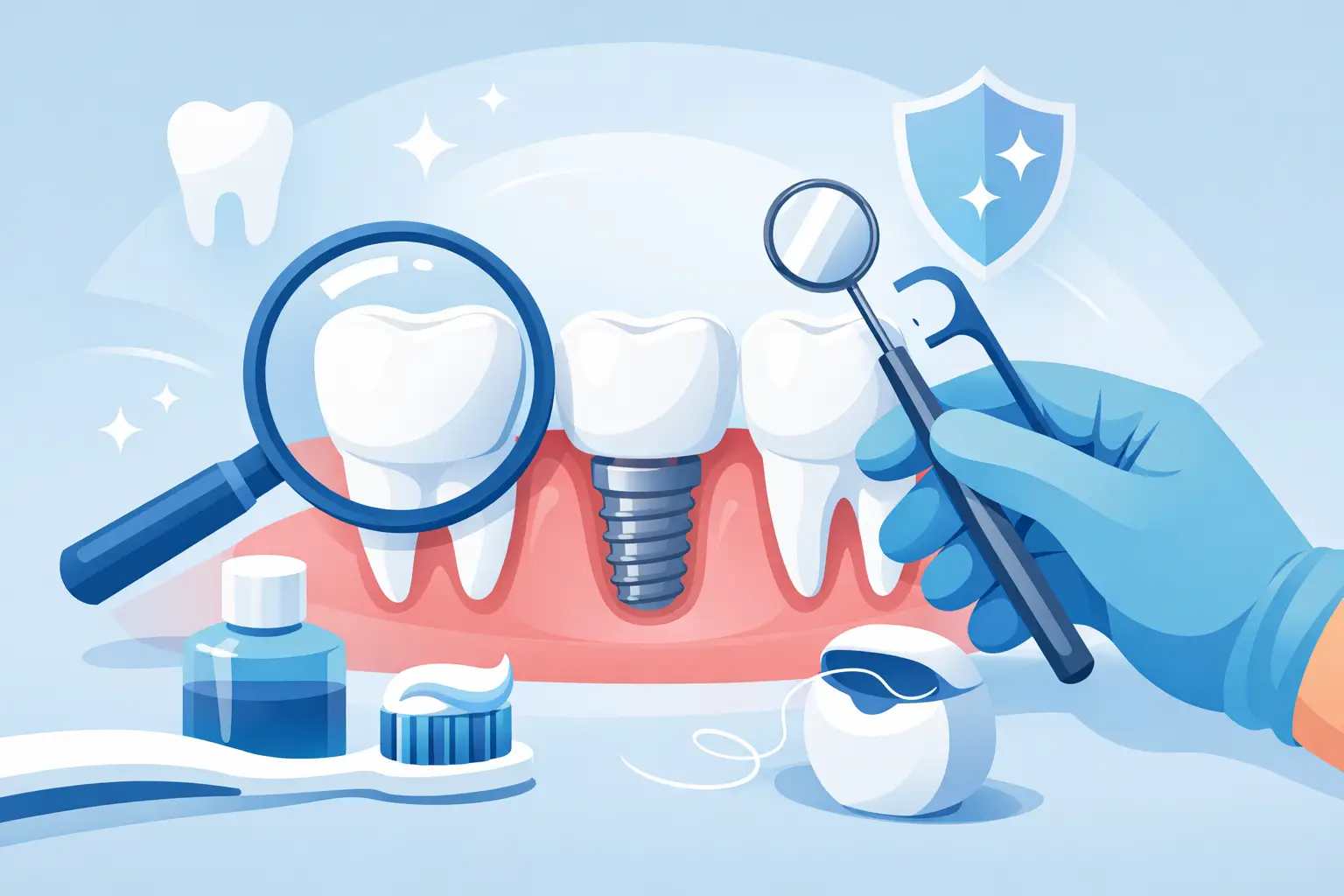
The best daily routine is thorough, gentle, and realistic enough to maintain every day. Brush twice daily with a soft-bristled toothbrush and a nonabrasive toothpaste. Abrasive whitening toothpastes can scratch some restoration materials over time, making them more likely to hold plaque or lose their polished appearance.
Clean between your teeth and around the implant once a day. The right tool depends on the type of restoration and the shape of the spaces around it. Floss may work well around a single implant crown. Interdental brushes can be especially useful for wider spaces, bridges, and implant-supported dentures. A water flosser can also help remove food debris and plaque along the gumline, though it should complement rather than replace brushing.
If you have a fixed implant bridge, your dental team may recommend a floss threader or specialized floss that can pass underneath the bridge. This area is easy to miss because you cannot remove the restoration at home. For removable implant-supported dentures , follow the instructions for taking out and cleaning the appliance, then gently clean the implants, attachments, and gums before placing it back in.
A few simple habits make a difference:
- Brush carefully along the gumline, not just the visible crown or denture.
- Use the cleaning tools recommended for your specific implant restoration.
- Rinse after meals when brushing is not possible, especially after sticky or fibrous foods.
- Keep cleanings in a convenient, visible place so they become part of your routine.
There is no single tool that is best for every implant patient. A person with one implant crown has different needs than someone with a full-arch restoration. The right approach is the one that removes plaque effectively without making home care frustrating or difficult.
Keep Regular Professional Maintenance Visits
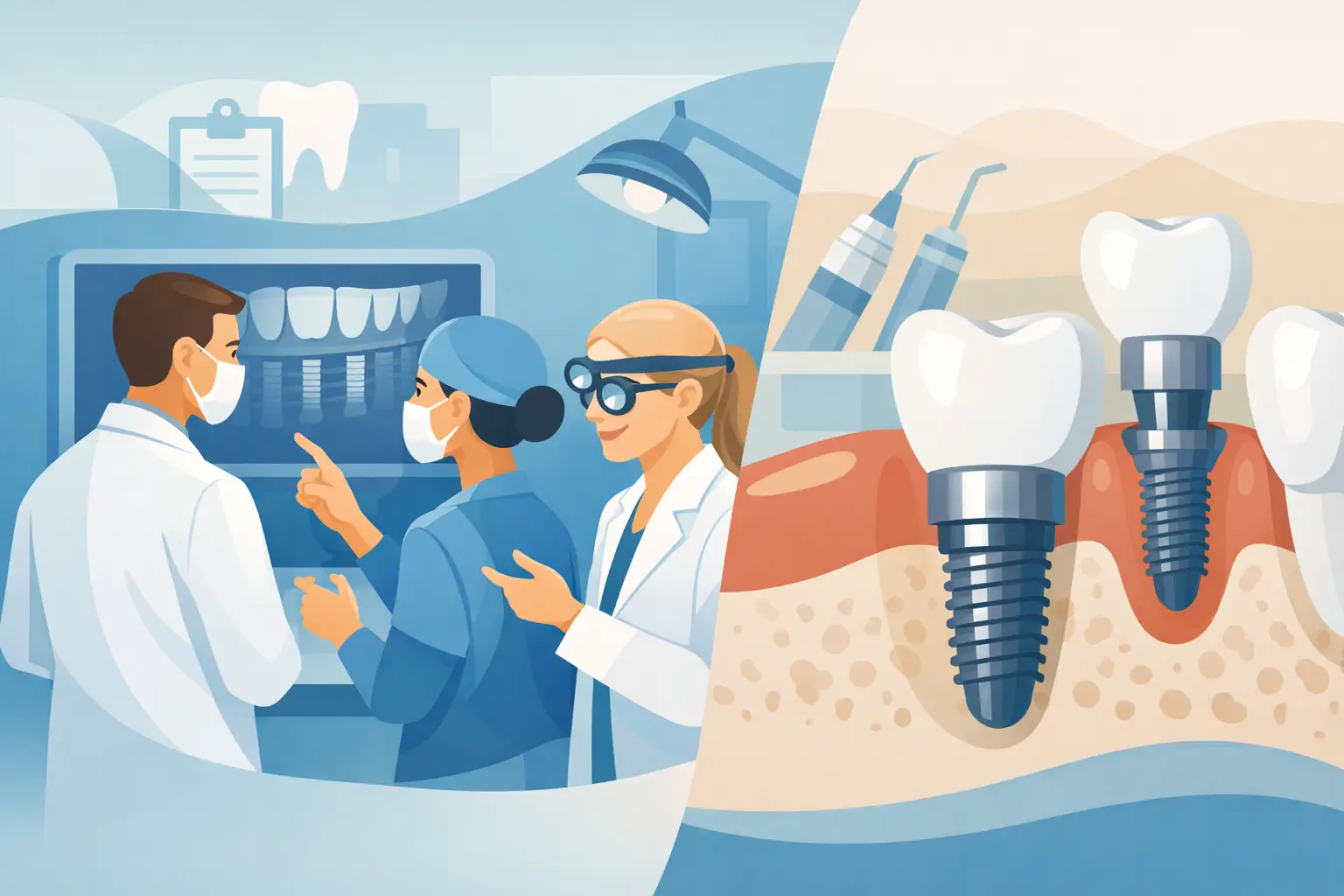
Professional maintenance is not simply a standard cleaning with a different name. Your hygienist and dentist will assess the gums, bite, restoration, and implant support using techniques and instruments appropriate for implants. They can remove buildup in areas that are difficult to reach at home and identify subtle changes before they become larger concerns.
How often you need maintenance depends on your health history and risk factors. Many patients benefit from visits every three to six months. If you have a history of gum disease , smoke or vape, have diabetes that is difficult to control, or find it challenging to clean around a bridge or denture, more frequent appointments may be recommended.
During a maintenance visit, your dental team may check for bleeding, swelling, gum recession, bite changes, looseness in a crown or bridge, and changes in bone levels visible on X-rays. A restoration that feels slightly different when you bite is worth mentioning. Small adjustments can prevent excessive force from repeatedly stressing the implant or restoration.
For complex implant care, coordinated treatment can be reassuring. At Seattle Oral Care, a prosthodontist, general dentist, oral surgeon, and periodontist can work together when a patient needs ongoing monitoring, restorative adjustments, or treatment for gum and bone concerns.
Protect Implants From Excess Force
Implants are strong, but they do not have the same cushioning ligament that natural teeth have. That makes bite balance especially relevant. Repeatedly biting hard objects, chewing ice, opening packages with your teeth, or using teeth as tools can chip a ceramic crown, loosen a component, or place unnecessary force on the restoration.
Nighttime clenching and grinding also deserve attention. You may not be aware that you grind your teeth, especially if it happens while you sleep. Signs can include morning jaw soreness, frequent headaches, worn teeth, or a chipped crown. A custom night guard may help protect natural teeth and implant restorations from excess pressure.
Food choices do not need to be restrictive once your implant has fully healed and your dentist has cleared you for normal eating. However, very hard foods should be approached with common sense. Cutting firm foods into smaller pieces and avoiding repeated biting directly into hard items can help preserve the porcelain or other material used in your restoration.
Watch for Changes, Even Small Ones
Pain is not the only sign that an implant needs attention. Contact your dental office if you notice bleeding when brushing, persistent bad breath, a bad taste near the implant, swelling, pus, gum recession, or a crown or denture that feels loose. Changes in how your teeth come together can also signal a need for an adjustment.
Do not try to tighten a loose implant crown or denture attachment at home. What feels loose may be a screw, the restoration itself, or another component that needs professional evaluation. Prompt care is usually simpler and more comfortable than waiting until the problem becomes urgent.
It is also wise to tell your dental team about changes in your overall health or medications. Conditions that affect healing, inflammation, or dry mouth can influence your oral health plan. This is not a reason to worry. It is simply useful information that helps your team tailor preventive care to you.
Support Gum Health With Everyday Choices
Healthy gums are one of the best supports an implant can have. If you smoke or use nicotine products, reducing or stopping is a powerful step for your oral health. Nicotine can reduce blood flow and make it harder for tissues to heal and respond to inflammation. It is also associated with a higher risk of implant complications.
Good nutrition, hydration, and management of health conditions such as diabetes support gum and bone health, too. Dry mouth can increase plaque buildup and make the mouth feel uncomfortable, so mention it if it has become a regular problem. Your dentist can help identify possible causes and suggest practical strategies.
Most importantly, do not let embarrassment delay a visit. Many patients feel anxious when they see bleeding or realize they have fallen out of a routine. Dental teams see this often, and the focus should be on helping you regain control, not judging you for what has happened.
A long-lasting implant is built on more than the procedure itself. It is supported by everyday care, thoughtful maintenance, and a dental team that knows your history. If something feels different, a calm conversation and a timely checkup can help keep your smile comfortable for many years to come.