A denture that slips when you laugh, talk, or eat can make everyday moments feel stressful. When comparing implant supported dentures vs regular dentures , the biggest difference is how the teeth stay in place. Both can restore a full smile after tooth loss, but they offer very different experiences with stability, chewing, maintenance, and long-term oral health.
The right choice is not automatically the most advanced one. It is the option that fits your health, goals, budget, and comfort level - with a plan you can maintain for years.
How regular dentures work
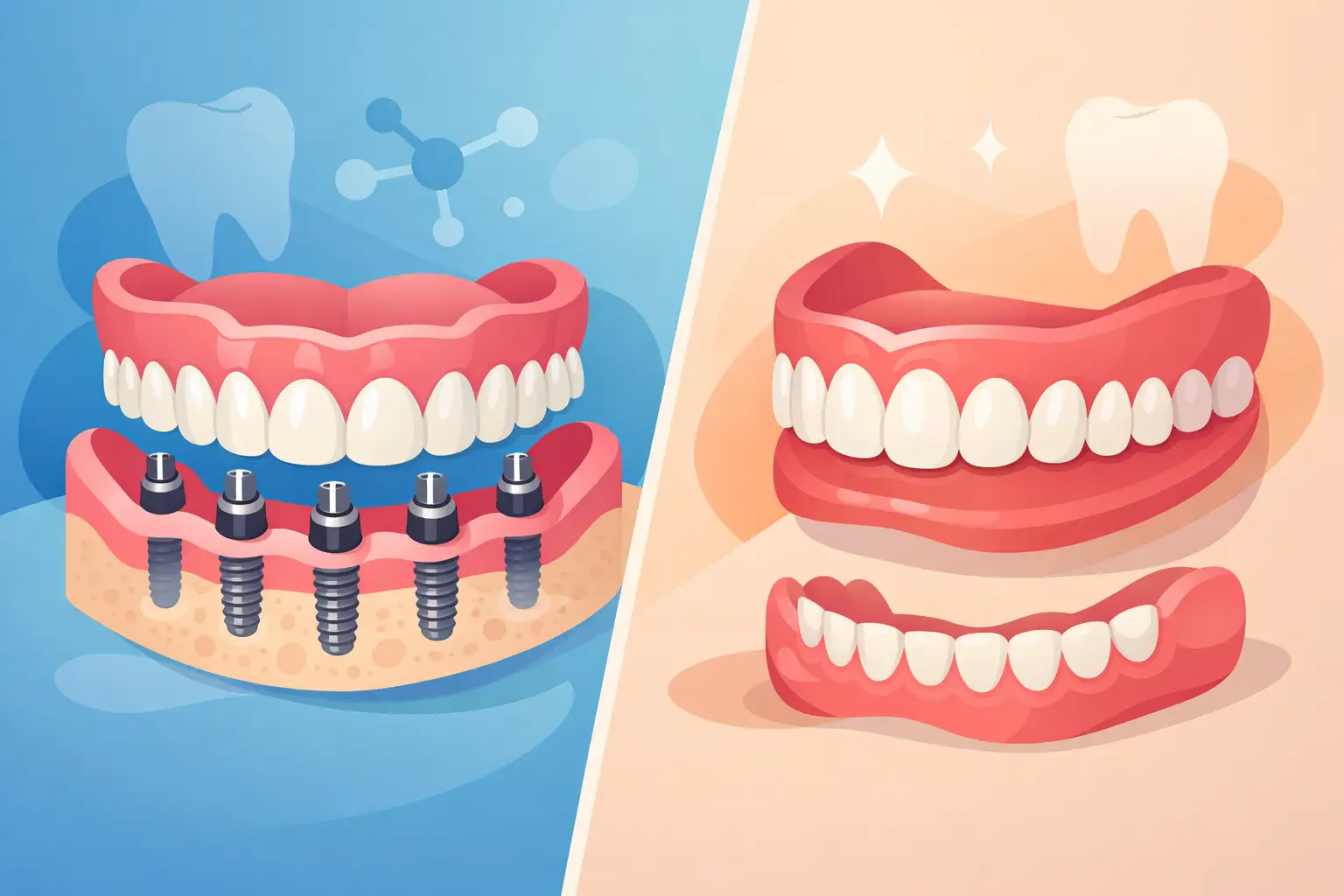
Regular dentures , also called conventional dentures, rest directly on the gums. A full denture replaces all teeth in an upper or lower arch, while a partial denture fills spaces when some natural teeth remain. They are custom-made to match your mouth and can restore the appearance of a complete smile without surgery.
For many people, conventional dentures are a practical starting point. Treatment is generally less invasive and has a lower upfront cost than implants. They can be especially appropriate for someone who is not medically ready for surgery, needs an immediate tooth-replacement option, or prefers to avoid a surgical procedure.
Still, even a carefully made denture can move slightly because it relies on the shape of the gums and underlying bone for support. Adhesives may help, but they do not create the same secure connection as implants. Lower dentures are often more challenging because the tongue and a smaller gum surface can make retention less predictable.
Over time, the jawbone naturally changes after teeth are lost. As the bone shrinks, a denture may begin to feel loose and need adjustment, relining, or replacement.
Implant supported dentures vs regular dentures: key differences
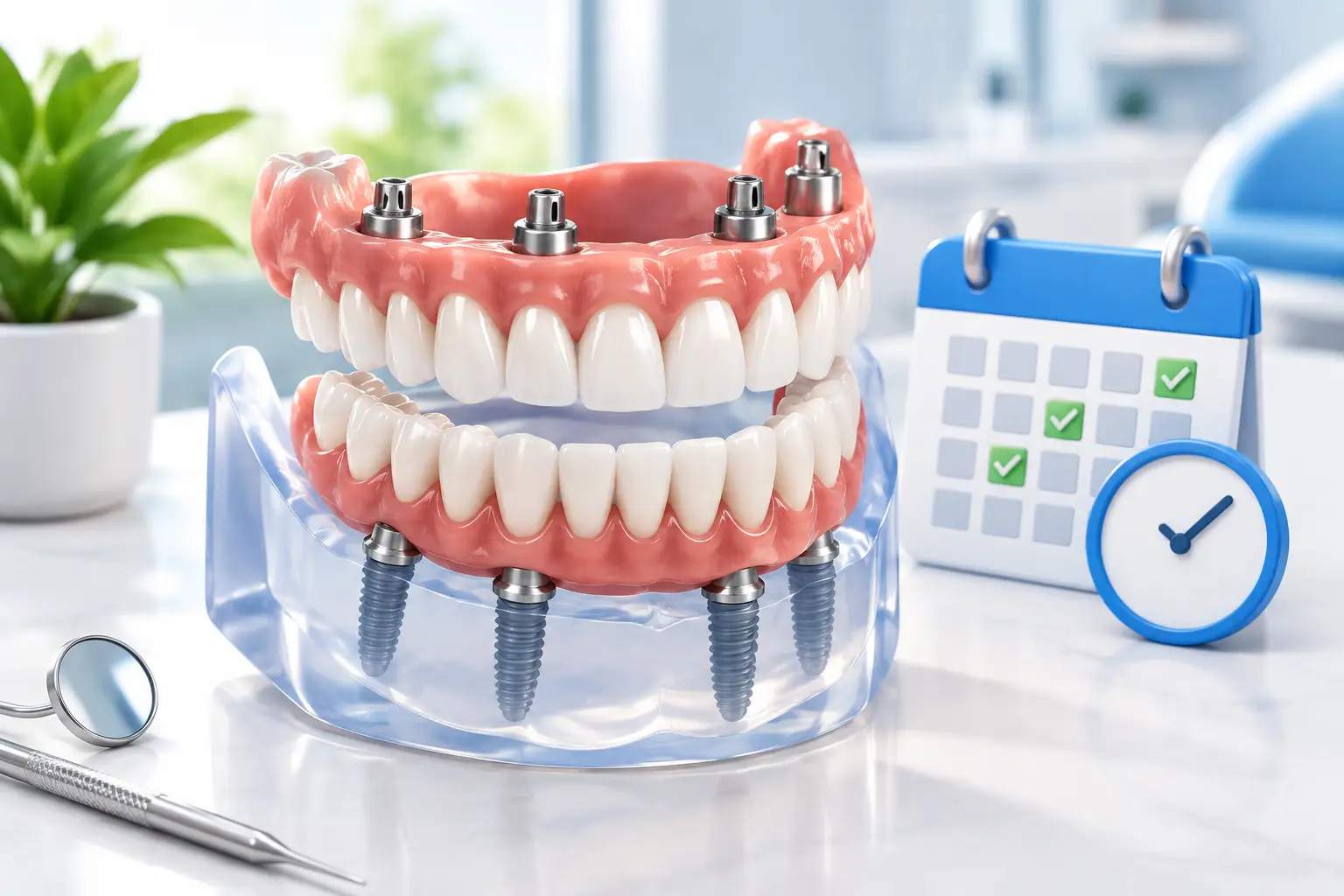
Implant-supported dentures attach to dental implants placed in the jawbone. Those implants act like replacement tooth roots, creating a foundation that helps hold the denture steady. Depending on the treatment plan, the denture may snap on and off for cleaning or be fixed in place and removed only by a dental professional.
The most noticeable benefit is stability. Many patients find they can speak more confidently, eat a wider range of foods, and stop worrying that their denture will shift at an inconvenient moment. Implant support can also reduce sore spots caused by rubbing and pressure on the gums.
Implants offer another important advantage: they stimulate the jawbone. While they cannot reverse all existing bone loss, they can help preserve bone in the areas where they are placed. Conventional dentures do not provide that stimulation.
There are trade-offs. Implant treatment requires surgery, healing time, and a greater financial investment. It also requires consistent home care and professional maintenance. An implant-supported denture is not a set-it-and-forget-it solution, but it can be a durable one when properly cared for.
Fixed and removable implant options
Not all implant-supported dentures are the same. A removable implant overdenture typically connects to two or more implants with snaps, bars, or similar attachments. You remove it at night to clean the denture, attachments, and gum tissue. This option can provide a major improvement in security while keeping treatment and hygiene more straightforward.
A fixed full-arch restoration is attached to multiple implants and stays in place day to day. It can feel closer to having natural teeth because it does not come out for cleaning. However, cleaning underneath it takes care and technique, often with specialty brushes, flossing aids, or a water flosser. Fixed treatment may also involve more implants and a higher cost.
Your prosthodontist will consider your bite, bone volume, gum health, medical history, facial support, and expectations before recommending either approach. Some patients need bone grafting or periodontal treatment before implants can be placed. Others may be good candidates for a carefully planned implant solution without additional procedures.
Comfort, food choices, and daily confidence
Conventional dentures can restore function, but they may limit how comfortably you chew firm, crunchy, sticky, or fibrous foods. It is common to need practice with speaking and eating after receiving a new denture, regardless of the type.
With implant support, biting force and control are often improved because the denture is more secure. That can make meals more enjoyable and reduce the need to cut food into very small pieces. It does not mean every food is risk-free, though. Ice, hard candy, and other very hard foods can damage denture teeth or attachments.
Comfort also depends on fit. A well-designed conventional denture may serve one person beautifully, while another person may continue to struggle with movement despite multiple adjustments. If a denture feels persistently loose or painful, that is worth discussing rather than simply accepting.
Cost and long-term planning
Regular dentures usually cost less initially, but they may need periodic relines as the jaw changes. Implant-supported dentures involve surgical and restorative costs upfront, plus ongoing care for attachments, replacement components, and routine exams.
The most useful question is not simply, “Which costs less?” It is, “Which option best supports the life I want to live and the care I can commit to?” For someone who wants the most secure fit and is a good surgical candidate, implants may provide meaningful long-term value. For someone seeking a non-surgical, accessible replacement option, a conventional denture can still be a thoughtful and effective choice.
At Seattle Oral Care, a coordinated evaluation can clarify what your bone, bite, health history, and goals make possible. You deserve time to ask questions, understand the trade-offs, and choose a tooth-replacement plan that feels comfortable in more ways than one.