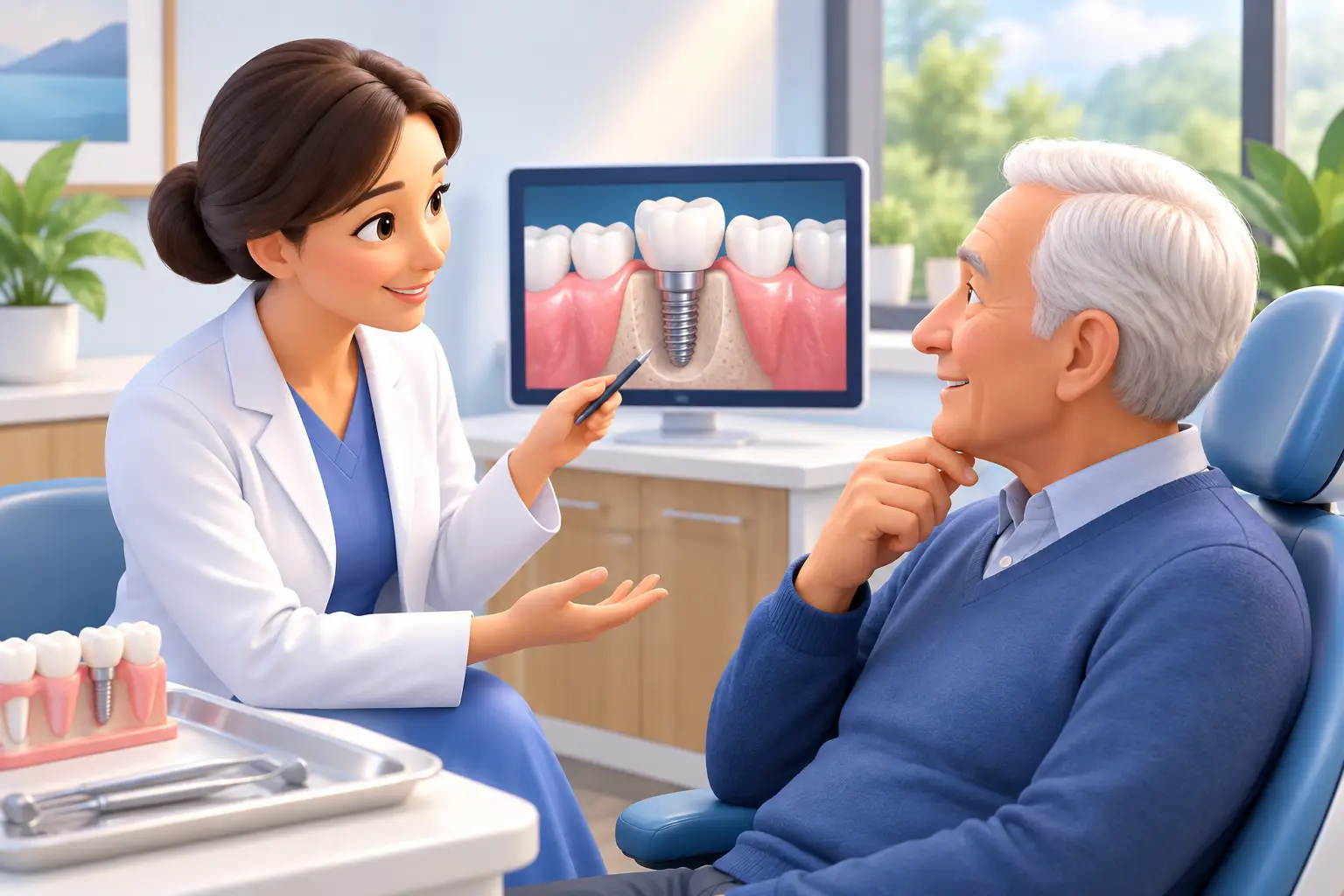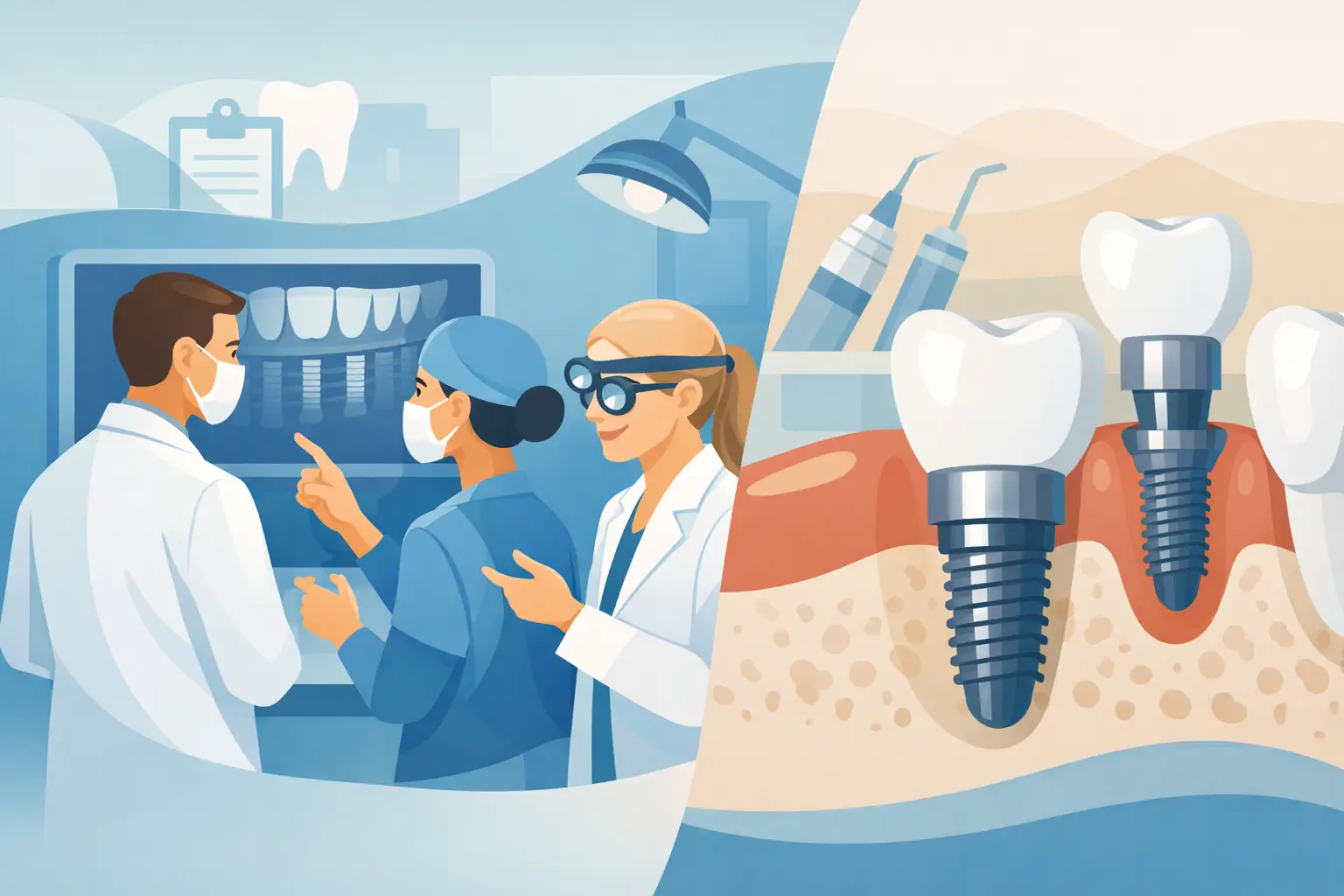

A dental implant can feel much like a natural tooth, but it does not maintain itself. Helping an elderly parent clean dental implants may become necessary when arthritis, poor vision, stroke recovery, tremors, or memory changes make an established routine harder to manage. Consistent care protects the gum tissue and bone supporting the implant, helps prevent bad breath and discomfort, and gives you an early chance to notice changes that need professional attention.
The goal is not to take over more than your parent needs. Instead, create a calm routine that preserves independence where possible and provides hands-on help when needed. A few thoughtful adjustments can make daily implant care safer, easier, and far less stressful for everyone.
Start by Knowing What Type of Implant Restoration They Have
“Dental implants” can describe several different restorations, and the cleaning method depends on what is in the mouth. A single implant crown is cleaned much like a natural tooth, with extra attention at the gumline. An implant-supported bridge has connected teeth and may require cleaning beneath the bridge where a regular toothbrush cannot reach.
Some parents have an implant-retained denture , sometimes called an overdenture. This appliance snaps onto implants and is removable for cleaning. Others have a fixed full-arch bridge that stays in place and must be cleaned around and underneath, but never removed at home.
If you are unsure which type your parent has, do not guess or try to remove anything that seems fixed. Ask their dentist or prosthodontist to demonstrate the exact home-care method. A short, hands-on review is often more useful than general instructions, especially if you will be helping regularly.
A Daily Oral Hygiene Routine for Implant Patients
For most implant patients , cleaning should happen at least twice each day, ideally after breakfast and before bed. The evening cleaning is particularly valuable because plaque left around implants overnight can irritate the gums.
Use a soft manual or electric toothbrush and a gentle technique. Position the bristles where the implant crown meets the gumline, then clean the outer, inner, and chewing surfaces. There is no need to scrub hard. Firm brushing can make a sore mouth feel worse and may discourage a parent from accepting help the next day.
Flossing or another form of between-the-teeth cleaning is also necessary. For a single implant crown, floss can usually be used in the usual way. For bridges, a floss threader, implant-safe tufted floss, or an interdental brush may help clean under the artificial teeth. Your dentist can recommend the right size and type of interdental brush, since one that is too large can be uncomfortable and one that is too small may not clean effectively.
A water flosser can be a useful addition for many seniors, particularly when fingers cannot manage floss. It does not replace brushing, and it may not replace all other interdental cleaning for every restoration, but it can help flush food debris from around a bridge or implant-supported denture. Start on a low setting if gums are tender or your parent is unfamiliar with the sensation.
Use toothpaste and rinses exactly as recommended by the dental team. In general, a nonabrasive toothpaste and alcohol-free mouth rinse are comfortable choices for dry or sensitive mouths. If your parent has a prescription rinse, use it only as directed. More product is not necessarily better.
Implant Care for Seniors With Limited Mobility
The right setup can make the routine feel manageable. Good lighting, a stable chair, and a mirror at a comfortable height matter more than many people realize. If your parent uses a wheelchair or has difficulty standing at the sink, consider a seated routine with a small basin, cup of water, and towel nearby.
Helping a parent with dexterity issues clean teeth often works best as shared care. They may brush the areas they can reach, while you finish the gumline or clean underneath a bridge. A large-handled toothbrush, electric toothbrush, or grip adapted with a soft foam sleeve can reduce the need for a tight grasp.
Move slowly and explain what you are doing before you begin. Ask permission even if you have helped before. A parent who feels rushed, embarrassed, or physically unsteady may clench their jaw or pull away. Keeping the routine predictable, at the same time and in the same place each day, can build trust.
If there is a risk of choking or difficulty swallowing, keep your parent upright and use only a small amount of toothpaste. Encourage them to spit rather than rinse repeatedly. Speak with their medical and dental providers if they cough during oral care, cannot reliably spit, or have a swallowing disorder.
How to Clean Dentures and Implants for a Parent
A removable implant-supported denture should be taken out and cleaned outside the mouth, unless the dentist has given different instructions. Place a folded towel in the sink or fill it with a little water first. Dentures can crack if dropped on a hard surface.
Brush all surfaces of the denture with a denture brush and the cleaner recommended by the dental team. Regular toothpaste can be too abrasive for some denture materials. Rinse thoroughly, then clean the implants, gum tissue, tongue, and roof of the mouth with a soft brush before reinserting the denture.
The attachment points inside the denture and on top of the implants deserve special attention. Food and plaque can collect there quickly. Never force a denture into place. If it no longer snaps in easily, feels loose, or causes pain, it may need an adjustment, replacement attachment, or professional cleaning.
Unless their clinician has specifically instructed otherwise, removable dentures are usually left out overnight. This gives the gums a rest and allows the appliance to be cleaned and stored safely. Fixed implant bridges should remain in place and be cleaned with the tools demonstrated by the dental team.
A Caregiver Dental Implant Checklist
A simple checklist prevents small changes from being overlooked. During the daily routine, look for the following:
- Red, swollen, tender, or bleeding gums around an implant
- New bad breath or a persistent unpleasant taste
- Food repeatedly catching under a bridge or around denture attachments
- A crown, bridge, denture, or attachment that feels loose, rocks, or no longer fits correctly
- Pain when chewing, new sensitivity, or pressure around the implant area
- Cracks, chips, missing teeth on a denture, or worn attachment components
Bleeding is not something to dismiss as normal simply because a parent is older. Healthy implant gums should not regularly bleed with gentle cleaning. Plaque-related inflammation around an implant can sometimes be treated early, but untreated infection can progress and damage the bone that holds the implant in place.
Signs of Implant Problems in Elderly Parents
Call the dentist promptly for swelling, pus, a bump on the gums, fever, facial swelling, significant pain, or an implant restoration that suddenly feels mobile. These symptoms do not always mean the implant itself has failed. A loose screw, worn denture attachment, or gum infection may be the cause. Still, each needs timely assessment.
A change in behavior can be an equally meaningful warning sign. A parent who stops wearing a denture, avoids favorite foods, touches one area of the mouth, or becomes unusually resistant to brushing may be experiencing discomfort they cannot clearly describe. This is especially relevant when a parent has dementia or communication challenges.
Do not attempt to tighten a loose implant crown, bridge, or denture attachment at home. Avoid using household glues or repair kits. These can damage the restoration, trap bacteria, or make a professional repair more complicated.
Dental Implant Maintenance for Dementia Patients
Dementia can turn familiar oral care into a confusing experience. The most effective approach is usually brief, calm, and repetitive. Use one-step cues such as, “Hold the brush,” or “Open your mouth a little.” Demonstrating the motion can work better than lengthy explanations.
Choose the time of day when your parent is most relaxed. Keep supplies visible and consistent, and avoid surprising them by approaching from behind. If they become upset, pause rather than forcing the task. Try again later, or ask the dental team for strategies tailored to their level of cognitive change.
Regular maintenance appointments become even more valuable when home care is limited. Professional cleanings allow the team to remove buildup in areas that are difficult to reach, check the fit of restorations, and monitor gum and bone health over time. For complex implant restorations, coordinated care from a general dentist, periodontist, and prosthodontist can help address small issues before they become disruptive.
Caregiving often involves noticing what others cannot see. A clean implant restoration, comfortable gums, and a parent who can eat and smile without worry are meaningful signs that the routine is working. When something changes, a prompt dental visit offers clarity and protects the long-term treatment your parent depends on.