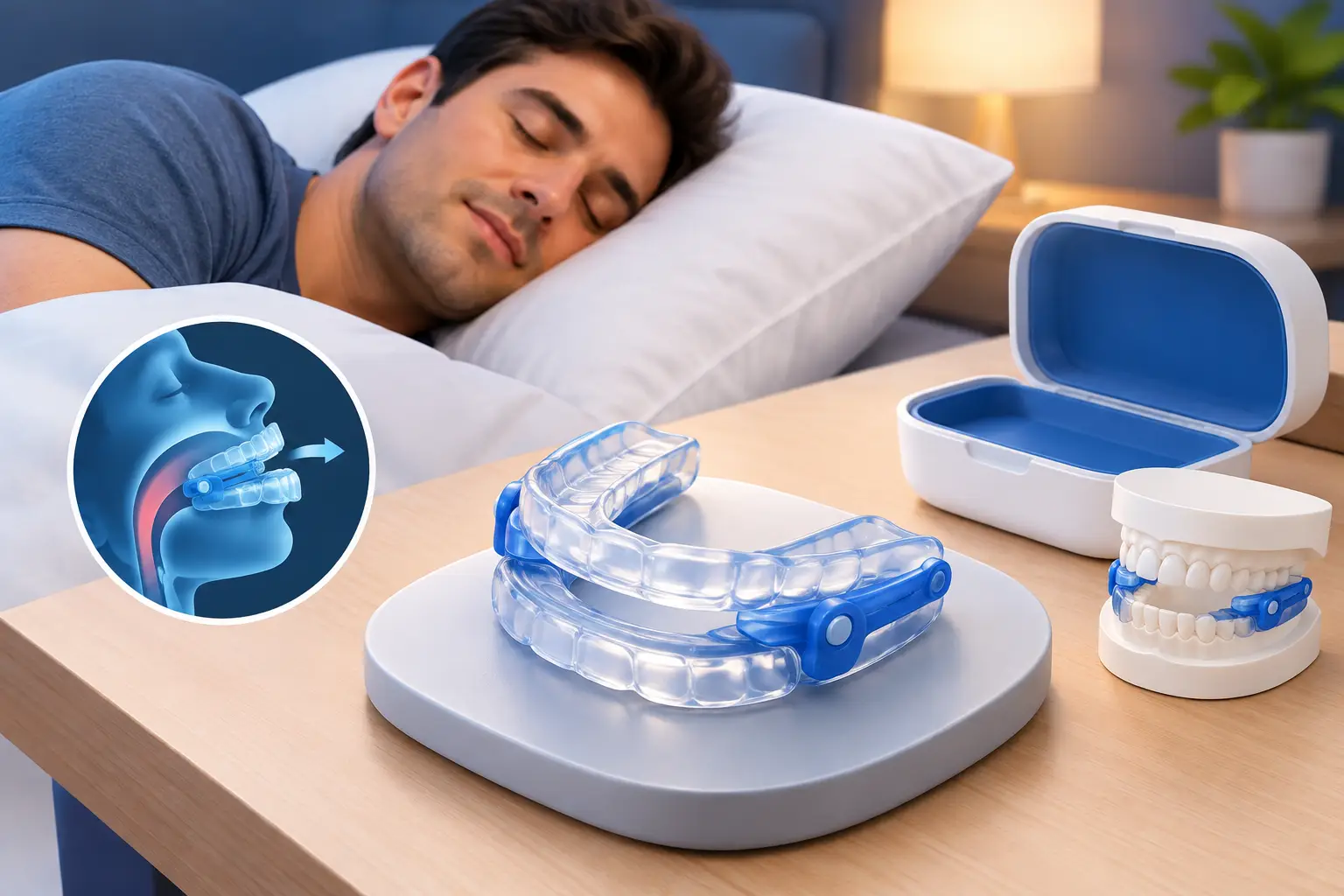
The first morning with a sleep apnea mouthpiece can feel unfamiliar in several ways: your teeth may feel pressure, your jaw may be aware of its new position, and your bite may take a few minutes to settle after you remove it. If you are asking, “how long does it take to adjust to an oral appliance?” the reassuring answer is that most people improve steadily over the first several days to a few weeks. Discomfort should not become something you simply endure, though. A well-fitted appliance and timely follow-up make a meaningful difference.
How long does it take to adjust to an oral appliance?
Many new wearers get through the most noticeable adjustment period in about one to two weeks. Some feel comfortable after only a few nights. Others need three to six weeks, especially if they have a sensitive jaw joint, a history of clenching or grinding, nasal congestion, or a more advanced appliance setting.
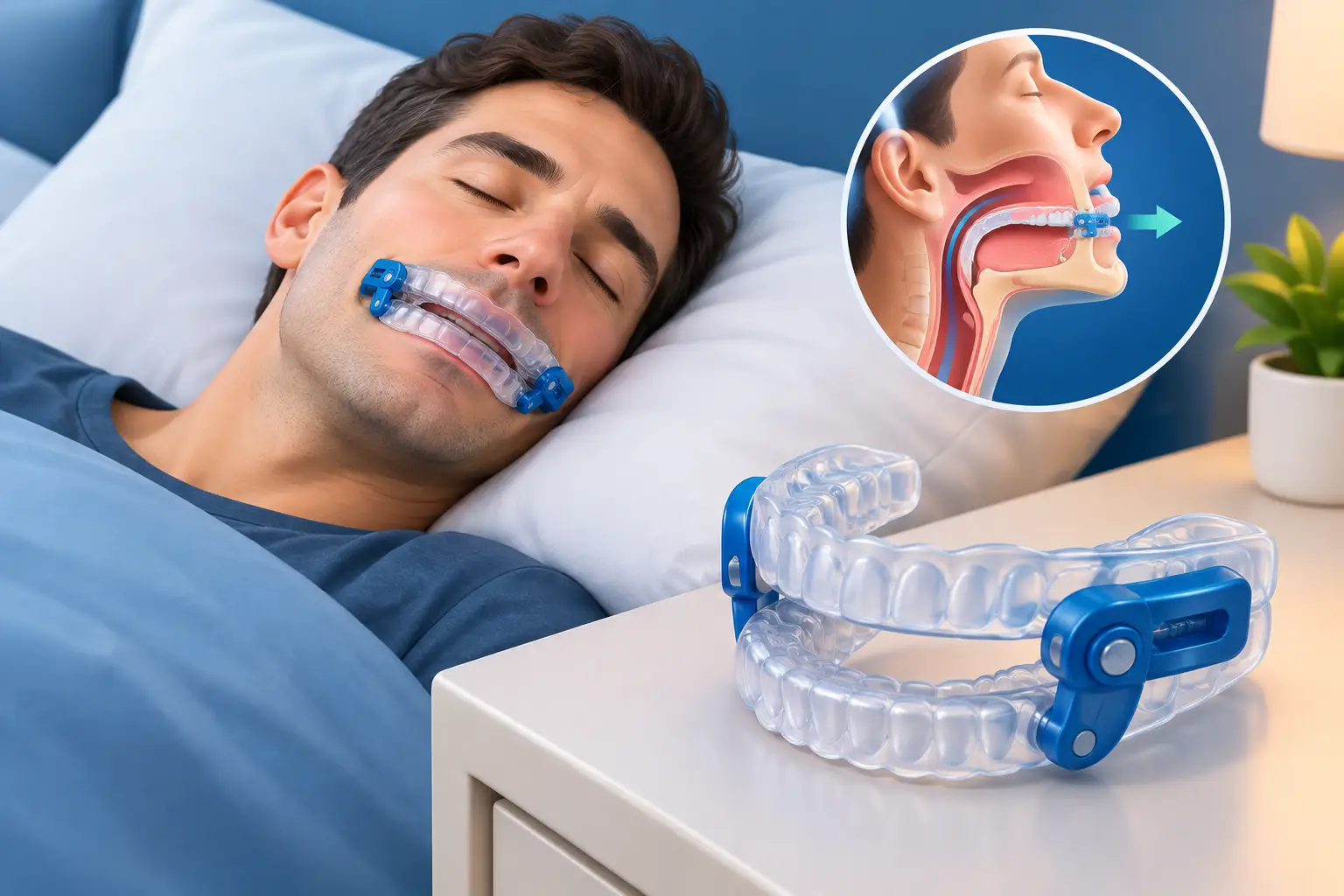
Oral appliance therapy works by gently holding the lower jaw forward during sleep. This helps keep the airway from collapsing in people with obstructive sleep apnea or snoring. Because the appliance changes your jaw position overnight, it is normal to notice mild tooth pressure, temporary jaw stiffness, extra saliva, or a changed bite first thing in the morning.
The goal is not to force yourself through significant pain. Gentle pressure that improves after removing the appliance is one thing. Persistent pain, a bite that does not return to normal, or a device that feels loose or sharp deserves a call to your dental sleep provider.
The oral appliance first week: what is normal?
During the first few nights, the appliance may feel bulky simply because it is new. Your cheeks, tongue, and lips are learning where it sits. Some people produce more saliva; others notice mild dry mouth. Both reactions often improve as your body adapts.
Morning jaw tightness is also common. Your provider may give you a morning repositioning guide, sometimes called a morning aligner, to help guide your jaw and bite back into their usual position after removing the appliance. Use it exactly as instructed. It is a small but important part of protecting comfortable jaw function over time.
A typical first week may include brief tooth tenderness when inserting the appliance, mild muscle fatigue near the cheeks or temples, and a bite that feels “off” for a short time after waking. These sensations should be mild and trend better, not worse, as the days go on.
Sleep can feel different, too. You may wake up more aware of the appliance at first. That does not mean treatment is failing. Give yourself a consistent bedtime routine and wear the appliance every night unless your provider tells you otherwise. Consistency helps your mouth adapt and gives your care team a clearer picture of whether the therapy is improving your sleep.
Getting used to a sleep apnea mouthpiece without making it harder
The easiest adjustment plan is usually the simplest: follow the instructions for your specific device, keep it clean, and attend recommended adjustment visits. Do not make your own major changes to the appliance setting. Moving the jaw too quickly can increase soreness and may not improve airway results.
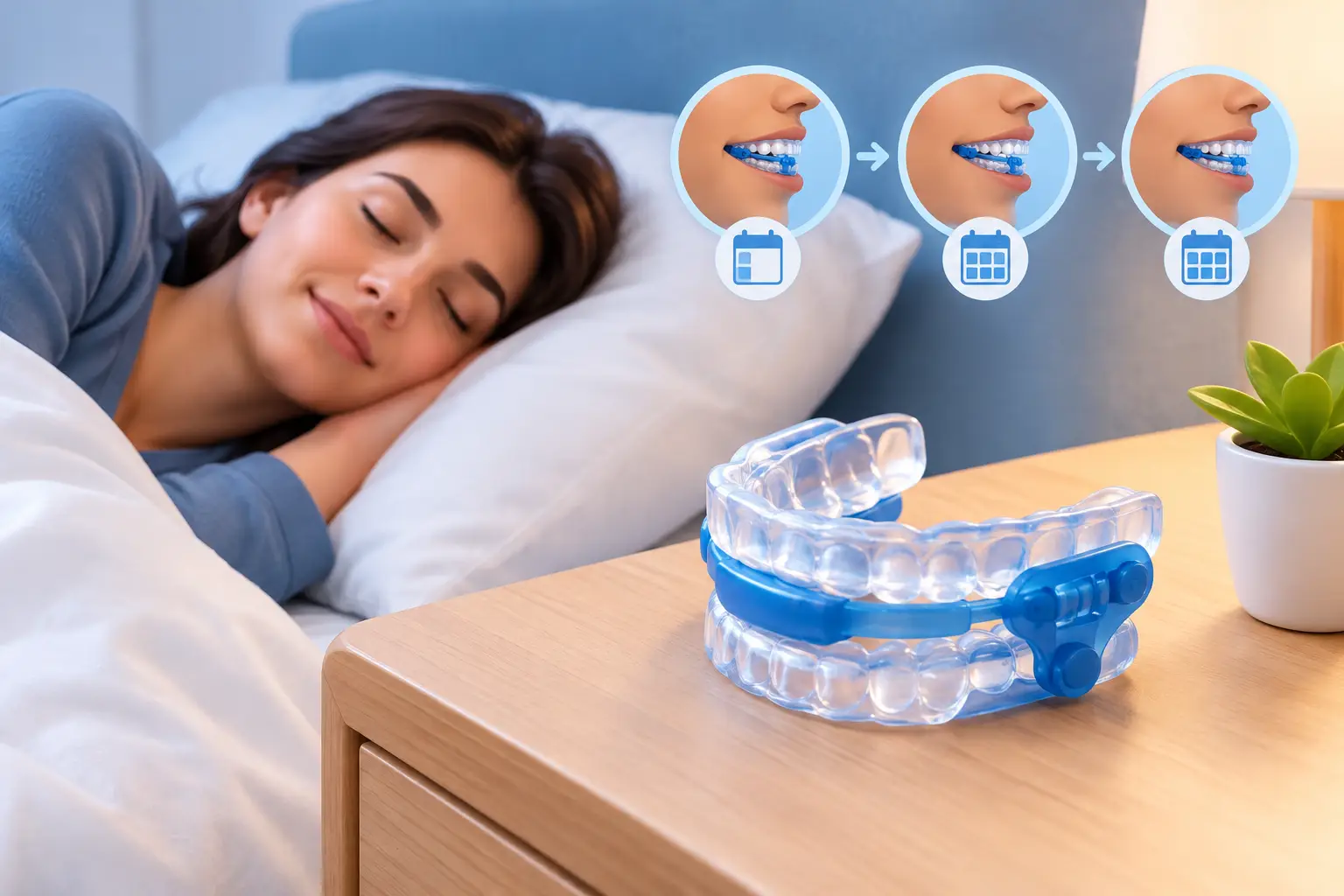
If your provider has advised gradual advancement, follow that schedule rather than rushing ahead. More forward movement is not automatically better. The right setting balances airway support, comfort, jaw health, and sleep quality.
A few habits can make the transition more comfortable:
- Put the appliance in only after brushing and flossing, so food debris does not sit against your teeth overnight.
- Clean it each morning with the method your provider recommends, then let it dry properly in its case.
- Use your morning repositioning guide as directed, particularly if your bite feels uneven after waking.
- Address nasal stuffiness with your physician or sleep provider. Breathing comfortably through your nose can make appliance therapy easier.
Avoid trying to “break in” the appliance by wearing it for long periods during the day unless your provider specifically recommends that approach. The appliance is designed for sleep, and daytime wear may create unnecessary jaw fatigue.
Will the discomfort pass, or is something wrong?
A new wearer wondering if the discomfort will pass is asking the right question. Mild discomfort that fades each morning or lessens from night to night often reflects normal adaptation. Pain that persists, escalates, or interferes with eating is not something to ignore.
Call your dentist or dental sleep provider if you have jaw pain that lasts well into the day, tooth pain focused on one tooth, gum sores, broken components, headaches that are becoming more frequent, or a bite change that does not improve after using your morning guide. Contact the office promptly if the appliance feels too tight, falls out during sleep, or causes clicking or locking in the jaw.
These concerns do not necessarily mean oral appliance therapy is not right for you. Often, the answer is a careful fit adjustment, a change in advancement, smoothing a rough spot, or a conversation about clenching and jaw-joint symptoms. Oral appliances are not one-size-fits-all devices. They need to be monitored as part of ongoing sleep apnea care.
Why follow-up visits matter
A comfortable appliance is only part of successful treatment. It also needs to help manage your obstructive sleep apnea. Your dental sleep provider will assess your symptoms, fit, jaw comfort, tooth movement risk, and appliance setting over time. Your sleep physician may recommend follow-up sleep testing to confirm that the appliance is adequately controlling breathing events.
This is especially important if you still wake unrefreshed, snore loudly, have witnessed pauses in breathing, experience morning headaches, or feel sleepy while driving. Improvements in snoring can be encouraging, but snoring alone does not confirm that sleep apnea is controlled.
Long-term monitoring also protects your teeth and jaw. Small bite changes can occur with oral appliance therapy, particularly over years of use. Regular dental exams and sleep-appliance follow-up allow changes to be noticed early, when they are often easier to manage.
A realistic timeline for feeling at home with your appliance
By the end of the first week, many people are no longer focused on the appliance every time they wake up. By weeks two through four, insertion, removal, and morning jaw exercises often become routine. If your appliance is being advanced gradually, each adjustment may bring a short period of renewed awareness or mild tightness.
Your experience may take longer if you already have temporomandibular joint symptoms, limited jaw opening, missing teeth, extensive restorative work, or nighttime clenching. These factors do not automatically rule out treatment. They simply make personalized planning and follow-up more important.
At Seattle Oral Care, oral appliance therapy is overseen with attention to both sleep health and the teeth and jaw that support the device. An AADSM-certified prosthodontist can help determine whether a fit or setting adjustment is needed, so you are not left guessing whether discomfort is normal.
A sleep apnea mouthpiece should become a manageable part of your night, not a source of ongoing pain. Give your mouth time to adapt, use the tools and schedule provided by your care team, and speak up early if something does not feel right. Comfort and effective treatment are both worth pursuing.