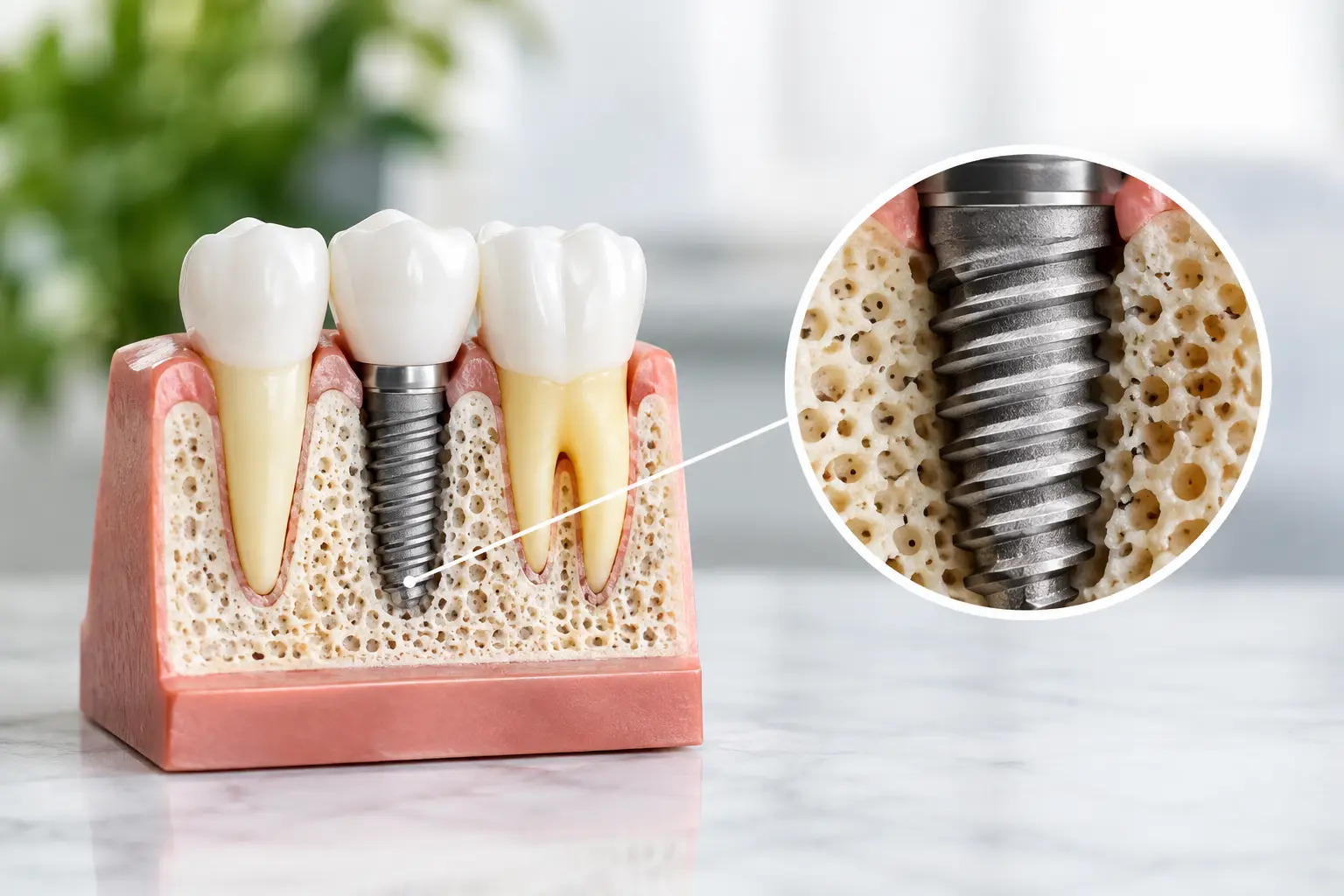

A dental implant is not one single material or one-size-fits-all product. Implant materials work together beneath and above the gumline to replace a missing tooth in a way that feels comfortable, looks natural, and stands up to everyday life. The right choice depends on your oral health, the location of the tooth, your bite, cosmetic goals, and the quality of the bone supporting the implant.
For someone considering an implant, material choices can sound technical and intimidating. They do not have to be. A thoughtful implant plan explains what is being placed, why it is recommended for you, and how each part supports a lasting result.
Implant Materials: What Makes Up a Dental Implant?
When people say “dental implant,” they often mean the entire replacement tooth. Clinically, it is a system with several parts. The implant post is placed in the jawbone and acts like a tooth root. An abutment connects that post to the visible restoration. The final restoration may be a crown, bridge, or denture.
Each component can be made from different materials. Your dentist and specialists consider the full system rather than choosing a material in isolation. A strong implant post is only part of the equation. The final tooth also needs to fit your bite, support healthy gums, and blend with neighboring teeth.
Titanium implant posts
Titanium is the most widely used material for dental implant posts, and it has a long clinical history. It is strong, lightweight, and compatible with the body. Over time, bone can grow closely around the implant surface in a process called osseointegration. This stable connection is what allows an implant to support a crown, bridge, or denture.
Titanium implants are typically made from commercially pure titanium or a titanium alloy. Both are designed to tolerate chewing forces while remaining biocompatible. Many systems also have carefully engineered surface textures or treatments that encourage bone attachment.
For most patients, titanium is an excellent and predictable option. It is especially well suited for cases where strength, surgical flexibility, and long-term evidence are priorities. Titanium can also be used in a wide variety of implant sizes and treatment situations, from replacing a single tooth to stabilizing a full arch of teeth.
Zirconia implant posts
Zirconia is a ceramic material that is white rather than metallic. It may be considered for patients who prefer a metal-free implant option or who have particular aesthetic concerns, especially in the front of the mouth where gum tissue is thin.
Zirconia implants can be a good choice in carefully selected cases, but they are not automatically better simply because they are metal-free. They have a different design history, available component options, and clinical evidence base than titanium. Some zirconia implant systems are made as one piece, which can limit certain adjustments after placement. Other systems offer two-piece designs that provide more restorative flexibility.
The best option depends on the details of your case. Bone volume, gum thickness, bite forces, the position of the tooth, and the type of final restoration all matter. Your treatment team should discuss whether zirconia offers a meaningful advantage for your goals or whether titanium provides the most reliable path forward.
The Visible Tooth Material Matters, Too
The crown or bridge attached to an implant is the part you see when you smile and use when you chew. Its material affects appearance, strength, wear, and how it meets the opposing teeth.
All-ceramic and zirconia crowns
Modern ceramic crowns can closely match the color, translucency, and shape of natural teeth. They are often an appealing choice for front teeth, where a lifelike appearance is particularly important. Different ceramic formulations offer different balances of beauty and durability.
Zirconia crowns are especially strong and can work well in areas that absorb heavier biting forces, such as molars. Newer multilayer zirconia materials can also provide a more natural color gradient than earlier versions. Depending on the case, a dentist may recommend a highly esthetic ceramic for a front tooth or a stronger zirconia-based crown for a back tooth.
Porcelain fused to metal crowns
Porcelain fused to metal crowns combine a metal substructure with a porcelain outer layer. They have been used successfully for many years and can be durable, particularly in bridges. However, a dark edge can occasionally become visible near the gumline over time, especially if gums recede. They may also be less translucent than an all-ceramic restoration.
That does not make them the wrong choice. In some restorative situations, their strength and design characteristics remain useful. The most appropriate material is the one that suits the restoration design, your bite, and the appearance you want.
Acrylic teeth for implant-supported dentures
For implant-supported dentures and full-mouth restorations, acrylic teeth may be used as part of a denture framework or provisional restoration. Acrylic can be easier to adjust and repair, which can be valuable while a patient adapts to a new bite or completes a staged treatment plan.
In other cases, a final full-arch bridge may use zirconia or another high-strength ceramic. These materials can offer excellent longevity and appearance, but they require careful planning. A very hard material still needs the right bite design and a healthy foundation to perform well.
How Dentists Choose the Right Materials
Choosing implant materials is not a matter of picking the most expensive option or the newest-sounding one. It is a clinical decision built around your individual needs. A careful consultation includes digital imaging, an evaluation of your gums and bone, an analysis of your bite, and a conversation about what you want from treatment.
If you grind or clench your teeth, the restoration must be designed to manage greater force. If you are replacing a front tooth, the way light reflects from the crown and the thickness of your gum tissue may deserve extra attention. If bone loss has occurred after a tooth has been missing for some time, bone grafting or a different implant approach may be part of building a stable foundation.
Your health history also matters. Conditions that affect healing, tobacco use, and gum disease should be addressed openly. None of these automatically rule out implants, but they can affect timing, treatment planning, and the steps needed to protect your investment.
At Seattle Oral Care, complex cases can be planned with coordinated input from a prosthodontist, oral surgeon, periodontist, and general dentist. That collaboration helps ensure that the surgical plan and final restoration are working toward the same goal: a comfortable, functional result that is designed to last.
A Good Material Still Needs Good Maintenance
Even the highest-quality implant materials need consistent care. Implants cannot get cavities, but the gum tissue and bone around them can develop inflammation or infection. This is why professional maintenance visits and daily home care remain essential.
Brush thoroughly around the implant restoration, clean between teeth as instructed, and keep regular hygiene appointments. Your care team may recommend floss, an interdental brush, a water flosser, or another tool based on the design of your crown, bridge, or denture. If you clench or grind, a nightguard may help protect both your implant restoration and natural teeth.
Call your dentist if you notice bleeding, swelling, a change in how your bite feels, looseness, or persistent discomfort. Early attention can often prevent a small concern from becoming a larger repair.
A dental implant should feel like a well-considered part of your smile, not a source of ongoing uncertainty. With the right materials, careful planning, and regular care, your replacement tooth can support the simple daily moments that matter most: eating comfortably, speaking confidently, and smiling without holding back.