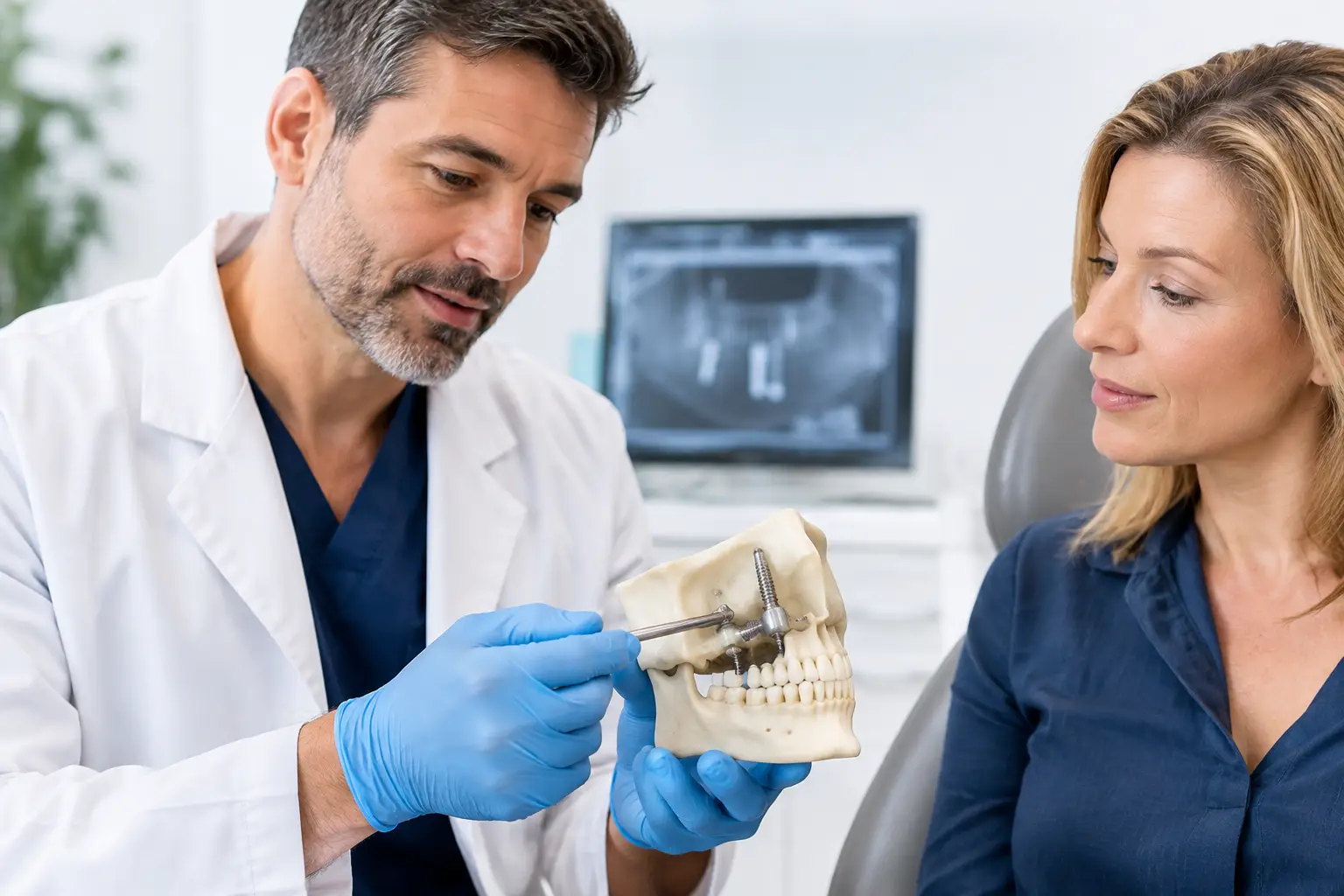
At an implant consultation, you may hear the word osseointegration and wonder whether it simply means the implant is healing. It is more specific than that. For a curious patient who heard the term at a consultation and wants a plain explanation of what is osseointegration, how dental implants fuse to bone, and implant healing phases, this is the key idea: the bone around an implant gradually grows into close, stable contact with its surface. That connection is what allows an implant to support a crown, bridge, or denture much like a natural tooth root supports a tooth.
What Is Osseointegration?
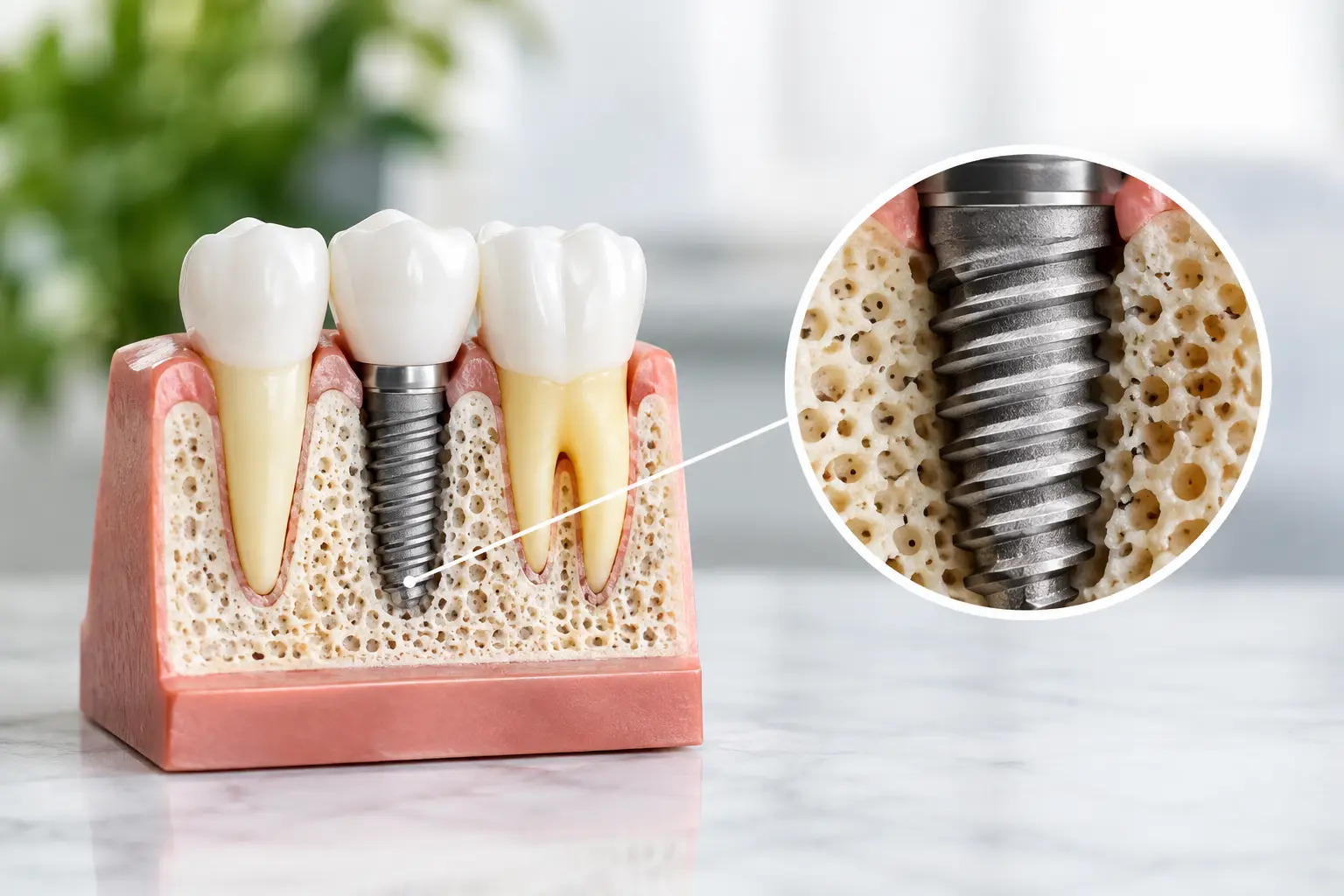
Osseointegration means “bone integration.” A dental implant is a small, precisely placed post, usually made from titanium or a titanium alloy, that replaces a missing tooth root. After it is placed in the jawbone, your body begins a normal healing response around it.
Unlike a screw that is simply held in place by threads, a successful implant becomes biologically anchored by living bone. Bone cells attach and remodel around the implant's textured surface. Over time, this creates the stable foundation needed for your final restoration.
An implant does not literally fuse to bone in the way two pieces of metal might be welded together. Instead, bone grows closely against the implant at a microscopic level. That distinction may sound technical, but it explains why healing time matters. The body needs time to create a strong, dependable connection before the implant is asked to handle regular biting forces.
How Dental Implants Fuse to Bone
The process begins with careful planning, not the surgery alone. Your dentist and specialists evaluate the quantity and quality of jawbone, the health of your gums, your bite, and the position of nearby teeth and anatomical structures. Advanced imaging helps determine where an implant can be placed safely and predictably.
During placement, the implant is positioned in the jawbone with controlled precision. In the first days after surgery, a blood clot and early healing tissue form around the implant. This is a normal part of the body's repair process.
Next, new bone begins to form and replace early healing tissue. The jawbone is always living tissue, constantly renewing itself. Around an implant, this remodeling process allows bone to adapt to the implant surface and the forces it will eventually receive during chewing.
Once integration is well established, your care team can place or finalize the visible replacement tooth. Depending on your situation, that may be a single crown, an implant bridge, or a denture secured by several implants.
The goal is not just for the implant to stay in place. It is for the final result to feel comfortable, function reliably, look natural, and be maintainable for years to come.
The Implant Healing Phases, in Plain Language
Healing is not identical for every person, but these phases give you a practical picture of what is happening.
1. Early healing: the first few days
Immediately after implant placement, your body starts repairing the surgical area. Mild tenderness, swelling, and minor bruising can occur, particularly if you also had a tooth extraction or bone graft. Your dentist will provide instructions for pain control, oral hygiene, food choices, and activity.
This is the time to protect the site. Avoid disturbing the area, follow dietary guidance, and take prescribed medications exactly as directed. If you smoke or use nicotine products, stopping is especially valuable because nicotine can interfere with blood flow and healing.
2. New bone formation: the first several weeks
As the gum tissue closes and becomes more comfortable, the deeper healing work continues. New bone develops around the implant. You may feel mostly back to normal, but that does not mean the implant has completed osseointegration.
Some implants can receive a temporary tooth early in treatment. This is often possible for visible front teeth or carefully selected cases, but it depends on the implant's initial stability, your bite, bone conditions, and whether the temporary restoration can be kept out of heavy function. A temporary tooth is not always a sign that healing is finished.
3. Bone remodeling and maturation: roughly two to six months
The body continues strengthening and reorganizing bone around the implant. For many patients, this is the main osseointegration period. The timing varies based on implant location, bone density, whether grafting was needed, general health, and the complexity of the restoration.
The lower jaw often has denser bone than the upper jaw, although every mouth is different. An implant placed after a straightforward extraction may follow a different timeline than an implant placed in an area that first needed bone grafting. Waiting longer is not a setback when it protects the long-term outcome.
4. Restoration and ongoing adaptation
After your dentist confirms that the implant is stable and ready, the final crown, bridge, or denture is designed to fit your smile and bite. The new tooth should not feel loose. While an implant does not have the same ligament and nerve feedback as a natural tooth, a well-designed restoration can feel secure and natural during daily life.
Even after the final tooth is placed, the surrounding bone and gum tissues need ongoing care. Regular professional cleanings and home hygiene help protect the implant from inflammation and bone loss over time.
What Can Affect Osseointegration?
Dental implants have a strong long-term success record, but no medical treatment is guaranteed. A thoughtful treatment plan identifies factors that can affect healing before treatment begins.
Gum disease, active infection, untreated grinding or clenching, poorly controlled diabetes, smoking or vaping nicotine, and limited bone volume can increase risk. Certain medications and medical conditions may also affect healing. This does not automatically mean implants are off the table. It means your dental team may recommend additional treatment, a modified timeline, or closer monitoring.
Bone grafting is one example. If a tooth has been missing for a long time, the jawbone may have lost volume. A graft can rebuild or preserve bone so an implant has better support. It adds time to treatment in some cases, but it can make a durable result more achievable.
Your bite matters, too. Implants are strong, but they do not move in the jaw like natural teeth. If an implant crown receives excessive force from grinding or an uneven bite, it can place stress on the restoration and surrounding bone. A nightguard or bite adjustment may be part of protecting your investment.
How Do Dentists Check Whether an Implant Has Healed?
Your care team does not rely only on how the implant feels. Follow-up visits may include an examination of the gums, X-rays to evaluate the bone level, and tests of implant stability. The implant should be comfortable, stable, and free from signs of infection before it is loaded with its final restoration.
Call your dental office if you notice persistent or worsening pain, swelling, pus, a loose implant or restoration, fever, or a change in how your bite comes together. Early attention can make a meaningful difference.
At Seattle Oral Care, implant treatment is planned with the coordinated perspective of restorative and surgical care. That means the final tooth is considered from the start, along with the health of the gums, bone, and bite that support it.
Caring for an Implant While It Heals
Your post-operative instructions should always take priority, since they are tailored to your procedure. In general, gentle brushing, careful cleaning as directed, soft foods during the initial period, and keeping follow-up appointments all support healing. Do not test the implant by pushing on it or chewing hard foods on the area before your dentist says it is ready.
Once your final restoration is in place, treat it like a natural tooth: brush thoroughly, clean between teeth and around the implant, and maintain regular professional visits. Implants cannot get cavities, but the gum and bone around them can still develop inflammation. Consistent maintenance is part of keeping osseointegration healthy for the long term.
Hearing that an implant needs months to heal can feel like a long wait when you want your smile back. But that quiet healing period is where the foundation is built. Asking how your bone, gums, bite, and overall health shape your personal timeline can help you move forward with clarity and confidence.