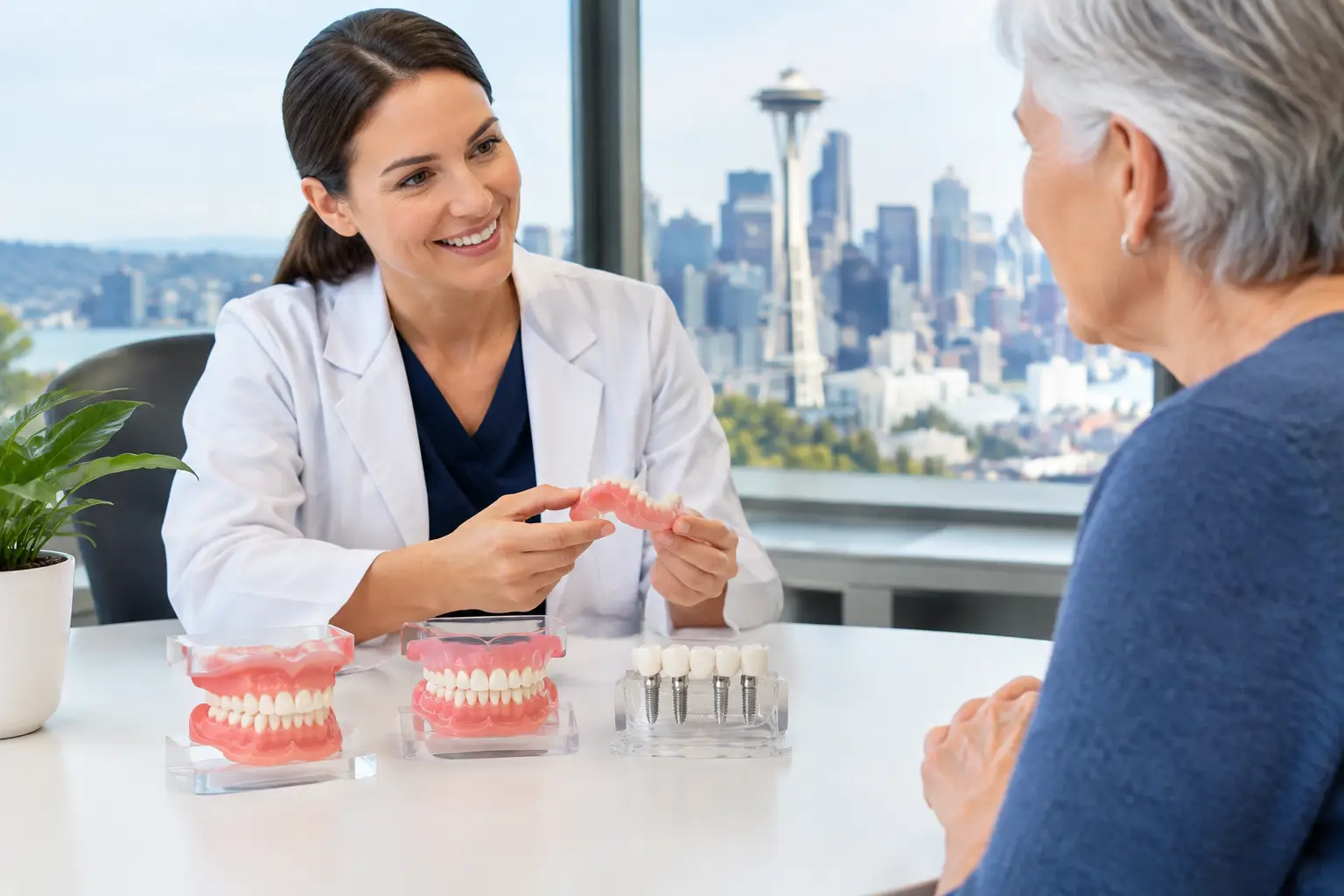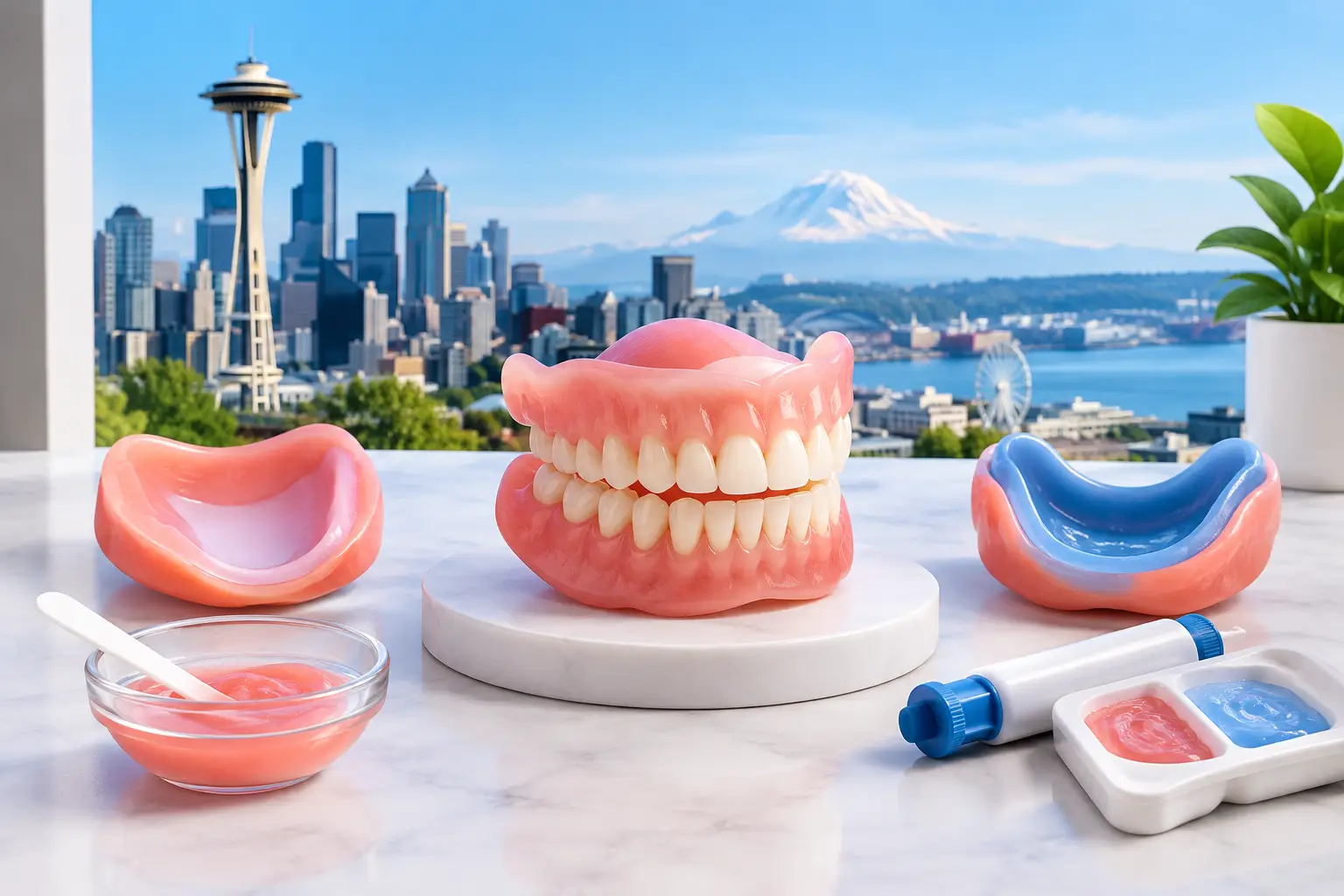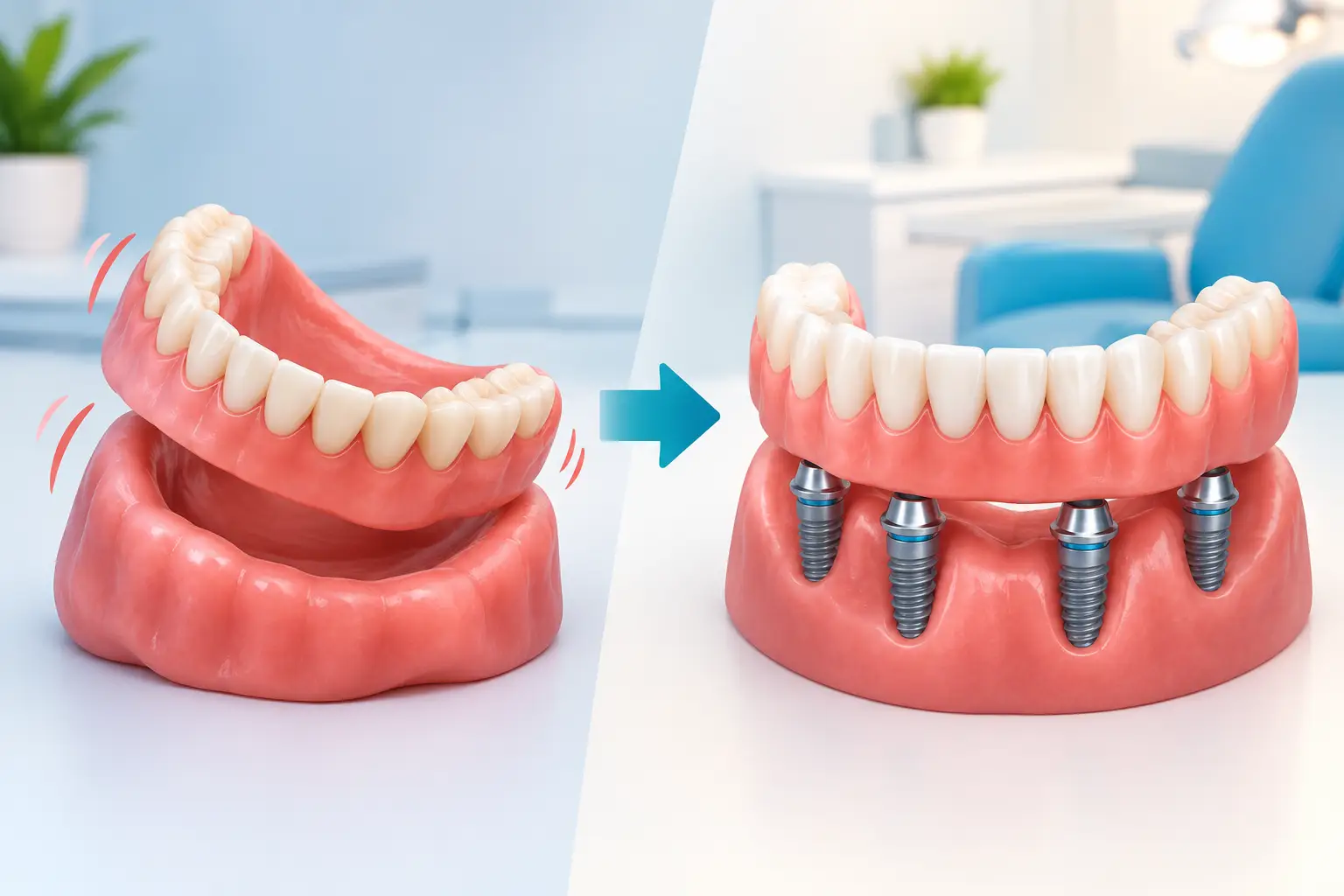
A full-arch implant decision is not only about replacing missing teeth. Many patients are quietly asking, “Will I still look like myself when I smile? Will people hear a difference when I speak?” Questions about whether full arch implants look natural, full mouth implants and speech, All-on-4 appearance, and adjusting to new implant teeth are completely reasonable. The good news is that a carefully planned restoration can look highly natural and allow clear, comfortable speech. It also takes thoughtful design, time, and a clinical team that listens closely to what matters to you.
Do Full Arch Implants Look Natural?
They can. A natural-looking full-arch restoration is not simply a row of very white, perfectly identical teeth. It is designed around your face, lips, smile line, bite, and the way you naturally show teeth when you talk and laugh.
Your final implant teeth can be customized for shape, shade, size, and proportions. Some patients want a brighter, more youthful smile. Others prefer a softer shade, slight variations in tooth shape, or a look that closely reflects their original teeth. Neither choice is wrong. The goal is to create a smile that feels appropriate for you, not a one-size-fits-all version of “perfect.”
Full-arch restorations may include both tooth-colored material and a small amount of gum-colored material, particularly when bone and gum tissue have receded after years of tooth loss. This is not automatically a sign that teeth will look fake. When it is designed well, it supports the lips and creates proportions that look balanced from normal conversational distance.
Why planning makes such a visible difference
The same implant procedure can produce very different cosmetic results depending on the planning behind it. Before final teeth are made, the dental team evaluates facial proportions, the position of the lips, the amount of tooth display, bite relationship, and available bone. Digital imaging, records, and a trial smile can help guide decisions before the final restoration is completed.
This planning is especially valuable for patients who have worn dentures, have had failing teeth for years, or have become used to hiding their smile. In these situations, restoring proper support can make the face look healthier and more relaxed. Still, the transition can feel emotionally significant. Even a beautiful result may look “different” at first because you have spent a long time seeing a different smile in the mirror.
All-on-4 Appearance: What Affects the Final Look?
All-on-4 treatment uses a full set of implant-supported teeth anchored by four strategically placed implants in an arch. It can be an excellent option for many people with extensive tooth loss, but the appearance depends on more than the number of implants used.
A temporary set of teeth is often placed during the healing phase. These teeth are intended to restore your smile and function while your implants integrate with the bone. They are important, but they may not have every refinement of the final restoration. The temporary may be adjusted for comfort, bite, and speech as healing progresses.
The final teeth are typically designed after healing and after the care team has had an opportunity to evaluate your bite, gum contours, facial support, and how you function day to day. This is when subtle details matter most: the edge of each tooth, the space between teeth, how much texture is visible, and whether the color complements your skin tone and natural features.
It is reasonable to tell your dentist what you do not want. If you are worried about teeth that appear too large, too white, too uniform, or too prominent, say so early. Photos of your younger smile, a favorite past photo, or examples of smiles you like can all be useful conversation starters.
Will Full Mouth Implants Change How You Talk?
Most patients can speak clearly with full mouth implants, but there is an adjustment period. Your tongue has learned to work around the contours of your natural teeth, missing teeth, dentures, or existing restorations. New implant teeth change those contours, and your brain needs time to recalibrate.
Certain sounds are more likely to feel different at first. “S,” “F,” “V,” “T,” “D,” “N,” and “TH” sounds depend on precise contact between the tongue, teeth, and lips. A temporary full-arch bridge may initially feel slightly bulky to the tongue, and mild swelling after surgery can also affect speech in the early days.
For many people, the change is temporary and improves as they talk, read, and eat. Reading aloud for a few minutes each day can help. So can slowing down briefly rather than trying to force words through an unfamiliar sensation. If a lisp, whistle, clicking sound, or difficulty making certain sounds continues, it should be assessed. A small adjustment to the restoration may make a meaningful difference.
Speech is one reason ongoing communication matters. You should never feel that you need to simply tolerate a restoration that feels wrong. The dentist can check the bite, tooth position, thickness of the bridge, and the space available for your tongue.
Adjusting to New Implant Teeth Takes Patience
Full-mouth implant treatment is a major change, even when the result is positive. Your mouth, facial muscles, tongue, and chewing pattern all need time to adapt. Patients often notice that the new teeth feel larger or more present initially. That sensation usually becomes less noticeable as the brain accepts the restoration as part of the mouth.
Eating also progresses in stages. During the healing period, your clinical team will provide specific dietary guidance to protect the implants. Once you are cleared to expand your diet, start with manageable foods and focus on even, controlled chewing. Implant teeth are stable, but they do not have the same sensation as natural teeth because implants do not have the periodontal ligament that surrounds a natural tooth root. You may need to pay more attention to pressure and food texture at first.
Cleaning is another new routine. A fixed full-arch bridge does not come out at home, but it still needs daily care beneath and around the restoration. Your team may recommend specialized brushes, flossing aids, or a water flosser. Consistent home care and professional maintenance help protect the implants and surrounding tissue for the long term.
What Should You Tell Your Dental Team?
The most helpful patients are not the ones who “just go with it.” They are the ones who share specific concerns. Tell your care team if you feel self-conscious when smiling, notice a speech change, have pressure in one area, avoid certain foods, or see a feature of the temporary smile that you would like changed in the final teeth.
It also helps to discuss your priorities before treatment begins. Some people care most about a natural smile in photographs. Others are focused on speaking confidently during work meetings, feeling comfortable on dates, or eating in public without worrying about loose dentures. Your treatment plan should reflect the life you are returning to.
At Seattle Oral Care, full-mouth rehabilitation is approached as a coordinated process, with prosthodontic, surgical, periodontal, and general dental expertise available in one practice. That collaboration is especially valuable when cosmetic goals, implant health, bite function, and speech all need to work together.
When an Adjustment Should Not Wait
Some adaptation is expected, but ongoing pain or functional problems deserve attention. Contact your dental team if you have persistent sore spots, a bite that feels uneven, difficulty closing comfortably, continued speech concerns, a loose-feeling restoration, or swelling that does not improve as expected. Prompt evaluation can prevent a small issue from becoming more frustrating.
Feeling nervous before full-arch implant treatment does not mean you are a poor candidate. It means you understand that your smile and voice are personal. A thorough consultation gives you room to ask direct questions, see what is possible, and make decisions at a pace that feels informed. The right implant teeth should not erase your individuality. They should help you smile, speak, and live with greater ease.