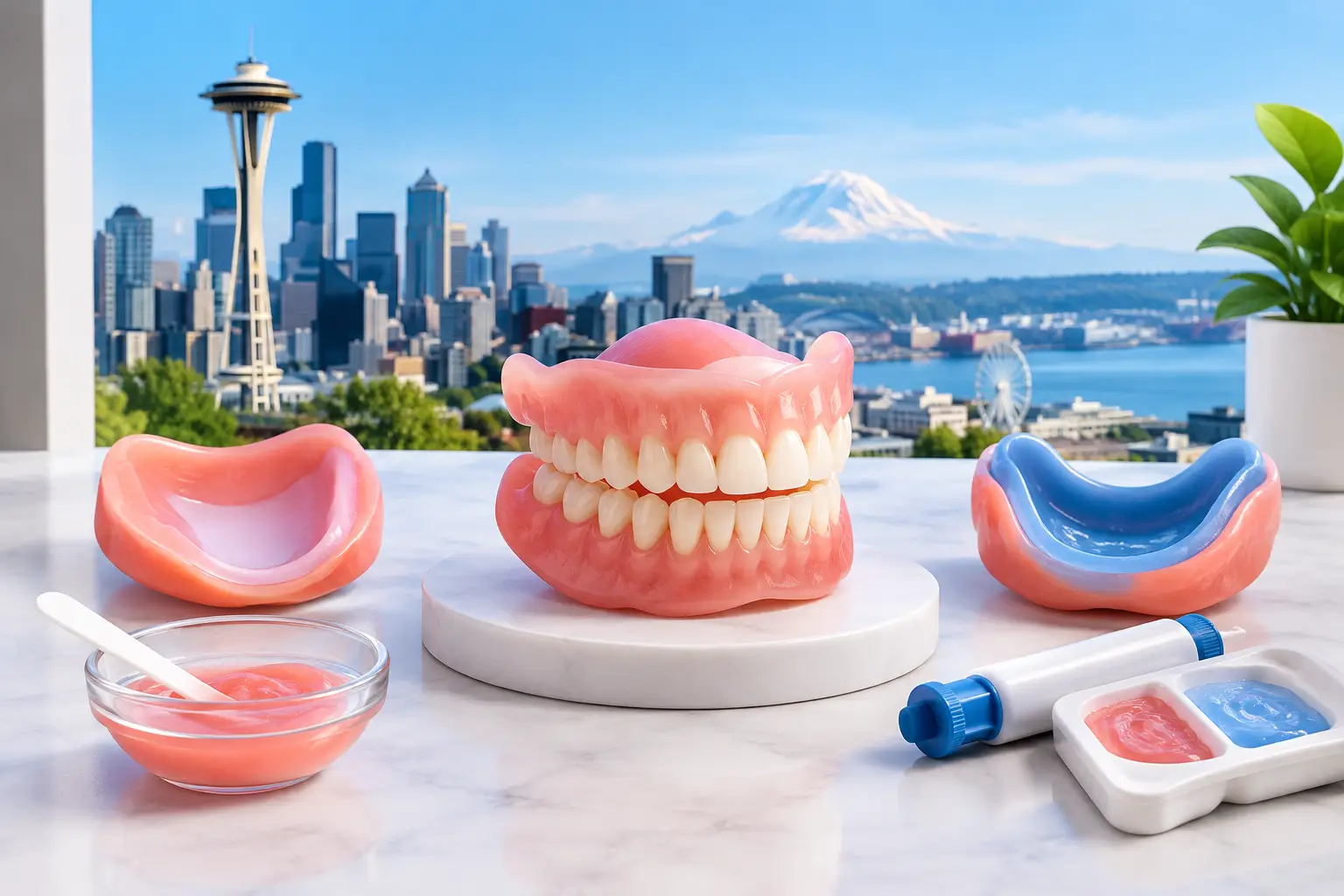
A missing tooth can change more than a smile. Meals may take more planning, conversations can feel less natural, and a denture that slips can make social situations stressful. This Seattle denture treatment comparison explains how conventional full dentures, partial dentures, and implant-supported options differ so you can ask informed questions and choose care that fits your health, goals, and daily life.
No one solution is right for every person. The best treatment depends on how many teeth are missing, the condition of your remaining teeth and jawbone, your medical history, your timeline, and what you want your teeth to feel like years from now.
Seattle Denture Treatment Comparison: The Main Options
Dentures are custom prosthetic teeth designed to restore appearance and function after tooth loss. Modern dentures can look remarkably natural, but the way they are supported makes a meaningful difference in comfort, stability, maintenance, and cost.
Conventional full dentures
A full denture replaces all teeth in an upper or lower arch. It rests directly on the gums and is shaped to match the contours of your mouth. Upper dentures usually gain added retention from the roof of the mouth. Lower dentures have less surface area to hold onto, so they can be more likely to shift during eating or speaking.
For many patients, conventional dentures are a practical starting point. They do not require surgery, are generally the most affordable full-arch replacement option, and can restore the appearance of a complete smile relatively quickly. They may also be appropriate when health conditions, bone availability, or personal preferences make implants less suitable.
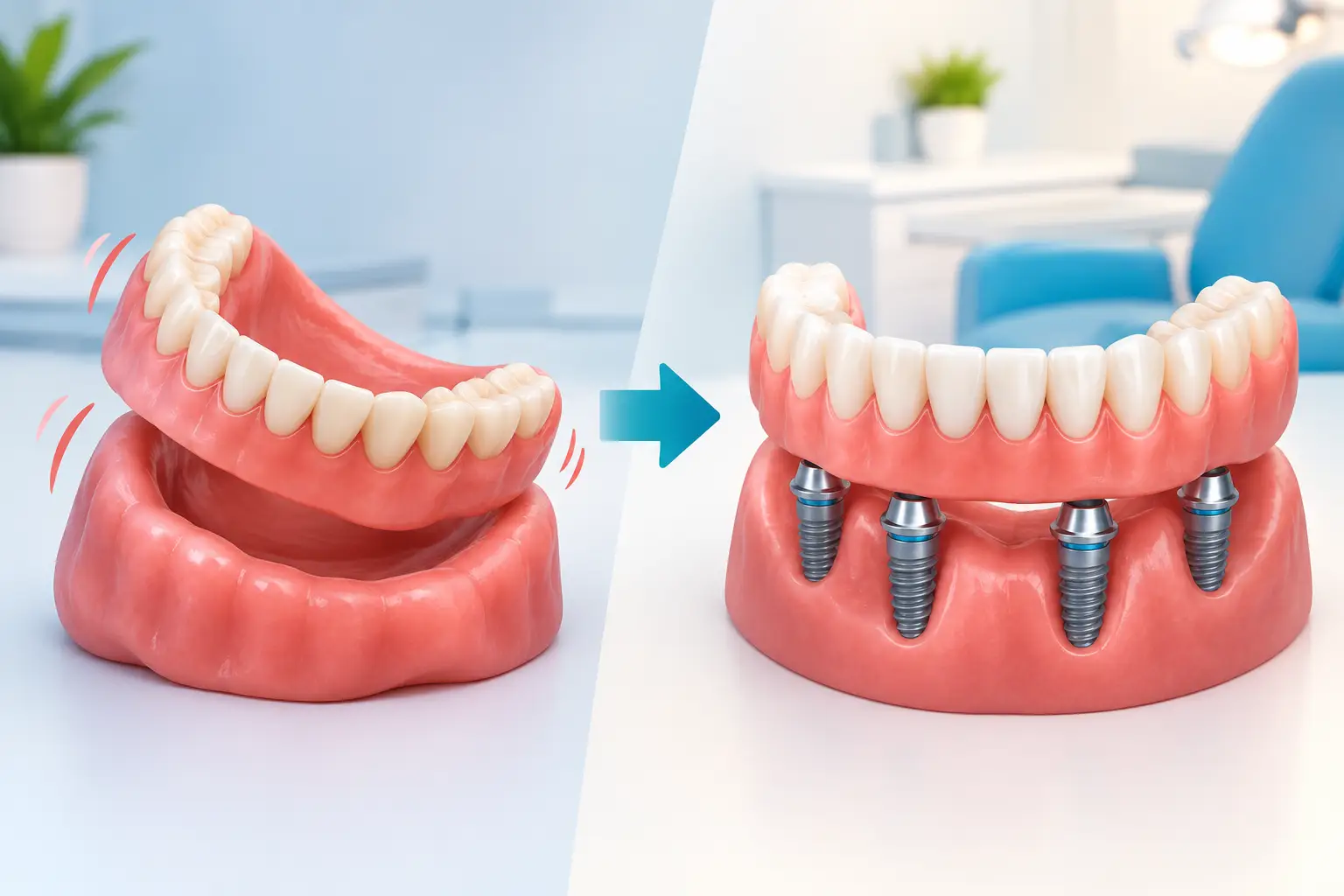
The trade-off is movement. Even a well-made denture can shift under pressure, especially on the lower jaw. Adhesives may help some people feel more secure, but they do not change the underlying support. Dentures also need periodic adjustments as the jawbone and gum tissue change over time.
Removable partial dentures
A partial denture replaces several missing teeth when healthy natural teeth remain. It may use a lightweight acrylic base, a metal framework, or flexible materials, with clasps or precision attachments that help secure it around existing teeth.
A partial can fill visible gaps, improve chewing, and help keep nearby teeth from drifting. It is removable for cleaning and can often be a less costly alternative to a fixed bridge or implant treatment. The design matters greatly: a carefully planned partial should distribute biting forces thoughtfully and protect the remaining teeth.
Still, a partial is not maintenance-free. Clasps, attachments, and the teeth supporting them need regular monitoring. Food can collect around the appliance, so daily cleaning and preventive visits are essential. If remaining teeth have significant decay, gum disease, or a poor long-term outlook, it may be wiser to address those concerns before relying on them for support.
Implant-supported overdentures
An implant-supported overdenture is still removable, but it attaches to dental implants placed in the jawbone. Depending on the treatment plan, two or more implants may support a lower overdenture, while an upper denture may require additional implants because of differences in bone and bite forces.
This option is often a major improvement for people frustrated by a loose lower denture. The implants help hold the denture in place, which can improve confidence while talking and make chewing easier. Because the denture is removable, it can be cleaned thoroughly at home.
Implant overdentures require surgery, healing time, and a higher initial investment than conventional dentures. They also need ongoing care. The attachments that connect the denture to the implants can wear and may need replacement periodically. For many patients, however, that maintenance is a worthwhile exchange for greater stability.
Fixed implant-supported teeth
Fixed full-arch implant restorations are attached to implants and can only be removed by a dental professional. They are designed to feel more like natural teeth than a removable appliance, with no need to take them out at night or use denture adhesive.
This treatment can offer strong stability, a natural-looking smile, and improved chewing function. It is often appealing to patients who want the closest experience to having teeth that stay in place. However, fixed treatment is not automatically the best choice simply because it is fixed. It requires sufficient bone or a plan to manage bone loss, precise planning, a commitment to excellent home care, and regular professional maintenance.
It is also typically the highest-cost denture replacement option. A clear treatment discussion should include the type and number of implants, whether extractions or bone grafting are needed, the materials used for the final teeth, and how future repairs will be handled.
Comparing Comfort, Function, and Daily Care
Comfort is personal, but support usually drives the difference. Conventional dentures rest on soft tissue, so they can move as the gums compress during chewing. Implant support transfers more of that force to the implants and jawbone, helping reduce movement.
Chewing ability often follows the same pattern. A conventional denture can allow a person to enjoy many foods, but hard, sticky, or chewy foods may still be challenging. Implant-supported options generally offer more control, though patients should still use good judgment with very hard foods. Fixed teeth may feel more natural in everyday use, while removable overdentures offer a balance of stability and simpler access for cleaning.
Daily care differs as well. Full and partial dentures should be removed and cleaned with products made for dental appliances, not abrasive toothpaste. They should also be kept safe from heat, which can warp the material. Implant-supported overdentures require cleaning of both the denture and the implant attachments. Fixed implant restorations require brushing, specialized flossing or cleaning tools, and professional visits to clean areas beneath the teeth that are difficult to reach at home.
How Bone Loss Affects the Decision
After a tooth is lost, the jawbone in that area gradually changes because it is no longer receiving normal chewing stimulation. Over time, this can affect facial support and make a conventional denture less stable. Relines are commonly needed to reshape the inner surface of a denture as the gums and bone change.
Dental implants can help preserve bone around the implant sites, but they are not a guarantee against every change in the mouth. The amount and quality of available bone must be evaluated through a comprehensive exam and imaging. Some patients need bone grafting or other preparatory care. Others may not be candidates for implants because of uncontrolled health conditions, tobacco use, untreated gum disease, or other individual factors.
A thoughtful plan looks beyond replacing missing teeth today. It considers how the restoration will function, how it can be maintained, and what it may require in five, 10, or 15 years.
Understanding Cost Without Guesswork
It is reasonable to compare costs, but the lowest initial fee does not always represent the lowest long-term expense. Conventional dentures may have a lower starting cost, yet they can need relines, repairs, or replacement as your mouth changes. Implant-supported treatment has a higher up-front investment, along with surgical and restorative components, but may offer greater stability and help reduce some denture-related frustrations.
Ask for a written treatment plan that explains what is included. Important details include extractions, temporary dentures, imaging, implant surgery, grafting if needed, final prosthetic teeth, follow-up visits, and expected maintenance. If you are comparing offices, make sure you are comparing similar materials, designs, and levels of care rather than a single broad price.
Insurance coverage varies widely. Some plans contribute toward dentures but not implants, while others provide limited coverage for certain parts of treatment. Your dental team can help you understand estimated benefits, but a clinical recommendation should be based first on what supports your oral health and quality of life.
Questions Worth Asking at Your Consultation
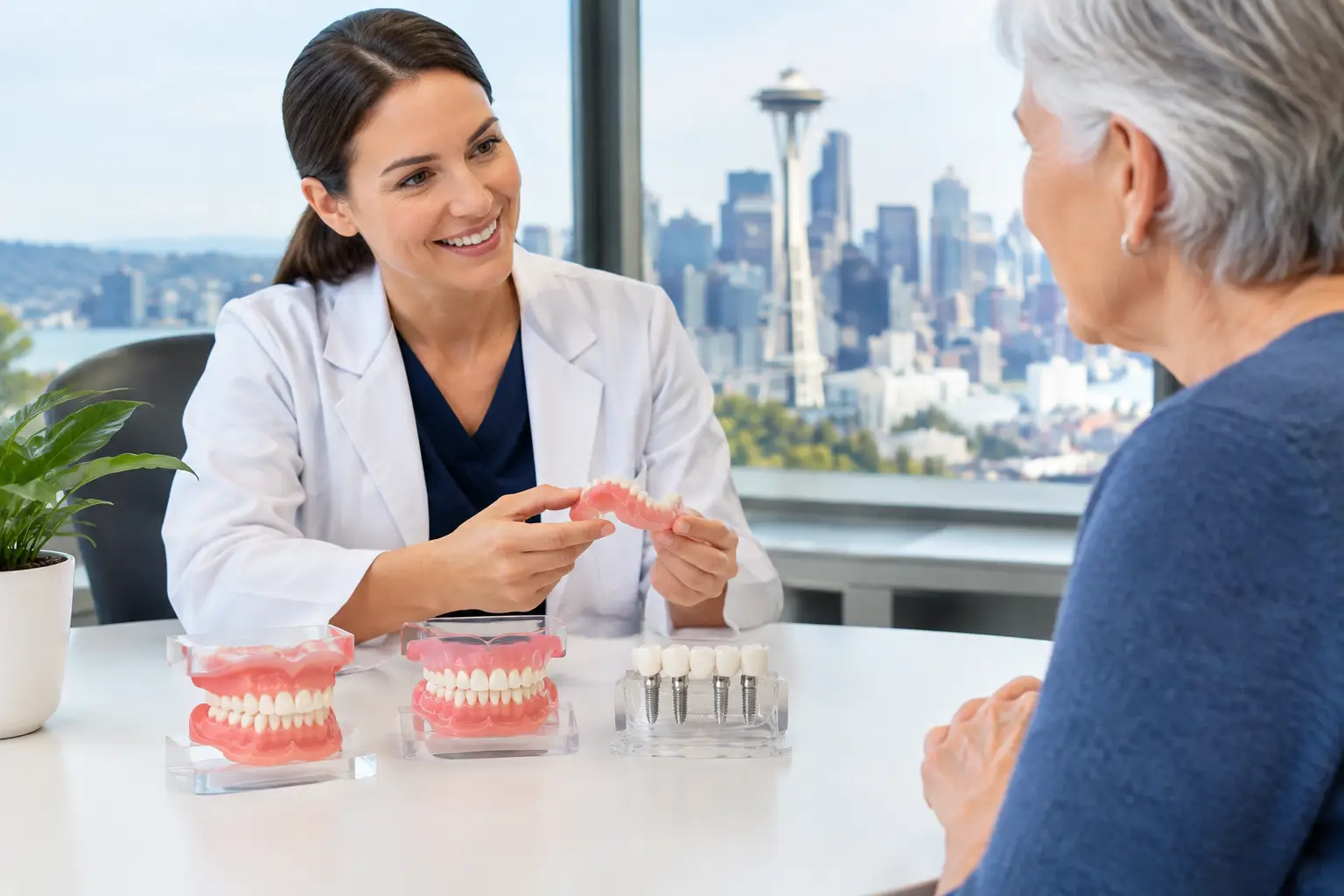
A denture consultation should feel like a conversation, not a sales pitch. Ask which teeth can be predictably saved, what support your restoration will have, and what daily care will be required. You may also want to ask how the denture will be adjusted if your fit changes, what happens if an implant or restoration needs repair, and whether all needed specialists can coordinate your care.
At Seattle Oral Care, complex cases can be planned with a prosthodontist, general dentist, oral surgeon, and periodontist working together. That coordinated approach can be particularly valuable when tooth removal, gum health, bone support, implants, and final restoration all need attention.
The right denture treatment should give you more than replacement teeth. It should give you a plan you understand, a level of function that fits your life, and a care team that listens closely before recommending the next step.