
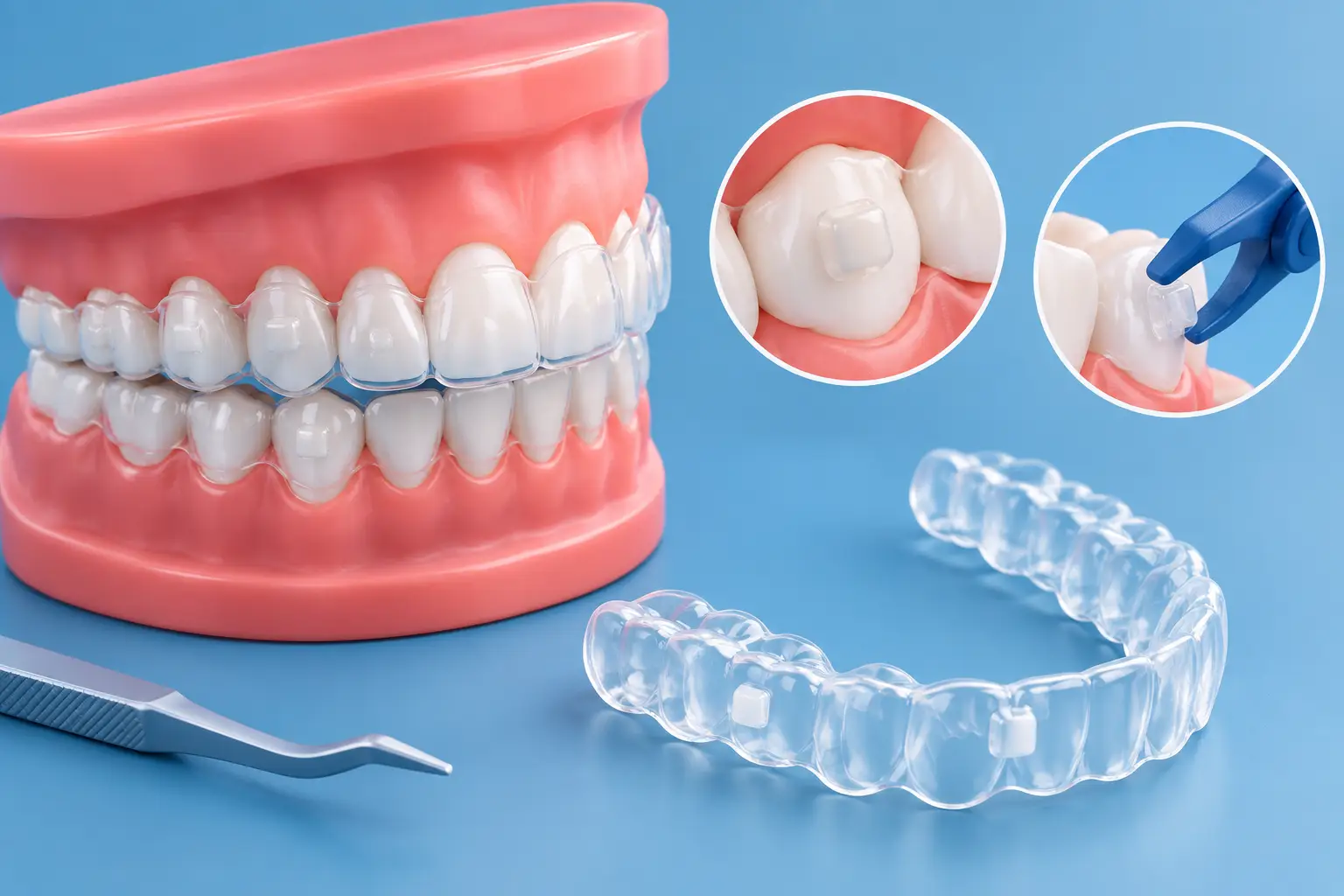
A clear aligner can only move a tooth when it has something secure to push against. That is where Invisalign attachments come in. If you have questions about Invisalign attachments, Invisalign buttons, what are Invisalign attachments for, or Invisalign attachments removal, the short answer is reassuring: they are small, tooth-colored tools that make certain movements more predictable, and they are usually removed comfortably when treatment is complete.
For adults considering orthodontic treatment, attachments can be the unexpected part of an otherwise subtle process. They are visible up close, but much less noticeable than traditional braces. More importantly, they can make the difference between a treatment plan that looks good on a computer and one that delivers a healthy, well-aligned bite in real life.
What Are Invisalign Attachments?
Invisalign attachments are small shapes of dental composite, the same type of tooth-colored material commonly used for bonded fillings. Your dentist places them on selected teeth, then cures or hardens the material with a special light. The clear aligner is designed with matching spaces that fit around each attachment.
Patients often call them Invisalign buttons. In everyday conversation, the terms are commonly used interchangeably. Technically, a button may also refer to a small attachment used with elastics, while many standard Invisalign attachments are shaped more like tiny ridges, rectangles, or beveled bumps.
Attachments are customized to your teeth and treatment goals. Some people need only a few. Others need attachments on many teeth for a period of treatment. Their number, size, and placement are not a measure of how difficult your smile is to improve. They simply reflect the kinds of movements needed to create a stable result.
What Are Invisalign Attachments For?
Clear aligners work by applying gentle, planned pressure. Without attachments, an aligner can be very effective for straightforward spacing or mild crowding. But teeth are smooth and rounded, which can allow the plastic to slip rather than grip when a movement requires more control.
Attachments give the aligner leverage. They help guide teeth that need to rotate, move vertically, shift their roots, or change position in a more precise direction. They can also help an aligner hold firmly in place while other teeth move.
This matters because orthodontic treatment is not only about straight front teeth. A carefully planned Invisalign case considers how the upper and lower teeth meet, how easily you can clean between them, and how forces are distributed when you bite. For patients with crowding, bite concerns, previous dental work, or restorative plans, that precision can protect the long-term health and function of the smile.
Common movements attachments can help with
Attachments may be used when a tooth needs to rotate, especially a rounded canine or premolar. They can help move a tooth up or down, improve the fit of the aligner around a tooth, or help correct an overbite, underbite, crossbite, or open bite with other planned tools.
Not every Invisalign patient needs the same approach. A dentist evaluates the position of your teeth, gum health, jaw relationship, existing crowns or fillings, and treatment priorities before deciding whether attachments are appropriate.
What Do Invisalign Buttons Feel Like?
The placement appointment is usually straightforward. Your teeth are cleaned and prepared, a template is placed over them, and composite material is bonded where it is needed. The process does not require drilling into healthy tooth structure, and anesthesia is generally not needed.
Once the attachments are in place, your aligners may feel tighter when you put them on and take them off. This is normal. It means the trays are engaging the attachments as designed. The first few days can require a little practice, particularly if attachments are near the edges of your front teeth.
Without aligners, attachments can feel slightly rough at first. Your lips and cheeks typically adapt quickly. If an attachment has a sharp edge, catches on floss, or feels uncomfortable beyond the adjustment period, contact your dental office. A small polish or adjustment may improve comfort without affecting treatment.
Attachments are tooth-colored, but they are not completely invisible. They may be more noticeable on close inspection, when you are not wearing your aligners, or if deeply colored foods and drinks stain them. Good brushing, flossing, and professional cleanings help keep them looking their best. Smoking and frequent coffee, tea, red wine, or strongly colored sauces can increase staining over time.
Living With Invisalign Attachments
Attachments do not change the main habits that make Invisalign successful, but they do make consistency even more valuable. Wear aligners for the number of hours your dentist recommends, usually about 20 to 22 hours a day. Remove them for meals and drinks other than water, then brush or rinse before putting them back in.
Because attachments create small contours on the teeth, take a little extra time when brushing around them. Daily flossing remains essential. Food can occasionally catch near an attachment, especially early on, but a soft toothbrush, floss, and an interdental brush can keep the area clean.
Avoid trying to remove, trim, or smooth an attachment at home. It can damage enamel or alter the treatment plan. If one comes off, save it if you can, wear your aligners as instructed unless your dentist tells you otherwise, and call the office. Whether it needs replacement depends on its location and purpose.
Invisalign Attachments Removal: What to Expect
At the end of active treatment, or sometimes during a planned change in treatment, Invisalign attachments removal is generally quick and conservative. Your dentist uses a small polishing instrument to gently remove the composite material from the enamel surface. The goal is to remove the bonded material while preserving the natural tooth.
Most patients do not need numbing for removal. You may feel light vibration and hear the instrument, but it should not be painful. Afterward, your dentist polishes the tooth so it feels smooth again. If you are sensitive to dental sounds or sensations, let the team know before the appointment. Small comfort measures and clear communication can make a meaningful difference.
Removal should be done by a dental professional, not with fingernails, tools, or whitening products at home. Attachments are designed to bond securely enough to support orthodontic forces, and attempting to remove them yourself can scratch or chip enamel.
It is also worth knowing that attachment removal does not always mean orthodontic care is completely over that day. You will usually transition into retainers, which hold teeth in their new positions while the surrounding bone and tissues adapt. Wearing retainers as directed is the best way to protect the time and investment you have made in your smile.
Are Attachments Worth It?
For many patients, yes. The trade-off is a small, temporary change in the appearance and feel of your teeth for greater control over the final result. Some minor cases can be treated without attachments, while more involved movements may be less predictable without them.
The right question is not whether attachments are a hassle. It is whether they help create the healthy, functional alignment your treatment needs. A thorough consultation should explain where attachments are planned, why they are needed, how long they may stay in place, and what your retainer plan will involve.
At Seattle Oral Care, Invisalign planning is approached as part of your overall oral health, not simply a cosmetic change. If you feel nervous about attachments or unsure whether clear aligners fit your goals, bring those concerns to your consultation. Understanding each small step can make treatment feel far more manageable - and help you look forward to the smile waiting at the end.